

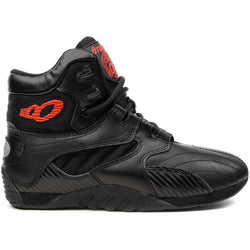
Ankle Support Lifting Shoes: Lock Down Your Elite Performance for 2026!
What if the answer to wobbly, uncertain heavy squats isn’t more cushioning, but a closer connection to the floor? The right ankle support lifting shoes can help you feel planted, keep your stance controlled, and spend less effort correcting foot movement.
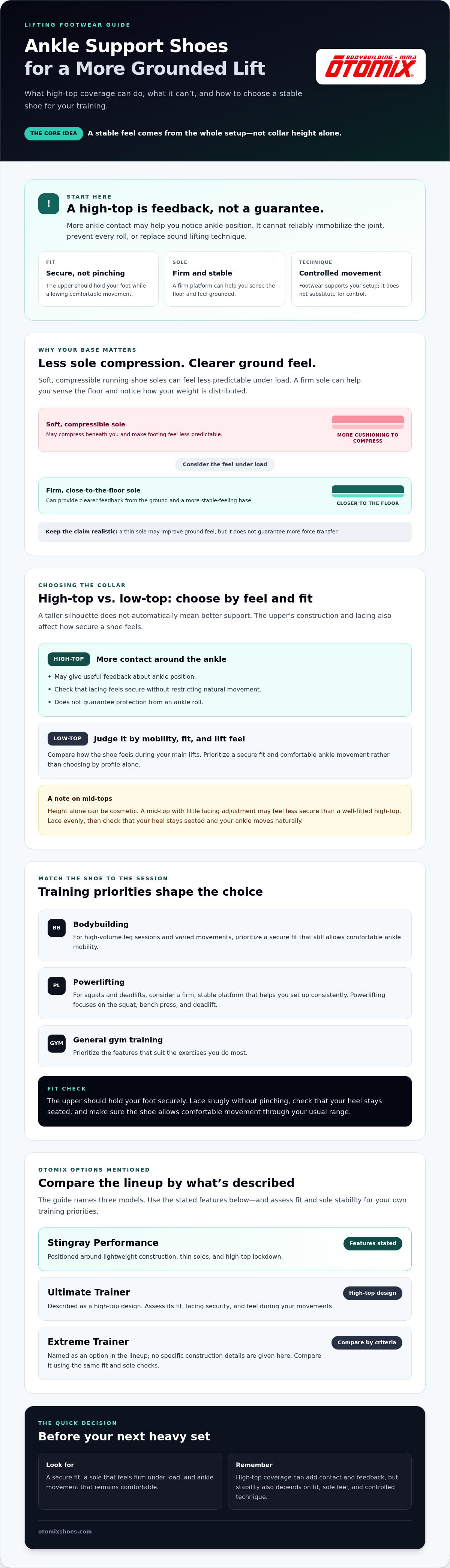
If your ankles feel unsteady under load, your footwear may be part of the problem. Soft running-shoe soles can compress beneath you, making it harder to feel a consistent base. High-tops can provide more contact around the ankle and useful feedback about its position, but they can’t guarantee protection from a roll or replace sound lifting technique. Fit and sole stability matter.
This guide explains what high-top ankle coverage can and can’t do, why a firm, close-to-the-floor sole can help you assess your footing, and what to look for in gym shoes. You’ll also learn how Otomix’s Stingray Performance, Ultimate Trainer, and Extreme Trainer fit into a footwear lineup focused on bodybuilding and weightlifting. Use these criteria to compare your options before your next heavy set.
Key Takeaways
- Ankle support lifting shoes can provide a secure, close-to-the-floor feel, but a high-top can’t prevent every ankle roll.
- Compare high-tops and low-tops based on fit, ankle mobility, and the feel you want during your main lifts.
- Match the sole to your training. A firm, stable platform can help you feel grounded during squats and deadlifts.
- Compare Otomix’s Stingray Performance, Ultimate Trainer, and Extreme Trainer to find footwear suited to your training priorities.
Why Ankle Stability is the Missing Link in Your Heavy Lifts
A shaky base can interrupt a heavy squat before your legs reach their full drive. A high-top collar alone can’t reliably immobilize the ankle joint or guarantee protection from a roll. Instead, think of ankle support as one part of a stable setup, alongside a secure fit, a suitable sole, and controlled technique.
Footwear still affects how stable your stance feels. A firm sole helps you sense the floor, while a secure upper can give you more feedback about ankle position. These features can make it easier to focus on your movement instead of repeatedly adjusting your balance. That can be useful during squats, lunges, and leg presses, where a steady stance helps you perform each rep with control.
See how footwear choices can affect squats and deadlifts in this video:
The Dangers of Ankle Roll and Instability
Soft, compressible running-shoe soles can feel less predictable under load and make it harder to sense how your weight is distributed. If your footing feels unstable, you may spend attention correcting your balance rather than focusing on the lift. A high-top can make ankle movement easier to notice, but it isn’t a brace and won’t prevent every roll or wobble.
Unlocking New PRs Through Structural Support
Confidence matters when you’re setting up for a demanding lift. Footwear that feels stable can help you focus on a controlled attempt, while a firm sole can provide clearer feedback from the ground than a cushioned running shoe. The demands of Olympic weightlifting show why specialized footwear matters in strength sports. Choose a fit that feels secure without restricting natural movement, and keep sound technique at the center of every lift.
High-Top vs. Low-Top: The Science of Structural Lockdown
A taller collar doesn’t automatically mean better support. High-tops provide more contact around the ankle and may give you useful feedback about its position, but the upper’s construction and the lacing affect how secure the shoe feels. No collar can guarantee that your ankle won’t roll, so treat footwear as one part of a stable lifting setup, not a substitute for control and technique.
Look beyond the silhouette. The upper should hold your foot securely and let you lace the shoe snugly without pinching or restricting comfortable movement. Leather or structured synthetic panels may feel more substantial than soft mesh, but construction varies by shoe. Check whether the upper stays secure as you brace, squat, and move through your typical range of motion.
Why Mid-Tops Often Fail the Test
Height alone can be cosmetic. A mid-top that barely reaches the ankle, or has little lacing adjustment around the upper, may feel less secure than a well-fitted high-top. Lace evenly from the forefoot upward, then check that your heel stays seated and your ankle can move naturally. Compare the Ultimate Trainer high-top design as you assess what a purpose-built lifting shoe offers.
Thin Soles and Force Transfer
A soft, compressible sole can feel less predictable under a heavy load than a firm, flat platform. A thin sole brings your foot closer to the floor and can improve ground feel, helping you notice how your weight is distributed. It doesn’t guarantee more force transfer, but a stable base gives you less cushioning to compress as you drive through the floor.
For bodybuilding, squats, or deadlifts, consider the sole and upper together. Look for a secure fit and a sole that feels firm under load. Otomix’s Stingray Performance is positioned around lightweight construction, thin soles, and high-top lockdown. Explore Otomix lifting footwear to compare options, then choose a shoe that feels stable without forcing your ankle into a rigid position.
How to Choose the Best Ankle Support Shoes for Your Training
Start with your training, not the shoe’s appearance. Bodybuilding often involves high-volume leg sessions and varied movements, so prioritize a secure fit that still allows comfortable ankle mobility. Powerlifting focuses on the squat, bench press, and deadlift. For squats and deadlifts, a firm, stable platform can help you set up consistently. For general gym training, choose features that suit the exercises you do most.
For squats and deadlifts, consider a thin, firm sole that keeps you close to the floor. Check the lacing, too. Eyelets that extend higher and let you snug the upper around your ankle can create a more secure feel than a high-looking collar with little adjustment. Lace firmly, but don’t tighten so much that you cause discomfort or restrict natural movement.
Bodybuilding vs. Powerlifting Requirements
Bodybuilders may want a balance of mobility for varied leg exercises and a secure fit for demanding sets. Powerlifters may prefer a more rigid, predictable feel under heavy barbell loads. Your stance is another consideration: wide-stance squats and sumo deadlifts call for a sole that feels stable and grips the floor. For a broader footwear breakdown, read the Weightlifting Shoes: 2026 Elite Performance Guide.
The Must-Have Feature Checklist
Before choosing ankle support lifting shoes, inspect these details in person or in the product specifications:
- Fit and lacing: The shoe should feel secure around the heel and ankle without pinching.
- Sole: Look for a firm, flat platform that feels stable during your main lifts.
- Collar: Check that the padding stays comfortable when the shoe is laced snugly.
- Grip and build: Choose tread that feels secure for your stance, and check that the construction looks suited to repeated training.
Otomix specializes in bodybuilding and weightlifting footwear. Compare the Otomix lifting shoe options and focus on the fit and features that match your training.
Otomix: The Gold Standard for Ankle Support and Lockdown
Otomix focuses on footwear for bodybuilding and weightlifting rather than general-purpose training. Its Stingray Performance, Ultimate Trainer, and Extreme Trainer models offer options for lifters with different priorities. If you’re comparing ankle support lifting shoes, start with the fit and feel you need for your lifts. A high-top can feel secure and provide ankle-position feedback, but it can’t guarantee injury prevention or replace controlled technique.
Stingray Performance: The King of the Gym
The Stingray Performance is a lightweight high-top option for lifters who want a close-to-the-floor feel and ankle coverage. Check that the lacing secures your foot and ankle comfortably, and that the fit stays secure when you brace and move. Explore the Stingray Performance bodybuilding weightlifting gym shoes to review the model’s details.
Ultimate Trainer: The Hybrid Powerhouse
If your sessions combine heavy lifts with other gym exercises, the Ultimate Trainer is positioned as a versatile option for athletes who move between different training styles. Compare its fit and support with the demands of your routine rather than choosing by collar height alone. See the Ultimate Trainer hybrid footwear guide for more information.
For lifters seeking a stability-focused design, Otomix identifies the Extreme Trainer as its model built for maximum stability. Consider your priorities: a lightweight high-top feel, versatility across gym work, or a stronger focus on stability. Rather than relying on a generic sneaker that feels unstable under load, review the available Otomix lifting shoe options and choose footwear that matches your training, fit, and ground-feel preferences.
Build a More Confident Foundation for Your Next Session
Lifting shoes are one part of your setup. A firm, close-to-the-floor sole can help you feel the ground, while a secure high-top fit may help you stay aware of ankle position. High-tops can’t guarantee injury prevention, but footwear that fits well and feels stable can help you focus through demanding sets. Proper body mechanics also extend beyond training—maintaining supportive alignment during recovery is just as crucial, and lifestyle guides from TopShop provide practical tips for improving everyday posture.
Otomix specializes in bodybuilding and weightlifting footwear, with the Stingray Performance, Ultimate Trainer, and Extreme Trainer offering options for different training priorities. Compare their features and fit, then choose the model that suits your lifts and preferences.
Frequently Asked Questions
Do high-top lifting shoes actually prevent ankle injuries?
No. High-top lifting shoes can’t guarantee ankle injury prevention. A higher collar may increase sensory feedback and help you notice your ankle position, but most shoe uppers aren’t rigid braces that mechanically stop a roll. Choose a secure, comfortable fit, build ankle control through appropriate training, and use sound lifting technique. If you have persistent pain or instability, consult a qualified healthcare professional.
Can I use boxing shoes for weightlifting and ankle support?
You can lift in boxing shoes if they feel secure and stable, but they’re designed for boxing, not necessarily for heavy squats or deadlifts. Check whether the sole feels firm, provides grip, and keeps you close to the floor. Test your stance with light loads before increasing weight. A tall collar alone doesn’t ensure ankle protection. If you lift heavy regularly, compare purpose-built weightlifting footwear with your boxing shoes.
Are ankle support lifting shoes good for squats and deadlifts?
They can be, if the fit and sole suit your stance and technique. A firm, relatively thin sole can provide a more direct feel of the floor than a soft, compressible running shoe. High-tops may offer extra feedback about ankle position, but they don’t guarantee protection from a roll. Check comfort and stability under light loads first.
How tight should I lace my high-top gym shoes for maximum support?
Lace them snugly enough to keep your heel seated and the upper secure around your ankle, without pinching, numbness, or restricting comfortable movement. Tighten progressively from the lower eyelets upward, then stand, walk, and perform a few bodyweight squats to check the fit. Maximum tightness isn’t the goal. If your foot feels compressed or your ankle can’t move naturally, loosen and adjust the laces.
Do Otomix shoes run true to size for wide feet?
Fit can vary by model and individual foot shape, so there’s no verified universal sizing claim for wide feet. Measure your foot and compare it with the current size guidance for the Otomix model you’re considering, including the Stingray Performance or Ultimate Trainer. Check both length and width, and allow room for comfortable toe movement. Don’t assume a familiar size will fit every shoe the same way.


