

Best Flat Sole Lifting Shoes: The 2026 Strength Buyer’s Guide
Cushioned running shoes can feel unstable under a heavy bar because their soft midsoles compress. If your feet shift during squats or deadlifts, flat sole lifting shoes can give you a firmer, more predictable base. A level profile also keeps the heel from sitting higher than the forefoot, a feature many deadlift-focused lifters prefer.
Choosing the right pair means looking beyond appearance. Check how the sole feels under load, whether the outsole grips your gym floor, and whether the shoe holds your foot securely without restricting it. This guide covers those practical checks and explains how to match a shoe profile to your main lifts. Otomix specializes in performance footwear for bodybuilding, weightlifting, and gym workouts, including the Stingray Performance, Ultimate Trainer, and Extreme Trainer.
Key Takeaways
- Assess lifting footwear for a level, firm sole, reliable traction, secure foot containment, and durable construction.
- Choose ankle coverage and freedom of movement according to your training priorities and preferred fit.
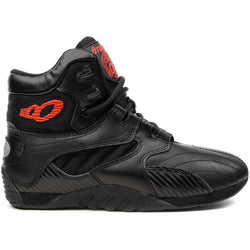
- The Stingray Performance has an ultra-thin flat outsole for close contact with the platform.
- Check that your clothing allows comfortable movement through squats, hinges, and other lifts.
Why Flat Sole Lifting Shoes Outperform Cushioned Running Sneakers
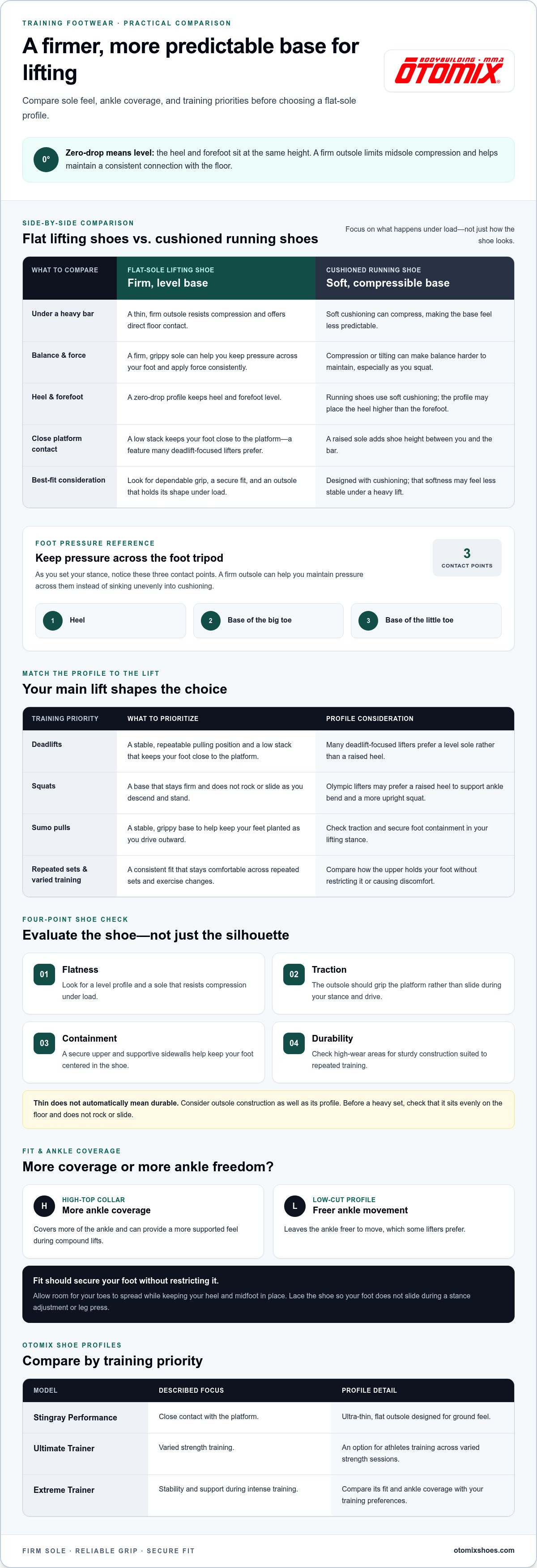
Flat sole lifting shoes have a level profile, with the heel and forefoot at the same height. Many also use a thin, firm outsole that resists compression. Running shoes are designed with soft cushioning, which can compress under a heavy bar and make your base feel less predictable. That can make it harder to keep your balance and apply force consistently through your feet.
A flat rubber sole gives you direct contact with the floor. The familiar Plimsoll (shoe) also uses a flat rubber sole, a design associated with sports footwear. For lifting, however, a low profile is only part of the decision. Look for a sole that feels firm and grippy, along with a fit that keeps your foot secure during the movement.
See how dedicated lifting shoes support a more stable setup:
The Biomechanics of Zero-Drop Platform Contact
As you set your stance, notice the contact points under your heel, the base of your big toe, and the base of your little toe. A firm outsole can help you maintain pressure across this tripod instead of sinking unevenly into cushioning. A zero-drop sole keeps the heel and forefoot level, while an elevated heel changes the foot’s angle and can affect your lifting position. A firm lifting sole limits midsole compression, helping you maintain a consistent connection with the floor.
Why Deadlifts and Squats Demand Flat Soles
For deadlifts, a low stack keeps your foot close to the platform and avoids adding unnecessary shoe height between you and the bar. A raised sole can slightly reduce the distance the bar travels by lifting the lifter. The practical reason many deadlift-focused lifters choose a flat sole is to establish a stable, repeatable pulling position. In squats, cushioning that compresses or tilts can make balance harder to maintain as you descend and stand. Olympic lifters may prefer a raised heel to support ankle bend and a more upright squat. Choose the profile that suits your main lift, and make sure the shoe holds your foot securely under load.
Essential Evaluation Criteria for Flat Sole Lifting Footwear
Assess a lifting shoe by how it feels and holds up during your training, not just by its appearance or versatility. A level sole helps provide a consistent base, but grip, foot containment, and durable construction matter too. Before choosing, check these four features:
- Flatness: Look for a level profile and a sole that resists compression under load.
- Traction: The outsole should grip the platform rather than slide during your stance and drive.
- Containment: A secure upper and supportive sidewalls help keep your foot centered in the shoe.
- Durability: Check high-wear areas for sturdy construction suited to repeated training.
Outsole Grip and Thinness vs. Durability
A thin sole can make it easier to feel the floor and notice pressure shifts as you brace and drive. Look for a firm rubber surface that grips the platform. The aim is not maximum softness or flexibility, but dependable contact that holds its shape under load. Before a heavy set, check that the outsole sits evenly on the floor and does not rock or slide. Keep in mind that a very thin outsole is not automatically durable, so consider its construction as well as its profile.
Ankle Stability: High-Top Collar vs. Low-Cut Mobility
A high-top collar covers more of the ankle and can provide a more supported feel during compound lifts. A low-cut shoe leaves the ankle freer to move, which some lifters prefer. Either way, the shoe should fit securely: lace it so your foot does not slide inside during a leg press or stance adjustment. Supportive sidewalls can also help contain the foot when you push against the floor. A casual shoe may look flat, but appearance alone does not tell you whether its fit and construction will feel secure under a heavy lift.
Otomix’s Extreme Trainer is designed to provide stability and support during intense training. Compare Otomix flat-sole training shoes by sole feel, traction, containment, and the level of ankle coverage you prefer.
Selecting Your Flat Sole Profile: High-Top Support vs. Minimalist Freedom
Start with the lifts you do most often. Sumo deadlifters may value a stable, grippy base that helps keep their feet planted as they drive outward. For high-volume bodybuilding sessions, prioritize a consistent fit that stays comfortable across repeated sets and exercises. If you prefer more ankle coverage, consider a high-top. If you want your ankle to move more freely, a lower-cut profile may suit you better.
Otomix offers footwear for different training priorities. The Stingray Performance has an ultra-thin flat outsole designed for ground feel. The Ultimate Trainer is designed for varied strength training, while the Extreme Trainer focuses on stability and support during intense workouts. Compare the fit and support you want, rather than choosing by silhouette alone.
Matching Flat Shoes to Powerlifting and Bodybuilding Goals
For sumo pulls, look for a firm platform and dependable traction so you can set your stance without feeling unstable. For bodybuilding leg sessions, focus on a secure, comfortable fit that works through repeated sets and exercise changes. Explore the Stingray Performance to learn about its thin, flat outsole and close platform contact.
Foot Width and Upper Material Considerations
Your toes need room to spread as you brace, but too much space can allow your foot to slide. Check the fit while standing and in your lifting stance: your toes should have room, while your heel and midfoot stay in place. Compare how the upper feels around your foot and whether it holds you securely without causing discomfort. The Ultimate Trainer is another option for athletes training across varied strength sessions. Browse Otomix training footwear and match the shoe profile to your lifts.
Pairing Flat Lifting Shoes with Functional Apparel for Maximum Mobility
Your training setup works as a system. Flat sole lifting shoes help anchor your stance, while clothing that moves freely lets you squat, brace, and position the bar without fighting tight fabric. A restrictive shirt can pull across your shoulders or ride up as you move. For versatile pieces that blend mobility with effortless style, brands like TSSENCE offer comfortable sporty-chic options so you can focus on the lift rather than adjusting your outfit.
Upper-Body Freedom for Unrestricted Barbell Movement
Test a top with a few bodyweight squats and an overhead reach. Your shoulders should move freely, and the fabric should not feel restrictive when you brace or position the bar. Check that the hem stays in place as you hinge and squat, and that seams or sleeves do not interfere with your movement. A comfortable top is one you can wear through your training without needing to readjust it between sets.
Building Your Complete High-Performance Training Kit
Build your setup around range of motion from the floor up. Pair stable lifting footwear with bottoms that let you bend, brace, and set your stance without pulling or bunching. Before a heavy set, check your full range of motion: squat, hinge, and reach. If your clothes tug or restrict movement, adjust the fit before loading the bar.
Keep comfort and mobility in mind alongside your footwear choice. To compare clothing options for your training kit, visit the Otomix gym apparel collection and consider how each piece moves through your usual lifts.
Set Up Your Next Training Session for Success
Choose footwear that suits your main lifts, then use it consistently so you can learn how it feels during your setup. A good fit should feel secure from your warm-up through your working sets. Otomix specializes in performance footwear for bodybuilding, weightlifting, and gym workouts, with options including the Stingray Performance, Ultimate Trainer, and Extreme Trainer.
Build your kit around the work you do. Choose a sole profile and level of ankle coverage that fit your lifting priorities, then check that your clothing allows you to move comfortably. Keep your focus on controlled reps and consistent positioning. A practical way to compare shoes is to test your stance in each pair during a warm-up and notice whether your feet feel planted through the movement.
Ready to choose footwear for your next training session? Explore Otomix training footwear and compare the Stingray Performance, Ultimate Trainer, and Extreme Trainer for the support and feel you want.
Frequently Asked Questions
Why are flat sole shoes better for deadlifts than running sneakers?
Flat sole shoes can provide a more direct, predictable connection to the floor when you set up and push through a deadlift. Running sneakers may feel less stable as their cushioning compresses under load. During a light warm-up, notice whether your feet stay planted through the pull. A firm sole and secure fit can help you focus on bracing and controlling the bar.
Can I use flat sole lifting shoes for squats and leg presses?
Yes. Flat sole lifting shoes can work for squats and leg presses if their fit and support suit your movement. Test your stance with bodyweight squats, then begin with a light warm-up set. On the leg press, keep your feet secure on the platform and avoid letting them shift as you press. Choose shoes that feel stable through your range of motion.
What is the difference between zero-drop lifting shoes and Olympic weightlifting shoes?
Zero-drop shoes keep the heel and forefoot at the same height, while Olympic weightlifting shoes typically have an elevated heel. That raised heel can help some lifters achieve more ankle bend and maintain a more upright torso in a deep squat. A zero-drop profile keeps the foot level and may suit deadlifts or lifters who prefer that position. Choose according to your lifts and the position in which you can move comfortably.
How tight should high-top flat sole lifting shoes fit around the ankle?
Lace high-tops snugly enough to limit heel lift and foot movement, but not so tightly that they cause pain, tingling, or numbness. Secure the ankle area without crushing the top of your foot. Walk, squat, and brace in the shoes before a heavy set. If the collar rubs or your foot shifts despite careful lacing, the shape or size may not suit your foot.
How do I care for and maintain flat sole gym shoes to preserve traction?
Keep the outsole clean by wiping away dust and debris with a damp cloth after training. Let the shoes air-dry fully before storing them. Avoid wearing them outdoors, where grit and rough surfaces can wear down the tread. Check the sole regularly for smooth patches, peeling, or uneven wear. A clean, intact outsole helps maintain consistent contact with the gym floor.


