

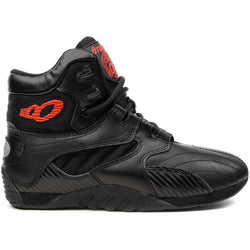
Breaking In New Lifting Shoes: A Safe, Step-by-Step Guide
Breaking in new lifting shoes is easier when your first session is low-pressure. A new pair may feel stiff or unfamiliar, but pushing through pain can turn a simple fit check into a training problem. Take time to see how the shoes feel before relying on them for demanding lifts.
If your shoes feel different from your usual pair, that’s understandable. Mild stiffness may feel unfamiliar as you move, but persistent rubbing, pinching, numbness, or pain deserves attention. Don’t treat discomfort as a test of toughness.
This guide walks you through a gradual routine, explains how to distinguish normal stiffness from signs of a poor fit, and helps you build confidence before your harder sets. Start with brief wear, test basic movements, and increase use only while the shoes feel secure and comfortable. If discomfort persists, stop and reassess the fit.
Key Takeaways
- Approach breaking in new lifting shoes as gradual familiarization, not a test of how much discomfort you can tolerate.
- Check the fit first, then wear the shoes briefly indoors with your usual training socks before rehearsing basic movements.
- Adjust the laces to improve security, but pause and reassess if pressure, rubbing, or numbness persists.
- Before harder sets, confirm the shoes feel secure and stable through your warm-up. Choose footwear priorities that match your lifts.
Breaking in new lifting shoes: what should feel normal?
Breaking in new lifting shoes means getting familiar with how they feel and move, not forcing them to stretch or pushing through pain. A firm, unfamiliar feel may take some getting used to. The shoes should still feel secure, with enough room for your toes to rest naturally rather than being squeezed together.
Pay attention to whether stiffness eases as you move or discomfort persists or sharpens. Temporary stiffness can feel unfamiliar, but ongoing pressure, numbness, or rubbing is a reason to stop and reassess the fit.
Watch this short example of a lifter adjusting to new weightlifting shoes:
How can you tell stiffness from a poor fit?
Check the toes, sides and top of your forefoot, and heel for pressure. A secure fit should limit excessive heel movement without pinching or forcing your toes together. Walk and shift your weight gently. Notice whether the shoe rubs in one spot or creates sharp pressure. If pain, numbness, or skin irritation develops, take the shoes off and stop wearing them until you can reassess the fit.
Why use lifting shoes only after checking fit?
New footwear can change how your feet contact the floor, so your balance and movement may feel different at first. Check the fit and get comfortable standing and moving before relying on the shoes for demanding sets. That matters in strength sports such as Powerlifting, where stable positioning is part of the lift. If you’re comparing footwear for your routine, read this weightlifting shoes guide, then assess each option by its fit and comfort.
How to break in new lifting shoes with a gradual routine
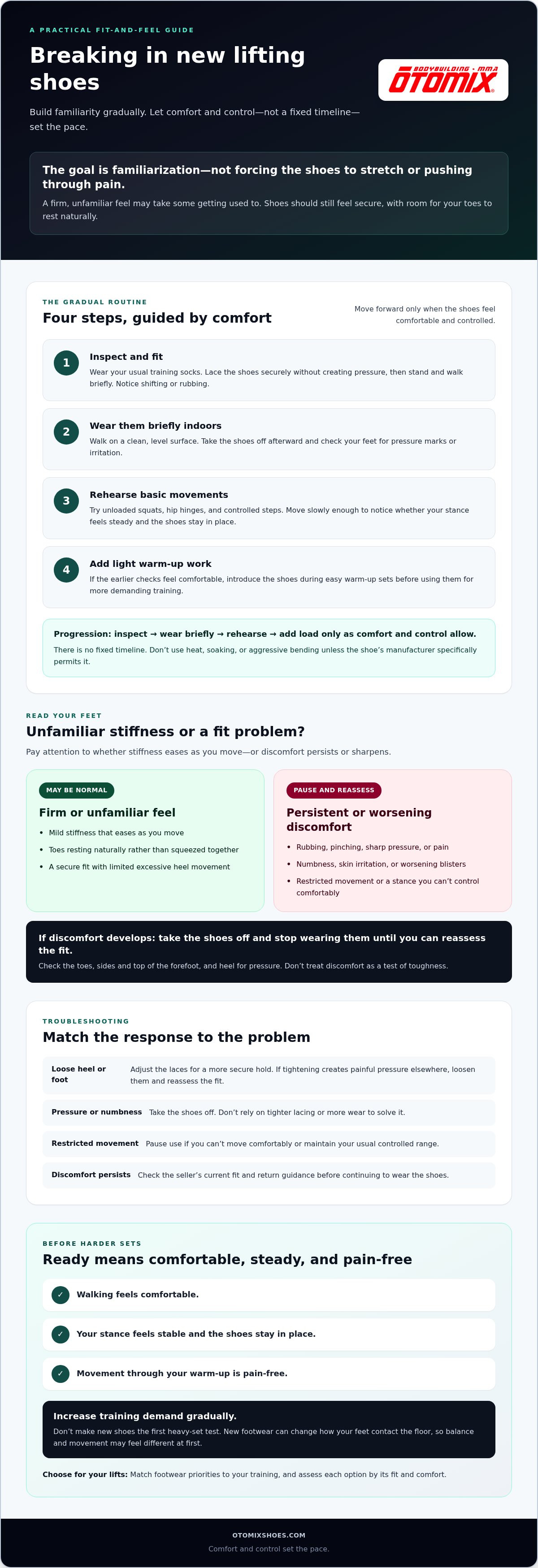
Use a simple progression, letting comfort and control set the pace rather than following a fixed timeline. Before breaking in new lifting shoes, put on your usual training socks and use the lacing adjustment you expect to wear during training.
- Inspect and fit: Check the shoes for visible issues, then lace them securely without creating pressure. Stand and walk briefly to notice any shifting or rubbing.
- Wear them indoors: Keep the first wear brief. Walk on a clean, level surface, then take the shoes off and check your feet for pressure marks or irritation.
- Rehearse basic movements: Try unloaded squats, hip hinges, and controlled steps. Move slowly enough to notice whether your stance feels steady and the shoes stay in place.
- Add light warm-up sets: If the earlier checks feel comfortable, introduce the shoes during easy warm-up work before using them for more demanding training.
Inspect, wear briefly, rehearse, then add load only as comfort and control allow. Don’t use heat, soaking, or aggressive bending to speed up the process unless the shoe’s manufacturer specifically permits it.
What should you do during the first wear?
Keep the first wear short and low-pressure. Afterward, check for new rubbing, lingering pressure, or signs that your foot shifted inside the shoe. If discomfort develops, stop and reassess rather than trying to force the shoes to adapt.
When are new lifting shoes ready for a full workout?
Look for comfortable walking, a stable stance, and pain-free movement through your warm-up. Increase training demand gradually instead of making new shoes the first heavy-set test. If you’re still comparing options, browse Otomix lifting shoes and consider which fit and feel suit your training priorities.
Common break-in problems: adjust, pause, or reassess the fit
Not every unfamiliar sensation calls for the same response. A little movement inside the shoe may improve with a careful lacing adjustment. Painful pressure, numbness, worsening blisters, or restricted movement are reasons to stop wearing it for now. Breaking in new lifting shoes should never mean training through symptoms that persist or get worse.
- Heel or foot feels loose: Try adjusting the laces for a more secure hold. If tightening creates painful pressure elsewhere, loosen them and reassess the fit.
- Pressure or numbness: Take the shoes off. Don’t rely on tighter lacing or more wear to solve it.
- Movement feels restricted: Pause use if you can’t move comfortably or maintain your usual controlled range.
- Discomfort doesn’t improve: Check the seller’s current fit and return guidance before continuing to wear the shoes.
What if lifting shoes rub or cause a blister?
Stop the session rather than training through the rubbing. Protect irritated skin and let it settle before considering another wear. Then check whether your usual training socks feel comfortable, whether the shoe fits securely, and whether your foot is sliding inside it. If rubbing returns, don’t keep testing the same setup. Reassess the fit and consult the seller’s current guidance.
Can you speed up the break-in process?
Don’t force it. Avoid aggressive bending, direct heat, soaking, or other break-in tricks unless the manufacturer specifically approves them. These methods may affect the shoe without fixing a fit issue. Gradual wear gives you a chance to notice how the shoes feel and stop if discomfort develops. There’s no need to rush into a full session.
If the fit remains uncomfortable, review the current guidance before deciding what to do next. To explore footwear options for your training, browse Otomix lifting shoes and assess fit and comfort before choosing a model.
Choose lifting shoes that feel ready for your training
Before committing to a full workout, run one final check. A ready pair should feel secure without painful pressure, support a stable stance, and stay comfortable through your warm-up movements. If any of those checks fail, pause and reassess rather than trying to push through.
- Fit: Your foot feels held in place, without pinching or toes being forced together.
- Stance: You can stand and shift your weight with control.
- Movement: Walking and warm-up reps feel comfortable, with no rubbing, numbness, or pain.
Different routines can call for different footwear priorities. Consider the movements you do and what feels secure for your training. No single shoe is right for everyone. Once fit and comfort check out, Otomix’s Stingray Performance, Ultimate Trainer, and Extreme Trainer are options to research. Breaking in new lifting shoes is about building familiarity, not overlooking a poor fit.
How should you compare lifting shoe options?
Compare the movements you plan to do, how each option fits your foot, and whether it stays comfortable during basic warm-up work. Check product-specific information rather than assuming models share the same features. For a closer look at one option, read the Stingray Performance guide.
How do you keep new lifting shoes comfortable?
Check and clean your shoes according to the manufacturer’s care directions. Avoid methods that aren’t approved for the specific pair. For practical upkeep tips, see this weightlifting shoe cleaning guide.
Ready to compare your options? Explore Otomix lifting shoes, then choose based on fit, comfort, and the demands of your training.
Step into your next session with confidence
Breaking in new lifting shoes should build familiarity, not test your pain tolerance. Start with brief, controlled wear, then progress to warm-up movements as comfort allows. A secure fit and stable stance matter, but persistent pain, numbness, or rubbing means it’s time to pause and reassess.
Choose footwear around your training and how it feels on your feet. Otomix specializes in footwear for bodybuilding, weightlifting, and gym workouts, with the Stingray Performance, Ultimate Trainer, and Extreme Trainer among its offerings. Compare the details, then put fit and comfort first.
Explore Otomix lifting shoes and find your fit. Take the time to get comfortable in your pair, trust the signals your body gives you, and head into your next session ready to lift with confidence.
Frequently Asked Questions
How long does it take to break in new lifting shoes?
There’s no set timeline for breaking in new lifting shoes. It depends on how the pair feels and how quickly you become comfortable moving in them. Start with brief indoor wear, then try basic movements and light warm-up sets if they feel secure and comfortable. Stop and reassess if pressure, rubbing, numbness, or pain develops instead of assuming more wear will fix it.
Should new weightlifting shoes feel tight?
They should feel secure, not painfully tight. Your foot shouldn’t slide excessively, but your toes should rest naturally rather than being squeezed together. Check for pinching across the toes, sides, or top of your foot, and notice whether the heel moves. Adjust the laces if the fit feels loose, but don’t tighten them so much that they cause painful pressure or numbness.
Can I wear new lifting shoes for a heavy workout right away?
It’s better not to make a heavy workout your first test. New shoes can change how your feet feel against the floor, so first check your balance and movement with walking, controlled reps, and warm-up sets. If those feel stable and comfortable, build up gradually. If you notice pain, rubbing, numbness, or restricted movement, stop and reassess before loading up.
How can I soften new lifting shoes quickly?
Avoid trying to soften them with direct heat, soaking, or forceful bending unless the manufacturer specifically approves those methods. They may affect the shoes without solving a fit problem. Instead, wear the shoes briefly indoors and progress to simple movements only while they feel comfortable. If stiffness is accompanied by painful pressure or persistent rubbing, check the fit and the seller’s current guidance.


