

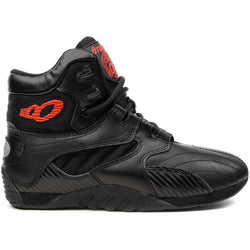
Flat Sole Shoes for Lifting: How to Choose the Right Pair
What if your most stable lifting shoe isn’t the one with the biggest heel? Flat sole shoes for lifting can provide a level-feeling connection to the floor, especially during deadlifts, but a flat base won’t suit every lift or every lifter.
A flat sole may feel solid under load, while a raised heel can feel more comfortable for some squatters, particularly when ankle mobility affects their setup. Cushioned running shoes are a different option: their soft soles can compress under weight and feel less predictable during heavy lifting.
This guide explains what a flat sole changes, what to check for in fit and support, and how to compare shoes for deadlifts, squats, and mixed workouts. You’ll also learn how to decide whether one pair suits your sessions or whether a different sole profile better matches some of your lifts.
Otomix specializes in performance footwear for bodybuilding, weightlifting, and gym workouts. Use the selection criteria below to compare your training needs with the Stingray Performance, Ultimate Trainer, and Extreme Trainer range.
Key Takeaways
- Flat sole shoes for lifting can feel different under load. Use your main lifts to decide whether that feel suits your training.
- Compare flat, raised-heel, and cushioned soles by the movements you train, not by a one-size-fits-all rule.
- Before choosing a pair, check secure fit, usable grip, and whether the base feels stable during your lifting movements.
- Compare Otomix’s Stingray Performance, Ultimate Trainer, and Extreme Trainer models against the demands of your workouts.
What flat sole shoes for lifting change under the bar
A flat-soled shoe has a relatively level base beneath the foot, without a pronounced heel lift. Flat-soled lifting shoes are shoes with a relatively level base designed for training under load. The term describes the sole’s profile, not a guaranteed result. Construction, fit, and the way you move all affect how a shoe feels.
When you set up under load, your feet meet the floor through your shoes. Sole shape and underfoot feel can influence how clearly you sense that contact and how steady your stance feels. You might prefer a firm, level base for one movement and a different feel for another. Focus on how the shoe works with your own setup rather than assuming everyone will respond the same way.
Flat sole, minimalist shoe, and raised heel: the difference
These labels describe different characteristics. “Flat” refers to the profile of the base. “Minimalist” usually describes a broader design approach, such as less cushioning or more flexibility, and doesn’t automatically mean the sole is level. A flat shoe can still have cushioning or a structured upper. A raised-heel shoe has an elevated heel, but its cushioning and flexibility can vary. Consider each feature separately instead of treating the terms as interchangeable.
Why lifters pay attention to their base
Fit matters as much as sole shape. A shoe that holds your foot securely can feel more consistent as you brace and position yourself. Excess movement inside the shoe may distract from your setup, while grip affects how confidently the shoe feels planted. These are individual impressions, not promises of greater strength or safety.
Pay attention to the shoe during the movements you actually train. Notice whether your foot stays comfortably in place, whether the base feels predictable, and whether you can set up without distraction. Flat sole shoes for lifting are one option, not a universal prescription. The right profile depends on the lift, your preferences, and the fit you can train in consistently.
Flat soles versus raised heels: match the shoe to the lift
No single sole profile is right for every session. Deadlifts, squats, and mixed gym workouts place different demands on footwear, so use the comparison below as a starting point rather than a rulebook.
Choose a shoe by considering both the movement and the lifter. Ankle mobility, stance, comfort, and technique can all influence which profile feels right. Compare the options with your own training:
| Sole type | Design | Likely training use |
|---|---|---|
| Flat | Relatively level base | Often preferred for deadlifts and selected strength movements |
| Raised heel | Heel sits higher than the forefoot | May suit some squatters, including lifters who find ankle mobility affects their setup |
| Cushioned | Soft, compressible underfoot feel | May feel comfortable for general movement, but can feel less predictable during heavy lifting |
When a flat, stable base may suit a lift
Some lifters prefer a level-feeling base for deadlifts and other strength movements because it supports a familiar, repeatable setup. That doesn’t make flat sole shoes for lifting the automatic choice for everyone. Pay attention to your balance, comfort, stance, and ability to repeat your setup from one rep to the next. Choose based on what feels controlled for you, not what’s trending.
When a raised heel may feel like a better fit
Heel elevation changes the foot’s position inside the shoe. Some squatters find that position more comfortable, particularly if ankle mobility affects their preferred stance or torso position. A raised heel doesn’t guarantee greater squat depth or better technique. Try the profile with your usual squat setup and assess whether you can move comfortably and consistently.
For general gym sessions, think about how much your workout varies. A sole that feels suitable for one lift may feel different during other movements. Explore Otomix strength-training footwear and compare your options with the lifts you perform and the fit you prefer.
How to choose flat sole shoes for lifting: a practical checklist
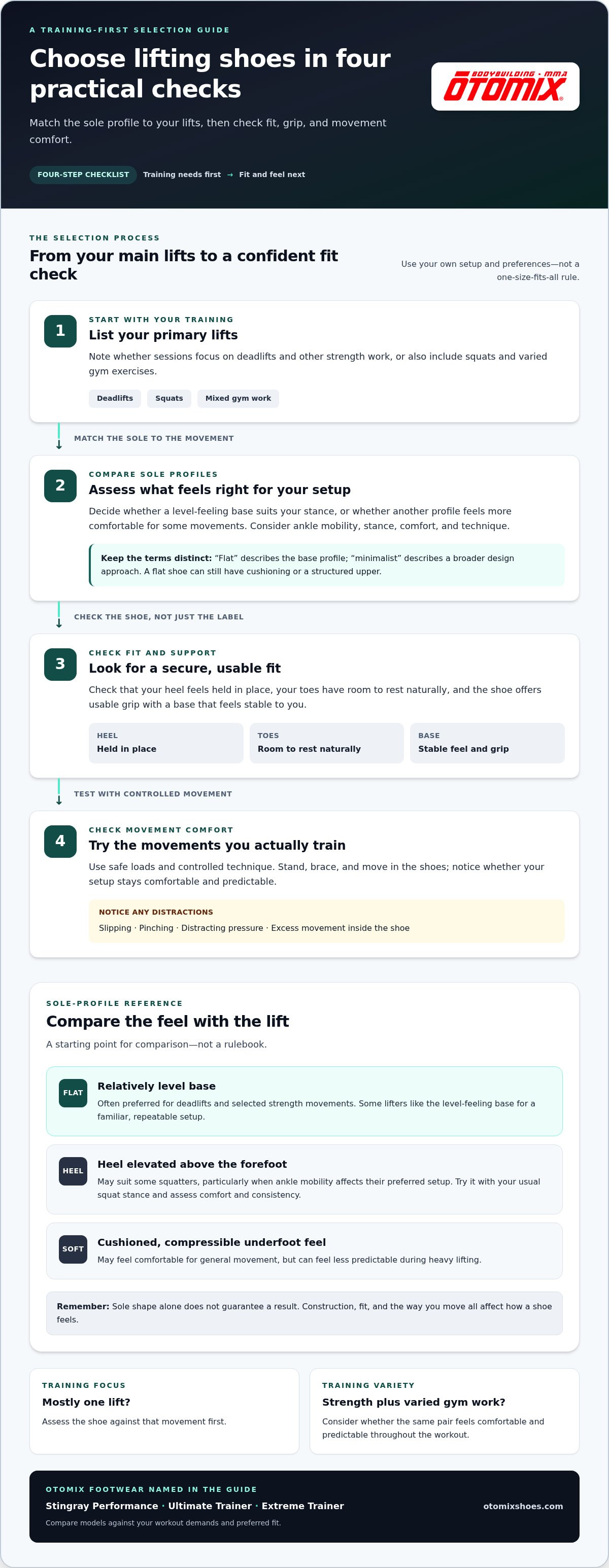
Choose for your training, not appearance alone. Use this four-step checklist to narrow down the right pair of flat sole shoes for lifting:
- List your primary lifts. Note whether your sessions focus on deadlifts and other strength work, or include squats and varied gym exercises.
- Assess your sole preference. Decide whether a level-feeling base suits your stance and setup, or whether you prefer another profile for certain movements.
- Check the fit. Look for secure heel hold, enough room for your toes, usable grip, and a base that feels stable to you.
- Test movement comfort. Try the movements you train with safe loads and controlled technique. Notice any slipping, pinching, or distracting pressure.
Fit and feel checks before committing
Stand, brace, and move in the shoes. Your heel should feel held in place, while your toes have room to rest naturally rather than being squeezed. Check whether the shoe stays comfortable through your setup and the movement, not just while you’re standing still. A secure fit and dependable grip matter more than a label or trend.
One pair for lifting or a dedicated training shoe?
If most of your training centers on one lift, assess the shoe against that movement first. If your sessions move between strength work and varied gym exercises, consider whether the same pair feels comfortable and predictable throughout the workout. Your training priorities can help you decide between a focused lifting shoe and a more versatile training option.
For more selection guidance, read our weightlifting shoes guide and explore the Stingray Performance shoe guide. You can also explore Otomix performance shoes in light of your training priorities.
Explore Otomix lifting shoes through your training priorities
Otomix specializes in footwear for bodybuilding, weightlifting, and gym workouts. Use your training checklist to compare the range, focusing on the movements you do and the fit and feel you want from a shoe.
Compare the confirmed Otomix footwear range
The Otomix range includes Stingray Performance, Ultimate Trainer, and Extreme Trainer. Start with the movements you train and the feel you want from a shoe. Compare the models with your priorities, including fit, comfort, grip, and whether the footwear suits your sessions.
Don’t choose by model name alone. If you’re considering flat sole shoes for lifting, pay attention to the sole profile and overall fit when comparing footwear. Keep the decision grounded in the characteristics that matter to your training and how the shoe feels for your lifts.
Turn your lifting checklist into your next move
Bring the key factors together: your primary lifts, preferred sole feel, secure fit, and whether you train one focused movement or move between exercises. A shoe that suits one lifter’s routine may not match another’s. Compare the Otomix range with your actual sessions and use those priorities to guide your choice.
Ready to put your checklist to work? Explore Otomix performance footwear.
Choose your shoes with confidence and get back to lifting
The right shoe depends on the work you ask it to do. Flat sole shoes for lifting may suit some movements and lifters, while a raised heel or another profile may feel better for different lifts. Let your training priorities lead: consider your main movements, preferred sole feel, fit, and whether you need one pair for varied sessions.
Otomix specializes in footwear for bodybuilding, weightlifting, and gym workouts. Compare the Stingray Performance, Ultimate Trainer, and Extreme Trainer models with your needs, focusing on fit and the demands of your training.
Explore Otomix performance footwear and compare the range with your lifting priorities. Choose a pair that fits comfortably and feels steady through the movements you train.
Frequently Asked Questions
Are flat sole shoes good for lifting?
Flat sole shoes for lifting can suit lifters who prefer a level, stable-feeling base, but they aren’t right for every person or movement. Consider your main lifts, stance, fit, comfort, and technique. For example, a raised heel may feel more suitable for some squat styles. Choose footwear based on how it works for your training, rather than assuming one sole type is always best.
Can you squat in flat sole shoes?
Yes, you can squat in flat-soled shoes. Some lifters prefer them, while others choose raised-heel weightlifting shoes. Your stance, mobility, technique, comfort, and the shoe’s feel under load can all affect your preference. A shoe doesn’t replace a sound setup. Test your chosen footwear with controlled movement and an appropriate load before using it for demanding sets.
Are flat shoes better than weightlifting shoes with a raised heel?
Neither option is better for every lifter or exercise. A flat sole and a raised heel create different underfoot feels and positions. Compare both with your main lifts, mobility, stance, and comfort. If your sessions include several movement types, consider how each shoe feels across the workout instead of choosing one profile based on a blanket rule.
Are flat sole shoes the same as minimalist shoes?
No. “Flat sole” describes the relative level of a shoe’s base, while “minimalist” refers to a broader approach to construction and feel. A shoe can have a flat sole without being barefoot-style or minimally structured. Assess sole profile, flexibility, cushioning, grip, and fit as separate features. Looking beyond labels gives you a clearer picture of what you’re choosing.
How should lifting shoes fit?
Lifting shoes should hold your heel securely and leave comfortable room for your toes, without painful pressure or unwanted movement inside the shoe. Check the fit while standing, then try the movements you train. Sizing and feel can vary between people and models, so don’t assume the same size fits identically in every style. Prioritize comfort and steady footing over appearance.


