

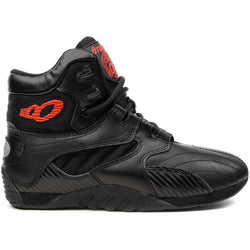
High Top vs. Low Top Lifting Shoes: The 2026 Elite Performance Guide
Your standard low-top trainers might be the exact reason your heavy squat feels shaky! You want that locked-in feel. You're tired of ankle instability when the weight gets heavy. It's frustrating to feel your feet shifting inside a flimsy shoe when you're chasing a PR. Choosing between high top vs low top lifting shoes isn't just about style; it's about engineering the perfect stability floor for your specific discipline. You need gear that matches your intensity! Professional-grade results require professional-grade equipment.
This guide breaks down the critical biomechanical differences to help you maximize stability and crush your performance goals! We'll explore how different heights impact your range of motion. You'll discover how the right ankle support increases your proprioception and floor feel. We're looking at elite-level durability for daily gym abuse. Whether you're eyeing the Stingray Performance for bodybuilding or the Extreme Trainer for maximum support, the right choice changes everything. Stop guessing. Start lifting with professional-grade confidence. Let's get to work!
Key Takeaways
- Master the science of proprioception to sharpen your brain-foot connection. Learn exactly how specific ankle coverage dictates your stability floor!
- Compare high top vs low top lifting shoes to secure that legendary "locked-in" feel for heavy leg days. Discover why lacing above the ankle bone revolutionizes your squat mechanics!
- Unlock maximum ankle dorsiflexion for explosive Olympic movements. Find out when zero restriction is the secret to a faster, more efficient clean and snatch!
- Identify your perfect performance weapon based on your specific training discipline. Get the definitive verdict on which shoe height dominates your lifting style!
The Biomechanics of Shoe Height: Why Your Choice Matters
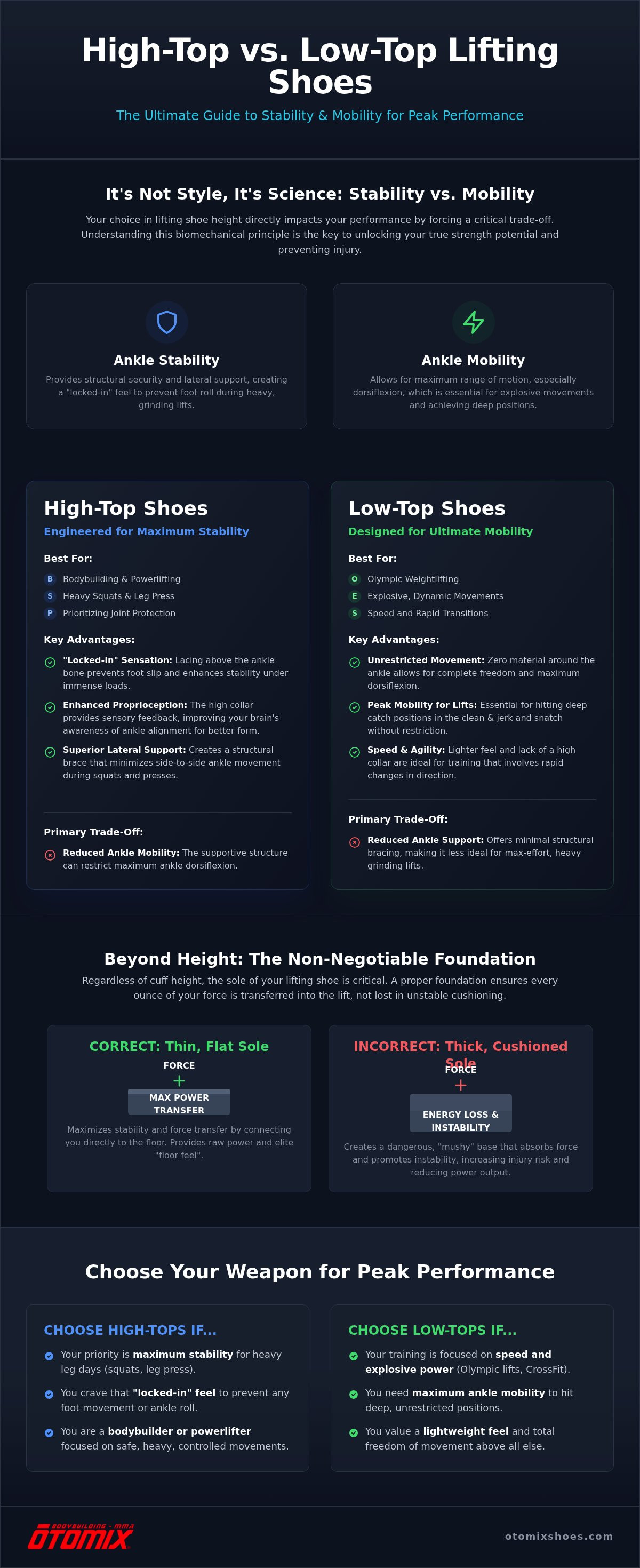
Stop wasting your potential in generic sneakers! The debate of high top vs low top lifting shoes isn't about fashion; it's about pure physics. High-tops wrap above the ankle bone for maximum sensory feedback. Mid-tops offer a balanced hybrid. Low-tops provide total freedom. Serious athletes ditch basic cross-trainers for professional-grade weightlifting shoes because precision matters! It's all about proprioception. When material hugs your ankle, your brain tracks foot position with elite accuracy. This isn't just about mechanical bracing. It's about sensory awareness that keeps your form tight under crushing loads! Get that "locked-in" feel now!
Ankle Mobility vs. Ankle Stability
Don't let your ankles cave! High-tops provide critical lateral support during max-effort squats. They create a structural security that low-tops simply can't match. However, some movements require extreme range. While Olympic weightlifting shoes often prioritize mobility for deep snatches, hardcore bodybuilders crave the stability of a high-top. It's a trade-off between total freedom and absolute security. You must prevent your feet from rolling when the weight gets heavy. Choose your weapon based on your discipline! Get the support you need to dominate the platform and protect your joints. Every rep counts!
The Impact of Sole Thickness
Height is only half the battle! High-top coverage must be paired with flat sole weightlifting shoes for raw power. You need to be close to the floor. Thicker soles create dangerous instability and "mushy" feedback. Thin, flat soles maximize force transfer immediately. You want every ounce of energy going into the bar, not absorbed by cheap foam! Otomix designs like the Stingray Performance deliver that ultra-thin floor feel. Destroy your previous limits with a solid foundation. Demand more from your gear! Elite performance requires elite equipment. Own the floor today!
High Top Lifting Shoes: Maximum Support for Heavy Sets
High-tops are the undisputed kings of the bodybuilding world! When you're moving massive iron on leg day, stability isn't optional. It's a non-negotiable requirement. When analyzing high top vs low top lifting shoes, lacing above the malleolus changes your entire biomechanical profile. You get an immediate "locked-in" sensation that generic low-tops simply cannot provide. This is exactly why the Stingray Performance remains the flagship choice for serious lifters. It's engineered for the professional-grade athlete who demands zero foot slip during brutal hack squats or heavy leg presses. Don't settle for less when your PR is on the line!
Proprioception and Heavy Squats
Don't ignore the science behind the support. While some research on weightlifting shoe claims questions the mechanical bracing of standard footwear, specialized high-tops excel at providing elite sensory feedback. The high collar acts as a constant physical cue for perfect ankle alignment. High-top collars provide a physical reference point against the lower leg that helps athletes maintain a more vertical shin angle during heavy squat descents. This immediate feedback loop prevents dangerous form breakdown when you're deep in the hole! You'll feel the floor better and stay more upright.
The Extreme Trainer Advantage
You need gear that survives the daily grind. The Extreme Trainer offers superior ankle lockdown for the most intense training sessions imaginable. Forget flimsy high-street sneakers that fall apart after a month. You need professional-grade durability that outlasts the competition. In the critical debate of high top vs low top lifting shoes, the high-top is the clear winner for raw stability and safety. It's built for the trenches.
- Maximum lateral support for crushing loads.
- Reinforced construction for relentless gym abuse.
- Total security during explosive leg movements.
Take action now. Secure your pair of bodybuilding high-tops and dominate the platform with confidence!
Low Top Lifting Shoes: Prioritizing Speed and Mobility
Speed is the ultimate weapon! If your training involves explosive power and rapid transitions, you can't have gear holding you back. When comparing high top vs low top lifting shoes, the low-top design is the undisputed champion of mobility. It offers zero restriction for athletes who require maximum ankle dorsiflexion. This is critical for hitting deep catch positions in cleans and snatches. You need your ankles to move freely to stay under the bar. Don't let a heavy collar kill your momentum! Olympic movements demand this specific freedom to ensure elite-level execution every single time.
The debate over high top vs low top lifting shoes often ignores the trade-offs. You will sacrifice some sensory feedback and lateral bracing found in high-tops. It's a choice between pure stability and raw speed. If you need a versatile middle ground, choose the Ultimate Trainer for a high-performance hybrid experience. It bridges the gap perfectly for serious bodybuilders who occasionally need more range. Get the best of both worlds!
Dynamic Movements and Ankle Freedom
Stay agile in the box! Functional fitness and CrossFit athletes lean toward low-tops for a reason. You need to transition from heavy thrusters to box jumps without missing a beat. Low-tops provide the agility required for multi-directional movement. They don't bind your ankle when you're moving at full throttle. Professional-grade performance starts with uninhibited movement. Own your space!
Breathability and Comfort
Keep your cool during high-volume sets! Low-top shoes are often lighter and offer superior airflow. This makes them the perfect "daily driver" for general gym work and cardiovascular sessions. You get the durability you expect without the extra weight. It's about efficiency and comfort during long training sessions. Don't weigh yourself down! Grab your performance gym shoes today and feel the difference in your next workout!
The Verdict: Choosing Your Weapon for Peak Performance
Decision time! You've seen the technical breakdown. Now, choose your weapon. The high top vs low top lifting shoes debate ends with your specific training goals. High-tops dominate the bodybuilding stage. They provide that legendary locked-in feel for massive squats. Low-tops rule the Olympic platform where speed is king. Versatile athletes should look at mid-top hybrids to bridge the gap. Investing in elite gear like the Stingray Performance is a 2026 essential for anyone serious about progress. Don't compromise on your foundation! Professional-grade results require professional-grade equipment. Secure your advantage today!
Exercise-Specific Recommendations
The Otomix Difference
Pros don't gamble with their gear. Elite bodybuilders choose high-top Otomix shoes for competition prep because they demand absolute stability under pressure. Otomix has led the bodybuilding shoe industry since 1989 by engineering specialized footwear that meets the extreme demands of world-class athletes. Join the legacy of champions who refuse to settle for average. Grab your pair and dominate your next session with total confidence!
Your Performance Checklist
- Identify your primary lift type (Power vs. Speed).
- Demand ultra-thin soles for maximum floor feel.
- Check for high-performance, professional-grade materials.
- Ensure a secure, locked-in ankle fit for heavy sets.
- Verify elite-level durability for daily gym abuse.
Dominate the Platform with Elite Performance
Stop guessing about your footwear and start engineering your success! Your decision in the high top vs low top lifting shoes debate determines your stability floor and PR potential. High-tops provide that essential locked-in feel for crushing heavy bodybuilding sessions. Low-tops unlock the explosive mobility required for elite Olympic movements. Don't settle for average trainers that fail under pressure! You need gear that matches your intensity. Every rep counts toward your ultimate physical excellence.
Otomix has led the industry since 1989 with professional-grade engineering. Our shoes feature ultra-thin soles for maximum power transfer and elite floor feel. It's the reason pro bodybuilders worldwide trust Otomix for their most intense competition prep. You deserve specialized durability that survives relentless gym abuse. Take control of your performance right now! Crush your next workout with the Elite Stingray Performance High Tops at Otomix! Get out there and destroy your limits with absolute confidence!
Frequently Asked Questions
Do high top lifting shoes actually provide ankle support?
Yes, they provide critical lateral stability and elite sensory feedback during heavy sets! High-tops wrap the ankle bone to prevent rolling and "caving" under extreme loads. This physical contact creates a proprioceptive loop that keeps your form tight. In the debate of high top vs low top lifting shoes, the high-top is the definitive winner for security. It's about feeling locked-in when the iron gets heavy!
Are low top shoes better for squats if I have poor ankle mobility?
Low-tops offer zero restriction for your range of motion! If you struggle with ankle dorsiflexion, the lack of a high collar helps you move through a full depth without interference. However, mobility issues often require specialized heel height rather than just a lower cut. If you need speed and total freedom, low-tops are your best bet. Demand better movement and stop letting your gear limit your depth!
Can I use high top basketball shoes for weightlifting?
No, basketball shoes are a dangerous choice for heavy lifting! They're engineered with thick air pockets and foam designed for impact absorption. This cushioning creates a "mushy" foundation that causes instability under a loaded barbell. You need ultra-thin, non-compressible soles like those found in professional gear. Professional-grade results require specialized equipment. Don't gamble with your safety on a squishy sole! Get the right tools now!
What are the best shoes for deadlifting: high or low top?
High-tops are the superior choice for maximum lateral bracing and ankle security! While thin soles are the most critical factor for force transfer, the high-top design ensures your foot doesn't shift during the pull. In the debate of high top vs low top lifting shoes, the high-top offers that legendary "locked-in" feel. It provides a solid structural foundation that helps you rip the bar off the floor with total confidence!
How tight should I lace my high top gym shoes for maximum performance?
Lace them tight enough to eliminate all internal foot movement! You want a secure lockdown that feels like a second skin. Start firm at the midfoot and maintain that tension through the high collar. This ensures the material provides constant sensory feedback against your ankle. Don't cut off your circulation, but don't leave them loose. Elite performance requires a precise fit to maximize your stability and power! Take action now!


