

Lifting Barefoot vs. Shoes: The Elite Guide to Maximize Your Gains
What if the "natural" barefoot trend is actually the single biggest roadblock between you and your next massive PR? You want the raw floor feel and the sensory feedback of 104 mechanoreceptors per square centimeter. But commercial gym floors are slick and your ankles are wobbling under the load. It's time to settle the debate of lifting barefoot vs shoes once and for all. Stop sacrificing your mechanical leverage. Don't let a trend hold your gains hostage!
You know that stability is the foundation of every elite lift. We're going to bridge the gap between that "connected" barefoot sensation and the professional-grade support your body demands. Discover the critical mechanical differences. Unlock your true lifting potential. Stay legal on the platform. We're breaking down the science of ground reaction force, the reality of ankle dorsiflexion, and why specialized gear like the Stingray Performance provides the ultimate edge. Get ready to dominate the rack with total confidence and professional-grade stability!
Key Takeaways
- Feel the floor and spike your proprioception instantly. Discover why thin-sole engineering is the only way to maximize sensory feedback without losing force to squishy running shoes!
- Stop wasting energy on compressible foam. Rigid, professional-grade soles drive 100% of your power into the platform for immediate PR gains!
- Analyze the critical stability gap when lifting barefoot vs shoes to understand why high-top lockdown is mandatory for heavy squats.
- Master the elite strategy of using barefoot mechanics for warm-ups while switching to professional gear like the Stingray Performance for your heaviest working sets!
Lifting Barefoot vs. Shoes: The Science of Sensory Feedback
Your feet are the only contact point between your body and the platform. The debate over lifting barefoot vs shoes isn't just about comfort; it's about neural drive. Barefoot training ignites the nervous system and activates intrinsic foot muscles instantly. You need that raw connection to maximize your output. However, commercial gym floors are a breeding ground for bacteria and grime. You need a professional barrier that protects your health without dampening your power.
To better understand the biomechanics of this choice, watch this expert analysis:
The Proprioception Advantage
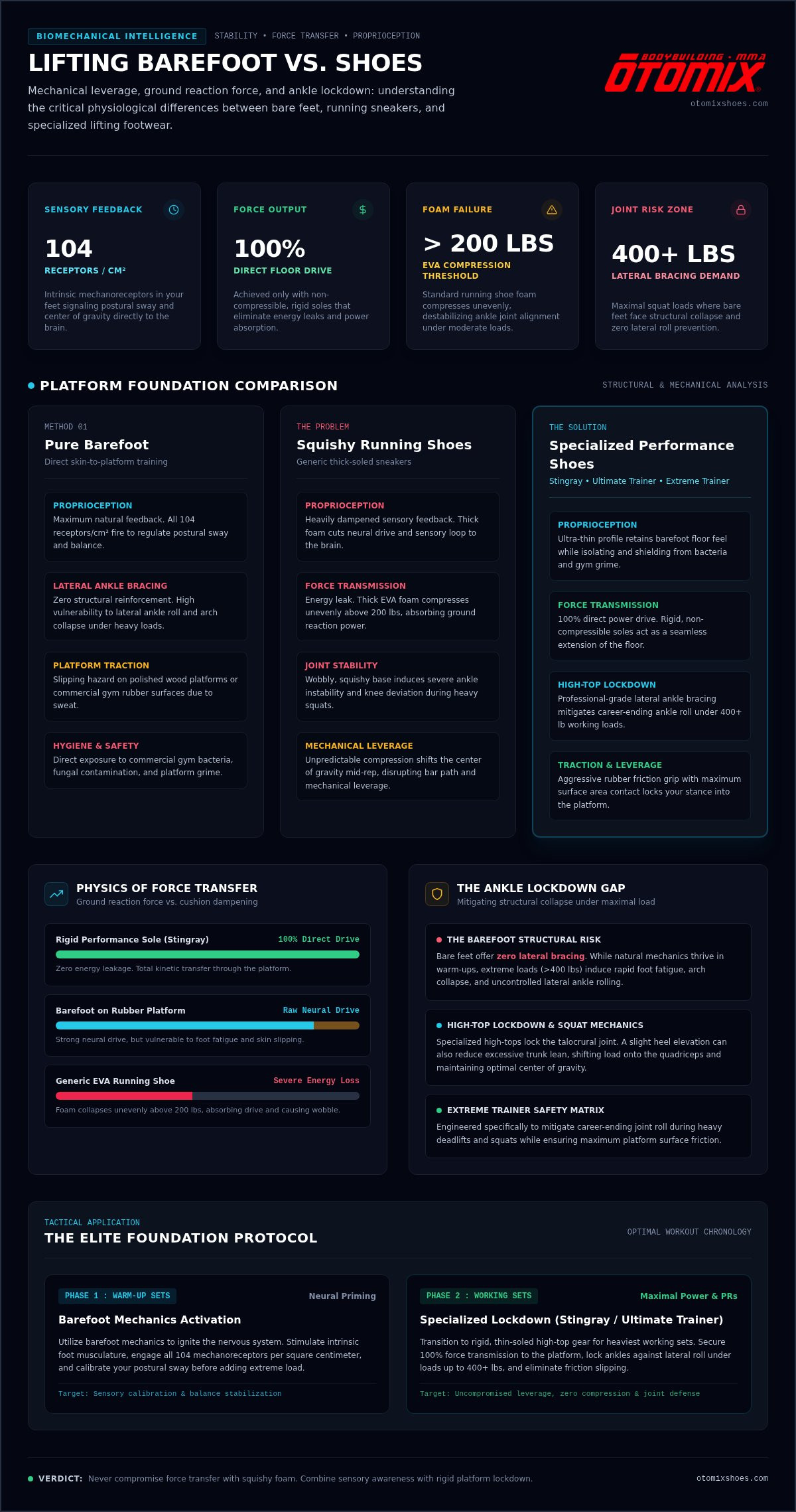
Proprioception is the body's ability to sense movement and position. Your feet contain over 104 mechanoreceptors per square centimeter. These receptors provide vital sensory feedback and proprioception to your brain. This data loop regulates balance and postural sway during heavy sets. Direct floor contact keeps your center of gravity locked in. It ensures your nervous system is fully engaged for every rep.
The Danger of Squishy Soles
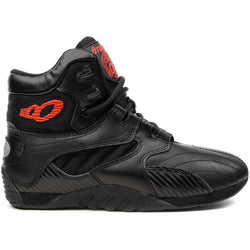
Running shoes are the ultimate enemy of stability. Standard sneakers use thick EVA foam that compresses unevenly under loads exceeding 200 lbs. This creates massive energy leaks and kills your force transfer. Your ankles wobble because the base is unstable. It's a recipe for injury. Ditch the generic trainers. Switch to a solid performance base like the Stingray Performance. You'll get the thin-sole floor feel you crave with the high-top support your ankles demand. Don't leave your gains to chance!
Mechanical Leverage: Why Specialized Shoes Win on Heavy Sets
When the iron gets heavy, physics takes over. The debate of lifting barefoot vs shoes often ignores pure mechanical output. Specialized soles don't compress. They drive 100% of your power directly into the floor! Running shoes fail because they absorb energy; specialized boots succeed because they act as an extension of the floor. You need that direct drive for a PR. No energy leaks. No wasted movement. Just pure, unadulterated force transfer.
Optimizing the Squat and Deadlift
High-performance weightlifting shoes drastically improve your center of gravity. While barefoot skin often slips on wooden platforms or commercial rubber, specialized rubber outsoles provide aggressive friction. Locking in your stance is non-negotiable for maximum drive. A slight heel elevation can actually save your squat form by reducing trunk lean and shifting the load to your quads. Don't let a slippery foot position kill your PR attempt.
Thin Soles vs. Total Barefoot
The Ultimate Trainer offers the best floor feel without the structural risk. Total barefoot lifting can lead to rapid foot fatigue and arch collapse under extreme loading. You need a rigid base that protects the foot's anatomy. The Stingray Performance provides that elite support while maintaining an ultra-thin profile. It is the ultimate blend of barefoot contact and high-top lockdown.
Maximum surface area contact ensures you never lose your footing. Every millimeter of the sole is designed to grip. Elite lifters don't guess. They use gear that guarantees stability. This is professional-grade engineering for serious practitioners. Stop compromising. Get the support you need to crush your goals. Check out our elite bodybuilding footwear to unlock your true potential!
Ankle Support: The Missing Link in the Barefoot Debate
Ankle stability is the bedrock of every heavy leg day. Don't leave your structural integrity to chance! While proponents of lifting barefoot vs shoes claim natural movement is superior, they often ignore the reality of maximal loads. Bare feet offer zero lateral bracing. When you're under 400 lbs or more, your joints need more than "natural" mechanics. High-top gym shoes provide a level of lockdown that bare skin simply cannot match!
Preventing Injury Under Maximal Load
Lateral ankle roll is a career-killer. The Extreme Trainer advantage lies in its ability to mitigate this risk through reinforced high-top construction. This isn't just about comfort; it's about survival at the limit. Rigid ankle lockdown significantly improves knee tracking by preventing the foot from collapsing inward during the drive phase. This is why professional-grade women's bodybuilding shoes are essential for maintaining perfect form under extreme pressure.
The Psychology of Lockdown
There is a powerful "Cast Effect" when you lace up a high-performance boot. Feeling secure leads to more aggressive lifting. When your ankles are locked in, your brain stops worrying about stability and starts focusing entirely on force production. A secure fit translates to higher confidence on the platform. This is the secret of the world's top pros. They choose high-tops to forge a deeper mind-muscle connection and eliminate distractions. Stop wobbling. Start dominating. Secure your foundation today when you shop elite weightlifting high-tops now!
The Verdict: How to Choose Your Performance Foundation
The battle of lifting barefoot vs shoes ends here. Barefoot training has a place in your warm-up routine. It wakes up your nervous system and improves mobility. But when the heavy iron comes out, you need professional protection. Axial loading requires elite stability. High-top support is non-negotiable for heavy squats and presses! You want the raw floor contact of a barefoot feel without the filth of a public gym floor. Choose the bridge between natural movement and mechanical leverage.
The Otomix Performance Kit
The Stingray Performance is the definitive choice for elite athletes. We've defined the industry standard since 1989! These are specialized performance tools built for maximum durability. Specialized gym shoes outlast minimalist alternatives because they are engineered to handle extreme lateral force. They don't shred under pressure. They don't slip. GET YOUR PAIR NOW! Stop letting your gear dictate your limits!
Final Checklist for Gym Footwear
Demand more from your equipment. Before your next PR attempt, run this checklist to ensure your gear is up to the task:
- Sole Thickness: Keep it thin. You need to feel the platform to maximize force!
- Ankle Height: High-tops only for maximum lockdown and structural safety.
- Material: Lightweight and breathable to keep you focused under tension.
Transition safely from barefoot by wearing your shoes during accessory movements first. Build total trust in the stability. Move to your heavy compounds once you feel the lockdown advantage. Elevate your performance. Join the elite. Choose the pro-standard footwear today and crush your next leg day with total confidence!
Master Your Performance Foundation
Your journey to elite strength starts from the ground up. We've analyzed the critical mechanics of lifting barefoot vs shoes to prove why professional gear is non-negotiable. Barefoot movement offers sensory feedback; specialized footwear delivers the mechanical leverage and ankle lockdown required for your heaviest sets. Stop sacrificing power to squishy running shoes or unstable bare feet. You need a rigid, professional-grade base that drives every ounce of energy into the platform!
Otomix has been the undisputed choice of professional bodybuilders since 1989. Our legendary thin-sole technology provides the raw floor feel you crave while our high-top designs offer elite ankle support for total security. Don't let inferior equipment hold back your gains. Secure your stability. Protect your structural integrity. Elevate your performance to the professional standard today!
CRUSH YOUR PRs WITH OTOMIX PERFORMANCE GEAR!
Go out there and dominate your next session. You've got the facts. Now get the gear. Your next massive PR is just one set away!
Frequently Asked Questions
Is it better to squat barefoot or in shoes?
Specialized shoes are superior for heavy squats because they provide the mechanical leverage and ankle lockdown bare feet lack. Barefoot squatting can improve proprioception during warm-ups, but maximal loads require a rigid base to prevent lateral ankle roll. Using a high-top boot like the Extreme Trainer ensures your center of gravity stays locked while shifting the load to your quads for explosive PR gains!
Do deadlift shoes actually help you lift more weight?
Yes, deadlift shoes help you lift more by reducing the distance the bar travels and maximizing force transfer. Transitioning from standard sneakers to thin-sole shoes like the Ultimate Trainer can reduce bar displacement by 0.6 to 1.1 inches. This decrease in mechanical work allows you to achieve lockout faster. When debating lifting barefoot vs shoes, remember that specialized rubber outsoles provide the aggressive grip skin lacks!
Why do some gyms ban barefoot lifting?
Commercial gyms ban barefoot training primarily due to liability, hygiene, and safety codes. Walking barefoot violates membership agreements citing risks of dropped weights, skin pathogens like MRSA, and debris. Operators mandate enclosed, closed-toe athletic footwear to protect you and their facility. You need a professional barrier like the Stingray Performance that mimics the barefoot feel while keeping you fully compliant with strict corporate safety standards!
Can I use wrestling shoes for bodybuilding and weightlifting?
You can use wrestling shoes, but they often lack the durability and specialized lockdown required for heavy lifting. While they offer a thin sole, they aren't engineered for the extreme lateral forces of a 400 lb squat. Specialized gear like our Extreme Trainer is built specifically for the gym. It provides the high-top ankle support and non-compressible base that wrestling shoes simply can't maintain under maximal axial loading!
What is the best shoe for someone who likes the barefoot feel?
The Stingray Performance is the ultimate choice for lifters who crave the barefoot feel without sacrificing professional support. It features an ultra-thin sole that maximizes floor contact and sensory feedback. You get the 104 mechanoreceptors per square centimeter firing while high-top construction locks your ankle in place. It’s the pro-standard bridge between natural movement and elite mechanical leverage that has dominated the industry since 1989!


