

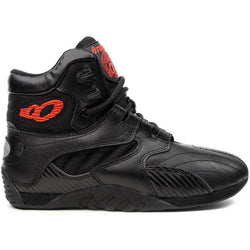
Lifting Shoes for Knee Pain: How to Choose in 2026
A raised heel can make a deeper squat easier for some lifters, but it can also shift more demand toward the knees. So the best shoes to help with knee pain when lifting aren’t necessarily the softest or most elevated pair. If your knees ache during squats or other lifts, it’s reasonable to question your footwear, especially if cushioned running shoes feel unstable under load.
Shoes can influence your lifting setup, but they can’t diagnose an injury or promise pain relief. The right choice depends on your main lifts, ankle mobility, preferred stance, and how stable the shoe feels. This guide breaks down the trade-offs between raised-heel lifting shoes, flatter training shoes, and softer athletic footwear, so you can compare options without mistaking gear for treatment.
Otomix has specialized in performance footwear for bodybuilding, weightlifting, and gym workouts since 1989. Its options include Stingray Performance, Ultimate Trainer, and Extreme Trainer. We’ll cover what footwear can and can’t change, how to choose for your training, and when persistent discomfort calls for assessment by a qualified professional.
Key Takeaways
- Learn what footwear can change during a lift, and why shoes alone can’t identify or treat the cause of knee discomfort.
- Compare firm, stable shoes with softer, cushioned options to see which may suit your lifts and personal comfort.
- Use a consistent test: check the fit, warm up with controlled sets, and track how each pair feels. Change one variable at a time.
- Explore shoes to help with knee pain when lifting by comparing training options, including Otomix Stingray Performance, Ultimate Trainer, and Extreme Trainer, against your lifting priorities.
Can Shoes Help with Knee Pain When Lifting? Start with What Footwear Can Change
Searching for shoes to help with knee pain when lifting? Start with a clear limit: footwear changes how your feet contact and feel against the training surface. A shoe may feel firmer, softer, higher, or flatter underfoot. That can change your lifting experience, but it can’t reveal why your knee hurts or treat the underlying cause.
Knee discomfort can have different causes, and the same shoe won’t suit every lifter. A pattern related to one movement or pair of shoes can help guide a comparison, not establish a diagnosis. A footwear choice can change your setup; only qualified clinical assessment can evaluate what may be causing persistent or concerning pain. The Knee pain overview describes the range of possible causes and approaches to management.
For a broader look at footwear and knee discomfort, watch this video:
When a footwear change is worth considering
Look for a repeatable pattern. Does discomfort show up during squats but not deadlifts? Does it change when you train on a different surface, or when you switch from a cushioned shoe to a firmer pair? Note the lift, footwear, surface, and when discomfort starts. These details can help you compare shoes under similar conditions. They can’t tell you what’s wrong with your knee.
When to pause lifting and seek qualified guidance
Don’t keep testing footwear through persistent, worsening, or concerning symptoms. Pause the lifts that aggravate discomfort and seek assessment from a qualified healthcare professional. A shoe change may be one equipment adjustment to consider, but it isn’t a substitute for clinical care. If symptoms make you uncertain about continuing, get guidance before pushing the load or range of motion.
Lifting Shoes for Knee Discomfort: Compare Stability, Cushioning, and Lift Type
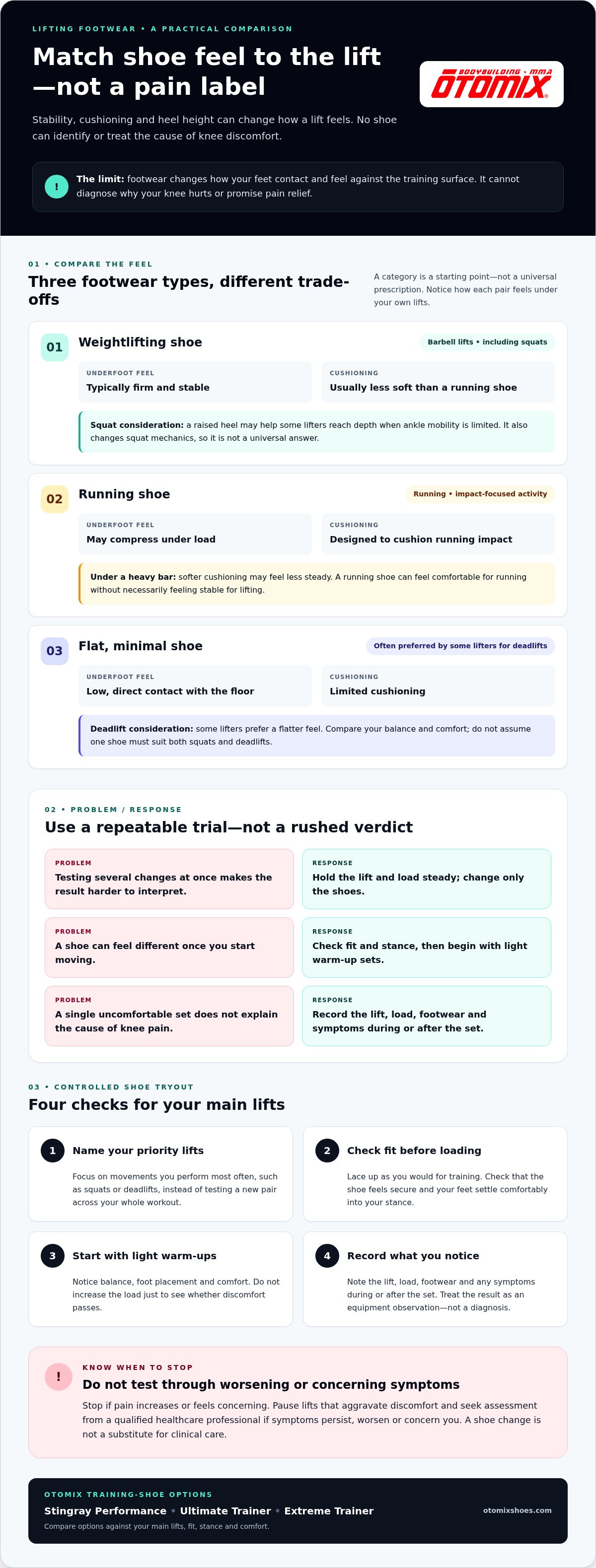
The best shoes to help with knee pain when lifting aren’t defined by a pain-relief label. Compare how the shoe feels under load, how much cushioning it has, and whether it suits the movement. A running shoe built for repeated impact may feel different from a firmer lifting shoe, but neither is automatically right for every lifter.
| Footwear type | Underfoot feel | Cushioning | Common training use |
|---|---|---|---|
| Weightlifting shoe | Typically firm and stable | Usually less soft than a running shoe | Barbell lifts, including squats |
| Running shoe | May compress under load | Designed to cushion running impact | Running and other impact-focused activity |
| Flat, minimal shoe | Low and direct contact with the floor | Limited cushioning | Often preferred by some lifters for deadlifts |
What to consider for squats and deadlifts
During squats, notice whether you can keep your balance and maintain comfortable foot contact through the descent and drive up. A raised heel may help some lifters reach depth when ankle mobility is limited, but it also changes squat mechanics and isn’t a universal answer. For deadlifts, some lifters prefer a flatter feel. Compare your own balance and comfort in each lift; don’t assume one shoe must suit both.
Running shoes are made for a different task. Softer cushioning can feel comfortable while running, yet may compress under a heavy bar and feel less steady. CNN’s footwear roundup includes a gym shoe associated with balance while lifting, useful context rather than a universal prescription. Your movement, fit, and comfort matter more than a category label. For more on lifting-specific footwear, explore this weightlifting shoes guide, then compare options such as Otomix training shoes against your main lifts and preferences.
How to Choose and Test Shoes for Knee Pain When Lifting
Choose with a repeatable trial, not a rushed verdict. A simple log can help you compare how footwear feels during your usual lifts, but it can’t explain what’s causing discomfort. Keep the trial controlled and treat the result as an equipment observation, not a diagnosis. If knee pain persists, worsens, or concerns you, pause self-testing and seek guidance from a qualified healthcare professional.
A controlled shoe tryout for your main lifts
- Name your priority lifts. Focus on the movements you perform most often, such as squats or deadlifts, instead of testing a new pair across your entire workout.
- Check fit before loading. Lace up as you would for training. Make sure the shoe feels secure and your feet can settle comfortably into your stance.
- Begin with light warm-up sets. Notice your balance, foot placement, and comfort during the movement. Don’t increase the load just to see whether discomfort passes.
- Record the details. Note the lift, load, footwear, and any symptoms during or after the set. Stop if pain increases or feels concerning.
Keep a footwear trial cautious: hold the lift and load steady, change only the shoes, start light, track how you feel, and stop if symptoms worsen. Comparing one change at a time makes your observations easier to interpret. It still won’t identify the cause of pain or replace clinical assessment.
Questions to ask before choosing a pair
Does the shoe suit the lifts and sessions you do most? Does it feel stable and comfortable without relying on a pain-relief promise? A pair can feel fine while standing and different once you move, so test it with controlled practice. Compare Otomix’s Stingray Performance, Ultimate Trainer, and Extreme Trainer as training-shoe options against your priorities. Explore Otomix training shoes as you narrow your choice.
Otomix Training Shoes: Match a Model to Your Lifting Priorities
Otomix has specialized in performance footwear for bodybuilding, weightlifting, and gym workouts since 1989. If you’re comparing shoes to help with knee pain when lifting, treat each model as a training-shoe option, not a promised fix for discomfort. Start with what you do in the gym, then consider how a pair fits and feels during your own lifting routine.
Compare Otomix models against your training routine
The Stingray Performance, Ultimate Trainer, and Extreme Trainer are options to explore for lifting and gym training. Rather than assuming one is best for squats, deadlifts, or knee comfort, use the same practical questions for each:
- Does the model fit the lifts and training sessions you perform most often?
- Does your foot feel secure and comfortable in your usual stance?
- Can you move through controlled warm-up sets without feeling unstable or distracted by the fit?
These observations can help you compare footwear based on your priorities. They can’t predict a medical outcome. A comfortable fit is a useful equipment consideration, not evidence that a shoe will relieve or prevent knee pain. For a closer look at one option, the Stingray Performance guide provides more information about that model.
Take the next step with a lifting-specific shoe choice
Keep the decision focused. Identify your main lifts, compare how each candidate fits your training routine, and use light, controlled sets to assess comfort before progressing. If symptoms continue or worsen, don’t treat a different pair as a substitute for qualified medical guidance. Footwear selection and assessment of knee discomfort are separate decisions.
Ready to compare options for your gym routine? Explore Otomix training shoes and consider which model aligns with the way you train.
Make Your Next Training Decision With Confidence
Your next step doesn’t need to be a dramatic change. Choose one footwear option to evaluate, keep your training conditions steady, and pay attention to whether it feels suitable for your routine. The goal isn’t to find a shoe that promises pain relief. It’s to make a considered equipment choice while staying alert to what your body is telling you.
If knee discomfort persists, worsens, or concerns you, pause the footwear experiment and seek qualified assessment. A shoe can be part of your setup, but it can’t replace care for symptoms that need attention. Keep your training decision and your health decision in the right lane.
Ready to compare shoes to help with knee pain when lifting against your gym priorities? Explore Otomix performance training shoes and choose your next pair with purpose. Train thoughtfully, stay responsive, and keep moving toward your goals.
Frequently Asked Questions
Can lifting shoes reduce knee pain?
They may change how a lift feels, but lifting shoes can’t be relied on to reduce knee pain or reveal its cause. If discomfort appears only with a certain pair or setup, note that pattern and avoid treating it as proof the shoe is responsible. A short, controlled comparison may inform your footwear choice. Persistent, worsening, or concerning symptoms deserve assessment from a qualified healthcare professional.
Are running shoes a good choice for weightlifting if my knees hurt?
They may work for some lifters, but comfort during a run doesn’t guarantee a secure feel under a barbell. For example, notice whether the shoe feels compressed or distracting as you brace and stand from a light squat. Test your current pair carefully before deciding it’s unsuitable, and don’t choose extra cushioning on the assumption it will ease knee discomfort.
Should I stop squatting if my knee hurts?
Stop or reduce the squat if pain sharpens, worsens, or feels concerning; don’t force another set to test your tolerance. If symptoms persist or interfere with training, seek guidance from a qualified healthcare professional. Until you have a clearer next step, avoid repeatedly provoking the discomfort with heavier loads. A shoe change alone can’t determine whether it’s appropriate to return to squatting.
Can I use one pair of shoes for squats and deadlifts?
Yes, one pair may suit both lifts if it feels comfortable and stable for your movement and stance in each. Test squats and deadlifts separately, since a shoe that feels natural in one setup may feel awkward in the other. Keep loads controlled as you assess it. If discomfort increases or the fit distracts you, stop using that setup and reassess your options.


