

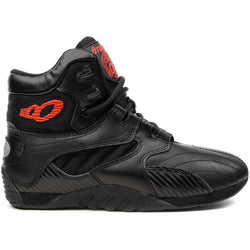
Squat Shoes vs. Deadlift Shoes: The 2026 Elite Performance Comparison
Your generic running shoes are a liability that's actively killing your progress and inviting injury. You've felt that terrifying wobble of unstable ankles during a heavy squat. You've experienced the loss of power when your feet can't find solid ground during a max deadlift. It's frustrating. It's dangerous. Most lifters settle for "good enough" gear and wonder why their numbers plateau. Stop training like an amateur. Start building your foundation on professional-grade equipment that demands respect on the platform.
You probably want to know if one elite trainer can do it all, but the mechanical reality of squat shoes vs deadlift shoes proves that specialization is the key to peak performance. This 2026 elite comparison reveals exactly how technical specs like 20mm heel elevations or 3.3mm ultra-thin soles dictate your total power output. We'll explore how specialized footwear like the Stingray Performance or the Ultimate Trainer can transform your stability and force transfer. You're about to learn how to choose the right tools to crush your PRs and maintain a cohesive, professional athlete appearance. Get ready to dominate.
Key Takeaways
- Master the mechanical edge of the Stingray Performance and Ultimate Trainer to maximize force transfer. Learn why professional-grade heel heights drive superior lifting mechanics!
- Resolve the squat shoes vs deadlift shoes debate by understanding how a 20mm drop versus a flat sole impacts your center of gravity. Stop guessing and start lifting with elite precision!
- Identify your mobility gaps to choose the perfect footwear weapon for deep squats or aggressive floor pulls. Unlock massive PRs with specialized gear that demands results!
- Complete your elite gym look with high-performance Lycra tops designed for total range of motion. Elevate your presence while dominating your heaviest training blocks!
Squat Shoes vs. Deadlift Shoes: Understanding the Mechanical Edge
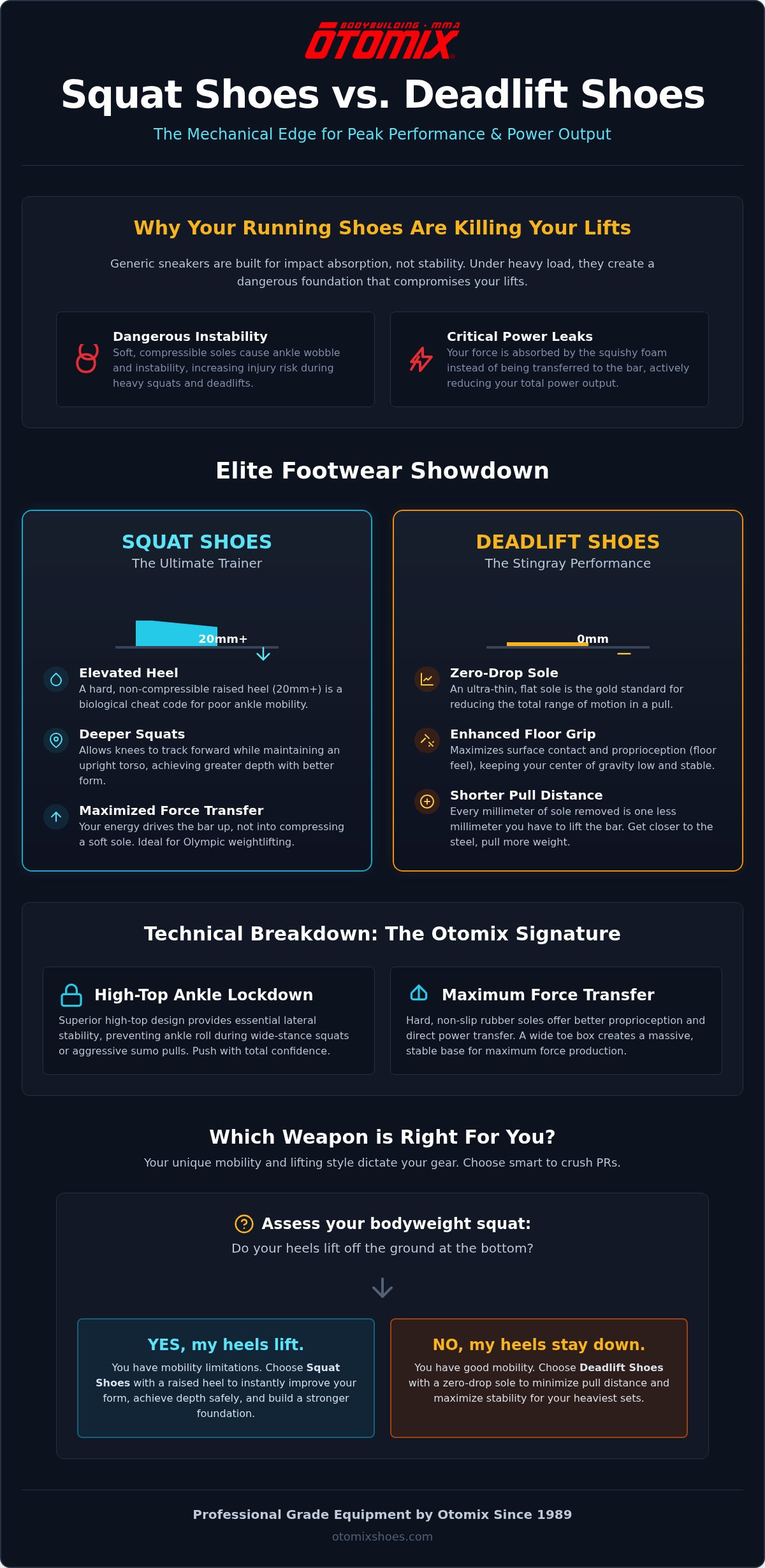
Stop wasting your strength in squishy running shoes! Regular sneakers are built for impact, not for moving massive weight. They compress under load, causing power leaks and dangerous instability. The decision between squat shoes vs deadlift shoes comes down to pure physics. You need specialized foundations to unlock your true potential. One shoe pushes you deeper; the other brings the floor to you. Choose wrong, and you're leaving PRs on the table.
The Science of the Squat Heel
Raised heels are a biological cheat code for ankle mobility. They allow your knees to track forward while keeping your torso vertical. This is why specialized soles are critical in Olympic weightlifting equipment. Effective heel height is the distance from the floor to the top of the heel wedge. Unlike foam, these hard soles provide instant force transfer. Your energy goes into the bar, not the floor! The Ultimate Trainer delivers this exact specialization for deep, heavy reps.
Deadlift Dynamics: Why Thin is King
Deadlifting requires a different strategy. You want to reduce the range of motion as much as possible. Every millimeter of sole thickness is another millimeter you have to pull. Zero-drop, ultra-thin soles are the gold standard here. They maximize floor grip and keep your center of gravity low. Use the Stingray Performance to stay glued to the platform. It's the king of bodybuilding shoes! Get closer to the steel. Pull more weight. It's that simple!
Otomix has set the industry standard since 1989. Our hybrid approach bridges the gap for serious athletes. We provide the ankle lockdown you need for squats and the thin-sole contact required for deadlifts. Mastering the choice between squat shoes vs deadlift shoes is the first step toward elite performance. Don't look like an amateur. Upgrade your foundation now!
Key Feature Showdown: Heel Drop, Sole Grip, and Ankle Lockdown
The foundation of your lift determines your success. You can't build a skyscraper on sand. Comparing squat shoes vs deadlift shoes means looking at the technical specs that matter most to elite athletes. Squat shoes demand a 20mm+ heel drop to force you into the hole with perfect form. Deadlift shoes require a 0mm drop to keep you grounded and reduce the pull distance. Mastering the squat shoes vs deadlift shoes debate is about more than preference; it's about mechanical advantage. Don't settle for cheap sneakers that shred after one heavy session. You need professional-grade materials built for the grind.
High-Top Support: The Otomix Signature
Low-top slippers are for amateurs. They offer zero support for heavy eccentric control. The Ultimate Trainer provides superior ankle lockdown that minimalist slippers simply can't match. This high-top design ensures essential lateral stability. It prevents your feet from caving during heavy wide-stance squats or aggressive sumo pulls. Stop risking a rolled ankle on a max effort set. Lock your feet in and push with total confidence!
Sole Performance: Traction and Force
Floor feel is everything. A technical breakdown of thin soles reveals better proprioception and force transfer. Research on the biomechanical effects of footwear on deadlifts shows how shoe choice directly alters your leverage and power output. You need a wide toe box to splay your toes naturally. This creates a massive, stable base for maximum force production. Non-slip rubber is mandatory for heavy leg days. It keeps you glued to the platform when the weight gets real.
Your gear should match your intensity. Durability isn't an option; it's a requirement for serious practitioners. Invest in footwear that outlasts the competition and supports your growth. Complete your elite performance kit with professional-grade gym tops for a look that commands respect in any facility. Demand more from your equipment. Dominate every single set.
Choosing Your Weapon: Mobility vs. Power Output
Assess your mobility before stepping under the bar! If your heels lift during a deep squat, you're bleeding power and risking your spine. This is the moment the squat shoes vs deadlift shoes debate becomes personal. Your specific goals dictate your gear. Bodybuilders chasing quad hypertrophy need different leverage than powerlifters grinding out a max pull. Don't let poor equipment choices stall your progress. Choose the weapon that matches your mechanics!
The Case for the Dedicated Squat Shoe
Use specialized weightlifting shoes when depth is non-negotiable. These are essential for Olympic movements like cleans and snatches. A raised heel shifts your geometry, allowing for maximum quad recruitment and a rock-solid upright torso. It's about precision. It's about dominance. If you want massive legs, you need the mechanical advantage of a lifter!
The Case for Flat-Sole Deadlifting
Sumo pullers and conventional deadlifters both thrive on a flat base. A zero-drop sole provides the ultimate stability for accessory work like lunges and leg presses. It keeps your weight distributed across the entire foot, preventing the forward tilt that ruins a heavy pull. For those who want a "one-shoe" solution for the entire session, a hybrid trainer like the Ultimate Trainer bridges the gap perfectly.
Keep your gear in peak condition! Learn how to clean weightlifting shoes to ensure your grip stays at 100% on the platform. Performance is a total-body commitment. Match your elite footwear with professional-grade gym tops to ensure you have the range of motion required for world-class results. Stop settling. Start winning!
Complete the Pro Look: Buying Guide for Lycra Tops
Performance doesn't stop at your feet! You've already mastered the foundation by navigating the squat shoes vs deadlift shoes debate. Now, focus on the rest of your kit. Baggy shirts are a liability. They hide your form and snag on the bar during explosive movements. Gear up with high-stretch Lycra for maximum range of motion! Lycra and Supplex blends are the gold standard for moisture-wicking and comfort. Elite aesthetics lead to elite results. Look like a pro to train like a pro!
Top Picks for Women: Style Meets Intensity
- Purple Wing Workout Cami (USD 15.95): This micro-poly yoga mystic tank features a built-in bra for ultimate gym support. It's designed for athletes who demand high-performance functionality.
- Butterfly Cami Workout Top (USD 12.88): Experience a criss-cross strap design in a premium Supplex/Lycra blend. It provides full coverage and breathable comfort during your heaviest sets.
- Stone Buddha Workout Cami (USD 6.99): Get incredible value with this meditation-style tank. It's tough enough to handle high-intensity training while maintaining a sleek, focused look.
Versatile Performance Gear
Your squat shoes vs deadlift shoes choice provides the power, but these pieces provide the versatility. The Sash Pant (USD 9.99) offers a designer look in a cotton/spandex blend. It's flattering for the gym or casual wear. For those who prefer a sleeve while crushing PRs, the Yoga Short Sleeve Top (USD 22.0) delivers a butter-soft feel with professional durability.
Don't settle for average. Your dedication deserves gear that works as hard as you do. Every piece in your gym bag should serve a purpose. Shop the full Lycra Tops Collection and upgrade your gym game today!
Master Your Foundation and Dominate the Platform
Your foundation is non-negotiable. You now understand the mechanical reality of squat shoes vs deadlift shoes. Don't settle for average results ever again. Whether you need a 20mm heel for deep squats or an ultra-thin sole for max pulls, specialized gear is mandatory. Otomix has been the industry standard since 1989. We engineer professional-grade gear for elite athletes who demand excellence in every lift. Stop letting generic footwear kill your momentum and start building your legacy today!
Peak performance requires a total-body commitment to quality. Elevate your presence with high-performance Supplex and Lycra materials designed to handle your highest intensity training blocks. You have the knowledge. Now take action and look like a champion on the gym floor. Crush Your Next Session: Shop Lycra Tops Now! Your journey to the top demands the best equipment. Go out there. Stay locked in. Dominate every single rep!
Frequently Asked Questions
Can I squat in deadlift shoes if I have good mobility?
Yes, you can squat in flat deadlift shoes if your ankle mobility allows for full depth without your heels lifting from the platform. Many elite powerlifters prefer this flat-sole approach to maintain a consistent center of gravity during heavy sets. However, most bodybuilders benefit from the mechanical advantage of a raised heel. If you struggle with depth, switch to the Ultimate Trainer immediately. Don't sacrifice your form for a flat sole!
Why do squat shoes have a raised heel?
Squat shoes feature a raised heel to reduce the required range of motion at the ankle joint instantly. This allows your knees to track further forward while keeping your torso upright. It's a technical edge that maximizes quad recruitment and prevents lower back rounding. When comparing squat shoes vs deadlift shoes, the heel height is the primary differentiator for achieving elite depth and stability!
Are high-top gym shoes better than low-tops for lifting?
High-top gym shoes are superior for heavy lifting because they provide critical lateral stability and ankle lockdown. Low-top slippers offer zero support during the eccentric phase of a heavy lift. Models like the Extreme Trainer ensure your feet stay glued to the floor without rolling. Stop risking injury with flimsy footwear. Lock your ankles in and push with total confidence on every max effort set!
Should I buy squat shoes or deadlift shoes first?
Prioritize the shoe that addresses your biggest weakness first. If you struggle with squat depth or torso uprightness, buy the Ultimate Trainer today. If you need a thinner sole to reduce your deadlift range of motion, go for the Stingray Performance. Most serious practitioners eventually own both pairs. Understanding squat shoes vs deadlift shoes is essential for building a professional-grade kit that supports every major lift!
What is the best material for workout tops to prevent sweat buildup?
High-performance Supplex and Lycra blends are the gold standard for managing intense sweat buildup during training. These materials provide elite moisture-wicking capabilities while offering the 4-way stretch required for a full range of motion. Baggy cotton shirts soak up moisture and become heavy liabilities. Upgrade to a professional Lycra top to stay dry, comfortable, and focused on your next heavy PR!


