

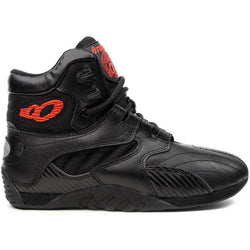
Weightlifting Sneakers: Choose the Right Pair for Your Lifts
Your best lifting shoe may be the wrong shoe for half your workout. That’s the catch with weightlifting sneakers: the design matters more than the label.
A raised heel can support a different position in Olympic lifts, while deadlifts and mixed gym sessions may call for other footwear priorities. If you’re unsure whether one pair can cover every workout, start with the movements you do most. Match your shoes to those movements instead of getting distracted by technical-sounding claims.
This guide explains how shoe design relates to different lifts and what to assess before you buy, from fit and stability to the variety in your routine. You’ll also find an overview of Otomix options, including Stingray Performance, Ultimate Trainer, and Extreme Trainer. Otomix specializes in footwear for bodybuilding, weightlifting, and gym workouts. Use the checklist to define your priorities, compare models, and find an option suited to the way you train.
Key Takeaways
- Choose weightlifting sneakers around your main lifts and workout demands, not the label alone.
- Compare fit, how stable the shoe feels, your movement needs, and workout variety.
- Use a four-step checklist to assess your routine and fit before comparing models, and ignore status-driven product language.
- Explore Otomix options such as Stingray Performance and Ultimate Trainer to find a model aligned with your training focus.
What Weightlifting Shoes Do During Training
Weightlifting sneakers aren’t one universal shoe category. They’re training footwear chosen for the movements and demands of a session. A base that feels stable can help you feel planted as you set up and apply force, while a secure fit can limit distracting foot movement inside the shoe. These qualities matter when you’re bracing under load, but the right priorities depend on the exercises you do.
A session centered on controlled bodybuilding exercises has different demands from one built around Olympic lifts or a mix of lifting, running, and jumps. Let your training purpose, not the shoe label, guide your footwear choice.
For a visual introduction to lifting shoes, watch this video:
Which training styles call for different footwear priorities?
Bodybuilding often involves controlled sets selected to train specific muscles. Look for a secure fit and a base that feels steady during your regular exercises. Olympic weightlifting centers on the snatch and clean and jerk; some dedicated shoes use a raised heel to support the positions involved. Learn more about Olympic weightlifting and its lifts. Powerlifting centers on the squat, bench press, and deadlift, so consider how your footwear feels during each movement. A shoe marketed for “lifting” doesn’t tell you whether it suits your main exercises.
Do weightlifting sneakers replace general gym shoes?
Not automatically. A focused lifting session may call for different priorities from a workout that shifts between weights, running, jumping, or varied conditioning. If your training changes activities frequently, consider whether the same pair feels appropriate through each part of the session. A specialized pair may suit the lifts you do most, while a varied routine makes versatility more important. Match the shoe to the workout, rather than assuming one style works for everyone.
How to Compare Weightlifting Sneakers for Your Main Lifts
Compare shoes against the work your sessions actually demand. Fit and perceived stability matter under load, as do movement needs and how often your workout shifts between activities. Use this guide to focus your comparison:
| Training focus | Ask yourself |
|---|---|
| Bodybuilding | Does the shoe feel secure and steady through my regular exercises? |
| Squats | Can I maintain a comfortable, balanced position through the movement? |
| Varied lifting | Will this pair suit both my lifts and the other activities in the session? |
These are decision prompts, not performance promises. A shoe can’t guarantee better technique, added strength, or injury prevention. Choose based on fit and training demands, not promised athletic outcomes.
What should you assess before choosing a pair?
Start with your regular exercises, lifting style, and session structure. Do you spend most of your time on controlled bodybuilding movements, squats, or a mix of lifting and conditioning? Then assess fit and comfort in ordinary movement. Walk around and try motions you can safely test. Notice whether your foot feels secure or shifts in a distracting way. If you have an opportunity to try the movement patterns you train, pay attention to comfort and balance rather than relying on appearance or product language.
Can one pair work across different lifts?
It depends on the mix. A session built around similar lifting movements may make one pair a practical choice. A workout that combines lifting with running or jumping asks more of your footwear, so consider how well one pair suits the whole session. If one discipline dominates your training, you may prefer an option selected for that priority. There’s no single answer for every athlete.
Use these criteria to compare Otomix bodybuilding and weightlifting shoes with your training focus, then narrow your options according to the movements you do most.
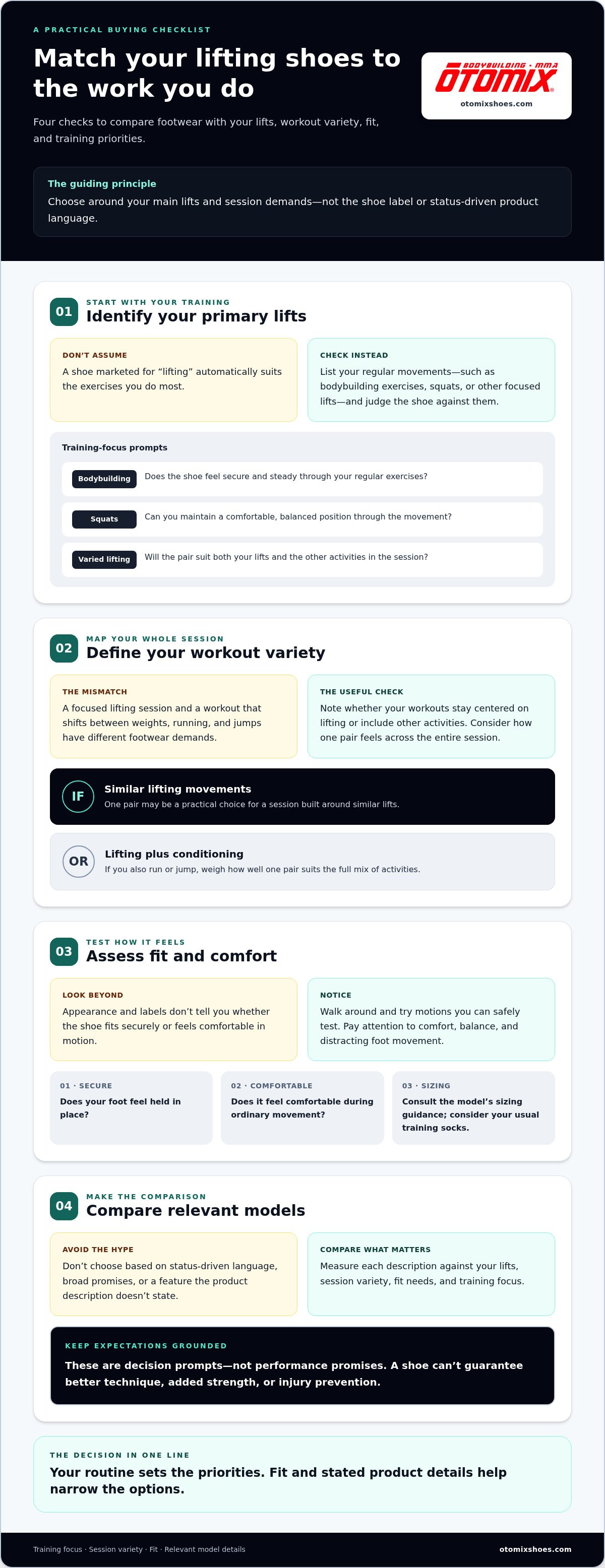
A Practical Weightlifting Sneaker Checklist Before You Buy
Cut through the hype with this four-step check. Match weightlifting sneakers to your actual routine, then compare product descriptions with the priorities you’ve identified. Base your decision on stated details rather than assuming a shoe has a feature that isn’t described.
- Identify your primary lifts. List the movements you train most often, such as bodybuilding exercises, squats, or other focused lifts.
- Define your session variety. Note whether workouts stay centered on lifting or also include activities such as running and jumping.
- Assess fit. Look for a secure, comfortable feel during ordinary movement, and use the product’s sizing guidance.
- Compare relevant models. Measure each description against your needs instead of choosing based on status-driven language or broad promises.
How should fit influence your final choice?
A shoe that feels secure and comfortable can help you move confidently through your normal training motions. Notice whether your foot feels held in place or shifts in a distracting way. Don’t rely on a label or appearance to judge fit. Consult the model’s sizing guidance, then assess comfort before making it part of a demanding session. If you’re between sizes, compare the fit guidance and consider how the shoe feels with the socks you normally train in.
When should you choose a specialist lifting shoe?
Consider a specialist option when your sessions consistently focus on a particular type of lifting and its demands. If your workout regularly moves from lifting into conditioning, running, or jumps, weigh how well one pair suits the entire session. The right choice depends on your priorities, not a promise of strength gains or injury prevention. For broader context, explore this weightlifting shoes guide.
Use your checklist to narrow down the options, then explore Otomix training shoes by their stated training focus.
Explore Otomix Weightlifting Sneakers for Your Training Focus
With your training priorities in view, compare Otomix models by their stated purpose. Stingray Performance is Otomix’s flagship bodybuilding and weightlifting workout shoe. Ultimate Trainer is another option in the bodybuilding and weightlifting range. Extreme Trainer is designed to offer stability and support during intense bodybuilding workouts. These models give you starting points for finding weightlifting sneakers suited to your focus. Compare their product information with your needs instead of assuming differences in construction, fit, or features.
Match an Otomix model to your training priorities
Begin with the model that best matches your main training focus. Consider Stingray Performance as the flagship, Ultimate Trainer as another bodybuilding and weightlifting shoe, or Extreme Trainer for intense bodybuilding workouts. Compare the information for each model with the priorities you identified, such as the movements you do most and whether your sessions stay focused on lifting. The Stingray Performance range is a place to start if you want to explore Otomix’s flagship shoe.
Keep exploring the Otomix range
For another bodybuilding and weightlifting option, take a closer look at the Ultimate Trainer. Read the product information with your checklist in mind, and choose according to the movements and workout style that matter most to you. Otomix specializes in athletic footwear for bodybuilding, weightlifting, and gym workouts, with Stingray Performance, Ultimate Trainer, and Extreme Trainer among its options.
Compare the Otomix models with your training priorities and choose a pair that fits your focus. Shop Otomix footwear for your next training session.
Make Your Next Training Choice Count
Your footwear choice can evolve as your training does. A new focus on bodybuilding, a shift toward dedicated lifting sessions, or more varied workouts may change what you want from a pair. Keep your routine at the center of the decision, and let the movements in your next training block guide what you explore.
Choose weightlifting sneakers with a clear purpose, not just a bold claim. Use the priorities you’ve identified to compare the options. A thoughtful match starts with what you actually do in the gym, then narrows the field to shoes designed for that kind of training.
Ready to choose? Explore Otomix weightlifting sneakers and find an option for your training focus.
Frequently Asked Questions
Are weightlifting sneakers worth it for beginners?
They can be worth considering if lifting is a regular part of your routine, but beginners don’t need specialized footwear just to start training. First, identify the movements you do most and consider whether your current shoes feel secure and comfortable during them. If your sessions are mostly general fitness with occasional weights, a versatile gym shoe may suit your routine better than a pair selected for one lifting focus.
Can I wear weightlifting sneakers for running?
Usually, choose shoes intended for running if you’ll be running regularly. Footwear made for lifting may feel less comfortable during repeated strides, especially if its design prioritizes a planted feel over running movement. For a short warm-up or a few steps between exercises, your preference and the shoe’s intended use matter. For longer runs, use footwear designed for that activity.
How tight should weightlifting sneakers fit?
They should feel secure without pinching or causing discomfort. Your foot shouldn’t slide around as you walk, but your toes also shouldn’t feel compressed. Try them with the socks you expect to train in, fasten them as you normally would, and walk or bend your knees to notice pressure points. Follow the specific model’s sizing guidance rather than assuming every brand fits alike.
Do high-top weightlifting sneakers prevent ankle injuries?
No shoe can guarantee that you’ll avoid an ankle injury. A high-top design may feel supportive to some wearers, but the height of the upper alone doesn’t establish injury protection. Choose a pair that feels comfortable and secure for your training, and don’t treat it as a substitute for sound movement choices or appropriate load management. If you have an ankle concern, seek qualified medical advice.
Can one pair of weightlifting sneakers work for bodybuilding and powerlifting?
It can, depending on the exercises you include and how the pair feels during them. A bodybuilding routine with some powerlifting movements may be manageable in one pair if it feels secure across your work. If you train powerlifting movements as a dedicated focus, compare footwear with those lifts in mind. Check comfort during the specific exercises rather than assuming one pair suits every session.


