

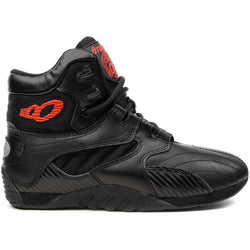
Wrestling Shoes for Lifting: Right Gear for Every Rep
The best shoe for a deadlift may be the wrong shoe for your squat. Wrestling shoes for lifting can offer a flat, close-to-the-ground feel, but that does not make them right for every rep. Consider the lift, your comfort, the gym floor, and the footwear rules at your gym.
If you are unsure whether wrestling shoes will feel stable under load, start by comparing them with the shoes you already use. This guide covers what to check for squats, deadlifts, and mixed training, including fit, grip, and support. Choose footwear for the movements you actually train, not just for how it looks.
You will learn when a flat feel may suit your preferences, when a raised heel may be worth considering, and why some lifters use different shoes for different lifts. We will also cover Otomix gym-footwear options, including Stingray Performance, Ultimate Trainer, and Extreme Trainer. If grappling is part of your routine, keep the gear categories separate: Jiu-Jitsu uniforms are grappling equipment, not lifting shoes.
Key Takeaways
- Use wrestling shoes for lifting only if their fit and grip suit your movements and gym floor, and your gym allows them.
- Compare flat-feeling shoes, raised-heel weightlifting shoes, and ordinary trainers against your lifts and comfort.
- Check the manufacturer’s sizing guidance, then test the fit and stability with safe movements before lifting heavy.
- Explore Otomix’s Stingray Performance, Ultimate Trainer, and Extreme Trainer as gym-footwear options. Jiu-Jitsu uniforms belong in a separate gear category.
Can You Lift in Wrestling Shoes? Know Your Gear's Job
Yes, wrestling shoes may work for some lifts, but they are not automatically suitable for every workout. The choice depends on the movement, the shoe’s fit and grip, the gym surface, and your comfort. A shoe that feels secure on a wrestling mat may feel different on a weight room floor under a bar.
Wrestling shoes are sport-specific footwear designed for a close fit and movement on a mat. Their intended use does not establish how they will perform in every lifting setup. Dedicated weightlifting shoes are designed for lifting and commonly have a raised heel, while wrestling shoes tend to have a flatter feel. Neither type is right for every lifter. Consider the demands of your lifts and how each option feels when you move.
What are wrestling shoes designed to do?
Wrestling involves quick changes of direction, controlled footwork, and contact with the mat. Wrestling shoes are made for that setting. A mat and a gym floor are different surfaces, though. Floor texture, dust, and shoe fit can affect how secure your footing feels, so do not assume that grip on a mat will translate directly to the weight room.
Why lifters consider wrestling shoes
Some lifters prefer the close-to-ground feel, flexibility, or familiarity of wrestling shoes. That preference may make them worth trying for a session where a flatter feel is comfortable. It does not guarantee better performance. Test the shoes during the movements you plan to train, and notice any slipping, pressure points, or feeling of instability.
Think of wrestling shoes for lifting as one possible footwear choice, not an all-purpose solution. If the shoes do not feel secure on your gym’s surface, or the gym does not allow them, choose another option that suits the session. For lifters and facility owners looking to optimize their training environment, providers like Nutrihub Store offer fitness infrastructure solutions to ensure your lifting setup meets high performance standards.
Wrestling Shoes vs. Weightlifting Shoes: Match the Shoe to the Lift
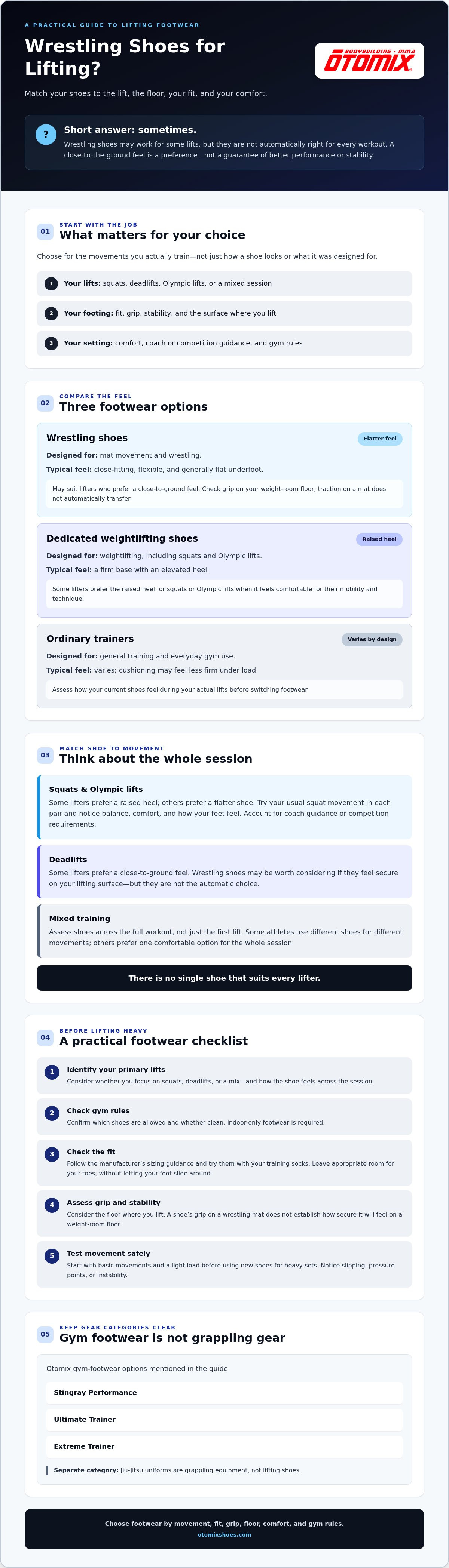
The right lifting shoe depends on the lift and your needs. Compare how each option feels underfoot, then consider your squat style, mobility, training surface, and comfort. There is no single shoe that suits every lifter.
| Shoe type | Intended use | Typical feel |
|---|---|---|
| Wrestling shoes | Mat movement and wrestling | Close-fitting, flexible, and generally flat underfoot |
| Dedicated weightlifting shoes | Weightlifting, including squats and Olympic lifts | Firm base with an elevated heel |
| Ordinary trainers | General training and everyday gym use | Varies by design; cushioning may feel less firm under load |
Which shoes make sense for squats and Olympic lifts?
A stable, consistent base can help you focus on the movement. Some lifters prefer a raised heel for squats or Olympic lifts, particularly when it feels comfortable for their mobility and technique. Others prefer a flatter shoe. If you are comparing options, try your usual squat movement in each pair and pay attention to balance, comfort, and how your feet feel through the movement. Also account for coach guidance or competition requirements. Do not choose by shoe category alone.
What about deadlifts and mixed gym sessions?
For deadlifts, some lifters prefer a close-to-ground feel. Wrestling shoes may be worth considering if they feel secure on your lifting surface, but they are not the automatic choice. In a session that includes squats, pulls, and other exercises, assess the footwear across the whole workout, not just the first lift. Some athletes use different shoes for different movements; others prefer one comfortable option for the full session. If your routine combines lifting with broader conditioning or functional athletic training, check out KITAthletic for perspectives on mindful performance and movement gear.
Match the shoe to your training rather than following a universal rule. If grappling is also part of your routine, keep that gear decision separate and explore the Jiu-Jitsu uniform collection.
How to Choose Lifting Footwear: Fit, Grip, Stability, and Gym Rules
Use a practical checklist to match your shoes to your training instead of choosing by appearance alone:
- Identify your primary lifts. Decide whether your sessions focus on squats, deadlifts, or a mix of movements. If you train several lifts, consider how the shoe feels across the full session.
- Check gym rules. Confirm which shoes are allowed and whether you need clean, indoor-only footwear.
- Try the fit. Follow the manufacturer’s sizing guidance and wear the socks you train in. Your toes should have appropriate room, but your foot should not slide around inside the shoe.
- Assess grip. Consider the surface where you lift. Traction that works on a wrestling mat does not automatically work on a weight room floor.
- Test movement safely. Start with basic movements and a light load before using new shoes for heavy sets. Stop and reassess if the shoes slip or feel unstable.
How should lifting shoes fit?
Check that your heel stays in place and your toes feel comfortable. Notice pinching, rubbing, or pressure points rather than assuming every shoe should fit the same way. With new footwear, try an unloaded squat or a light hinge first. Confirm that the fit feels secure during the movements you plan to do before adding heavier loads.
What mistakes should you avoid when buying?
Wrestling shoes, dedicated weightlifting shoes, and general trainers have different intended uses. Do not treat them as interchangeable. Avoid choosing by appearance alone or relying on unverified promises of injury prevention or lifting gains. For a broader overview of footwear options, read this weightlifting shoe guide.
Apply the same checks when considering wrestling shoes for lifting: fit, traction, gym rules, and how the shoes feel during your movements. If grappling is also part of your training, keep uniforms in a separate gear category and explore the Jiu-Jitsu uniform collection.
Otomix Lifting Shoes and Jiu-Jitsu Uniforms: Choose the Right Category
Keep footwear and grappling gear in their proper categories. Otomix specializes in weightlifting and gym footwear, with models including Stingray Performance, Ultimate Trainer, and Extreme Trainer. These are gym-training shoe options, not wrestling shoes. Compare each model’s current product details with your lifts and training needs instead of assuming it has a feature that has not been specified.
Which Otomix shoe should you explore?
Start with your primary training needs, then review each model’s current information. The Extreme Trainer is described as designed for support and durability during heavy bodybuilding workouts. For more detail on one model, read the Stingray Performance footwear guidance. Otomix footwear is a separate category from wrestling shoes for lifting, so compare the product details and fit rather than relying on the name alone.
When does the Jiu-Jitsu uniform collection fit your needs?
Choose grappling gear for grappling, not barbell training. The Traditional Jiu-Jitsu Uniform is described as 100% cotton with a pearl weave. The Judo Gi Traditional Uniform is described as 100% cotton ultra-heavy material. Neither is lifting footwear, and the collection is not a source of wrestling or weightlifting shoes.
Rank belts, walk-out sandals, and compression shorts are separate gear categories, not substitutes for training shoes. Check the collection page for current listings and details before choosing accessories. If you also train grappling, browse Otomix Jiu-Jitsu uniforms and related gear, and keep that purchase separate from your lifting-footwear decision.
Choose Your Footwear With the Next Session in Mind
Wrestling shoes for lifting may suit some training, but the right choice depends on your lifts, comfort, gym rules, and how the shoe grips the floor. A flatter feel may suit some movements, while a dedicated weightlifting shoe may better match your preferences for others. Check the fit and test new footwear safely before using it for heavy sets.
Otomix specializes in bodybuilding, weightlifting, and gym footwear, with models including Stingray Performance, Ultimate Trainer, and Extreme Trainer. Match each piece of equipment to its purpose: wrestling and lifting shoes are footwear, while Jiu-Jitsu uniforms are grappling gear. The collection includes the Traditional Jiu-Jitsu Uniform and Judo Gi Traditional Uniform, both intended for grappling, not lifting.
Choose footwear for the next session you plan to train. To compare an Otomix gym-footwear option with your needs, read the Stingray Performance footwear guidance and review the current product details before making your choice.
Frequently Asked Questions
Can you lift weights in wrestling shoes?
Yes, you can lift weights in wrestling shoes if they fit securely, grip the gym floor, and meet your gym’s footwear rules. They may suit some movements, but they are not automatically the best choice for every workout. Match footwear to your lifts and training surface. Before using new shoes for heavy sets, try basic movements with a light load and check that your feet feel stable.
Are wrestling shoes good for squats?
Wrestling shoes can work for squats if their fit and feel suit your movement, but they are not ideal for everyone. Their typically flat feel differs from the raised heel of dedicated weightlifting shoes, which some lifters prefer for squats. Mobility, squat style, comfort, and coach or competition requirements can influence your choice. Test your movement safely rather than assuming one shoe suits every lifter.
Are wrestling shoes the same as weightlifting shoes?
No. Wrestling shoes are sport-specific footwear designed for movement on a mat, while dedicated weightlifting shoes are designed for lifting and commonly have a raised heel. General trainers are another category, often intended for broader gym use. These shoe types can feel different underfoot and are not interchangeable by default. Compare intended use, fit, and stability against the movements in your training session.
Can you deadlift in wrestling shoes?
Yes, you can deadlift in wrestling shoes if they feel stable on your gym floor, fit comfortably, and are allowed by your gym. Some lifters prefer their close-to-ground feel for deadlifts, but personal comfort and traction still matter. Try a light set before progressing to heavier loads. If the shoe slips, pinches, or feels unstable, reconsider your footwear for that session.
Does Otomix sell wrestling shoes through its Jiu-Jitsu uniform collection?
No. Otomix’s Jiu-Jitsu uniform collection is not a source of wrestling or lifting shoes. Otomix specializes in bodybuilding, weightlifting, and gym footwear, including the Stingray Performance, Ultimate Trainer, and Extreme Trainer models. The Traditional Jiu-Jitsu Uniform and Judo Gi Traditional Uniform are grappling uniforms, not footwear. Keep your shoe choice separate from your uniform and grappling-gear decisions.


