

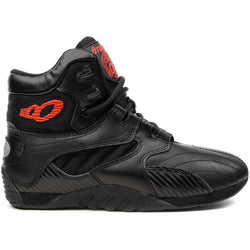
Best Footwear for Hip Thrusts: 2026 Elite Lifter Guide
Your cushioned running shoes are actively sabotaging your glute gains. Every heavy rep turns into wasted power when thick foam soles compress and your feet roll outward under load. Finding the best footwear for hip thrusts isn't about casual gym comfort; it's about commanding raw, unfiltered mechanical leverage straight through the floor.
You already know the frustration of loading heavy plates only to feel your heels slip across slick rubber mats or your ankles wobble at lockout. Soft running sneakers bleed drive with every rep, while raised Olympic lifting heels shift tension away from your hips and dump it directly onto your quads.
It's time to fix your foundation. Discover the exact flat-soled, high-traction footwear required to lock down hip thrust mechanics and drive maximum glute power. We will walk you through the ultimate zero-drop platforms engineered to eliminate energy leaks, stabilize your ankles, and anchor your feet under multi-hundred-pound barbell loads.
Key Takeaways
- Eliminate kinetic energy loss by ditching compressible running shoes for a rigid base that channels maximum drive into the barbell.
- Learn why elevated squat heels shift tension to your quads and why zero-drop profiles represent the best footwear for hip thrusts.
- Discover the elite, thin-soled footwear models built to stop platform slippage and withstand brutal lower-body loading.
- Dial in your foot flare and stance width using locked-in stability tricks that trigger peak glute recruitment every set.
Why Footwear Dictates Power in the Barbell Hip Thrust
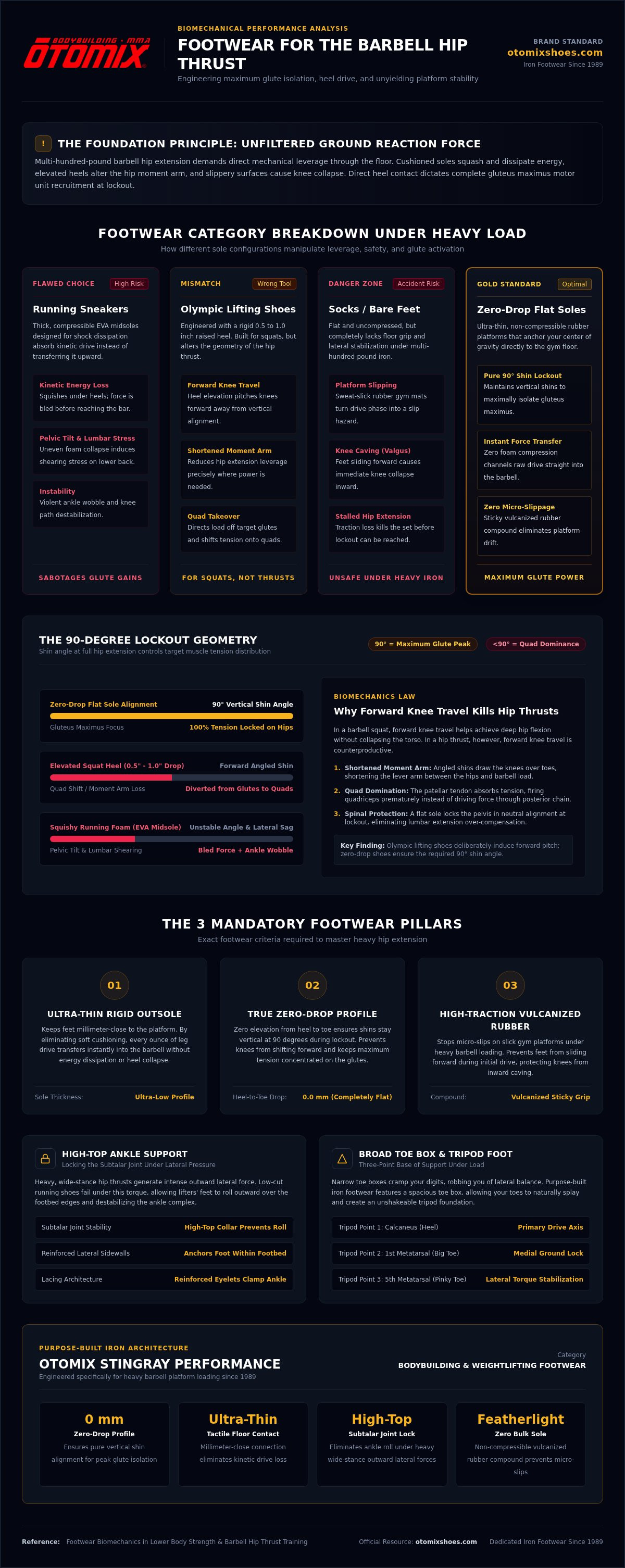
Soft running midsoles destroy kinetic energy. When you drive upward against a loaded bar, compressible EVA foam squashes under your heels, absorbing force that should move the iron. That squish induces violent ankle wobble, destabilizes your knees, and bleeds raw power. Demanding multi-hundred-pound hip extension requires an unyielding, zero-drop foundation locked directly against the floor.
Serious athletes in competitive strength sports like powerlifting know that direct ground contact dictates poundage. Finding the best footwear for hip thrusts comes down to three mandatory elements: an ultra-thin rigid outsole, a true zero-drop profile, and high-traction rubber grip.
To see how elite lifters evaluate gym shoes for lower-body output, watch this breakdown:
The Biomechanics of Heel Drive and Glute Activation
Driving straight through your heels fires maximum gluteus maximus motor units at lockout. Cushioned sneakers compress unevenly, tilting your pelvis and dumping shearing stress into your lumbar spine. Thin, flat outsoles anchor your center of gravity, transmitting pure ground reaction force straight to your glutes!
The Slipping Hazard: Why Socks and Bare Feet Fail
Lifting in socks or bare feet invites disaster. Sweat-slick gym platforms turn heavy sets into accidents waiting to happen. As your feet slide forward during initial drive, your knees cave and hip extension stalls completely. Stop burning reps; grab the best footwear for hip thrusts and lock your feet to the floor.
Key Footwear Criteria: Flat Soles vs. Olympic Lifting Heels
Olympic lifting shoes belong on the squat rack, not the hip thrust platform. Squat shoes feature a raised heel between 0.5 and 1.0 inch. That elevation deliberately pitches your knees forward, which works great for deep squats but destroys hip thrust geometry. Forward knee travel shortens the hip extension moment arm, redirecting tension off your glutes and dumping it straight into your quads. The best footwear for hip thrusts always features a true zero-drop profile paired with a sticky vulcanized rubber compound that prevents micro-slips under heavy loads.
Zero-Drop Soles Deliver Optimal Glute Isolation
A completely flat sole locks your shins into a vertical 90-degree angle at full lockout. Vertical shins isolate the gluteus maximus, preventing quad takeover and protecting your lower back. Fitness roundups like Marie Claire UK's analysis of the Best Weightlifting Shoes agree that flat-soled footwear is crucial for targeted hip extension. Check our complete weightlifting shoes guide to see how zero-drop geometry transforms your platform output.
High-Top Ankle Support vs. Low-Cut Mobility
Heavy wide-stance thrusts create severe outward lateral force. Flimsy low-top sneakers collapse under this pressure, letting your feet roll outward over the footbed edges. High-top designs stabilize the subtalar joint, preventing ankle roll and securing your stance. Reinforced eyelets let you lock the ankle collar tight, while reinforced lateral sidewalls keep your feet anchored inside the shoe. Elevate your lower-body training by exploring professional lifting footwear engineered specifically for heavy iron.
Top Footwear Models Built for Heavy Hip Thrust Platform Sets
Crushing PRs requires dedicated iron footwear. Generic sneakers waste your leg-drive potential through thick, unstable foam. Otomix has engineered professional-grade bodybuilding and weightlifting shoes since 1989, giving serious lifters the exact zero-cushion architecture needed to drive big numbers. Thin rubber compounds eliminate energy dissipation, while broad toe boxes let you splay your toes to create an unshakeable tripod foot. When hunting for the best footwear for hip thrusts, these purpose-built models lead the pack.
Stingray Performance: Ultra-Thin Soles for Maximum Floor Contact
The Stingray Performance Bodybuilding Weightlifting Workout Gym Shoes represent the gold standard in tactile floor connection. Built featherlight with an ultra-flat grip sole, they keep your feet millimeter-close to the platform for instant force transfer. The secure high-top lacing architecture locks your ankle tight, eliminating internal foot slippage during explosive hip extension. Check out our detailed Stingray Performance guide to see how this model dominates heavy lifting days.
Ultimate Trainer and Extreme Trainer: Unyielding Platform Stability
For lifters who need rugged sidewalls and bulletproof ankle wraps, two dedicated options stand out:
- Ultimate Trainer Bodybuilding Weightlifting Workout Gym Shoes: Packs an ultra-wide base and heavy-duty ankle support to eliminate lateral foot rollover during wide-stance thrusts.
- Extreme Trainer: Delivers high-traction rubber outsoles and reinforced chassis stability to keep your stance welded in place under heavy loaded bars.
Stop letting squishy running shoes rob your glute gains. Gear up for your next PR and buy your Otomix lifting shoes today to unlock maximum platform power!
How to Optimize Your Footwear Setup for Peak Glute Output
Dialing in your platform setup turns raw stability into explosive barbell power. Even the best footwear for hip thrusts won't save you if your setup mechanics are sloppy. Execute these four tactical rules every single set:
- Lock in a snug fit: Pick a glove-like fit that eliminates internal foot slide.
- Flare your stance: Plant feet shoulder-width apart with toes turned slightly out.
- Check tibia angles: Position your heels so shins hit 90 degrees at lockout.
- Crank the laces: Cinch your high-top collar firm before unracking the barbell.
Fine-Tuning Foot Angle and Shin Alignment
Set your feet shoulder-width apart. Point your toes outward roughly fifteen degrees. This slight external rotation ignites the gluteus medius and maximizes hip extension range. Keep your flat soles glued completely flush against rubber gym tiles throughout each rep. Never let your heels peel upward or your toes lift off the platform. If your knees shoot past your toes, your shins aren't vertical. Adjust your foot position until your shins form a clean right angle under load.
Lacing Strategy for Maximum Ankle Lockdown
Don't tolerate loose collars. Pull your laces snug across the forefoot, then crank high-tension lockdown through the upper eyelets. Finish with a tight double-knot to build a rigid support cuff around your subtalar joint. This prevents lateral foot rollover dead in its tracks when pushing heavy iron. Lock down your lifting base now with Otomix gym shoes and conquer your next platform session!
Claim Your Maximum Hip Extension Power Today
Squishy soles bleed strength, and raised heels rob your glutes of mechanical tension. Choosing the best footwear for hip thrusts transforms every single rep by anchoring your heels and keeping your shins perfectly vertical. When you position yourself beneath a loaded barbell, you need complete confidence that your footing will never slide, roll, or compress under heavy iron.
Trusted by world-class bodybuilders and powerlifters since 1989, Otomix builds shoes specifically for intense gym warfare. Experience ultra-thin zero-drop soles engineered for zero power loss, along with unmatched high-top ankle stability under maximum barbell loads. Stop compromising your lower-body development with unstable running trainers. Upgrade your training base with Otomix high-performance lifting shoes! Step onto the platform, drive through your heels, and lock out your next massive personal record!
Frequently Asked Questions
Can I do hip thrusts in running shoes?
No, you should never do heavy hip thrusts in running shoes. Soft foam midsoles compress unevenly, causing massive energy dissipation and unstable foot wobble under load. This compression prevents direct force transmission through your heels and risks knee or pelvic misalignment. The best footwear for hip thrusts utilizes ultra-thin, dense outsoles that don't squish when driving heavy plates upward.
Why should I wear flat shoes instead of squat shoes for hip thrusts?
Flat shoes keep your shins vertical to maximize pure glute recruitment. Squat shoes feature an elevated heel between 0.5 and 1.0 inch designed specifically to push knees forward. In a hip thrust, that forward angle transfers tension away from your glutes directly into your quads. Zero-drop footwear keeps the mechanical leverage locked entirely on your posterior chain throughout the lift.
Is it better to do hip thrusts barefoot or with shoes?
Doing hip thrusts in specialized lifting shoes is vastly superior to lifting barefoot or in socks. Bare feet and slick socks easily slide across dusty gym platforms, instantly collapsing your drive. Dedicated flat workout shoes feature high-traction vulcanized rubber compounds that glue your feet to the floor, providing necessary lateral upper support that prevents foot slippage during maximal hip extension attempts.
How tight should my lifting shoes be for heavy hip thrusts?
Your lifting shoes should fit like a snug glove with zero internal heel slip. Foot slide inside a loose shoe leeches force and causes balance breakdown during lockout. Cinch the forefoot firmly and crank the upper ankle laces tight. You want a locked-in feel that holds your foot stable against the sole while still allowing your toes to splay actively.
What makes high-top gym shoes beneficial for lower body training?
High-top gym shoes reinforce your ankles against dangerous lateral rolling. Wide-stance hip thrusts and heavy leg drives place aggressive outward shear on your feet. Models like Otomix high-tops brace the subtalar joint with rigid upper collars. This extra ankle lockdown ensures total ground stability, letting you drive maximum force directly through your heels. Investing in the best footwear for hip thrusts protects your mechanics set after set.


