

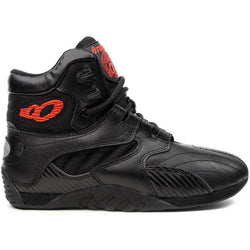
Boxing Shoes for Lifting: Sole and Ankle Support for Lifters
A high ankle isn’t a substitute for a stable lifting platform. Boxing shoes for lifting may suit your training if the sole gives you a secure base and the fit supports your movement without feeling restrictive.
The right shoe can change how planted you feel under a load, but height alone won’t tell you whether a pair works for your lifts. Sole design, grip, materials, and fit all matter.
This guide explains how those features affect ankle support, traction, and stability, so you can assess what matters for your training. You’ll learn when a higher cut may help, why the sole deserves close attention, and how boxing footwear compares with shoes designed for lifting. Then you can choose based on the movements you train and the feel you prefer underfoot.
Key Takeaways
- Choose ankle coverage for the support and freedom of movement your lifts require; a taller cut alone doesn’t guarantee joint protection.
- Compare low-, mid-, and high-top designs by how each balances mobility, fit, and the feeling of support around your ankle.
- Assess midsole and upper materials alongside sole thickness, firmness, and texture to find a stable, grippy feel underfoot.
- Explore Otomix’s Stingray Performance, Ultimate Trainer, and Extreme Trainer when you’re considering footwear made for weightlifting and gym training.
Ankle height and joint protection
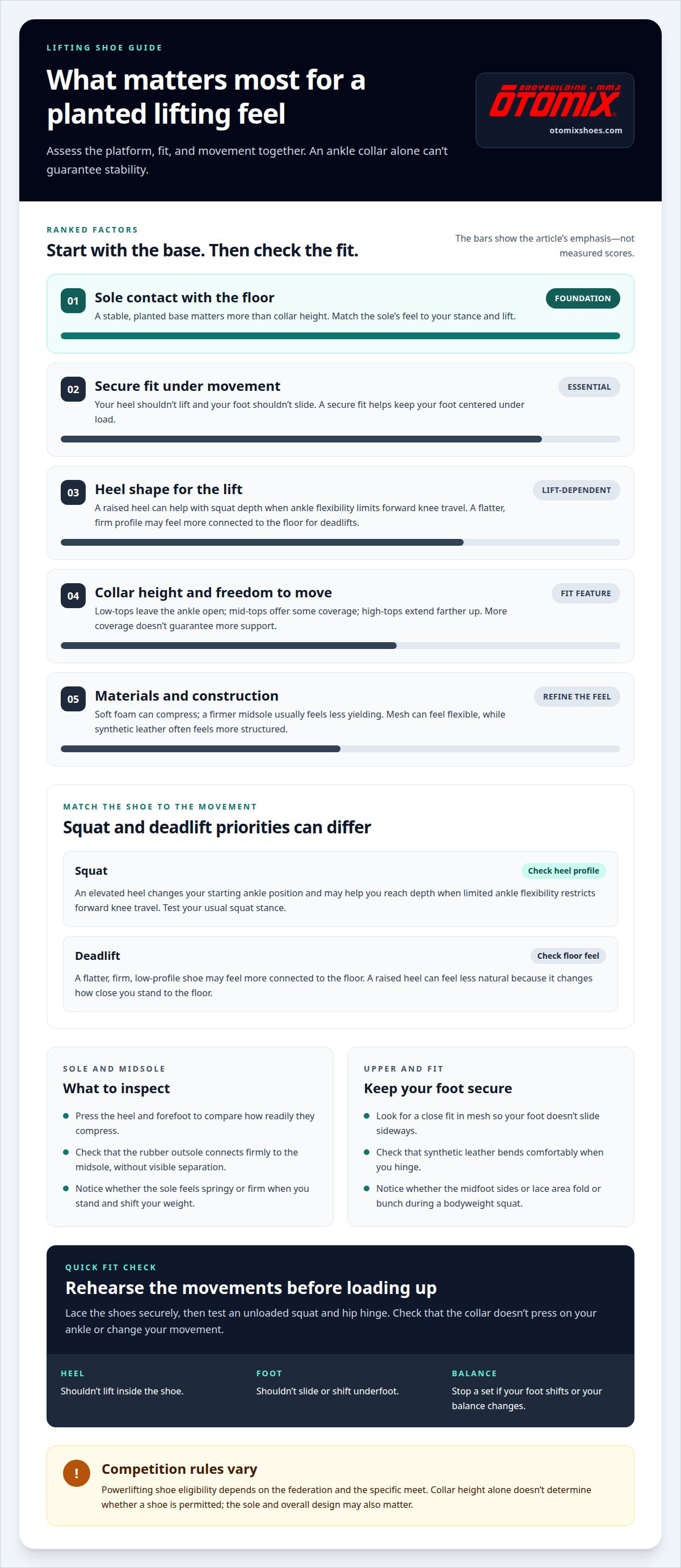
A taller collar covers more of the ankle, but fabric height alone doesn’t protect a joint. During a squat, support depends on how securely the shoe fits, how the sole contacts the floor, and whether the collar restricts ankle movement. A high-top may feel secure without preventing the ankle from rolling. Treat collar height as one fit feature, not a replacement for a stable base or controlled lifting technique.
Boxing shoes and weightlifting shoes can feel different during squats and deadlifts. Boxing shoes typically prioritize a close fit and mobility; weightlifting shoes often have an elevated heel that changes your starting ankle position for squats. A flatter boxing shoe may suit deadlifts, where a firm, low profile can help you feel connected to the floor. The better choice depends on the lift and your preferred stance.
Heel height and heel-to-toe drop are related but distinct features. Heel-to-toe drop is the height difference between the heel and forefoot. A raised heel can make it easier to reach depth in a squat when limited ankle flexibility restricts forward knee travel. For deadlifts, that elevation may feel less natural because it changes how close you stand to the floor. Check the shoe’s side profile and test your squat stance before choosing.
Heel support isn’t the same as ankle coverage. A high collar wraps around the ankle, while stability under load comes from a secure fit and a sole that stays planted. Lace the shoe snugly, then test an unloaded squat and hip hinge. Your heel shouldn’t lift inside the shoe, and your foot shouldn’t slide. This simple fit check tells you more than collar height alone.
The risks of lifting in boxing shoes include slipping on a smooth floor, heel movement inside a loose shoe, or feeling unstable when the sole doesn’t suit your stance. A lightweight high-top may feel less restrictive than a heavier, stiff shoe, but weight alone doesn’t determine support. When choosing boxing shoes for lifting, match ankle height to comfort, heel shape to the lift, and fit to the movement. Stop a set if your foot shifts or your balance changes.
Low-top, mid-top, and high-top shoes
Low-top shoes leave the ankle uncovered, giving your foot more freedom to bend and rotate. That may suit lifters who value mobility during warm-ups, accessory work, or a deadlift setup. Mid-tops cover more of the ankle but have a lower collar than high-tops. High-tops extend farther up the ankle, adding material around the joint without guaranteeing better support or balance.
Are boxing shoes allowed in powerlifting competitions? There isn’t one universal answer: eligibility depends on the federation’s rules and the meet. A shoe’s collar height alone doesn’t determine whether it’s permitted. The sole and overall design may also matter, so choose competition footwear according to the rules for that specific event.
Choose a collar height that suits the movements you perform and the feel you prefer. A low-top can feel less restrictive during quick foot adjustments. A mid-top offers a middle ground for lifters who want ankle coverage without a taller collar. A high-top may feel more secure around the ankle, but the fit must still allow your usual squat stance and hip hinge.
- Low-top: Try this profile if you prefer an open ankle and easy movement during setup.
- Mid-top: Consider it if you want some ankle coverage with a less enclosed feel.
- High-top: Test it with bodyweight squats and hinges to see whether the collar interferes with movement.
Compare both shoes, not just the collar. Lace each pair, plant your feet in your squat stance, then rehearse a controlled hinge. Notice whether the collar presses your ankle or changes your movement. For lifters weighing coverage against mobility, explore weightlifting shoe options and consider which profile best fits your training.
Midsole and upper materials
The midsole sits between your foot and the outsole, shaping how the shoe feels under load. Soft foam, such as EVA, can compress as you stand or move, creating a cushioned feel. A firmer midsole usually feels less yielding during a squat or deadlift. Neither material guarantees stability: construction and fit also affect how your foot moves.
Pay attention to the upper, too. Mesh can feel flexible and breathable, while synthetic leather often feels more structured around the foot. Reinforced panels may help the upper hold its shape when you brace or shift position. Check the sides near the midfoot and the area around the laces. If those sections fold or bunch during a bodyweight squat, the upper may not feel secure under a barbell.
- Foam midsole: Press the heel and forefoot to compare how readily each area compresses.
- Rubber outsole: Check that it connects firmly to the midsole, without visible separation.
- Mesh upper: Look for a close fit that doesn’t let your foot slide sideways.
- Synthetic leather: Check that its panels bend comfortably when you hinge.
Test the shoe during the movements you train. Lace it securely, then perform a slow bodyweight squat and hip hinge. Notice whether the midsole feels springy or firm and whether the upper keeps your foot centered. A soft-feeling heel may suit warm-ups but feel less controlled during a heavy set. A rigid upper may feel supportive but press uncomfortably when your foot flexes.
Materials work together, not in isolation. A sturdy upper can’t compensate for a midsole that shifts underfoot. Likewise, a firm platform won’t feel stable if the fit lets your heel move. Compare the left and right shoes, inspect seams and bonded edges, and rehearse your squat stance before training. Choose the combination that keeps your foot secure without creating pressure points.
Sole thickness, hardness, and texture
Sole thickness changes how directly you feel the floor under each foot. A thin sole can make a deadlift setup feel close to the ground, while a thicker sole may feel less connected. Thickness alone doesn’t determine stability. Press the sole with your thumb, then stand and shift your weight to notice how much it compresses.
Hardness affects how a shoe responds under load. A firm sole resists compression and can feel steady during a squat or deadlift. A softer sole may compress or shift as you brace, changing your sense of balance. Test both feet on the same surface, then perform a controlled bodyweight squat. Notice whether your heel and forefoot stay planted.
Texture matters where the rubber meets the gym floor. A patterned outsole can provide traction, while worn or smooth areas may feel less secure on dusty flooring. Check the forefoot and heel for even contact. Don’t assume deep tread guarantees grip: the floor’s surface and the shoe’s contact area also affect traction.
Can you safely deadlift or squat in boxing shoes? Yes, if the shoe fits securely, grips the floor, and keeps your feet stable through the movement. Test the sole with an unloaded squat and hip hinge before using it for a working set.
- For deadlifts: Notice whether a thinner, firm sole keeps your feet close to the floor.
- For squats: Check whether the sole stays stable as your knees and hips bend.
- For grip: Test your stance on the actual gym surface, not just a clean display floor.
- For wear: Inspect the heel and forefoot for smooth patches or uneven contact.
Follow a simple sequence: inspect the outsole, lace the shoes, then rehearse your lifting stance. If your foot slides or the sole rolls during a bodyweight repetition, adjust your setup before adding a barbell. This quick check helps reveal whether the tread and firmness suit your movement.
Compare footwear built for lifting by reviewing its sole design and fit. Explore weightlifting shoe options and focus on the platform that matches your training.
Otomix
Otomix offers footwear for bodybuilding, weightlifting, and gym workouts. When comparing boxing shoes for lifting with gym training shoes, consider the sole feel, fit, ankle coverage, and movements you perform. The right option should give you the stable feel you want underfoot.
Explore the Stingray Performance Bodybuilding Weightlifting Workout Gym Shoes, Ultimate Trainer Bodybuilding Weightlifting Workout Gym Shoes, and Extreme Trainer. These models offer options for weightlifting and broader training needs. Compare them against your priorities, such as a secure fit for squats or a grounded feel for deadlifts, rather than assuming collar height alone determines support.
Ready to discuss your training footwear? Contact Otomix to learn more about its gym shoe offerings.
Choose Your Next Training Step
Choose footwear for the way you train, not just the way it looks. Before your next session, decide which lifts matter most and what you want to feel through your feet. Use that priority to narrow your options. The right pair should suit your training habits and feel dependable during your usual movements.
Boxing shoes for lifting may be worth considering if you prefer boxing-style footwear and want to assess its fit for strength work. Weigh that preference against shoes designed for bodybuilding, weightlifting, and gym workouts. Otomix offers the Stingray Performance Bodybuilding Weightlifting Workout Gym Shoes, Ultimate Trainer Bodybuilding Weightlifting Workout Gym Shoes, and Extreme Trainer.
Ready to take the next step? Contact Otomix about boxing shoes and find a footwear direction that fits your training. Bring focus to your next session, choose deliberately, and keep building strength with confidence.
Frequently Asked Questions
Are boxing shoes good for weightlifting?
Boxing shoes for lifting can work for weight training if they feel secure during the specific movements you perform. Use a controlled warm-up set to assess how they feel in your squat stance and deadlift setup before progressing to heavier work. Keep a pair dedicated to training, and inspect its outsole and laces regularly so wear or loosening doesn’t catch you mid-session.
What features should boxing shoes have for lifting weights?
Look for a close fit, secure fastening, and an outsole that stays in contact with the gym floor. During a fitting, wear your usual training socks, lace both shoes, and move into your squat and hip hinge positions. Check that your toes aren’t cramped, your heel stays seated, and the upper doesn’t pinch when your foot bends. Then walk and turn to assess comfort.
What are the best boxing shoes for lifting weights in the US?
Otomix’s Stingray Performance, Ultimate Trainer, and Extreme Trainer are options to consider. Choose based on a secure fit, a stable sole, and the movements you train.


