

High Top Lifting Shoes for Recreational Lifting and Barbell Training
High top lifting shoes can be a smart choice for recreational lifting and barbell training when you want a stable feel underfoot. Weightlifting shoes average an 18.4 mm heel-to-toe drop, though that figure describes the category, not every high-top model. The right pair still depends on your fit, toe-box width, and whether the ankle collar feels supportive without restricting movement.
A taller collar can look supportive, but height alone doesn’t determine how a shoe feels during a squat or another lift. Focus on comfort and stability, not just appearance. This guide explains when high top lifting shoes suit barbell workouts, what to check in the fit and toe box, and how to assess the collar as you move. It also covers when a high-top design may feel restrictive during workouts that call for more freedom of movement.
Key Takeaways
- Match your shoes to your main lifts and workout mix; a specialized lifting platform may feel different from a cross-training shoe.
- Compare beginner and advanced lifters’ priorities by focusing on the demands of your training, not the look of the shoe.
- Assess comfort while standing and moving: a secure fit should feel stable without pinching or distracting you.
- Check toe-box room and ankle-collar comfort together to find support that doesn’t restrict your natural movement.
1. Why are these the best weightlifting shoes?
For beginner lifters, choose a shoe that feels stable and secure during your main lifts. A firm, broad base can help you feel planted during squats and deadlifts. More experienced lifters may prioritize a particular heel height, fit, or feel under the bar. Your training needs matter more than experience alone. For bodybuilding sessions that mix machines and free weights, consider whether the shoes remain comfortable between lifts.
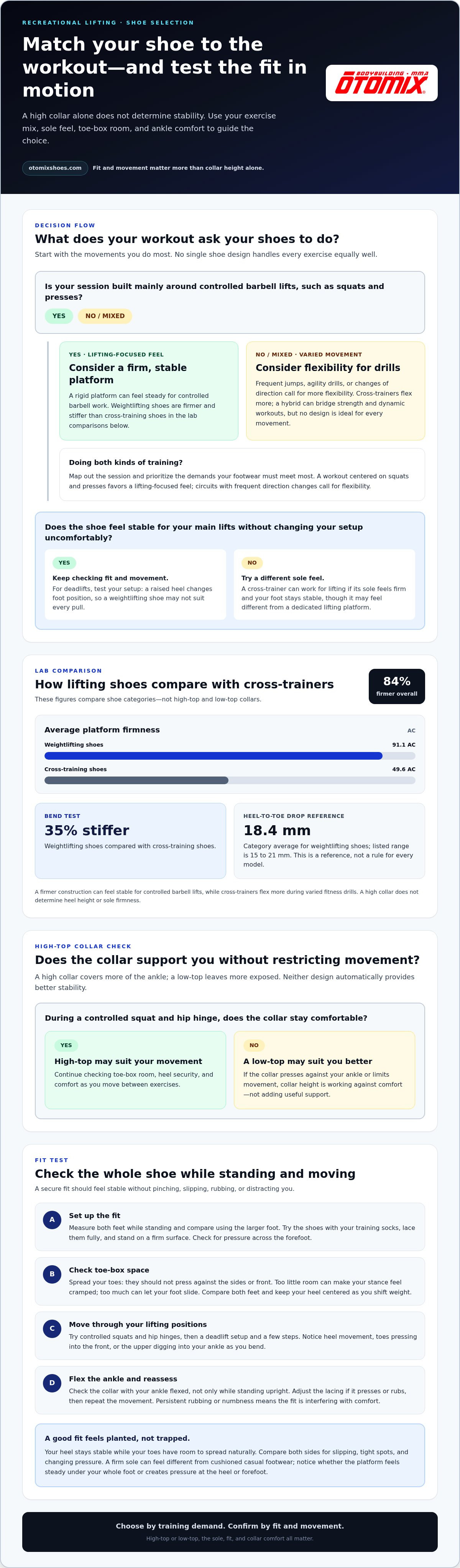
High-top and low-top lifting shoes differ mainly in collar height. A high collar covers more of the ankle; a low-top leaves more exposed. Neither design automatically provides better stability. The sole, fit, and collar comfort during movement matter more. Try a controlled squat and hip hinge in each style. If a high collar presses against your ankle or limits movement, a low-top may suit your workout better.
For heel height, use the category average as a reference, not a rule: weightlifting shoes average an 18.4 mm heel-to-toe drop, with a listed range of 15 to 21 mm. Look for a firm, stable sole that doesn’t compress easily under load. The right heel elevation depends on your lifting position and comfort. A high collar does not determine heel height or sole firmness.
No single high-top shoe suits every lifter. Check how the shoe holds your foot during a squat, then see whether you can move comfortably between exercises. A rigid platform can feel steady for barbell work, while a more flexible shoe may suit sessions with varied movements. Match the design to your workout instead of assuming one pair will work equally well for every exercise.
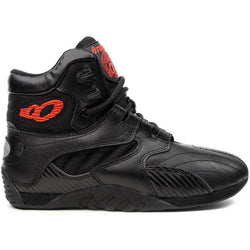
Otomix offers Stingray Performance Bodybuilding Weightlifting Workout Gym Shoes, a high-top option for lifters across the United States. Consider this brand-specific choice by assessing the fit and your range of movement. To judge value, think about how often you lift, how well the shoe suits your main exercises, and whether its construction fits your training needs. Don’t choose based on collar height alone.
2. High-top shoes for recreational lifting and barbell training
High-top lifting shoes have collars that rise above the ankle. Recreational lifters wear them for barbell exercises such as squats and presses, as well as bodybuilding workouts. The collar covers more of the ankle, but the sole and fit have more bearing on how planted your foot feels. Shoe height alone doesn’t determine stability under load.
Lab comparisons show weightlifting shoes are 84% firmer than cross-training shoes. Their average platform firmness is 91.1 AC, compared with 49.6 AC for cross-trainers. In a bend test, weightlifting shoes are 35% stiffer. That firmer construction can feel stable for controlled barbell lifts, while cross-trainers flex more during varied fitness drills. For sessions that mix squats and lateral movements, prioritize the demand your footwear must meet most.
Hybrid shoes can bridge strength training and dynamic workouts, but no design handles every movement equally well. A stable sole suits heavy, controlled lifts; a more flexible training shoe can make jumps or agility drills easier. If you want one pair for recreational workouts, map out your session first. A workout built around squats and presses favors a lifting-focused feel, while circuits with frequent changes of direction call for flexibility.
Deadlift sessions also deserve a deliberate shoe choice. A raised heel changes your foot position, so test your setup rather than assuming a weightlifting shoe suits every pull. Cross-trainers can work for lifting when their sole feels firm and your foot stays stable, but they may feel different from a dedicated lifting platform. For daily wear after training, consider comfort during ordinary walking; a shoe built for lifting may not feel ideal through a full day. If your workout also calls for grip gear, explore lifting gloves for barbell training alongside your footwear setup.
3. Fit and comfort
Choose a size that secures your heel without squeezing your toes. Measure both feet while standing and use the larger foot when comparing the shoe with its sizing guidance. Try the shoes with your training socks. Lace them fully, stand on a firm surface, and check for pressure across the forefoot.
During a squat, your foot should stay planted inside the shoe. Watch for heel movement, toes pressing against the front, or the upper digging into your ankle as you bend. Then try a deadlift setup and walk a few steps. A shoe that feels fine while seated may pinch once you brace and settle into your stance.
Construction affects comfort as much as size. A firm sole feels different from cushioned casual footwear, especially during barbell work. Notice whether the platform feels stable beneath your whole foot or creates pressure at the heel or forefoot. Cushioning that feels comfortable while walking can feel less steady when you push into the floor.
Check the collar with your ankle flexed, not just while standing upright. High-top lifting shoes should feel secure around the ankle without rubbing when you descend into a squat. If the collar presses against your ankle bone, adjust the lacing and try the movement again. Persistent rubbing or numbness means the fit is interfering with comfort.
Use this simple fit test before training: lace both shoes, stand in your usual stance, then perform controlled squats and hip hinges. Compare both sides for slipping, tight spots, and changes in pressure. The right size keeps your heel stable while leaving your toes room to spread naturally. Don’t rely on the size printed inside another pair, since shoe shapes and construction vary.
4. Fit, toe-box width, and ankle support
Start with the toe box. Stand in your training shoes and spread your toes; they shouldn’t press against the sides or front. A narrow fit can make your stance feel cramped during squats, while excess room can let your foot slide. Compare both feet, since one may need more space. Keep your heel centered as you shift your weight from side to side.
Next, assess ankle comfort through movement, not collar height alone. Lace the shoe, then perform a slow squat and notice whether the collar rubs, pinches, or restricts your ankle. A secure feel should come from the shoe holding your foot comfortably, not forcing your ankle into position. Repeat the squat with a slightly different stance to catch pressure points that appear only when you bend.
Use the laces to fine-tune the fit. Tighten them enough to reduce heel movement, but loosen the forefoot if the upper presses across your toes. Walk, hinge, then squat in that order. If your heel lifts during the hinge or your toes feel compressed at the bottom of the squat, adjust the lacing and retest before training.
Balance support with flexibility for your planned exercises. A firm-fitting shoe can suit controlled lifting, while a more flexible training shoe may feel easier during lunges or quick transitions. Test those movements in the same pair. For durability, inspect the sole and stitching after regular sessions. Visible separation or uneven wear can change how the shoe contacts the ground. Reassess the fit if that contact starts to feel different.
Choose the pair that lets your toes spread, heel stay steady, and ankle move comfortably through your lifting stance. Complete your gym setup with lifting gloves for your next training session, and keep footwear fit focused on support without restriction.
Otomix: Stingray Performance Bodybuilding Weightlifting Workout Gym Shoes
Otomix offers Stingray Performance Bodybuilding Weightlifting Workout Gym Shoes for bodybuilding, weightlifting, and gym workouts. After considering fit, toe-box room, and collar comfort, decide whether this type of shoe suits your training.
The Stingray Performance is one option for lifting-focused workouts. Otomix also offers Ultimate Trainer Bodybuilding Weightlifting Workout Gym Shoes and Extreme Trainer. Compare these options with your training needs, then assess how the chosen shoe feels during your usual movements. The right match should work with your routine, not simply look like a lifting shoe.
If you’re narrowing down gym footwear for recreational lifting or barbell training, contact Otomix to explore its shoe options.
Make Your Next Training Choice Count
Let your training plan guide your next footwear choice. Before your next training block, identify the lifts you’ll prioritize and the movements that fill the rest of each session. This gives you a practical way to judge whether high top lifting shoes belong in your regular rotation or whether another style better suits your workouts. Choose for the training you do, not the training you might do someday.
Then build a setup that supports the whole session. If grip is part of your preparation, explore lifting gloves for your training setup. Make one deliberate choice at a time, keep your routine focused, and step into your next workout ready to train with purpose.
Frequently Asked Questions
Are Mid-Top/High-Top Shoes Good for Working Out?
Yes, mid-top and high-top shoes can work for workouts centered on lifting and controlled strength exercises. High top lifting shoes may feel less adaptable than flexible training shoes during circuits with running, jumps, and lateral drills. Try movements from your actual routine, such as a squat followed by a lunge, and assess comfort through the full range.
Why are these the best weightlifting shoes?
No single shoe is best for every lifter. Choose based on your program, foot shape, and how the shoe feels under load. Someone who spends most sessions squatting may prioritize a stable platform, while someone combining lifting with dynamic drills may prefer greater flexibility. Use your training priorities, not a “best” label, to narrow your options.
What are the best high-top weightlifting shoes available in the United States?
Otomix offers Stingray Performance Bodybuilding Weightlifting Workout Gym Shoes, Ultimate Trainer Bodybuilding Weightlifting Workout Gym Shoes, and Extreme Trainer. Compare them with your routine and fit preferences rather than assuming one model suits everyone. Try the shoe you’re considering in your usual lifting stance and check that its collar feels comfortable as you bend.
What should I expect to pay for high-top lifting footwear?
Cost depends on the model and whether it has a sale price. Otomix lists its footwear in U.S. dollars, with the current price shown on each product listing. Compare the price of the specific model you’re considering rather than relying on a general estimate. Also consider how often you’ll use the shoe and whether it suits your regular training sessions.
Do high-top lifting shoes improve stability and lifting performance?
A firm, well-fitting shoe can provide a consistent base for lifting, which may help you focus on technique. The high collar itself doesn’t guarantee better stability or stronger lifts. When choosing high top lifting shoes, perform the same unloaded squat in your usual shoes and the pair you’re evaluating. Notice any foot movement, assess comfort, and check whether the collar restricts your ankle.
Are high-top lifting shoes suitable for squats, deadlifts, and Olympic lifts?
High-top shoes can suit squats and some Olympic lifts if the sole and fit work for your position. Deadlifts call for a shoe that lets you establish a comfortable, stable setup, so assess how the heel and sole affect your stance. For Olympic lifts, test ankle movement in the receiving position. Use separate footwear if one pair compromises your form for a particular lift.


