

Powerlifting Meet Shoes: Your 2026 Competition-Day Checklist
Could the powerlifting meet shoes that feel strongest for your squat be the wrong choice for your deadlift? It’s a practical competition-day question: footwear rules vary by federation, and one pair may not suit all three lifts. Don’t leave the answer until weigh-in morning. Your shoes need to meet the rules and work with a setup you’ve already tested under the bar.
This checklist will help you confirm your meet’s footwear requirements, decide whether one pair or a two-shoe setup makes sense for your squat, bench, and deadlift, and avoid platform-day surprises. USAPL and IPF, for example, have different equipment approval processes, so start with the rulebook for your specific meet. Then test your chosen shoes in training well before competition day. Allow at least four to six weeks to get used to them. You’ll also learn how to compare Otomix models such as Stingray Performance, Ultimate Trainer, and Extreme Trainer against your rules, fit, and lifting routine. Choose deliberately and arrive prepared.
Key Takeaways
- Check your federation’s current rulebook and meet instructions before packing powerlifting meet shoes.
- Compare what you need for each lift, then prioritize a stable, familiar stance over a shoe’s marketing label.
- Use a fit and training test to spot problems before competition day, not during warm-ups.
- Evaluate Otomix Stingray Performance, Ultimate Trainer, and Extreme Trainer against your rules, fit, and tested setup.
Powerlifting Meet Shoes: Check the Rules Before Choosing a Pair
Before packing powerlifting meet shoes, identify the federation sanctioning your event and read the meet’s current instructions. Rules can differ, and a shoe that feels solid under a heavy squat still has to meet the competition’s footwear requirements. Start with the rulebook, not the product label.
The Powerlifting overview explains the sport’s three lifts, but footwear decisions depend on the rules for your specific competition. Keep those questions separate: a shoe can suit your lifting setup without being compliant with your meet’s rules.
For a visual look at lifting footwear, watch this guide:
How do you verify powerlifting meet shoe rules?
Check the current rulebook for your federation, then compare it with the event instructions. Don’t assume a rule from another organization applies. For example, the USAPL rulebook uses footwear specifications, while the IPF has an approved equipment list. Verify approval claims and interpretations against the current source that applies to your meet.
- Identify the federation and the specific meet.
- Find the current equipment rules and event instructions.
- Read the footwear clause and any inspection guidance closely.
- Save the rulebook link and its revision date for your meet-day reference.
Check again if event instructions are updated. Keeping the relevant source handy makes it easier to confirm the wording before you pack, rather than relying on memory or a general shoe recommendation.
Powerlifting Meet Shoes by Lift: Squat, Bench, and Deadlift
Your footwear needs to work with each lift and the setup you’ve practiced. Instead of choosing by which shoe label sounds most specialized, assess whether you can repeat your stance, stay balanced, and feel secure under competition conditions.
| Lift | Setup needs | Feel to assess | Rule check |
|---|---|---|---|
| Squat | A stance you can set consistently | Balance, stance comfort, and control through the descent and drive | Confirm the shoe meets your meet’s footwear requirements |
| Bench | Stable foot placement that supports your practiced position | Comfort holding your setup without shifting or distraction | Check that the same footwear is permitted for bench |
| Deadlift | A secure base suited to your pulling technique | Grip, floor feel, and confidence as you set up and pull | Verify any event-specific footwear wording |
Footwear can vary by lift and lifter. The right choice supports your practiced position, rather than promising a universal solution. A raised heel or flatter feel may suit one lifter’s movement and stance, but neither is automatically right for everyone.
What should you assess for each lift?
Test shoes with your regular setup. During squats, check that you can find your stance and stay balanced through your reps. For bench, rehearse your foot placement and notice whether the shoes stay comfortable while you hold position. During deadlifts, assess whether they grip the floor and let you feel connected to it without disrupting your technique.
Can one pair cover all three lifts?
One pair can work if it suits your setup for all three lifts and meets the applicable rules. Other lifters may prefer different footwear between lifts. Compare your experience in familiar training sessions rather than assuming one pair, heel profile, or marketing category suits everyone. Otomix offers weightlifting and workout shoes to compare with your lifting needs. Test your choice before meet day.
Powerlifting Meet Shoe Checklist: Fit, Test, and Pack
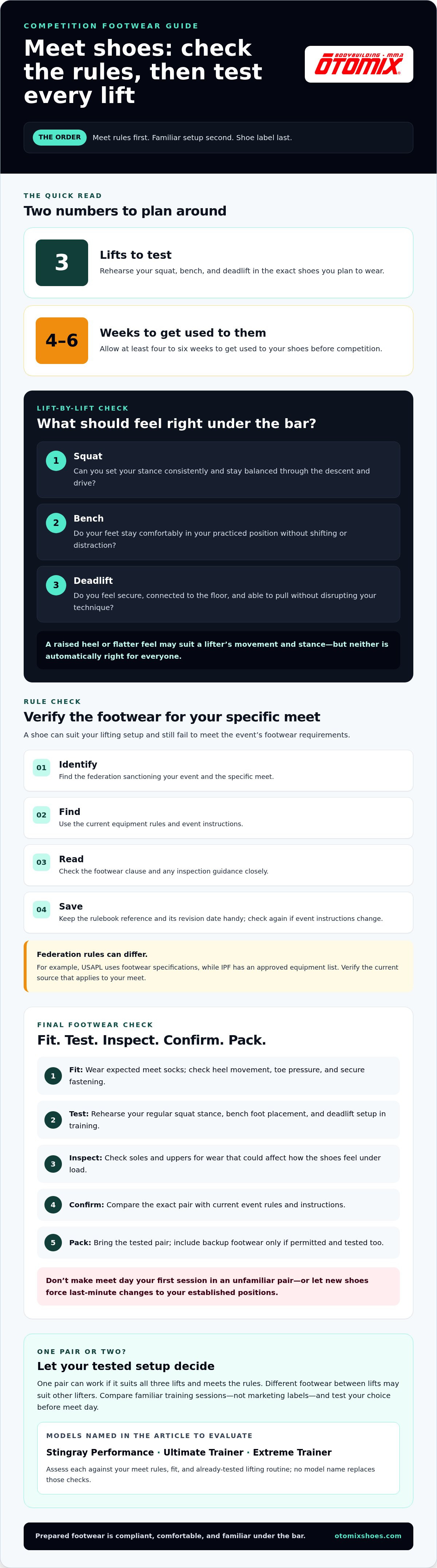
Work through your footwear checks in order. Your powerlifting meet shoes should fit comfortably, feel familiar across your lifts, comply with the event rules, and be ready to pack.
How should you test meet shoes before competition day?
Start with fit, then put the shoes through your training. Wear the socks you expect to use at the meet, whether standard deadlift socks or athletic options from SZOKZ, so you can accurately gauge interior room. Check for heel movement, toe pressure, and secure fastening. Inspect the soles and uppers for wear that could affect how the shoes feel under load.
Next, wear the intended pair in training sessions that include your competition lifts. Rehearse your usual squat stance, bench foot placement, and deadlift setup. Pay attention to slipping, discomfort, or distraction. The shoes should let you repeat your established positions, not force last-minute changes. Don’t make meet day your first session in an unfamiliar pair.
What belongs on the final footwear check?
Before packing, compare the exact pair you plan to wear with the current event rules and instructions. Review any updated guidance, make sure the shoes remain in usable condition, and pack the pair you tested. Add backup footwear only if it’s permitted and you’ve tested it too.
- Fit: Comfortable with secure fastening and no distracting pressure.
- Training: Tested during relevant lifts with a repeatable setup.
- Condition: Soles and uppers remain usable.
- Rules: Pair checked against current event requirements.
- Packing: Tested shoes and any permitted backup packed together.
Keep your shoes clean between sessions. Follow this guide to cleaning weightlifting shoes to care for your pair. For broader footwear context, explore the weightlifting shoes guide. To compare options for your training setup, explore Otomix footwear and assess the fit in training before relying on it at a meet.
Choose Powerlifting Meet Shoes You Have Tested Under the Bar
Make your final choice by checking the current meet rules, the demands of each lift, a familiar fit, and training time in the exact pair. A shoe name or category can help narrow your options, but it can’t confirm that the footwear is allowed or works with your setup. Test before you pack.
Which Otomix shoes should a powerlifter compare?
Otomix offers three models to compare with your event requirements and lifting routine:
- Stingray Performance: A bodybuilding, weightlifting, and workout shoe. Assess its fit with your practiced lifting setup.
- Ultimate Trainer: A bodybuilding, weightlifting, and workout shoe to compare with your comfort and training needs. The Ultimate Trainer guide provides model-specific context.
- Extreme Trainer: Designed for support and stability during intense bodybuilding workouts. Assess its fit and intended use against your requirements.
These descriptions don’t establish federation approval. Check the current rules for your meet and verify any footwear requirements that apply to your chosen pair.
How do you make the final selection?
Use the same criteria for every option. Does the pair satisfy the event’s rules? Does it feel secure and comfortable? Can you repeat your squat, bench, and deadlift setups without distraction? Have you tested it in training for the relevant lifts? If you’re unsure about any answer, keep evaluating before meet day. Familiar performance under the bar matters more than a marketing label.
- Match the shoes to current event rules.
- Check fit and lift-specific needs.
- Use the exact pair in relevant training sessions.
- Pack only footwear you’ve tested and are allowed to wear.
Compare your options at Otomix performance shoes, then test your choice under the bar before competition day.
Make Your Next Training Session Meet-Ready
Give your footwear decision a real test before competition day. In your next relevant training session, wear the pair you’re considering and notice how naturally you settle into each lift. Does the fit stay comfortable? Can you repeat your usual setup without thinking about your shoes? Make note of anything distracting so you can address it before meet day. For lifters who also incorporate endurance conditioning into their overall regimen, Fastgear Australia provides technical racing gear and sports nutrition to support high-intensity training.
Once you know what feels right, compare the options with your training needs in mind. Otomix offers the Stingray Performance, Ultimate Trainer, and Extreme Trainer for lifters to evaluate. Choose your powerlifting meet shoes carefully and put them through their paces before competition day.
Explore Otomix performance shoes to compare the models, then test your choice in training before your meet.
Frequently Asked Questions
Are regular training shoes allowed at a powerlifting meet?
Sometimes, if they meet your federation’s footwear rules. For example, the 2026 USA Powerlifting rulebook requires closed-toe indoor athletic shoes, powerlifting boots, or deadlift slippers for all three lifts. A typical training shoe may fit that description, but its category alone doesn’t settle the question. Check the exact rule wording and any event instructions before bringing it to the platform.
Do powerlifting meets require different shoes for squats and deadlifts?
No general rule requires a separate pair for each lift, but the answer depends on your federation’s rules and your setup. Some lifters prefer different footwear for squats and deadlifts; others use one pair throughout. If you plan to change shoes between lifts, rehearse the switch during training so laces, stance, and foot placement don’t become meet-day distractions.
Can I wear new shoes for the first time at a powerlifting meet?
You can, but that’s a risky time to discover that a shoe pinches, shifts, or feels unfamiliar under load. Wear the pair in training first, including sessions for the lifts you’ll perform. Allow at least four to six weeks to get accustomed to competition shoes. That gives you time to assess comfort and decide whether the pair belongs in your meet setup.
How do I check whether my shoes meet my federation’s rules?
Find your federation’s current equipment rules and the instructions for your specific event, then look for footwear requirements and any inspection process. USAPL uses footwear specifications, while the IPF maintains an approved equipment list for sanctioned competitions. Don’t rely on a retailer’s description or assume approval in one federation applies in another. Keep the relevant rule source handy as you prepare.
Should I bring a backup pair of shoes to a powerlifting competition?
A backup can be useful if your main pair gets wet, damaged, or uncomfortable, but bring one only if it’s permitted under your meet’s rules. Choose a pair you’ve already worn for the relevant lifts, not an untested spare. Pack it where you can reach it quickly, and make sure it meets the same competition requirements as your primary pair.


