

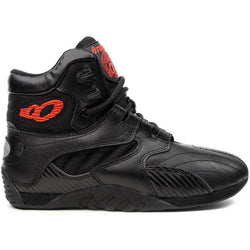
Pro Bodybuilder Training Shoes for Stable, Comfortable Lifts
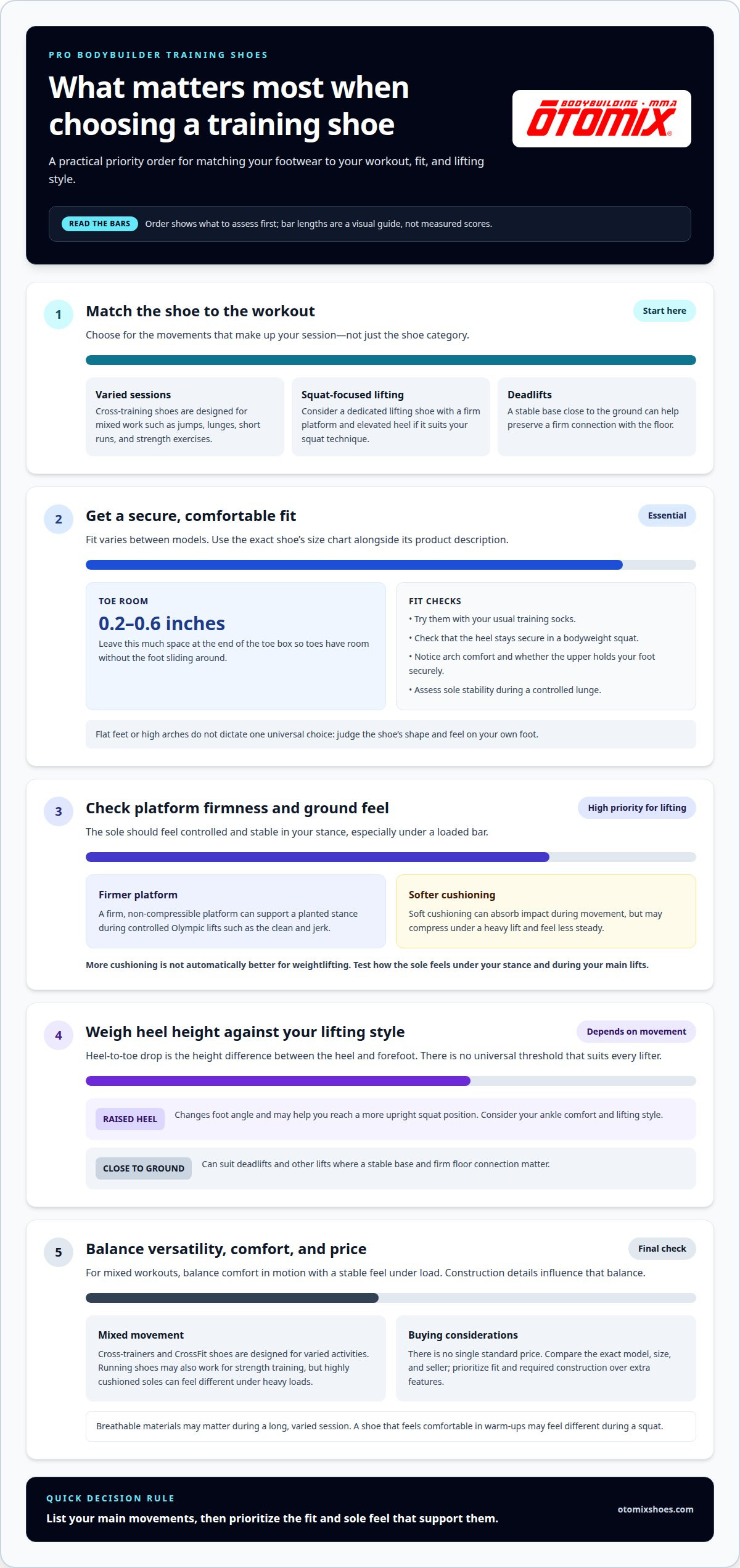
A running shoe isn't automatically the right tool for a heavy lift. Pro bodybuilder training shoes are gym footwear designed to support strength workouts, with features that can feel more stable under load than a soft, highly cushioned running shoe. For fit, leave 0.2-0.6 inches of room at the end of the toe box so your toes have space without your foot sliding around.
Comfort matters when a workout moves from warm-ups to demanding sets. The key is matching the shoe to the work: cross-training shoes are designed for varied sessions, while weightlifting shoes focus on a stable lifting platform and may have an elevated heel. This guide explains what training shoes do, how those designs differ, and how to assess fit and comfort for your routine. First, identify what your workouts demand, then choose footwear that suits those needs.
Key Takeaways
- Use the brand’s size chart and product description together to find a fit that suits your foot and training needs.
- Choose footwear around how varied your workout is and how much time you spend lifting.
- Consider heel height, platform firmness, and ground feel when weighing stability for your lifts.
- Prioritize comfort and a secure fit so your shoes work for your training routine, not just the rack.
1. What are training shoes?
Training shoes are gym shoes designed for workouts such as strength training, weightlifting, and circuit sessions. Unlike running shoes, which are made for repeated forward movement, training shoes balance support and flexibility for varied gym activities. The right construction depends on your session: repeated jumps, machine work, and heavy lifts place different demands on footwear.
Cushioning affects how a shoe feels underfoot. A softer midsole can absorb impact during movement, while a firmer platform can feel more planted during a lift. More cushioning isn’t automatically better for weightlifting. Consider whether the sole compresses under your stance and whether you can keep your feet stable. A shoe that feels comfortable during walking warm-ups, for example, may feel different during a squat.
Start with the size chart for the exact shoe, then read its product description for fit and construction details. Shoe sizes can vary between models, so don’t assume your usual size will fit every gym shoe. Leave 0.2-0.6 inches of room at the toe, as the sizing guidance recommends. Try the shoes with your usual training socks and check that your heel stays secure during a bodyweight squat.
Flat feet and high arches don’t determine one universal shoe choice. Match the shoe’s shape and feel to your foot: check whether the arch area feels comfortable, whether the upper holds your foot securely, and whether the sole feels stable during a controlled lunge. These fit checks are more useful than choosing by foot type alone.
There’s no single standard price for pro bodybuilder training shoes in the US. Prices vary by model, size, and seller, so compare the price of the exact shoe you’re considering rather than relying on a broad category estimate.
When choosing a lower-priced shoe, prioritize fit and the construction your workouts require over extra features. Check the size chart, compare product descriptions, and look for a shoe that feels secure during your main lifts. A low price won’t make an uncomfortable or unstable shoe a good training choice.
Professional bodybuilders don’t all wear the same training shoes. Their choices depend on their workouts and personal fit. Evaluate recommendations for D-MAK II and D-MAK Carbon against those same factors rather than treating either as a universal answer. Recommendations from well-known pros are most useful when they explain the workout and fit behind the choice.
2. Cross-training versus weightlifting shoes
Cross-training shoes are designed for workouts that combine exercises and movements, such as short runs, jumps, lunges, and strength work. They aim to handle varied activities in one gym shoe. Weightlifting shoes focus more narrowly on lifting, with an elevated heel and firm platform that can support squat posture and a planted stance. Choose according to the work your session actually involves.
A cross-trainer can suit bodybuilding sessions that move between machines, accessory exercises, and moderate or heavy weightlifting. CrossFit shoes are also intended for varied workouts and can be used for most workouts, including moderate or heavy weightlifting. Their appeal is versatility, not a guarantee that every design will feel the same under a barbell. Compare how the midsole feels during your main lifts and other movements.
For CrossFit, consider the session as a whole. A workout with box jumps, short runs, and barbell work calls for a different balance than one built around squats and presses. Cross-training and CrossFit shoes can accommodate varied activities, while dedicated weightlifting shoes prioritize lifting stability. Look for a secure fit and a sole that feels controlled during lateral exercises, then check how it feels in your lifting stance.
Running shoes with good support can also be used for strength training, according to fitness experts. However, a highly cushioned running shoe may compress differently under a heavy lift than a firmer platform. If your workout includes both running and lifting, weigh comfort during movement against a stable feel under load. The midsole and other parts of the shoe’s construction affect that balance; breathable materials may also matter during a long, varied session.
Squat or powerlifting shoes can suit bodybuilding when the lifter benefits from a raised heel and their squat technique. Their firm platform and elevated heel support a more upright squat posture, but they’re less adaptable for running or jumping. Choose them for lift-focused workouts, and consider cross-trainers for sessions with more varied exercises.
Make the call by listing your workout’s main movements, then matching the shoe to its priority. For mixed sessions, favor versatility. For squat-focused lifting, consider a dedicated platform and heel.
3. Heel-to-toe drop, weight, and lifting thresholds
Heel-to-toe drop is the height difference between a shoe’s heel and forefoot. A raised heel changes your foot angle and may help you reach a more upright squat position. Weightlifting shoes use elevated heels for this reason. The right drop depends on your movement, ankle comfort, and lifting style, not a universal threshold. Compare that feel with the positions you use most.
For Olympic lifting, a firm, stable platform matters during controlled movements such as the clean and jerk. Weightlifting shoes use hard, non-compressible platforms to support lifting efficiency. Under a loaded bar, a soft midsole may compress and feel less steady. Focus on how the shoe supports your stance throughout the lift rather than choosing by its listed weight alone. This helps narrow your pro bodybuilder training shoes options.
Strength-training sessions vary. A squat-focused workout may benefit from heel elevation, while deadlifts often call for a stable base close to the ground. Excess cushioning during a deadlift can change how firmly your foot connects with the floor. Consider your main lifts and stance before deciding whether a raised heel helps or hinders your setup.
Flat-soled casual shoes can provide a closer-to-ground feel for lifting, but their suitability still depends on sole stability, grip, and construction. A rubber outsole may provide traction, and durable construction matters across repeated gym sessions. Test the shoe with a controlled bodyweight squat and hip hinge. Notice whether your foot stays planted without the sole rocking or compressing.
There’s no single weight threshold that automatically calls for a particular shoe. As the load increases, prioritize a platform that feels stable and doesn’t visibly compress during your lift. Check support at the heel and forefoot, then repeat the movement with your usual stance. Compare how each shoe feels during a squat and deadlift. These checks help you assess pro bodybuilder training shoes for your routine.
Heel elevation is a tool, not a requirement for every lifter. A raised heel may suit Olympic lifts or squat mechanics, while a flatter base may work better for movements performed close to the ground. Choose the design that supports your lifting positions, and pay attention to comfort and stability throughout each session.
4. Choosing footwear based on workout and comfort
Start with your workout, not the shoe’s appearance. A lifting-focused session calls for a stable feel underfoot, while HIIT classes combine quick direction changes, jumps, and strength exercises. If your routine includes both barbell work and fast circuits, consider which activity needs more support from your footwear. The right amount of cushioning depends on the movements you perform most.
For a HIIT class with lateral shuffles and jumps, look for a secure fit that lets your foot move without sliding inside the shoe. During a strength circuit, notice whether the sole feels steady during lunges and loaded carries. Comfort also depends on the upper materials: breathable materials may suit a warm, active class, while a close fit helps limit unwanted movement during exercise.
Use a simple test before committing to a workout shoe. Walk, perform a bodyweight squat, then step into a controlled lunge. Check for heel lift, toe pressure, or a sole that feels unstable. Repeat the movements in the socks you usually wear for fitness sessions. A shoe that feels comfortable while standing still may fit differently once you bend, brace, and change direction.
Watch for wear that affects how your footwear performs. A smooth, worn tread can reduce grip, while a sole separating from the upper can change how the shoe feels. If cushioning feels compressed or uneven compared with the other shoe, stability may suffer during a squat or jump. Compare both shoes on a flat surface, then inspect the soles and uppers for damage before training.
Match materials and construction to your weekly routine. A shoe used for lifting and HIIT faces different movements from one reserved for machine exercises. If your sessions combine varied activities, prioritize a secure fit and balanced comfort instead of choosing by cushioning alone. For dedicated lifting, a firmer feel may better suit the work.
Ready to choose footwear for serious gym sessions? Explore training shoes for lifting and focus on the fit and feel your workouts demand.
Otomix
Otomix offers footwear for bodybuilding, weightlifting, and gym workouts. After weighing fit, stability, and session demands, consider the Stingray Performance Bodybuilding Weightlifting Workout Gym Shoes, Ultimate Trainer Bodybuilding Weightlifting Workout Gym Shoes, and Extreme Trainer.
Use your training priorities to narrow the choice. Think about whether your sessions focus on lifting, include varied gym work, or combine both. Then compare the available options with the fit and comfort factors discussed above. The goal is to choose footwear that suits your routine, not simply a shoe with a familiar label.
If you’re ready to explore bodybuilding and weightlifting footwear for your workouts, contact Otomix to discuss your needs.
Make Your Next Training Choice Count
Choose footwear that supports the training you’re building toward. As your routine changes, notice whether your shoes still feel right for the work you ask of them. That ongoing awareness can help you make a more deliberate choice than simply replacing a familiar pair with something similar.
Choosing pro bodybuilder training shoes isn’t about chasing a label or copying another lifter. It’s about finding footwear that fits your training priorities and feels dependable as you put in the work. Keep comfort and confidence in focus, and make your next choice with purpose.
Ready to take that next step? Contact Otomix about training shoes and move forward with confidence in your training.
Frequently Asked Questions
What are training shoes?
Training shoes are gym footwear designed for exercise beyond steady running. They can suit sessions that move between resistance machines, dumbbell work, and conditioning drills. For example, if a workout shifts from cable rows to step-ups, a training shoe is designed to handle those changing demands. The right choice still depends on fit and the movements in your routine.
Why are these the best weightlifting shoes?
No shoe is automatically best for every weightlifter. The right choice matches your lifts, stance, and comfort: a firm-feeling base can suit barbell work, while a mixed session may call for more flexibility. Try your main movement at a controlled load. Notice whether your foot feels planted during setup and execution, and whether the shoe stays comfortable throughout the set.
What are the best weightlifting shoes for bodybuilding workouts?
Choose footwear that suits your session rather than expecting one shoe to work best for every bodybuilding workout. A leg day centered on squats may call for a different feel from a routine of machines, lunges, and conditioning intervals. Compare fit, sole feel, and comfort during your actual movements. Your shoes should support your routine without distracting you between sets.
Do pro bodybuilders prefer flat shoes or heeled lifting shoes?
There’s no single preference shared by all pro bodybuilders. Flat shoes offer a close-to-ground feel, while heeled lifting shoes may help some lifters maintain a more upright squat position. The choice depends on the lift, stance, mobility, and personal comfort. A flat shoe for deadlifts and a heeled option for squats can both suit different parts of a training plan.
What shoe features matter for bodybuilding leg workouts?
For leg workouts, prioritize a secure heel, stable sole, and a fit that keeps your toes comfortable during squats or lunges. Heel elevation can matter for squat posture, while a flatter base may suit other lifts. Check that the outsole grips the gym floor and that cushioning feels controlled during movements such as leg presses, split squats, and loaded carries.
How should bodybuilding shoes fit, and what risks come from the wrong footwear?
Bodybuilding shoes should feel secure through the heel and midfoot, with room for your toes to move. Use the maker’s size chart because sizing varies between models. Poorly fitting footwear can cause slipping, pressure, or distracting movement during a set. Try the shoes with your training socks and test controlled squats, lunges, and hip hinges before using them for demanding sessions.


