

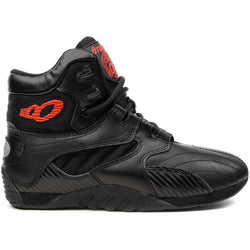
Shoes Worn at Mr. Olympia: Stage Shoes vs. Training Shoes
The shoes worn at Mr Olympia depend on the division and whether you mean stage presentation or training. Men’s Open bodybuilders compete barefoot, while competitors in Bikini, Fitness, Wellness, and Figure wear regulated high heels onstage. These choices reflect presentation rules, not the shoes competitors use to lift. If you’ve found conflicting answers about Olympia footwear, start by checking the division and setting.
Your gym shoes should suit your own workouts, not an athlete’s stage look. This guide explains the difference between stage footwear and training shoes, then offers a practical way to compare options for your lifting routine. Consider the movements you do most, how stable and secure a shoe feels, and whether you need it for focused lifting or a mixed gym session. Otomix offers training footwear including Stingray Performance, Ultimate Trainer, and Extreme Trainer. Choose based on your training needs, not assumptions about what a competitor wears.
Key Takeaways
- Interpret claims about shoes worn at Mr Olympia by checking the division and context. A product listing alone doesn’t establish what an athlete wore.
- Match shoe priorities to your main lifts. Squats, deadlifts, and mixed gym sessions can involve different trade-offs.
- Compare fit, stability, grip, and versatility against the movements in your routine.
- Once you know what you need, explore Otomix’s Stingray Performance, Ultimate Trainer, and Extreme Trainer as training-shoe options.
What Shoes Are Worn at Mr. Olympia, and When?
The shoes worn at Mr Olympia vary by division and setting. Men’s Open competitors appear barefoot onstage, while competitors in divisions such as Bikini, Fitness, Wellness, and Figure wear heels. Those stage choices don’t tell you what the athletes wear to train.
The Mr. Olympia competition includes multiple divisions, so there isn’t one universal stage-shoe answer. Under current IFBB Pro League rules, women’s stage heels have limits on sole thickness and heel height, and platform shoes aren’t allowed. Training footwear, by contrast, is a personal choice shaped by the athlete’s workout. When checking a specific claim, distinguish a stage appearance from a training session and look for reliable, event-specific evidence.
Watch this behind-the-scenes look at show day for event context:
Does Mr. Olympia require a specific type of shoe?
Stage rules apply to presentation by division; they don’t establish a required gym shoe or endorse a training brand. Men’s Open competitors are barefoot during onstage judging and finals. For women’s Bikini, Fitness, Wellness, and Figure divisions, the stated limits are a maximum 1 cm sole thickness and 12 cm stiletto height, with platforms prohibited. Check the current rules for the specific division and event, since requirements can change. A competitor photo alone can’t confirm a rule or endorsement.
Why a stage look does not identify a training shoe
Stage footwear is selected or required for presentation; bodybuilding training shoes are chosen for lifting and gym movement. Posing emphasizes physique display and compliance with division rules. Lifting calls for footwear that feels secure and maintains stable contact with the floor. A stage image shows what an athlete wore in that moment, not their squat, deadlift, or workout shoe preference. Treat a training-shoe claim as reliable only when event-specific imagery or a direct statement supports it.
Stage Footwear vs. Bodybuilding Training Shoes: What Changes?
The difference comes down to purpose. Stage footwear supports presentation and posing; gym footwear is chosen for the movements and lifts in a training session. Stage shoes complete the look, while performance-focused gym shoes are selected for fit, stability, and movement.
| Context | Purpose | Movement | Footwear priorities |
|---|---|---|---|
| Stage presentation | Showcase physique and complete the division’s presentation | Posing and controlled transitions | Appearance, comfort while posing, and compliance with current rules |
| Training | Support exercise sessions | Lifting, bracing, and moving between exercises | Secure fit, stable floor contact, suitable grip, and movement freedom |
What matters in shoes for posing and stage presentation?
Stage footwear should suit the presentation demands of the division and allow the competitor to pose comfortably. Requirements can differ, so don’t assume one shoe style applies to every Mr. Olympia division. Review the current rules for your specific competition before choosing footwear. Photos show what a competitor wore onstage, not a universal standard.
What matters in shoes for bodybuilding workouts?
Training priorities depend on the session. For squats, consider whether the shoe feels secure and gives you steady contact with the floor as you brace. For deadlifts, pay attention to how the sole feels underfoot and whether the shoe lets you set your stance comfortably. Mixed gym sessions may call for a balance of grip, support, and flexibility as exercises change. No single design suits every lifter or workout.
Compare footwear against the movements you actually perform, not the shoes worn at Mr Olympia for presentation. For more detail on lifting-focused considerations, read this weightlifting shoes guide. Then explore Otomix training shoes with your session needs in mind.
How to Compare Bodybuilding Shoes for Your Own Training
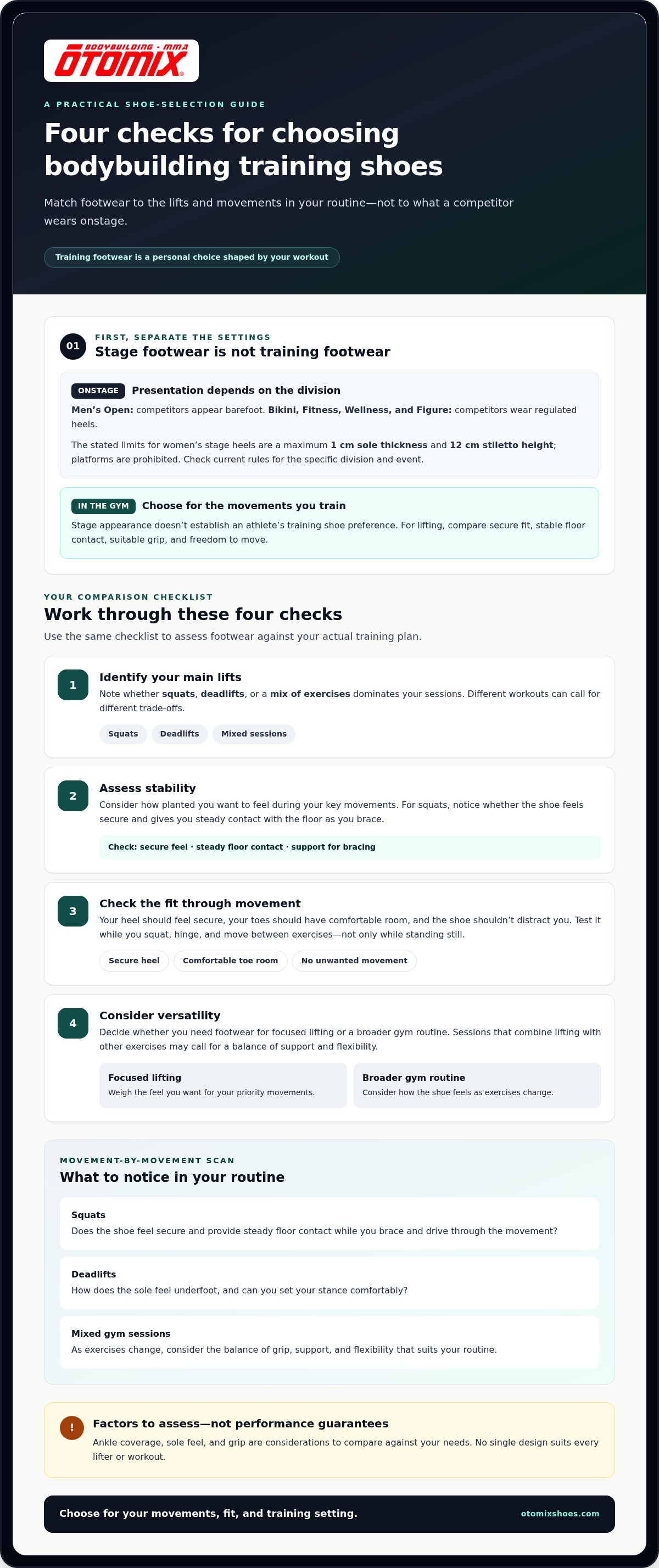
Choose for your training plan, not a competitor’s stage appearance. Use this checklist to compare bodybuilding shoes against the work you actually do:
- Identify your main lifts. Note whether squats, deadlifts, or a mix of exercises dominate your sessions.
- Assess stability needs. Pay attention to how planted you want to feel during your key movements.
- Check the fit. Look for a secure feel without discomfort or unwanted movement inside the shoe.
- Consider versatility. Decide whether you need footwear for focused lifting or a broader gym routine.
Match shoe priorities to your main lifts
For squats, consider whether the shoe gives you a steady base as you brace and drive through the movement. For deadlifts, notice how the sole feels underfoot and whether you can set your stance comfortably. A mixed session that combines lifting with other gym exercises may call for a different balance of support and flexibility. Treat ankle coverage, sole feel, and grip as factors to assess, not guarantees of better performance. Explore the Stingray Performance guide for a focused model overview.
Check fit and versatility before choosing
Test the fit through your usual movements, not just while standing still. Your heel should feel secure, your toes should have comfortable room, and the shoe shouldn’t distract you as you squat, hinge, or move between exercises. If you train across several types of lifts, weigh versatility against the feel you want for your priority movements. Review the Ultimate Trainer guide for a model-specific comparison.
Use your checklist to narrow the options. Explore bodybuilding training shoes and compare them with the movements you do most.
Explore Otomix Training Shoes After You Know What You Need
Once you’ve identified the lifts and movements that shape your sessions, compare training shoes against those priorities. Otomix specializes in athletic footwear for bodybuilding, weightlifting, and gym workouts, with options including Stingray Performance, Ultimate Trainer, and Extreme Trainer. These are training models to consider for your routine, not shoes to assume a Mr. Olympia competitor wears.
Which Otomix model should you explore first?
Start with the model names, then compare each option with the demands of your workouts. Review the product information for details that help you assess whether a shoe fits your routine. Stingray Performance, Ultimate Trainer, and Extreme Trainer are Otomix training options; your needs, not an athlete endorsement, should guide your choice.
Turn event inspiration into a training-shoe decision
The shoes worn at Mr Olympia may catch your eye, but stage presentation doesn’t establish which footwear will suit your gym work. Bring the decision back to your own checklist:
- Movement: Which lifts or exercises make up most of your sessions?
- Fit: Does the shoe feel secure and comfortable as you move?
- Grip: Does the contact with the floor feel appropriate for your exercises?
- Stability: Does the shoe feel steady during the lifts you prioritize?
Compare the models using these priorities, and choose based on how they fit your routine rather than a promise of results. Otomix has specialized in athletic footwear since 1989. Ready to assess your options? Explore Otomix training shoes and find a model that aligns with your training priorities.
Choose Footwear That Fits Your Training
The shoes worn at Mr Olympia depend on the division and setting. Stage footwear serves presentation rules, while gym shoes are chosen for lifting and training. Don’t use an athlete’s stage look as a shortcut to choosing your own footwear.
Start with your main lifts, then compare stability, grip, fit, and comfort through the movements you actually perform. Squats, deadlifts, and mixed gym sessions can place different demands on a shoe, so the right choice depends on your routine and preferences.
Otomix has specialized in athletic footwear since 1989. Its training options include Stingray Performance, Ultimate Trainer, and Extreme Trainer. Explore them for your workouts, and choose based on your movements, fit preferences, and training needs. Explore Otomix training shoes and compare the options with your lifting priorities in mind.
Frequently Asked Questions
What shoes do Mr. Olympia competitors wear?
It depends on the division and whether you mean stage presentation or training. Men’s Open competitors appear barefoot onstage, while some women’s divisions require heels under current rules. Training footwear is a separate personal choice. The shoes worn at Mr Olympia in a photograph don’t prove what an athlete wears to lift. Identify a specific training model only when reliable event imagery or a direct athlete statement supports it.
Do bodybuilders wear shoes onstage at Mr. Olympia?
Stage footwear depends on the division and current event rules. Men’s Open bodybuilding competitors appear barefoot, while Bikini, Fitness, Wellness, and Figure competitors wear heels. The IFBB Pro League rules described in this article limit sole thickness to 1 cm and stiletto height to 12 cm, and prohibit platform shoes. Check the current official rules for the relevant division and year before treating a style as mandatory.
Are the shoes worn onstage the same as bodybuilding training shoes?
Not necessarily. Stage footwear is part of a competitor’s presentation or follows division rules; training shoes are selected for gym movements and personal fit. A competitor’s stage look doesn’t tell you what they wear for squats, deadlifts, or other lifts. Choose workout footwear by considering your own routine, grip, sole feel, and stability rather than copying a stage appearance.
What should I look for in shoes for bodybuilding workouts?
Start with the movements you train most, then assess fit, grip, sole feel, and stability during those exercises. For example, notice whether the shoe feels secure as you squat, hinge, or move between stations. Comfort matters throughout the session, not just during one lift. No single feature guarantees better performance, so compare footwear with your needs and usual training routine.
Does Otomix make shoes for bodybuilding and weightlifting?
Yes. Otomix offers specialized training footwear for bodybuilding, weightlifting, and gym workouts, including Stingray Performance, Ultimate Trainer, and Extreme Trainer. Compare the models using your training priorities and the product information. These are options for gym use, not evidence that a Mr. Olympia competitor wears or endorses a particular model. Choose based on your movements, fit preferences, and training needs.


