

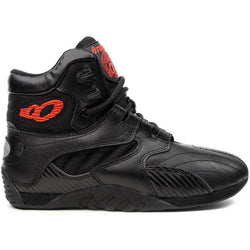
Thin Sole Shoes for Lifting: How Flat Soles Affect Lifting
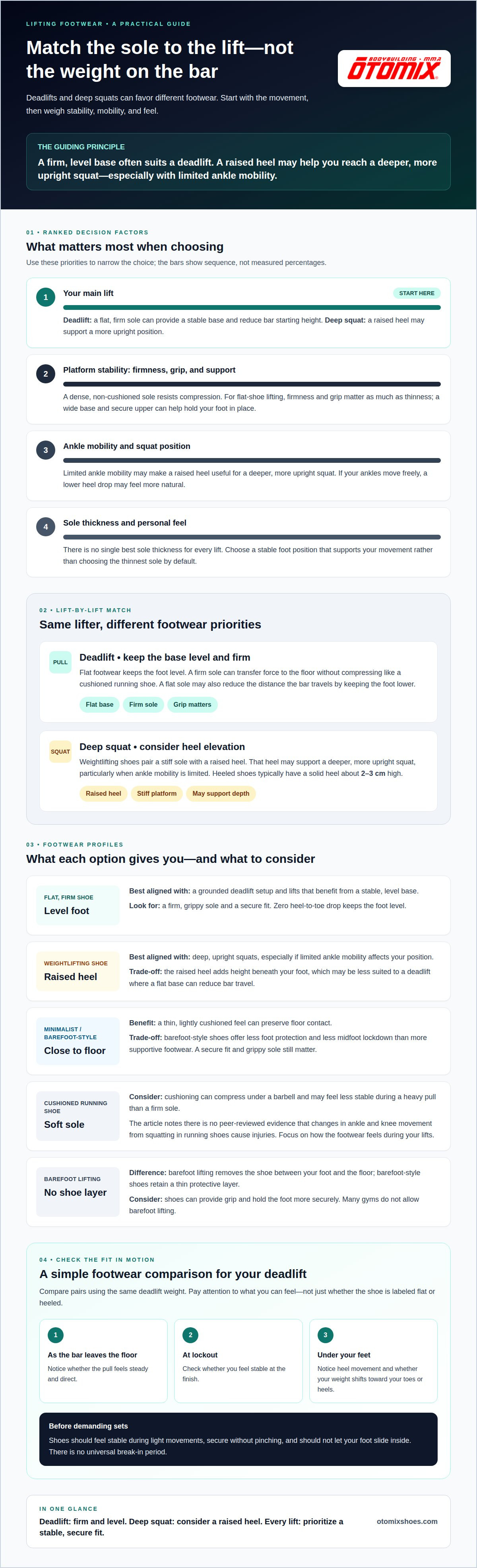
A higher heel isn’t automatically better for lifting. Thin sole shoes for lifting provide a firm, close-to-the-floor base that can feel more stable for deadlifts than soft, cushioned running shoes. Raised-heel weightlifting shoes may suit deep squats better, especially if limited ankle mobility affects your position.
The right sole depends on the lift, not just the weight on the bar. A flat, firm sole can help you feel grounded, while a raised heel may support a more upright squat. Barefoot-style shoes offer a minimal feel, but less midfoot lockdown than more supportive footwear.
This guide compares flat, thin-soled, heeled, and barefoot-style options, explains what lifting shoes are designed to do, and considers whether they suit deadlifts. It also covers why cushioned running shoes may feel less stable under a barbell, helping you match your footwear to your training.
Key Takeaways
- Match your shoe’s sole and heel to the lift: deadlifts often favor a flat base, while raised heels can support deeper squats.
- Look beyond “flat” or “heeled.” Sole firmness, grip, foot support, and your ankle mobility all shape how stable a shoe feels.
- Barefoot-style footwear offers a close-to-floor feel, but consider the trade-offs in foot protection and midfoot lockdown.
- Learn what lifting shoes are built for, then decide whether your training calls for a specialized weightlifting shoe or a versatile gym shoe.
Can you deadlift in weightlifting shoes?
Yes, you can deadlift in weightlifting shoes, but their raised heel may not suit every pull. Flat, firm footwear can provide a stable base and reduce the bar’s starting height.
Flat Footwear for Deadlift Training
Flat shoes keep your foot level, giving you a firm platform without a raised heel. A dense, non-cushioned sole can help transfer force into the floor instead of compressing under load. This can support a steady setup and a direct push through your feet. Running shoes, by contrast, may compress and feel less stable during a heavy pull.
Ground Feel from Flat Soles
Ground feel describes how clearly you sense contact with the floor through your shoes. A flat, firm sole offers a closer connection than a soft running shoe. During a deadlift, that may help you notice whether your weight shifts toward your toes or heels. Grip and sole firmness also affect how planted your feet feel.
Weightlifting shoes usually have a raised heel and stiff sole. That design can help with lifts requiring a deep squat, but the heel adds height beneath your foot. For deadlifts, a flat sole may offer a small advantage when your goal is to lift as much weight as possible, because it can reduce the distance the bar travels.
Compare footwear by using the same deadlift weight in each pair. Notice how the bar feels as it leaves the floor, whether you feel stable at lockout, and whether your heels move. These observations can show whether your shoes support your pull or introduce unwanted movement. A flat shoe is a practical choice when you want a firm base with minimal sole compression.
Are Flat Shoes Better for Lifting?
Flat soles suit lifts that benefit from a stable, level base. Raised heels can support squat depth when limited ankle mobility affects your position.
Heel-Elevated and Flat Shoe Tradeoffs
Flat shoes keep your foot level, while weightlifting shoes raise the heel on a stiff platform. This difference matters most when balancing deadlifts with deep squats. A raised heel may support a more upright, deeper squat for lifters with limited ankle mobility. If your ankles move freely, a lower heel drop may feel more natural. Choose according to the lifts you prioritize, rather than following one rule for every session.
Heeled weightlifting shoes typically have a solid heel about two to three centimetres high, a height that suits many squatters. That lift can pair well with a knee-forward, upright squat style. Hip-dominant squats shift more work to the glutes, hamstrings, and back, so some lifters may prefer a flat base.
Features of Minimalist Lifting Shoes
Minimalist shoes use thin soles with little cushioning to create a barefoot-like feel. For lifting, prioritize a firm, grippy sole, a wide base, and an upper that holds your foot securely. Zero heel-to-toe drop keeps your foot level. These features can provide a steady platform without the compression of a soft running shoe.
Your shoes should feel secure without pinching or letting your foot slide inside. There’s no universal break-in period; the shoes should feel stable during light movements before you use them for demanding sets.
Benefits of Thin Soles
Thin, firm soles provide a closer connection to the floor and don’t compress like cushioned running shoes. That contact can help you sense how your weight is balanced across your foot and make your stance feel more predictable during barbell work. For flat-shoe lifting, firmness and grip matter as much as thinness.
Thin-soled lifting shoes vary in price by model and construction, so compare their features rather than assuming one price applies to all. If squat depth is your priority, a raised heel may be more useful than a thin sole.
Sole Thickness and Heel Drop
There’s no single best sole thickness for every lift. Firmness, grip, and stability matter more than choosing the thinnest option. For a flat shoe, a firm sole with zero heel-to-toe drop keeps your foot level. For deep squats with limited ankle mobility, a raised heel may help you reach a deeper, more upright position.
Let your ankle mobility and main lifts guide your choice. The goal is a stable foot position that supports your movement, not a particular sole thickness on its own.
Lifting barefoot versus wearing shoes
Barefoot lifting removes the shoe between your foot and the floor, while barefoot-style shoes leave a thin protective layer. This distinction matters during squats and deadlifts: shoes can provide grip and hold your foot more securely. Many gyms don’t allow barefoot lifting, so going without shoes may not be an option on the gym floor.
Barefoot-style shoes offer limited protection if a weight plate drops and less midfoot lockdown during heavy sets. Those trade-offs matter when a loaded barbell is nearby or your feet shift under effort. Flat shoes provide grip and foot lockdown that socks alone don’t. If you want a minimal feel, they can preserve floor contact while adding practical coverage.
Running shoes offer a different comparison. Their cushioning can compress under a barbell, while barefoot-style shoes have little cushioning. Squatting in running shoes may change ankle and knee movement, but there’s no peer-reviewed evidence that those changes cause injuries. Focus on how each option feels during your lifts rather than assuming one shoe type is automatically unsafe.
Weightlifting shoes can also affect how stable a squat feels. In one study, participants reported feeling more stable while squatting in weightlifting shoes. That perception may matter during a deep squat, when you need to control your position at the bottom. It doesn’t mean every lifter needs a raised heel or specialized shoe; the right choice depends on the movement and the feel you want.
For many lifters, footwear may matter less, making comfort a reasonable priority. Try a squat and deadlift in comfortable shoes that stay secure, and notice whether your feet slide or feel poorly supported. Choose barefoot-style shoes for a minimal, close-to-floor feel, or regular lifting shoes when grip, foot lockdown, or protection matters more. Barefoot and barefoot-style footwear are not the same.
What lifting shoes are designed to do
Lifting shoes are designed for barbell training, not running, jumping, or conditioning. They support stable positions in movements such as squats, cleans, and snatches. Choose footwear for the demands of your lifts, rather than treating it as an all-purpose athletic shoe. Thin sole shoes for lifting can suit training where you want a closer connection to the floor.
In a deep squat, a firm platform can help you stay steady near the bottom. That matters in Olympic lifts such as the clean and snatch, where you catch the bar in a deep squat. A raised heel can also support a more upright torso and greater knee flexion than running shoes. These features make weightlifting shoes useful if you need to reach and control that position.
Running shoes serve a different purpose. Their cushioning is designed for impact during running, while barbell lifting calls for a stable base under load. A shoe that compresses may feel less secure during a squat or clean. Thin sole shoes for lifting offer another option for barbell sessions, especially if you prefer a level, close-to-the-floor feel.
Competition demands can make the difference clearer. Olympic weightlifters need to reach a deep squat to receive a clean or snatch, so a raised heel and stiff sole can support that movement. If your sessions center on these lifts, you may value a stable, squat-ready platform. For other gym training, different footwear features may matter more.
Think about your main movements first. If your training includes deep squats, cleans, and snatches, a dedicated lifting shoe may support the positions those lifts require. If you also run or jump, use footwear suited to those activities rather than expecting one lifting shoe to do everything. Explore specialized training footwear for a different kind of workout.
Otomix
Otomix offers bodybuilding, weightlifting, and gym workout shoes for lifters matching footwear to their training. Options include Stingray Performance Bodybuilding Weightlifting Workout Gym Shoes, Ultimate Trainer Bodybuilding Weightlifting Workout Gym Shoes, and Extreme Trainer.
Consider your main lifts and the feel you want from your footwear. Deadlift-focused training may call for a firm, level base, while deep squats may suit a different heel profile. Match those needs to the shoe’s features and choose the option that fits your training focus. Otomix’s range includes several footwear options, but not every design suits every lift.
Explore Otomix’s lifting shoes to compare the options with your training priorities.
Make Your Next Training Session Count
During your next training session, notice how your footwear supports your movement. Choose a familiar lift, set up as usual, and pay attention to whether your feet stay planted throughout the effort. That can help you decide what to prioritize in your next pair, such as a closer floor feel, more foot support, or a heel suited to your squat position.
Choosing thin sole shoes for lifting is a personal equipment decision, not a shortcut to better technique. Let your training goals guide your choice, then focus on consistent, controlled reps. Shoes that work with your movement can help you approach each session with confidence.
Ready to explore footwear for your lifting routine? Contact Otomix about lifting shoes and take your next step toward a setup that fits your training.
Frequently Asked Questions
Can’t I just wear runners?
You can wear running shoes, but their cushioning may compress during barbell lifts and make your base feel less stable. They can still suit sessions that combine lifting with running or conditioning. For squats or deadlifts, notice whether the shoes shift or feel soft under load. A firm, stable option may feel more secure for those lifts.
Is lifting barefoot the same?
No. Bare feet leave nothing between your skin and the floor, while barefoot-style shoes provide a thin protective layer. This distinction matters around weights: minimalist footwear offers some coverage, though less protection from a dropped plate than a more substantial shoe. Gym rules may also restrict barefoot lifting, so socks alone may not suit your training space.
So what shoes should I wear?
Choose shoes to suit the movements that anchor your workout. For deadlifts, a flat, firm platform can support a level stance; for deep squats, a raised heel may help if limited ankle mobility affects your depth. If your session combines lifting and conditioning, consider which activity needs the most stability. Comfort matters too: your foot should feel secure, not crowded or loose.
Are flat shoes or heeled lifting shoes better for squats and deadlifts?
Neither style is best for every lift. Flat shoes keep your foot level, which can suit deadlifts and lifters who prefer a grounded stance. Heeled shoes may help some squatters reach a deeper, more upright position, especially with limited ankle mobility. If your program includes both lifts, base your choice on your priority movement and how each position feels.
Are minimalist shoes safe for heavy lifting?
Minimalist shoes can work for lifting, but their limited cushioning and protection involve trade-offs. During heavy sets, notice whether your foot stays secure and the shoe grips the floor. Barefoot-style footwear offers less midfoot lockdown than more supportive shoes and less protection if a plate lands on your foot. A stable fit matters more than the minimalist label.
What features should I look for in thin-soled lifting shoes?
Look for a firm, grippy sole, a broad base, and an upper that holds your foot in place. A level platform with no heel-to-toe drop suits lifters seeking a flat stance. Check the fit while standing and moving into your lifting position: your foot should feel secure without pinching or sliding. Match these features to your main lifts, not appearance alone.


