

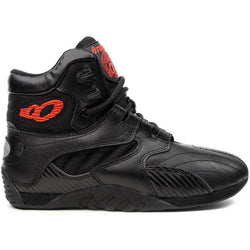
Wrestling Shoes for Lifting: Grip, Fit, and Heel Support
Wrestling shoes can be a strong choice for lifting, especially powerlifting. Wrestling shoes for lifting have a 0 mm heel-to-toe drop, keeping your foot close to the floor and offering a flat base for barbell work.
That grounded feel can help you engage the floor during deadlifts, while ankle coverage may appeal to lifters who want support around the joint. But a flat shoe isn’t the same as a weightlifting shoe with an elevated heel. The right fit depends on your lifts, stance, and what feels stable under load.
When comparing wrestling shoes with other gym footwear, focus on the sole, heel height, ankle coverage, and fit, not just the label. This guide explains when wrestling shoes can work well, why powerlifters often prefer a flatter profile, and when another design may better suit your training.
Key Takeaways
- Match sole stiffness and heel height to your main lifts: the best setup depends on the movement and the position that feels stable.
- Consider ankle coverage and fit together; a secure feel matters more than choosing a shoe for its label alone.
- Choose footwear for the training you actually do. A lifting-focused shoe may not suit running or cardio.
- For powerlifting, weigh how a flatter profile feels during deadlifts and low-bar squats before settling on your training shoe.
Benefits of a rigid sole and elevated heel
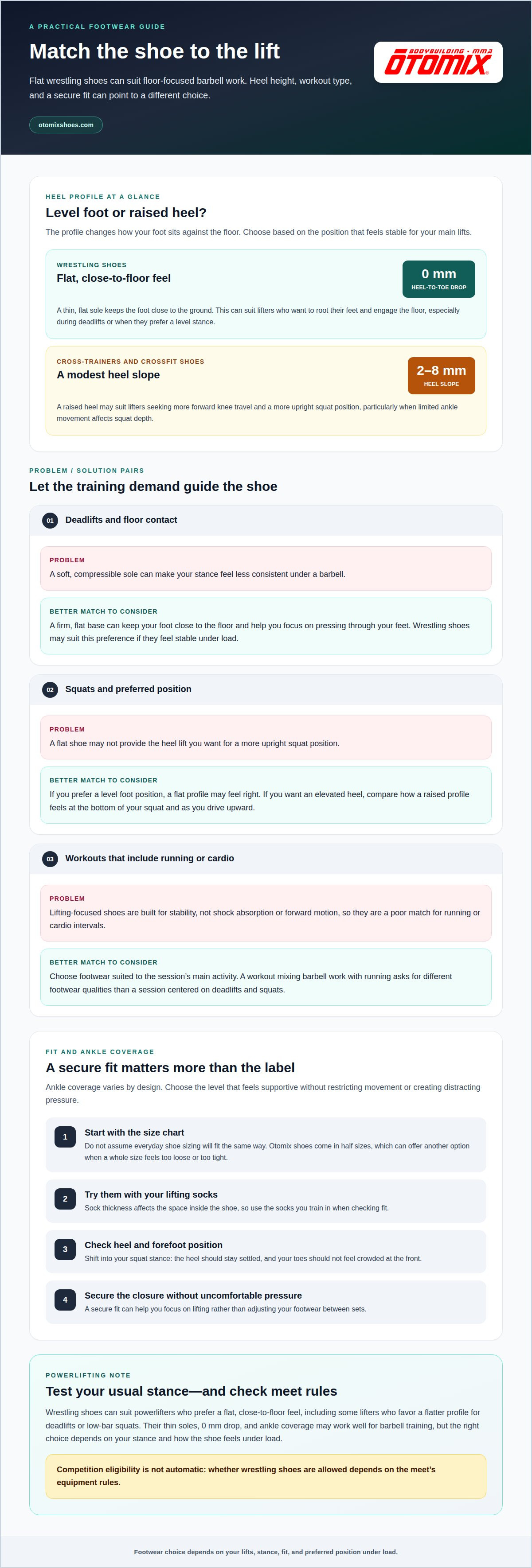
Wrestling shoes can suit lifting when you want a firm, flat platform; their heel-to-toe drop is 0 mm. Look for a stable sole and secure fit, then choose heel height according to your main lifts.
What features should you look for in wrestling shoes for lifting? Prioritize a sole that feels stable under load, a flat profile, and a secure fit. For deadlifts, a flat base can help you engage more of your foot with the floor.
Rigid Sole Benefits
A rigid sole resists bending and gives your foot a steady platform as you brace and push against the floor. That can matter when a soft, compressible sole makes your stance feel less consistent under a barbell. During a deadlift, for example, a firm base can help you focus on pressing through your feet rather than feeling the shoe compress.
Wrestling shoes typically use thin soles, which keep the foot close to the ground. Their 0 mm drop also means the heel and forefoot sit at the same height. This flat setup can help lifters root their feet and engage the floor, especially when a lifted heel would change their preferred stance.
Elevated Heel Benefits
An elevated heel sits higher than the forefoot, changing your foot’s angle against the floor. This profile may suit lifters who want more forward knee travel and a more upright position during squats, particularly when limited ankle movement affects their depth.
Wrestling shoes typically have a flat profile, so they may not provide the heel lift some lifters want. Cross-trainers and CrossFit shoes have a heel slope of 2 mm to 8 mm. Consider the difference with a squat: a raised heel may suit a more upright position, while a flat shoe keeps the foot level and closer to the floor. Match the profile to your lifting mechanics, not just the shoe category.
Ankle support and shoe fit
Wrestling shoes may suit barbell-focused lifters who prefer ankle coverage with a flat shoe. Some designs provide more ankle support than others. A lifter who values a close, flexible feel may prefer less coverage, while someone seeking more support around the ankle may favor a higher cut. The shoe should feel secure without creating distracting pressure.
Start with the brand’s size chart rather than assuming your everyday shoe size will fit the same way. Otomix shoes come in half sizes, offering another option when a whole size feels too loose or tight. Use the chart’s measurements to narrow your choice, then try the shoes on with your lifting socks. Sock thickness affects the space inside the shoe, so trying them on with the socks you train in gives a more useful sense of fit.
During the try-on, check how your heel and forefoot sit. Stand and shift into your squat stance: your heel should stay settled, and your toes shouldn’t feel crowded at the front. Tighten the closure and check that the shoe holds your foot without uncomfortable pressure. A secure fit helps you focus on lifting rather than adjusting your footwear between sets.
Use these checks to compare fit and support:
- Size: Follow the brand’s size chart and consider its half-size options.
- Socks: Try the shoes with your lifting socks, not only bare feet.
- Heel: Notice whether it stays in place during a squat stance.
- Ankle: Choose the level of coverage that feels supportive without restricting your movement.
For powerlifting, a secure fit and preferred ankle feel can matter as much as shoe height. Test both in your usual stance before choosing a pair.
Choosing footwear based on training style
Choose shoes for your main training movements, not the name of your sport or gym. A barbell-focused session, a squat-priority program, and a workout with running intervals place different demands on footwear.
For deadlifts, a flat shoe may suit lifters who want to stay close to the floor and engage their feet. Some lifters also prefer a flatter profile for low-bar squats. If these barbell lifts are central to your training, wrestling shoes may suit your preferences. The key is how the shoe feels in your actual stance, not the sport it is marketed for.
Your squat technique may point to a different profile. A lifter who wants an elevated heel may prefer footwear designed with one, while someone who favors a level foot position may choose a flatter shoe. Compare how each option feels at the bottom of your squat and as you drive upward. Your stance, mobility, and preferred position all affect which design feels stable.
Mixed workouts call for a practical trade-off. Weightlifting shoes have rigid soles and elevated heels designed for lifting stability, not shock absorption or forward motion. They’re a poor match for running or cardio intervals. A workout that moves from barbell squats to treadmill running, for example, demands different footwear qualities than a session focused on deadlifts and squats.
- Deadlift-focused training: Consider whether a flat profile suits your stance and floor contact.
- Low-bar squats: Notice whether a flatter shoe feels comfortable in your usual position.
- Heel-elevated squats: Look for a design whose heel profile supports your preferred mechanics.
- Running or cardio: Choose footwear suited to forward movement rather than lifting stability.
If your program combines lifting and cardio, decide which activity matters most in each session. A specialized lifting shoe isn’t an all-purpose choice for workouts with substantial running. If the session centers on barbell work, prioritize the stance and support you rely on during those lifts.
Likewise, athletes who split their time between strength training and combat sports need gear tailored to each setting. For martial arts academies and gyms seeking bulk training gear, JAGUAR PRO GEAR - WHOLESALE – JAGUAR PROGEAR provides wholesale combat sports equipment and uniforms.
Wrestling shoes for powerlifting
Wrestling shoes can suit powerlifters who prefer a flat, close-to-floor feel. Like most deadlift shoes, they typically have thin rubber soles, a 0 mm heel-to-toe drop, and ankle coverage. That combination can work well for barbell training, but the right choice depends on your stance and the meet’s equipment rules.
Are wrestling shoes allowed in powerlifting competitions? They aren’t automatically approved just because they work for lifting. Eligibility depends on the competition’s governing rules, so review the applicable footwear requirements before meet day.
Their flat profile may feel comfortable for lifters who use a low-bar squat pattern. A flatter shoe keeps the heel and forefoot level, which some lifters prefer when setting their stance and driving through the floor. For deadlifts, a thin sole also keeps the foot close to the platform. If your program includes both squats and pulls, compare how the shoe feels in each lift.
How much do wrestling shoes for lifting cost in the United States? There’s no single price for every pair; the amount depends on the shoe and retailer. Base your decision on fit, sole feel, and training use rather than assuming all wrestling shoes cost the same.
Can wrestling shoes be used safely on gym floors and lifting platforms? They can, if the rubber outsole grips the surface and the floor is clean and dry. Before a heavy set, check that the sole isn’t worn smooth and your feet don’t slide during setup. If the shoe slips on the platform, don’t use it for that session.
Use these powerlifting checks to make the call:
- Competition: Confirm the meet’s footwear rules before competing.
- Squats: Assess comfort in your low-bar stance.
- Deadlifts: Notice whether the thin sole gives you a stable setup.
- Platform: Make sure the outsole grips the floor before loading the bar.
For training, wrestling shoes may suit you if their flat profile supports your preferred squat and deadlift positions. For competition, follow the rulebook.
Otomix
Otomix offers footwear for bodybuilding, weightlifting, and gym workouts, including Stingray Performance Bodybuilding Weightlifting Workout Gym Shoes, Ultimate Trainer Bodybuilding Weightlifting Workout Gym Shoes, and Extreme Trainer. Compare their fit and feel with your training needs.
Let your main lifts guide your choice. If powerlifting is your focus, consider the flat profile and ankle coverage you prefer. For mixed gym training, think about which movements make up most of your sessions. These priorities can help narrow your options without assuming every design suits every lifter.
Compare Otomix footwear with your training needs, then contact Otomix with any questions about the shoes.
Make Your Next Training Block More Intentional
Your footwear should suit the work you plan to do. Before your next training block, decide which lifts matter most and what you need from your shoes during those movements. This gives you a clearer basis for choosing wrestling shoes for lifting than relying on appearance or assumptions about a shoe’s label.
Keep comfort and confidence in mind. Shoes that suit your training should let you focus on each lift, not distracting pressure or an uncertain stance. Explore Otomix footwear designed for bodybuilding, weightlifting, and gym workouts to find an option for your sessions.
Contact Otomix about lifting shoes and take the next step toward gear that fits your training priorities. Choose with purpose, then bring that focus to your next session.
Frequently Asked Questions
Are Wrestling Shoes Good for Weight Lifting?
Wrestling shoes can work well for barbell training if you prefer a flat, stable feel. They’re particularly suited to sessions centered on squats and deadlifts rather than running intervals. Before a demanding workout, test your stance during warm-up sets. Notice whether the shoe stays secure as you brace, lower, and drive through each repetition.
Are wresting shoes good for deadlifts and squats?
They can suit both lifts, but your stance and preferred squat position matter. A lifter using the same footwear for deadlifts and low-bar squats, for example, may appreciate a level platform. If your squat technique feels better with a raised heel, a flat wrestling shoe may not match your preference. Judge the shoe across the lifts you actually do.
Are wrestling shoes good for weightlifting?
They can be useful for general weight training, especially barbell sessions where a flat shoe fits your technique. For Olympic-style lifts, consider whether you want heel elevation for your receiving position. Wrestling shoes have a 0 mm heel-to-toe drop, so they won’t provide a raised heel. The better match depends on your lift selection and the position you need to maintain.
What are the pros and cons of lifting in wrestling shoes?
The main advantages are a thin, flat sole and ankle coverage, which can suit barbell-focused training. The trade-off is that a flat profile won’t provide the heel elevation some lifters prefer for squats. Wrestling shoes also aren’t designed for running or cardio. If a workout combines barbell sets and treadmill work, consider how much time you’ll spend on each activity.
How do wrestling shoes compare with weightlifting shoes for squats and deadlifts?
Wrestling shoes have a flat profile, while weightlifting shoes may have an elevated heel. That difference can affect squat comfort and the position you use to reach depth. For deadlifts, lifters who want a level, close-to-the-floor feel may prefer wrestling shoes. If your program includes both lifts, compare how each shoe feels in your squat stance and deadlift setup.
Do wrestling shoes provide enough heel elevation for squats?
No. Wrestling shoes have a 0 mm heel-to-toe drop, so the heel isn’t raised above the forefoot. They can suit squats performed in a flat shoe, including for lifters who favor that setup. If your squat mechanics or comfort depend on an elevated heel, choose footwear designed with a raised profile instead. The deciding factor is the position that supports your squat technique.


