

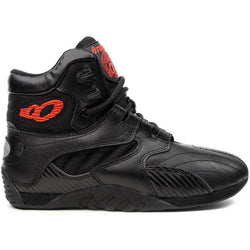
Zero Drop Shoes for Weightlifting: Choosing the Right Pair
The flattest shoe isn’t automatically the right choice for every lift. Zero drop shoes for weightlifting can suit lifters who prefer a level platform and a close feel underfoot, but comfort and control depend on the shoe and the movement. Zero drop means the heel and forefoot sit level, with no height difference between them.
Focus on how a shoe feels while you lift. A roomy toe box, thin sole, or removable insole can change the experience, and a barefoot style may feel very different from a more structured training shoe. The right choice should feel secure without forcing your feet into a shape or sensation that doesn’t work for you.
This guide explains whether barefoot shoes may suit your training and what to consider in stack height, insoles, fit, and sole feel. Use the comparisons and decision guide to match your preferences to the demands of your lifts, then choose footwear that helps you feel planted and ready to train.
Key Takeaways
- See when barefoot trainers can work for lifting and agility, and where a different shoe setup may better match your training.
- Learn how stack height and removable insoles affect the feel and stability of your setup.
- Use fit cues to choose a shoe that holds your foot securely without crowding your toes.
- Compare flat, thin soles with more cushioning to decide how much ground feel suits your lifts.
Are Barefoot Shoes Good for Lifting?
Yes, barefoot trainers can suit lifting if their flat, flexible platform feels stable under your feet. They can also work for agility drills with quick changes of direction, but they aren’t automatically the best match for every workout. A narrow toe box, soft sole, or unfamiliar ground feel can affect comfort and control.
Zero-drop shoes don’t automatically increase injury risk or cause foot and calf pain. However, switching suddenly from a raised heel to a flat platform can make your feet and calves feel more loaded. Ease into the change, and reduce use if pain develops.
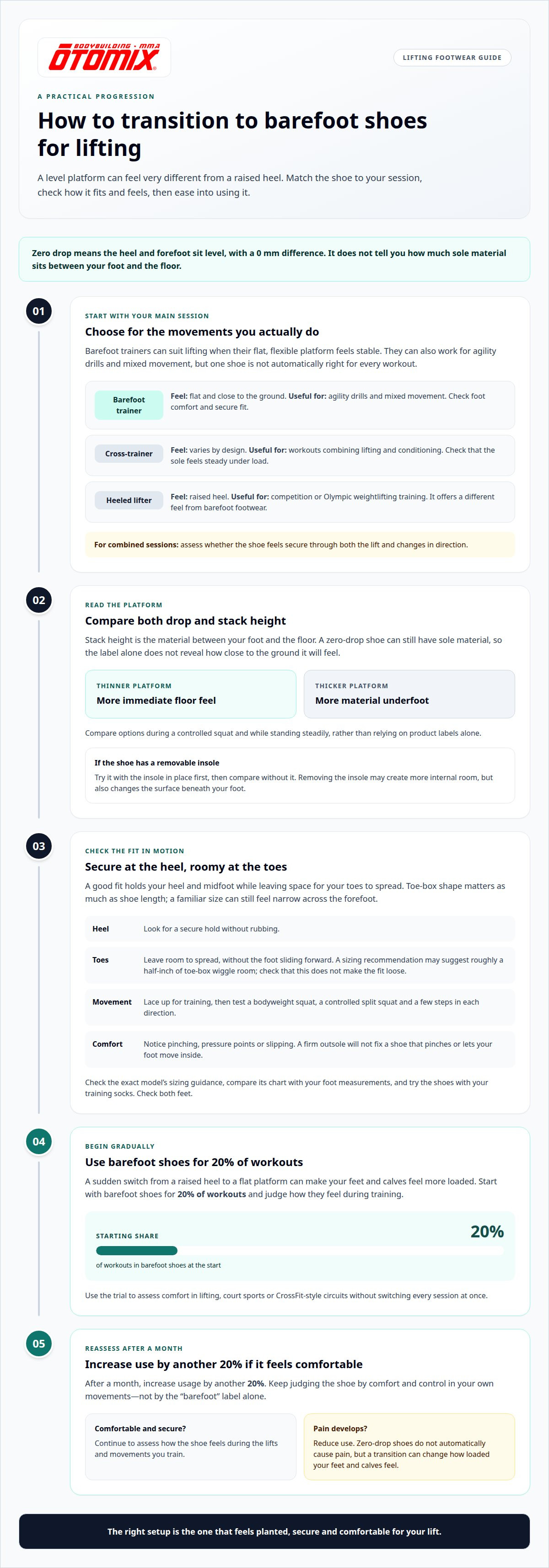
For a gradual transition, start by using barefoot shoes for 20% of workouts, then increase usage by another 20% after a month. This gives you a practical way to judge comfort during lifting, court sports, and CrossFit-style circuits without switching every session at once.
| Training option | Platform feel | Useful for | Watch for |
|---|---|---|---|
| Barefoot trainer | Flat, close to the ground | Agility drills and mixed movement | Foot comfort and secure fit |
| Cross-training shoe | Varies by design | Workouts combining lifting and conditioning | Whether the sole feels steady under load |
| Heeled weightlifting shoe | Raised heel | Competition or Olympic weightlifting training | Less suited to a barefoot feel |
Choose based on your main session, not an affiliate label or a broad “gym shoe” claim. If your workout combines squats and short sprints, assess whether one shoe feels secure through both the lift and the change in direction. If you lift barefoot and want more heel elevation, plates or a slant board can create it. Pick a setup that supports your movement without forcing a narrow fit or distracting sole feel.
Shoe stack heights and removable insoles
Stack height describes the material between your foot and the floor. It is different from heel-to-toe drop: zero drop means the heel and forefoot sit level, with a 0 mm difference. A minimal shoe can still have some sole material, so “zero drop” alone doesn’t tell you how close you’ll feel to the ground.
For lifting, consider how sole thickness affects your sense of position under load. A thinner platform can make the floor feel more immediate; a thicker one puts more material between your foot and the ground. Compare each option during a controlled squat and while standing steadily, rather than relying on labels alone.
A removable insole can change the shoe’s internal volume and feel underfoot. Removing it may create more space, but it also changes the surface beneath your foot. Try the shoe with the insole in place first, then compare the fit without it. Look for a secure heel hold and enough room for your toes, without your foot sliding during a lift.
Olympic weightlifting shoes often have a raised heel to support a different lifting position. Minimal footwear, by contrast, favors a level platform. For powerlifting competitions, there isn’t one universal yes-or-no answer: footwear eligibility depends on the federation’s and meet’s rules. A minimal profile alone doesn’t establish eligibility, so use the applicable competition rules to guide your choice.
Names such as Vivobarefoot and Primus Lite may appear in minimal-footwear comparisons. Treat each as a starting point, not a substitute for checking actual stack, insole design, and fit. Use these checks to narrow your choice:
- For a natural, minimal feel: prioritize a level platform and direct floor contact.
- For more internal room: compare the fit with and without the removable insole.
- For Olympic lifting: consider whether a raised heel better matches your preferred position.
Choose according to your lift and the feel you want underfoot. For footwear suited to movement beyond lifting, explore martial arts training shoes.
Fit and sizing considerations
A lifting shoe should hold your heel and midfoot securely while leaving room for your toes to spread. In barefoot shoes, toe-box shape matters as much as length: a shoe can match your usual size yet feel narrow across the forefoot. A good sizing recommendation provides roughly a half-inch of wiggle room in the toe box. Treat that range cautiously in practice: the shoe should let your toes move without making your foot slide during a squat.
Start with the sizing guidance for the exact brand and model. Size labels aren’t consistent across footwear, so don’t assume your casual shoe size will transfer directly to a training shoe. Compare the model’s chart with your foot measurements, then try the shoes with the socks you train in. Check both feet, since one may fit differently.
Test the fit in motion, not just while standing. Lace the shoe as you would for training, then do a bodyweight squat, a controlled split squat, and a few steps in each direction. Your heel should stay seated, and your toes shouldn’t press hard against the front. A loose fit can let your foot shift; a tight fit can make spreading your toes uncomfortable.
Assess the outsole and upper together. A firm outsole can feel stable, but it won’t fix a shoe that pinches or lets your foot move inside. With minimal cushioning, pressure points may be more noticeable than in casual footwear. Fit-test each shoe with its insole in place, especially if you’ve compared how removable insoles change the internal space.
- Heel: Look for a secure hold without rubbing.
- Toes: Check for space to spread without sliding forward.
- Movement: Repeat a squat and lateral step before choosing.
- Comfort: Notice pinching, pressure, or slipping during the test.
Choose the size that stays secure through these movements, not simply the one that matches a familiar label.
Flat, thin soles and ground feel for lifting
A flat sole puts your heel and forefoot at the same level, with a 0 mm drop. Stack height and grip still shape how stable the shoe feels under load.
Stability and Grip for Lifting
Zero-drop shoes provide a level platform, while thin soles can make the ground feel more immediate. Stability still depends on how securely the shoe holds your foot and how well its outsole grips the floor. A wide toe box can let your toes spread, but it doesn’t replace traction. Test your stance and foot placement before adding strength work or heavier loads.
Squats and Deadlifts
Zero-drop shoes can work for squats and deadlifts if the platform feels firm and your feet stay planted. During a bodyweight squat, notice whether your balance shifts or the outsole slips. For a deadlift, check that your stance feels secure from setup through lockout. A flat shoe differs from a raised-heel lifting shoe, which changes your foot position and may suit some squat styles better.
Transitioning to Zero-Drop Shoes
Transitioning works best as a gradual change, not an immediate switch for every session. Start by wearing zero-drop shoes for 20% of workouts, then increase usage by another 20% after a month. That gives you a staged way to assess foot comfort and calf response. Keep familiar footwear for other sessions as you adapt, and let comfort guide whether the next increase makes sense.
Price is one point of comparison, not a measure of ground feel or stability. First decide whether you need a flat platform, a grippy outsole, or more cushioning; then compare options against that priority. If a review mentions an affiliate commission, consider the disclosure separately from the shoe’s fit and construction. Choose based on your training needs, not commission language alone.
Ready to explore footwear for training movement? Browse training footwear options.
Otomix
Otomix sells footwear for bodybuilding, weightlifting, and gym workouts, including the Stingray Performance Bodybuilding Weightlifting Workout Gym Shoes, Ultimate Trainer Bodybuilding Weightlifting Workout Gym Shoes, and Extreme Trainer. Compare the individual fit and feel of these gym-training shoes with the criteria in this guide rather than assuming every model has a zero-drop platform.
If you’re choosing between a minimal barefoot style and a specialized gym shoe, focus on the lifts and movements you train most. Otomix’s bodybuilding and weightlifting footwear is designed for those gym activities. Explore the Otomix range to compare its training shoes with your lifting needs.
Make Your Next Training Choice
Match footwear to the work you actually do, rather than chasing a label. If zero drop shoes for weightlifting seem like a fit, notice how your stance, comfort, and confidence feel from warm-up through working sets. Pay attention to the movements you repeat most. That practical feedback can guide your choice better than a label alone.
Keep your priority clear: a secure feel for lifting, comfort through gym movements, or a balance between both. Otomix offers footwear for bodybuilding, weightlifting, and gym workouts. Explore its options with your training priorities in mind, then choose the direction that suits the work ahead. Explore Otomix lifting footwear and step into your next session ready to focus.
Frequently Asked Questions
What Does Zero Drop Mean?
Zero drop describes a shoe’s heel-to-toe offset, not its cushioning. The heel and forefoot sit at the same height, but the sole may still contain substantial material. Compare the heel and forefoot from the side, then assess sole thickness separately. This distinction helps you avoid assuming every level-looking shoe has the same cushioning or underfoot feel.
What are zero-drop shoes, and are they suitable for weightlifting?
Zero-drop shoes have no height difference between the heel and forefoot, and they can suit some lifting styles. Consider your session: a controlled deadlift-focused workout may call for a different feel than a session with varied movements and conditioning. Weigh the sole, fit, and feel in your actual lifting positions rather than choosing by the zero-drop label alone.
What are the best zero-drop shoes for weightlifting in 2026?
There isn’t one best choice for every lifter in 2026. Start with your main training demands: frequent movement between exercises calls for different priorities than sessions centered on a few heavy lifts. Then compare the shoe’s platform, grip, toe-box shape, and fit during your usual stance. A shortlist based on those needs is more useful than a general ranking.
How do zero-drop shoes compare with weightlifting shoes with raised heels?
Zero-drop shoes keep the heel and forefoot level, while raised-heel lifting shoes angle the foot. That difference can affect your setup, especially for squats. A level platform may suit lifters who prefer a flatter stance; a raised heel may suit a preferred Olympic lifting position. Choose according to your technique and training focus.
What features should weightlifting shoes have for stability and grip?
Look for a sole that feels firm under load, an outsole that grips your gym floor, and an upper that keeps your foot secure. During your warm-up, test your stance and make a small foot adjustment. Notice whether the shoe shifts, rocks, or slips. A wide toe box can give your toes room, but fit and traction still need to work together.
What are the best budget zero-drop shoes for lifting, and how much do they cost?
The best budget option is the one that meets your training needs and fits securely, not simply the one with the lowest price. Costs vary by shoe and seller, so compare current listings for the models you’re considering. Check the return terms and whether the shoe suits your main lifts. Don’t rely on price alone to judge grip, fit, or durability.


