

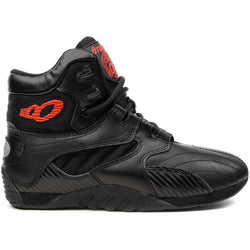
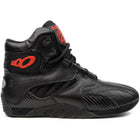
Ankle Support Weightlifting Shoes: What to Look For Before You Buy
Could a high-top lifting shoe feel supportive yet still leave you unstable under a heavy load? Collar height affects how a shoe feels around your ankle, but it is only one part of the picture. With ankle support weightlifting shoes, fit, foot lockdown, and a stable sole matter too. The right choice depends on the lifts you do and how the shoe fits your foot, not just how high it rises.
It is understandable to look for extra ankle coverage when a lift feels shaky. Shoes can provide a steadier base and help limit unwanted foot movement, but they cannot diagnose or resolve an ankle problem. This guide explains what shoe construction can and cannot do, how fit and collar height compare, and why squats, Olympic lifts, and deadlifts may call for different footwear. You will also learn how to assess a shoe before buying and when ongoing pain or instability is a reason to seek professional advice rather than rely on footwear alone.
Key Takeaways
- For ankle support weightlifting shoes, judge the whole shoe rather than choosing by collar height alone.
- Match footwear to your main lifts, then check the manufacturer’s current specifications for details that affect your choice.
- Test how the shoe feels during relevant movements before relying on it for heavy training.
- Keep training apparel separate from support decisions, and seek professional advice for ongoing pain or instability.
Ankle support in lifting shoes: what it can and cannot do
Footwear support describes how a shoe’s fit, lockdown, and construction help your foot feel secure during a lift. It is not medical treatment or a promise of injury prevention. Keep that distinction in mind when comparing ankle support weightlifting shoes. A shoe that feels secure may help you feel more confident under the bar, but it cannot guarantee balance, prevent an injury, or correct an ankle problem.
Look beyond the collar. How securely the shoe holds your foot and how stable it feels during your lifts also shape your experience. Specialized footwear is part of the equipment used in Olympic weightlifting, but no single shoe feature works the same way for every lifter.
For a visual look at weightlifting footwear, watch this video from Catalyst Athletics:
Do high-top weightlifting shoes automatically support your ankles?
No. A higher collar provides more coverage and may feel more noticeable around the ankle, but the effect depends on the collar’s design and the shoe’s fit. Height alone does not show how securely your foot is held during a squat or pull. Do not assume a high-top prevents sprains or fixes ankle weakness. Assess the whole shoe and how it feels during the lifting movements you actually do.
When should footwear advice involve a health professional?
Seek clinical advice if you have ankle pain, repeated giving-way, a recent injury, or persistent limits in mobility. A shoe choice cannot replace an individualized assessment or rehabilitation plan. If a movement feels unstable or painful, do not rely on a taller collar to solve it. Ask a qualified health professional to help identify what is going on before you push your training further.
How shoe fit, collar, and sole affect ankle support under the bar
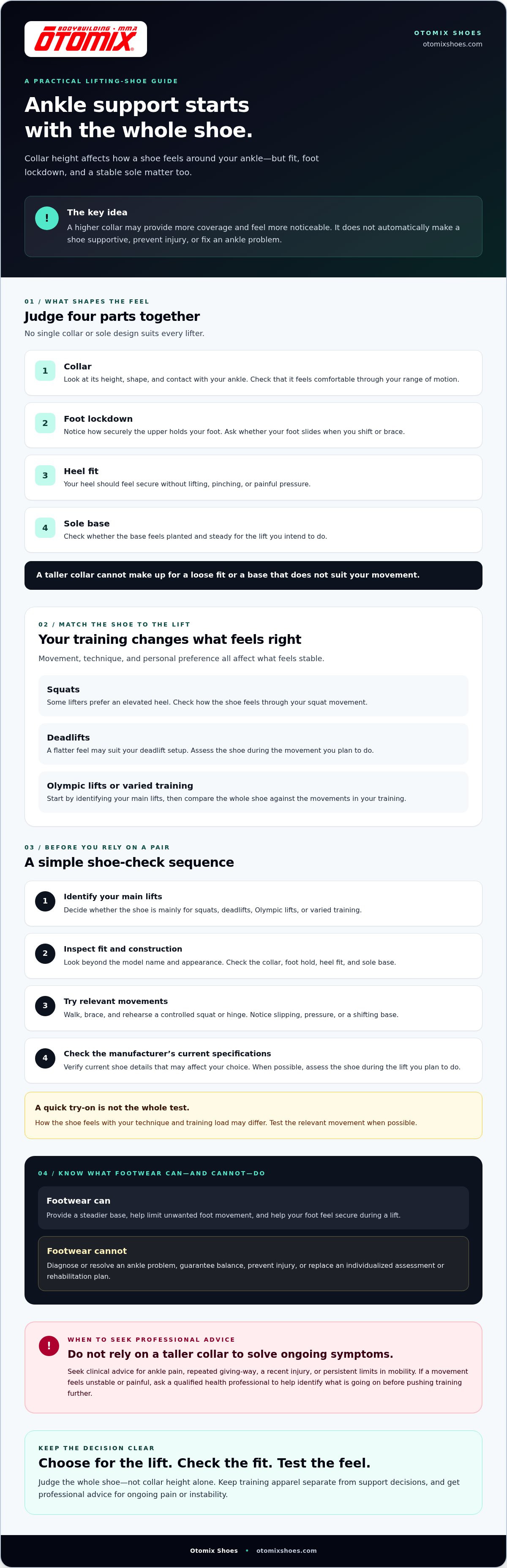
Assess each part of the shoe separately. Collar height affects ankle coverage. Foot lockdown and heel fit affect how much your foot shifts inside the shoe. The sole base influences how planted you feel. These features work together, but a taller collar cannot make up for a loose fit or a base that does not suit your movement. For more context on how the athlete’s body matters too, read about ankle strength and mobility.
No single collar or sole design suits every lifter. Use this checklist to compare ankle support weightlifting shoes, rather than relying on a model name or one standout feature:
| Feature | What to inspect | Question to ask |
|---|---|---|
| Collar | Height, shape, and how it contacts your ankle | Does it feel comfortable through your range of motion? |
| Foot lockdown | How securely the upper holds your foot | Does your foot slide when you shift or brace? |
| Heel fit | Whether your heel lifts or feels pinched | Is it secure without painful pressure? |
| Sole base | How planted the shoe feels under load | Does the base feel steady for your intended lift? |
What should a supportive shoe feel like when you try it on?
Your heel and midfoot should feel held, not squeezed. Walk, brace, and rehearse a controlled squat or hinge. Notice any slipping, pressure, or sensation that the base is shifting. Then assess the shoe during the lift you plan to do. A quick try-on cannot confirm how it feels with your usual technique and training load, so test the relevant movement when possible.
Does the best shoe change between squats and deadlifts?
It can. Your movement, technique, and preferences all affect what feels stable. Some lifters prefer an elevated heel for squats, while a flatter feel may suit their deadlift setup. Compare options in this broader weightlifting shoes guide. Once you have chosen footwear, explore Otomix weightlifting tank tops as apparel, not ankle-support gear.
How to choose ankle-support weightlifting shoes for your training
Use the same process to compare ankle support weightlifting shoes. Start with your lifts, then judge how the shoe fits and functions rather than relying on its name or appearance.
- Identify your main lifts. Decide whether you need footwear mainly for squats, deadlifts, Olympic lifts, or varied training. Your stance and technique help define what feels secure.
- Assess the fit. Check heel and midfoot hold. Heel movement, pinching, unwanted pressure, or slipping are reasons to reassess the fit.
- Compare construction. Review the current product details for information about the collar, sole, and closure. Prioritize a stable platform and close fit over a taller collar if those features feel more secure for your lifts.
- Test the movement. Rehearse your intended stance and controlled lifting positions. The shoe should feel secure underfoot without restricting comfortable movement.
A quick fit-and-function checklist before buying
Try shoes with the socks you train in. Check heel and midfoot security, then consider whether the shoe feels appropriate for your lifts and stance. Before ordering, review the retailer’s current sizing and return information. If you require specialized fit guidance or orthopedic support beyond standard gym shoes, consulting footwear providers like Feet for Life can help you find options suited to your specific foot needs. Do not guess fit from a model name or assume the same size will feel identical in different shoes.
How should Otomix models enter your comparison?
Otomix offers the Stingray Performance and Ultimate Trainer bodybuilding and weightlifting shoes, as well as the Extreme Trainer, designed for support and stability during intense training. Treat each as an option to investigate, not a guaranteed match for every lifter. Check current product details for collar, sole, closure, and fit information before drawing model-specific conclusions. For more context, read the Ultimate Trainer shoe guide. Once you have settled on footwear, complete your training kit with Otomix weightlifting tank tops. Apparel complements your gear; it does not provide ankle support.
Make your shoe choice, and complete your weightlifting training kit
Choose footwear based on function: match the shoe to your lifts, prioritize a secure fit and stable feel, then consider collar height. That is the practical order for comparing ankle support weightlifting shoes. If pain, repeated giving-way, or mobility concerns are part of the picture, address those separately with advice from a health professional. Shoes and gym apparel are not substitutes for an assessment or rehabilitation plan.
Choose the rest of your kit for comfort and personal style, not ankle support. Tank tops are optional training apparel. They do not stabilize your feet, support your ankles, or replace suitable lifting shoes.
Which Otomix weightlifting tank top suits your style?
- Extreme Sports Lifting Rag Top: An old-school bodybuilding-style top.
- SaleMuscle Baseball Vest Shirt Top Final: A muscle baseball vest-style gym top.
- Bodybuilding Tank: A racerback men’s weightlifting tank offered without a logo.
Choose based on the look and feel you want from your gym apparel. Keep that decision separate from your footwear choice: a top can complete your training outfit, but it cannot correct a loose shoe fit or provide ankle support.
What should you do before placing an order?
Product details can change, so check the live collection page for current descriptions, sizing, colors, and availability before ordering. Review the information carefully rather than assuming product details from a name. Once you have settled your footwear needs, browse Otomix weightlifting tank tops for optional apparel to round out your kit.
Choose footwear that earns your confidence under the bar
The best ankle support weightlifting shoes are the ones that fit securely and suit the lifts you train. Compare heel hold, midfoot lockdown, and sole stability, then consider collar height as one factor rather than the whole answer. If pain, repeated giving-way, or ongoing mobility concerns affect your training, seek professional advice instead of expecting footwear to resolve them.
Otomix specializes in footwear for bodybuilding, weightlifting, and gym workouts, including the Stingray Performance, Ultimate Trainer, and Extreme Trainer models. Once you have identified the shoe features that suit your training, you can round out your gym kit with optional apparel. The promoted collection features three weightlifting tank top options, made for style, not ankle support.
Explore the Otomix weightlifting shoes guide to compare footwear considerations for your training. Choose a shoe for the job, then keep building your strength.
Frequently Asked Questions
Do high-top weightlifting shoes provide ankle support?
High-top weightlifting shoes cover more of the ankle, but collar height alone does not prove a shoe will feel supportive or stable. Fit, how securely the shoe holds your foot, sole design, and the movement you are training all matter. Compare those features and try the shoe for your intended lifts when possible. If you have ankle pain or a recurring injury, seek advice from a qualified health professional.
Are weightlifting shoes good for weak ankles?
Weightlifting shoes may feel more secure for some lifters, but they do not diagnose or treat ankle weakness. Choose footwear for a comfortable fit and the demands of your lifts, not on the promise that it will prevent injury. If your ankle hurts, feels unstable, or repeatedly gives way, consult a qualified health professional before relying on a shoe change. Footwear is not a substitute for an individualized assessment or care plan.
Should I wear high-top or low-top shoes for weightlifting?
Neither high-top nor low-top shoes are automatically right for every lifter. Compare how each option fits, holds your foot, and feels during the movements you train. A higher collar provides more coverage, but other design features may matter just as much to your sense of security. Try suitable options when possible, and prioritize a secure, comfortable fit over appearance alone.
What features should I look for in weightlifting shoes for ankle support?
Start with a secure heel and midfoot fit, then assess the collar, sole base, and how the shoe feels during your intended lifts. Notice heel movement, pinching, unwanted pressure, or unstable footing during a try-on and movement test. Check current product specifications instead of guessing from a model name. Ankle support weightlifting shoes cannot guarantee injury prevention or replace professional assessment.
Can weightlifting shoes prevent ankle injuries?
No shoe can guarantee that an ankle injury will not happen. Footwear is one part of training, and its feel depends on fit, movement, and individual needs. Do not treat a high-top collar as medical protection. If you have current pain, a recent injury, or repeated ankle instability, ask a qualified health professional for individualized guidance rather than relying on a footwear change alone.


