

Are Lifting Shoes Worth It? The Cold Hard Truth for Your 2026 Gains
Your running shoes are the primary reason you are plateauing on the squat rack! Stop wasting your energy on compressed foam and unstable ankles. If you want to know are lifting shoes worth it, the answer is found in the physics of your kinetic chain. You cannot build a massive physique on a shaky foundation. Every wobble under the bar is an energy leak that steals your potential for serious growth!
We know the frustration of losing power on the platform because your soles are too soft. You need a rock-solid base that never quits. This article reveals why specialized footwear is the single most important investment for your performance and long-term health in 2026. We are diving deep into the tech behind the Stingray Performance and Ultimate Trainer series to show you how professional-grade gear transforms your output. Get ready to discover how to maximize force production from the floor, eliminate foot pain, and secure the stability required for elite-level gains. It is time to upgrade your gear and dominate the gym!
Key Takeaways
- Stop wasting power on "marshmallow" soles and learn how rigid footwear prevents energy leaks during your heaviest sets.
- Discover are lifting shoes worth it by weighing the cost of specialized gear against the price of blown PRs and avoidable injuries.
- Identify whether your training style requires the heel elevation of an Olympic lifter or the flat-sole floor contact of the Stingray Performance.
- Gain the professional-grade stability of the Extreme Trainer series, built to withstand the daily abuse of elite-level bodybuilding.
- Leverage the 1989 heritage of Otomix to secure ultra-lightweight support that maximizes your force production and posterior chain engagement.
The Science of Stability: Why Your Running Shoes Are Killing Your Gains
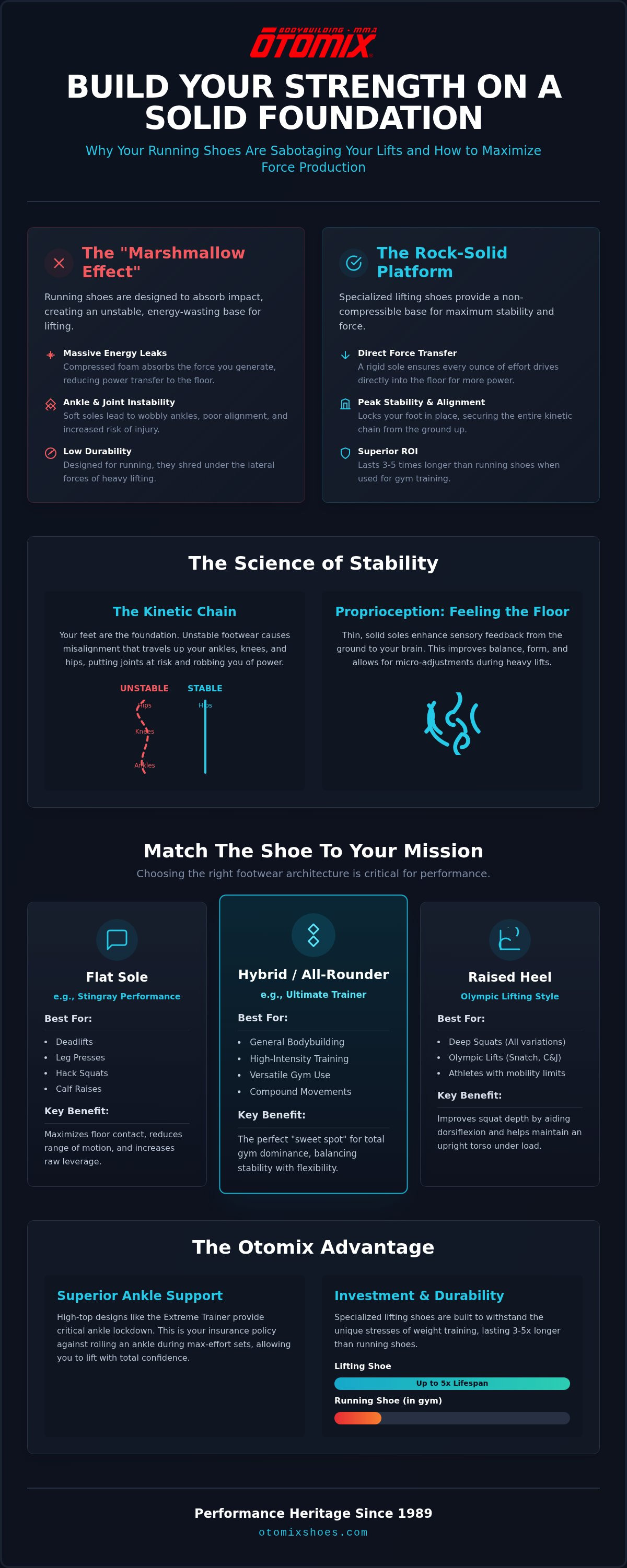
Stop squatting on pillows! Your running shoes are built to absorb impact. That is the exact opposite of what you need when moving heavy iron. When you are under a loaded barbell, you need a platform, not a cushion. Soft, squishy soles create a dangerous "marshmallow effect" that causes massive instability. This compression leads to energy leaks that steal your power before the weight even moves. A lifting shoe is a specialized tool designed to provide a non-compressible base for maximum force production.
By eliminating the squish, you achieve direct force transfer. Every ounce of effort you exert goes straight into the floor. This is the primary reason why serious lifters ask, are lifting shoes worth it? If you want to stop wasting energy and start hitting PRs, the answer is a resounding yes! You wouldn't build a skyscraper on a swamp. Don't build your physique on compressed foam. Look at the fundamental design of weightlifting shoes to see why a rigid base is the gold standard for elite performance.
The Kinetic Chain and Foot Positioning
Your feet are the foundation of your entire body. Their interaction with the floor dictates the alignment of your knees and hips. When you train in soft-soled sneakers, your ankles are prone to rolling or pronating inward. This misalignment travels up the kinetic chain. It puts your joints at risk. Professional-grade gear locks your foot in a neutral, powerful position. It secures your alignment so you can push harder without the fear of a structural collapse.
Proprioception: Feeling the Floor
Thin-soled weightlifting sneakers like the Stingray Performance deliver superior ground sensory feedback. This isn't just about comfort; it's about neurological efficiency. Better feedback improves your mind-muscle connection and overall balance. You can feel exactly where your weight is distributed during a heavy deadlift or squat. This heightened proprioception allows for instant micro-adjustments. It ensures your compound movements are executed with surgical precision and absolute confidence!
Comparing the Contenders: Flat Soles vs. Heeled Lifting Shoes
Stop guessing. Start winning. Choosing the wrong footwear is a recipe for mediocrity. You must match your shoe architecture to your training mission. Raised heel shoes are the gold standard for Olympic lifting and deep squats. They fix ankle dorsiflexion issues and keep your torso upright under massive loads. Flat sole shoes are the kings of the deadlift platform. They maximize floor contact and ignite your posterior chain engagement. Determining are lifting shoes worth it depends entirely on your primary movement. If you want a "sweet spot" for total gym dominance, the Ultimate Trainer serves as the perfect high-performance hybrid for serious bodybuilders.
Some lifters assume any gym shoe will suffice. However, UNLV research on lifting shoes suggests that while gear is critical, its value is tied to your specific movement patterns and goals. Don't just follow a trend. Pick the weapon that suits your battle. For those who demand versatility without sacrificing power, exploring the full performance lineup is the first step toward a new PR.
When to Choose a Flat Sole
Flat soles are non-negotiable for optimizing the deadlift. Being closer to the floor reduces your range of motion. It increases your leverage instantly. This design is also superior for leg presses, hack squats, and heavy calf raises. It provides a stable base without the artificial tilt of a heeled shoe. You get natural foot mechanics and a raw, powerful connection to the iron.
The Role of Ankle Support
Ankle lockdown is your insurance policy. Low-tops are for the casual crowd. High-top support is critical for preventing injury during max-effort sets. The Otomix Extreme Trainer offers an aggressive advantage here. It delivers superior stability that secures your joints when the weight gets heavy. Don't let a rolling ankle kill your progress. Lock it down and lift with total confidence!
The ROI of Performance: Are Lifting Shoes Worth the Investment?
Stop burning money on disposable sneakers! Running shoes are built for forward motion, not the violent lateral forces of a heavy leg press. They shred under pressure. They fail when you need them most. Specialized shoes often last 3-5 times longer than running shoes when used exclusively in the gym. This is pure ROI for the serious athlete. If you are chasing elite results, asking are lifting shoes worth it is the first step toward securing your foundation. Don't wait for a structural failure to realize the value of professional gear!
This focus on maximizing value through specialized equipment is a hallmark of any dedicated athlete. For instance, those who balance their time in the squat rack with time on the links often turn to Golf Ball Monkey to source premium golf equipment that offers the same high-performance ROI as a pair of professional lifting shoes.
Injury prevention is your greatest cost-saving measure. A specialized shoe is an affordable investment. A blown ankle or a strained lower back is a career-ending expense. It costs you months of progress. It costs you your peak physique. There is also a psychological edge to lacing up. It is the "uniform" effect. Stepping into professional gear signals your brain that it is time for high-intensity work. You aren't just at the gym; you are at the office.
Breaking Down the Myths
Don't fall for the barefoot hype. While it sounds natural, barefoot lifting lacks the critical lateral support and aggressive grip needed for maximal loads on a polished gym floor. You need a stable platform to push against. Check out The Truth About Weightlifting Trainers: Busting the Myths Sabotaging Your Gains to stop the misinformation from killing your progress.
Performance Gains You Can Measure
Stability equals immediate power. Fixing balance issues with a rigid base can add 5-10% to your compound lifts instantly. That is the difference between a plateau and a new personal record! The lockdown feel during heavy leg days provides the confidence to go deeper and push harder. Secure your foundation with the Ultimate Trainer series today and dominate your next session!
The Otomix Advantage: Professional Grade Gear for Serious Athletes
Excellence isn't an accident. It's engineered. Since 1989, Otomix has defined the pro-choice standard in the iron game. Professional bodybuilders don't settle for generic sneakers. They demand gear that survives the daily abuse of a high-intensity training facility. When you ask are lifting shoes worth it, look at the legends on the Olympia stage. They choose ultra-lightweight construction that delivers maximum support without the heavy, swampy bulk of traditional trainers. You get speed. You get stability. You get a shoe that transitions perfectly from the squat rack to the posing stage. This is the definitive edge you've been searching for. Check out the Stingray Performance Bodybuilding Weightlifting Workout Gym Shoes: The 2026 Elite Performance Guide for a deep dive into elite gear.
Spotlight on the Stingray Performance
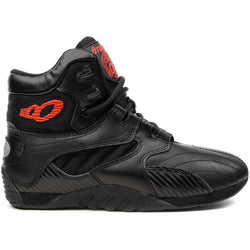
This is the ultimate weapon for maximum floor feel. Our proprietary thin-sole tech provides a "barefoot" sensation that ignites your mind-muscle connection. But don't be fooled by the low profile. It adds professional-grade traction and high-top lateral support. It's engineered with durable materials specifically designed for the extreme friction and pressure of heavy bodybuilding sessions. It won't shred under a 600-pound hack squat. It won't slip during a max-effort deadlift. It just performs. Every single time!
Ultimate Trainer: The Hybrid King
Need one shoe for every single gym movement? The Ultimate Trainer is your definitive answer. It's the go-to choice for athletes who demand total versatility. This shoe bridges the gap between heavy compound lifts and aesthetic posing. It combines aggressive, bold styling with a functional design that crushes generic "big box" brands in every category. Stop settling for mediocrity. If you still wonder are lifting shoes worth it, one session in these will end the debate forever. Secure your pair today. Upgrade your foundation. Dominate your 2026 gains now!
Secure Your Foundation and Dominate Your Next Session
Stop settling for mediocre gains. You now understand that your footwear is the most critical link in your kinetic chain. Running shoes are for the track; the weight room requires a rock-solid platform. By switching to specialized gear, you eliminate energy leaks and fix your alignment instantly. You've seen the science. You've seen the ROI. The cold hard truth is that are lifting shoes worth it becomes a dead issue once you feel the stability of a non-compressible sole. It's the difference between a shaky set and a new personal record!
Otomix has been the pro-choice standard since 1989. We deliver the thin-sole technology required for maximum power and the ultra-lightweight high-top support trusted by IFBB Pros worldwide. Don't let another heavy day go by with unstable ankles or squishy soles. Your 2026 physique depends on the gear you choose right now. It's time to step up. It's time to lift like a professional!
Upgrade Your Gear: Shop Otomix Lifting Shoes Now!
Grab your pair and get back to the iron. Your best performance is waiting!
Frequently Asked Questions
Can I wear lifting shoes for cardio or running?
Absolutely not! Lifting shoes are precision tools for the iron. They lack the impact-absorbing cushioning required for treadmill work or distance running. Using a rigid sole like the Extreme Trainer for cardio will destroy your feet and ruin the shoe's structural integrity. Save the running for your joggers. Keep your specialized footwear on the platform where it belongs!
Do lifting shoes actually increase your squat max?
Yes, they do. A rock-solid foundation allows for total force transfer from your legs directly to the floor. You stop wasting energy on micro-adjustments for balance and start pushing pure weight. Many athletes see an immediate jump in their numbers. If you want to know are lifting shoes worth it for raw power, just look at your next personal record!
How should weightlifting sneakers fit compared to regular shoes?
They must fit tight! Any movement inside the shoe is a massive power leak. Your weightlifting sneakers should feel like a second skin with zero heel slip. A snug, locked-in fit ensures that the high-top support of the Stingray Performance can actually do its job. Don't buy them loose. Secure your feet for maximum control during your heaviest sets!
Are flat shoes or heeled shoes better for deadlifting?
Flat shoes are the definitive choice for deadlifts. They keep you closer to the floor and reduce the total distance the bar has to travel. This improves your leverage and posterior chain engagement immediately. Heeled shoes can pitch your weight forward, which is a disaster for your lower back during a heavy pull. Stick with thin-sole tech for your deadlift sessions!
How long do professional-grade lifting shoes like Otomix last?
Professional-grade gear is built to last for years of gym abuse. When used strictly for training, Otomix shoes often outlive standard sneakers by three to five times. We use high-performance materials that don't shred under lateral pressure or heavy loads. It's a long-term investment in your performance. Stop buying cheap shoes every six months. Invest in quality that survives elite-level bodybuilding!


