

Best Lifting Shoes for Women in 2026: Choose for Your Lifts
The best lifting shoes for women are chosen for the lifts you do and the fit that helps your feet feel secure under load. A cushioned trainer may feel familiar for a mixed gym session, but its sole and support can feel different from footwear designed for lifting. Your priorities may change depending on whether you focus on squats, deadlifts, or a mix of both.
If you’re deciding whether you need dedicated lifting shoes, compare the sole, heel, support, and fit with the movements in your routine. Those details can help you narrow the options and identify the trade-offs that matter to you.
This guide explains what to compare, how to match footwear to your routine, and which Otomix models to consider. Otomix has specialized in athletic footwear since 1989. Its range includes the Royal Weightlifting Bodybuilding Gym Shoe Female, Stingray Performance, Ultimate Trainer, and Extreme Trainer. Use your training priorities to find a practical starting point.
Key Takeaways
- Find the best lifting shoes for women by matching your choice to your main lifts, training mix, comfort, and secure fit.
- Compare product details that matter to your routine, including sole, heel, and sizing information where listed.
- Follow a four-step process: name your main lifts, map your sessions, assess fit, then compare product details.
- Explore Otomix options, including the Royal Weightlifting Bodybuilding Gym Shoe Female and the Female Weightlifting Bodybuilding Gym Shoe Kit Bundle.
Best lifting shoes for women: what should a good pair do?
Lifting shoes are built around the demands of weight training, so compare more than appearance. The right pair should suit your regular movements, feel comfortable through repeated sets, and stay secure on your feet. The best lifting shoes for women depend on whether your sessions center on squats, deadlifts, or a broader mix of gym work.
A women’s label can help you find relevant options, but it doesn’t determine whether a particular shoe fits your foot. Review the product’s sizing guidance and listed features, then compare them with your needs. For more foundational context, explore this women’s weightlifting shoe guide.
For another perspective on matching shoes to lifting style, watch this video from strength coach Annie Miller:
Lifting shoes versus general training shoes
Dedicated lifting shoes prioritize weight-training needs. Compare the firmness and shape of the sole, heel height, and how securely the shoe holds your foot. These details affect how a shoe feels when you brace and move under a barbell. General training shoes are intended for a wider range of gym activities, so their cushioning and flexibility may feel different during lifts. Neither category is automatically right for every workout. Consider your main lifts and whether the same pair also feels comfortable for accessories, warm-ups, or conditioning.
Why women’s fit still needs individual attention
Fit is personal, even among shoes labeled for women. During a set, your foot should feel held in place without uncomfortable pressure or distracting movement inside the shoe. Use the product’s sizing guidance as a starting point, then consider your usual fit preferences. Don’t assume the label alone tells you how a shoe will feel. Try the positions you use in training, including your squat stance and deadlift setup, and notice whether the fit stays comfortable.
Strength training involves repeated resistance against a load, as outlined in these principles of strength training. Let your actual movements guide the footwear decision, rather than appearance or a one-size-fits-all rule.
How to compare women’s lifting shoes for your training
Compare shoes against the work you actually do, not a generic “gym shoe” label. Start with your main lift, then weigh session variety, fit, and the details listed for each option. This makes the search for the best lifting shoes for women more practical and helps you avoid choosing by name alone.
| Training focus | Session variety | Fit priority | Product-page details to compare |
|---|---|---|---|
| Squat-dominant | Mostly barbell work | Comfort and a secure feel in your squat stance | Published heel, sole, and sizing details |
| Deadlift-focused | Deadlifts with related strength work | A stable, comfortable feel in your setup | Published sole and sizing information |
| Mixed gym sessions | Lifting plus varied movements | Comfort across the movements you include | Listed features and the product’s stated use |
Match footwear considerations to your main lifts
For a squat-dominant routine, pay close attention to listed heel and sole details, then consider how the shoe feels in your squat positions. If deadlifts are your priority, assess the shoe in your usual pulling setup. Olympic weightlifting and powerlifting involve different movements, so focus on the lifts you practice instead of assuming one shoe is ideal for both. For broader context, use this weightlifting shoes guide alongside your own training priorities.
Check fit and product details before deciding
Read the sizing guidance and compare the product details that relate directly to your routine. A firm sole, heel height, and the way the shoe holds your foot may all affect how it feels during a lift. Use listed product information rather than guessing about materials or construction. Comfort is personal, so consider how the shoe feels in your usual stance and movement. The guidelines from the American Academy of Orthopaedic Surgeons offer general athletic-shoe selection context, while your lift-specific needs shape the final comparison.
Once you know your priorities, browse Otomix lifting shoe options and compare the listed details against your checklist.
Choose women’s lifting shoes for your actual gym routine
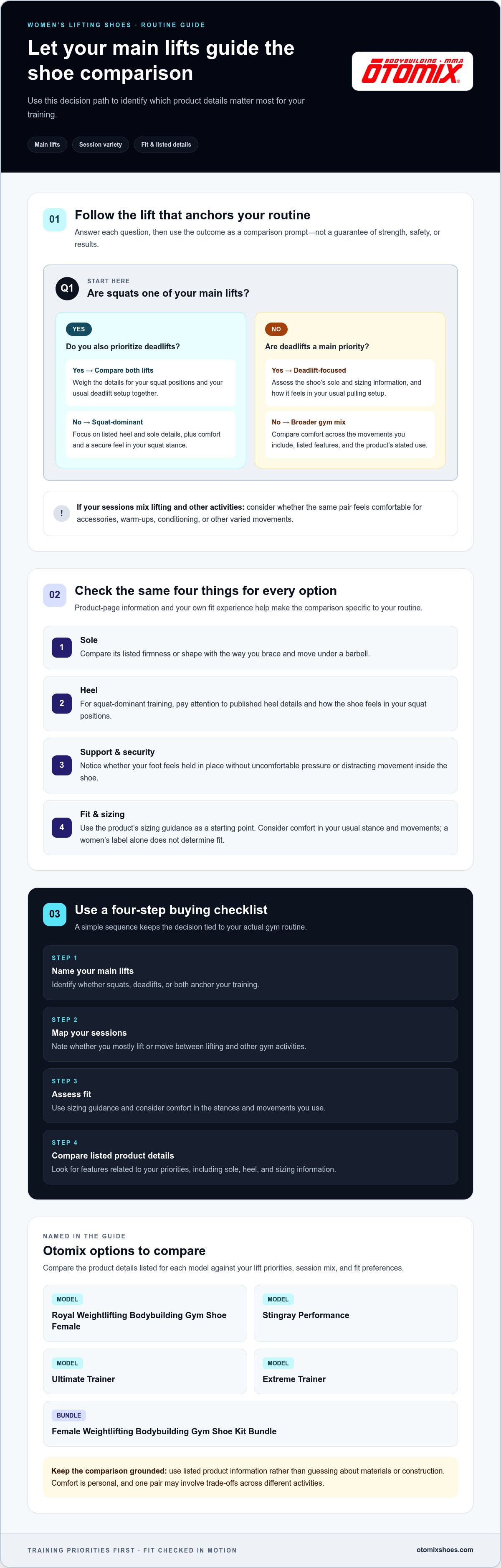
Turn your weekly plan into a buying checklist. The best lifting shoes for women are the ones whose fit and listed features make sense for the movements you do most. A shoe that suits one kind of session may involve trade-offs in another.
- Name your main lifts. Pick the movements that anchor your training, such as squats, deadlifts, or both.
- Map your sessions. Note whether you spend most of your workout lifting or move between lifting and other gym activities.
- Assess fit. Use the shoe’s sizing guidance and consider your comfort during the stances and movements in your routine.
- Compare product details. Look for listed features that relate to your priorities, such as sole, heel, and sizing information.
A quick decision path for common routines
If squats dominate your plan, compare the details that relate to your squat positions and comfort. For deadlift-focused training, assess how the shoe feels in your usual setup. If your sessions include both lifts, weigh those needs together instead of choosing based on just one movement. Treat these as comparison prompts, not guarantees of strength, safety, or results.
When one pair may not cover every workout
A dedicated strength session may call for different priorities from a workout that also includes conditioning, lunges, or other varied movements. One pair may suit your regular routine, but comfort can vary across activities. Decide which part of training matters most, then consider whether the shoe’s listed features and fit work for the rest of your session. You don’t need to expect one pair to be perfect for everything.
With your routine and priorities clear, explore Otomix footwear and compare the product details with your checklist.
Otomix women’s lifting shoe options: compare the listed models
Once your training priorities are clear, use them to narrow the Otomix range. The listings include a women-named weightlifting shoe, a women’s shoe kit bundle, and additional shoe models. Compare each product’s listed information with your routine instead of assuming features based on the name. This keeps your search for the best lifting shoes for women focused on your needs.
Start with the women-named listing
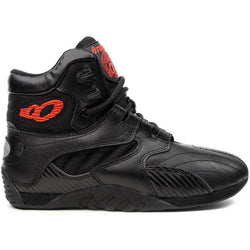
Royal Weightlifting Bodybuilding Gym Shoe Female is an Otomix listing with “Female” in its product name, making it a natural starting point for women comparing lifting footwear. The name alone doesn’t establish fit or construction. Review the product’s sizing information and listed details, then consider how they align with your requirements and comfort preferences.
Female Weightlifting Bodybuilding Gym Shoe Kit Bundle is another women-named listing. Evaluate it separately and use its product page for information about the listing. Don’t infer what the bundle contains from its name alone.
Explore the wider Otomix footwear range
Otomix also offers Stingray Performance, Ultimate Trainer, and Extreme Trainer models. These give you additional options to compare, but their names don’t establish which shoe suits a particular lift. Review each model’s listed details and match them to the priorities you set for your training. For focused model context, consult the Stingray Performance shoe guide.
Keep the comparison practical: match listed product information and sizing guidance to your routine. Ready to review the options? Shop Otomix footwear and compare the listings with your lifting priorities.
Make your next shoe choice training-led
Turn your training priorities into a short checklist, then compare footwear against it. The best lifting shoes for women aren’t defined by a trend or a label. They’re the pair whose listed features and sizing information suit your lifts and personal comfort.
Otomix has been in business since 1989, and its catalog includes the Royal Weightlifting Bodybuilding Gym Shoe Female and the Female Weightlifting Bodybuilding Gym Shoe Kit Bundle. Review the product information for each option and compare it with your routine. Choose based on your priorities, not someone else’s program.
Explore Otomix lifting shoes and compare the available models with the way you train.
Frequently Asked Questions
Do women need special shoes for weightlifting?
No. Women don’t automatically need a shoe made specifically for women. A women-named listing can make browsing easier, but it can’t tell you whether the shape or size suits your foot. Follow the product’s sizing guidance, then try a few bodyweight squats and hip hinges. Notice pressure, heel movement, and whether your toes feel cramped before choosing.
Are lifting shoes good for deadlifts?
They can be, but the right choice depends on how the shoe feels in your setup and whether it suits your technique. A raised heel or different sole profile may change how your starting position feels, so don’t decide from the category name alone. If you’re switching footwear, compare how it feels in your usual stance during warm-ups before using it for heavier working sets.
Can I use lifting shoes for cardio and other gym workouts?
You can use one pair across activities if it feels suitable for each movement, but don’t assume a lifting-focused shoe will feel right for every cardio session. A workout that combines barbell sets with treadmill intervals, for example, has different demands from a session built around lifting alone. Consider which activities make up most of your week and whether a second pair makes practical sense.
How should women’s lifting shoes fit?
A suitable pair should feel secure without pinching or distracting pressure. Follow the product’s sizing guidance, since sizing can differ between brands and models. With the shoes on, try a bodyweight squat and a hip hinge. Check whether your heel shifts, your toes feel crowded, or any area feels uncomfortable. If the fit distracts you during these movements, keep comparing options.
Are weightlifting shoes suitable for beginners?
Yes, beginners can consider weightlifting shoes, but specialized footwear doesn’t replace learning sound lifting technique. Start with the exercises you’re practicing now, not lifts you might pursue later. If your current sessions focus on basic squats and deadlifts, compare shoes against those movements and your comfort. The best lifting shoes for women are a personal equipment choice, not a shortcut to mastering form.


