

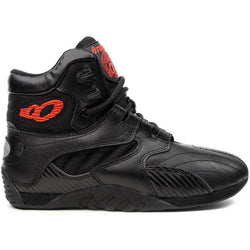
Boxing-Inspired Shoes: Choose the Right Pair for Your Training
The boxing-inspired look can be misleading: the right shoe depends on how you train, not just how high its collar rises. Searching for boxing inspired shoes might mean you want footwear for boxing footwork, or a high-top style for gym sessions. Those needs aren’t interchangeable. A shoe intended for boxing movement may not provide the stable feel you want for heavy lifts, and a strength-training shoe isn’t automatically a dedicated boxing shoe.
Grip, freedom to turn, support, and training surface all matter, especially if you hope one pair will cover bag work, sparring, and lifting. This guide separates boxing-specific function from boxing-inspired design so you can match footwear to your training. You’ll learn what to assess for boxing, when a general gym shoe may fall short, and why Otomix options such as Stingray Performance, Ultimate Trainer, and Extreme Trainer are designed for bodybuilding and weightlifting, not as dedicated boxing shoes. Choose for the work, then bring the intensity.
Key Takeaways
- “Boxing inspired shoes” can describe a look or footwear intended for boxing. First decide which meaning fits your training.
- Assess grip and ease of turning separately. The right balance depends on your movements and training surface.
- Use a simple selection process: identify your main activity, assess how you move, consider the surface, then compare fit.
- If strength training is your priority, explore Otomix Stingray Performance and Ultimate Trainer, designed for bodybuilding and weightlifting workouts.
What Do “Boxing-Inspired Shoes” Actually Mean?
The phrase boxing inspired shoes can describe either a boxing-style look or footwear intended for boxing practice. Those are different things. A high-top shape or athletic design doesn’t prove a shoe is suited to ring training, just as a gym shoe’s appearance doesn’t tell you how it will feel under a lift. Separate visual appeal from intended use before comparing options.
Boxing shoes are intended for boxing environments, where footwork and movement shape the choice. Gym-training shoes serve broader workout needs, which may include lifting and varied exercises. That distinction helps make sense of searches for boxing inspired shoes: some shoppers want the aesthetic, while others need footwear for boxing activity. A label or silhouette alone doesn’t establish what a shoe is designed to do.
For a visual comparison of boxing footwear and alternatives, watch this FightCamp video:
Boxing-Specific Function Versus Boxing-Inspired Appearance
Start with the job, then compare silhouettes. For boxing practice, choose footwear intended for boxing movement and footwork. A style-led choice may look the part without being made for ring training. The reverse matters too: a shoe chosen for gym training isn’t automatically suitable for boxing. Treat appearance as a preference, not proof of function, and match the shoe’s intended use to the session you’ll actually do.
Which Training Are You Buying Shoes For?
Name your primary activity before you shop. For boxing practice, focus on boxing-specific movement. General gym sessions can involve a mix of exercises, while strength-focused workouts center on resistance training and lifting. Then identify any secondary use. A pair for occasional gym warm-ups may not be the right choice for regular boxing practice or heavy strength sessions.
- Boxing practice: prioritize footwear intended for boxing movement.
- General gym sessions: consider the range of exercises you perform.
- Strength-focused workouts: look for shoes designed for bodybuilding or weightlifting.
How Boxing Shoes Handle Footwork, Grip, and Pivoting
Boxing and lifting place different demands on footwear. Start with the activity, then assess grip, ease of turning, sole feel, weight, and height in relation to your movement and training surface. There isn’t one specification that suits every athlete or workout, so use these as comparison points rather than a checklist of universal requirements.
| Training priority | What to evaluate |
|---|---|
| Boxing footwork | How the shoe feels during changes of direction and controlled turns, and whether grip and pivot feel balanced on your training surface. |
| Strength training | How steady and comfortable your stance feels during lifts, and whether the shoe suits the movements in your session. |
Why Boxers Assess Grip and Pivot Together
Boxing involves forward, backward, and lateral movement, as well as controlled changes of direction. Grip helps your foot hold its position; pivot describes how readily it can turn. More grip isn’t automatically better if turning feels restricted. The Expert Boxing review also identifies sole thickness and texture, shoe weight, and height as factors to assess. Use these as points to compare, not fixed rules.
Why Lifting Calls for a Different Evaluation
For a squat or deadlift, the priority shifts from ring footwork to a steady stance under load. Notice how stable you feel and whether the shoe’s sole feel suits the lift. A shoe that feels nimble during boxing drills won’t automatically feel right for heavy lifting, and a lifting-focused shoe isn’t automatically designed for boxing movement. Match the footwear to the activity.
For a deeper look at footwear considerations for strength training, explore this weightlifting shoes guide. If your sessions center on bodybuilding or weightlifting, browse Otomix strength-training shoes with those priorities in mind. Choose based on how you train, not just on a boxing-inspired look.
How to Choose Shoes for Boxing, Gym Workouts, or Lifting
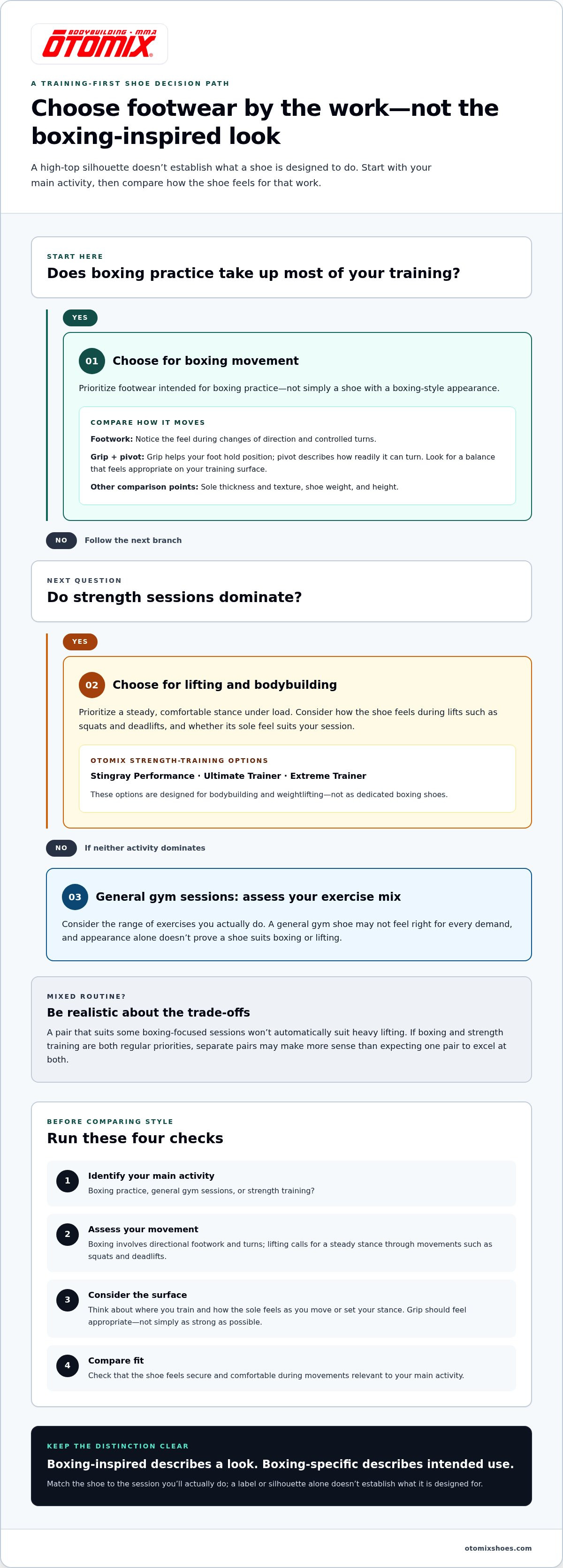
Choose for your training, not just the boxing-inspired look. If you’re comparing boxing inspired shoes, first decide what the pair needs to do. Run through these four checks before weighing style or other details:
- Identify your main activity. Decide whether boxing practice, general gym sessions, or strength training takes up most of your time.
- Assess your movement. Boxing involves directional footwork and turns; lifting calls for a steady stance through movements such as squats and deadlifts.
- Consider the surface. Think about where you train and how the sole feels as you move or set your stance. Grip should feel appropriate, not simply as strong as possible.
- Compare fit. Check that the shoe feels secure and comfortable during movements relevant to your main activity.
A Quick Decision Path for Your Primary Activity
If boxing takes up most of your training time, use boxing-specific movement and footwear criteria to guide your choice. Pay attention to how the shoe feels during controlled changes of direction, not just how it looks. If strength sessions dominate, prioritize footwear intended for lifting and bodybuilding. For general gym use, consider the actual mix of exercises instead of assuming one shoe will suit every demand equally well.
Have a mixed routine? Be realistic about the trade-offs. Boxing inspired shoes may suit some boxing-focused sessions, but that doesn’t make every pair a natural fit for heavy lifting. If both activities are regular priorities, separate pairs for each activity may make more sense than expecting one pair to excel at both.
Fit and Use Checks Before Choosing
Try the shoe with the socks you normally train in. Check for a secure feel without uncomfortable pressure, then assess it with controlled movements that reflect your routine. For boxing, consider footwork and turns; for lifting, check your stance through the movements you perform. Don’t judge fit by standing still alone. Once you’ve chosen strength-training footwear, use this guide to cleaning weightlifting shoes to care for it.
Let your main activity decide. If strength training is your focus, explore Otomix strength-training shoes designed for bodybuilding and weightlifting workouts.
Choose Otomix Shoes for Strength-Focused Training
If strength training is your primary use, choose footwear for that work, not for a boxing-inspired silhouette. Otomix specializes in performance footwear for bodybuilding, weightlifting, and gym workouts. Its shoes are designed for strength training, not as dedicated boxing shoes. Keep that distinction clear as you narrow your choice.
Match an Otomix Model to Your Strength-Training Focus
Start with the intended training category. Stingray Performance and Ultimate Trainer are bodybuilding and weightlifting workout shoes. For a closer look at Stingray Performance, including its product overview, visit the Stingray Performance guide. Extreme Trainer is designed to provide support and durability during heavy bodybuilding workouts.
- Stingray Performance: bodybuilding and weightlifting workouts.
- Ultimate Trainer: bodybuilding and weightlifting workouts.
- Extreme Trainer: heavy bodybuilding workouts.
Use your routine to guide the comparison. If bodybuilding workouts are central, consider the Extreme Trainer’s stated focus. If your sessions center on weightlifting or bodybuilding, Stingray Performance and Ultimate Trainer are relevant options. Compare each model with the training you actually do, rather than choosing by a boxing-style appearance alone.
Take Your Next Step
This guide distinguishes boxing footwear, intended for boxing movement, from Otomix shoes designed for strength training. That difference matters: choose footwear for the activity it’s made to support, not simply because its shape looks familiar. Otomix has specialized in performance footwear since 1989, with strength-focused options for gym workouts, bodybuilding, and weightlifting.
Ready to focus your search on strength training? Explore Otomix performance training shoes and find the category that fits your workout.
Make Your Next Training Session Count
Let your training plan lead your footwear choice. Before your next workout, decide which activity matters most in your gear setup, then choose a pair for that job. If boxing inspired shoes caught your eye, make sure the choice fits how you’ll use them, not just the look you want.
For strength-focused training, keep your search centered on footwear made for bodybuilding and weightlifting. Otomix offers Stingray Performance, Ultimate Trainer, and Extreme Trainer for strength-training needs. Choose the model that aligns with your routine and make your next session a chance to train with purpose.
Explore Otomix performance training shoes and take the next step toward gear that matches your workout.
Frequently Asked Questions
Can boxing shoes be used for weightlifting?
They may suit some lifting sessions, but the shoe’s intended use and your workout demands should guide the choice. Boxing footwear is designed around boxing movement, while a strength session may involve squats, deadlifts, or machine exercises. Check the shoe’s stated purpose and assess how it feels during your lifts. Don’t assume every boxing shoe is unsuitable, or that every pair is right for lifting.
Are boxing-inspired shoes the same as boxing shoes?
No. “Boxing-inspired” can describe a visual style, while “boxing shoes” usually means footwear intended for boxing. The label alone doesn’t tell you what activity a shoe is made for. Before buying, check its stated purpose and think about where you’ll wear it. A style-led choice for gym lifting and footwear for boxing practice may look similar but serve different training needs.
What should boxing shoes feel like when trying them on?
They should feel secure and comfortable while allowing natural movement for your boxing practice. Try controlled steps and turns similar to the footwork you use, and notice whether the shoe stays comfortable and feels stable through those motions. There’s no single fit or sole specification that suits everyone. Consider your intended boxing activity, then use the shoe’s fit guidance to assess the pair.
Can one pair of gym shoes work for boxing and lifting?
Possibly, depending on your training mix and the specific shoe, but don’t expect one pair to perform equally well at both. Boxing emphasizes footwork and movement; lifting requires footwear suited to strength exercises. If boxing is your main activity, assess the pair for boxing first, then consider how it feels during lifts. If heavy lifting dominates, prioritize that workout and assess boxing use separately.


