

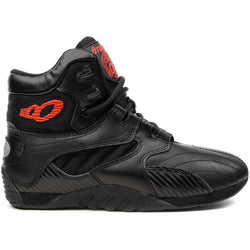
Can You Use Boxing Shoes for Lifting? 2026 Lifter's Guide
Squishy sneaker soles are actively robbing you of raw power every single time you unrack a heavy barbell! When maximum poundages compress soft foam, you bleed energy, risk dangerous foot rollover, and completely compromise your foundation. Standard gym trainers just don't cut it on heavy leg days. That exact frustration leads serious lifters to ask: can you use boxing shoes for lifting to secure an ultra-dense, zero-drop base?
You already know that pillowy running shoes kill your drive, while stiff squat shoes with high wooden heels feel totally unnatural on heavy deadlifts. You demand maximum ground force transfer, rock-solid ankle lockdown, and gear engineered to survive brutal workouts. This guide reveals whether ring boots truly protect your heaviest attempts or if dedicated weightlifting shoes remain non-negotiable for peak platform performance.
Here is your direct breakdown of sole mechanics, ankle support, and structural stability built for pure power.
Key Takeaways
- If you wonder can you use boxing shoes for lifting, recognize that their ultra-thin soles excel for deadlifts, but canvas sidewalls fail under brutal squat loads.
- Compare structural compression limits between ring boots and lifting footwear to stop wasting kinetic drive on the platform.
- Pinpoint the exact compound barbell lifts that thrive with zero-drop bases versus the movements that risk severe foot rollover.
- Discover why purpose-built gym footwear engineered with reinforced high-top collars delivers the ultimate fusion of agile mobility and heavy-load security.
Can You Use Boxing Shoes for Lifting? The Direct Answer
Yes, you can strap on ring boots for specific barbell movements, but they aren't engineered for maximum platform punishment! Ring footwear is built around an ultra-thin, low-profile rubber base intended to provide ring feel and quick multidirectional pivots, not to stabilize heavy axial barbell loading. Lifters crave zero-drop contact to maximize kinetic chain recruitment from the floor up. However, the forces generated under a 500-pound squat crush materials designed strictly for canvas footwork.
To see how ring boots behave under working iron, watch this quick breakdown:
The Appeal: Why Lifters Look at Boxing Footwear
The Appeal: Why Lifters Look at Boxing Footwear
The Hidden Risk: Where Boxing Boots Fail Under Iron
Can you use boxing shoes for lifting without compromising stability? Not when axial loads peak. Unlike the rigid outsoles developed for Olympic weightlifting, soft ring rubber yields unevenly under severe compression. Lightweight mesh uppers lack reinforced sidewalls, triggering foot rollover when you spread the floor on squats. Coarse gym platform knurling will shred thin canvas soles in weeks.
Boxing Shoes vs. Weightlifting Shoes: Structural Comparison
Direct ground contact dictates total kinetic output. When asking can you use boxing shoes for lifting, you have to analyze how ring footwear measures up against purpose-built lifting gear. Ring boots prioritize multidirectional glide and quick pivoting. Lifting shoes lock you into cement. Read our weightlifting shoes guide to master dense sole dynamics before loading your next working set.
| Feature | Boxing Shoes | Dedicated Lifting Shoes |
|---|---|---|
| Sole Hardness | Soft, pliable rubber | Dense, non-compressible composite |
| Heel-to-Toe Drop | 0 mm (Flat) | 0 mm to 20 mm (Lift dependent) |
| Lateral Sidewalls | Thin canvas / mesh | Reinforced leather / structural wraps |
| Platform Longevity | Wears fast on grip tape | Engineered for rough knurling |
Outsole Density and Ground Force Transmission
Compressible soles bleed wattage during explosive hip drive! While typical running shoes sport an 8 to 12 millimeter drop loaded with plush foam, dedicated flat lifting boots stay at zero to eight millimeters. Non-compressible compounds deliver immediate platform feedback. This rigid surface triggers immediate motor unit recruitment through the posterior chain, driving maximum force straight into the barbell.
Lateral Sidewall Reinforcement and Foot Rollover
Spreading the floor on heavy squats generates extreme outward sheer pressure. If you wonder can you use boxing shoes for lifting wide-stance squats, look at the seams. Flimsy ring mesh tears when knees drive outward over toes. Reinforced synthetic overlays lock your foot centered over the outsole. For athletes needing unyielding containment, exploring otomixshoes.com reveals how specialized powerbuilding footwear stops foot rollover instantly.
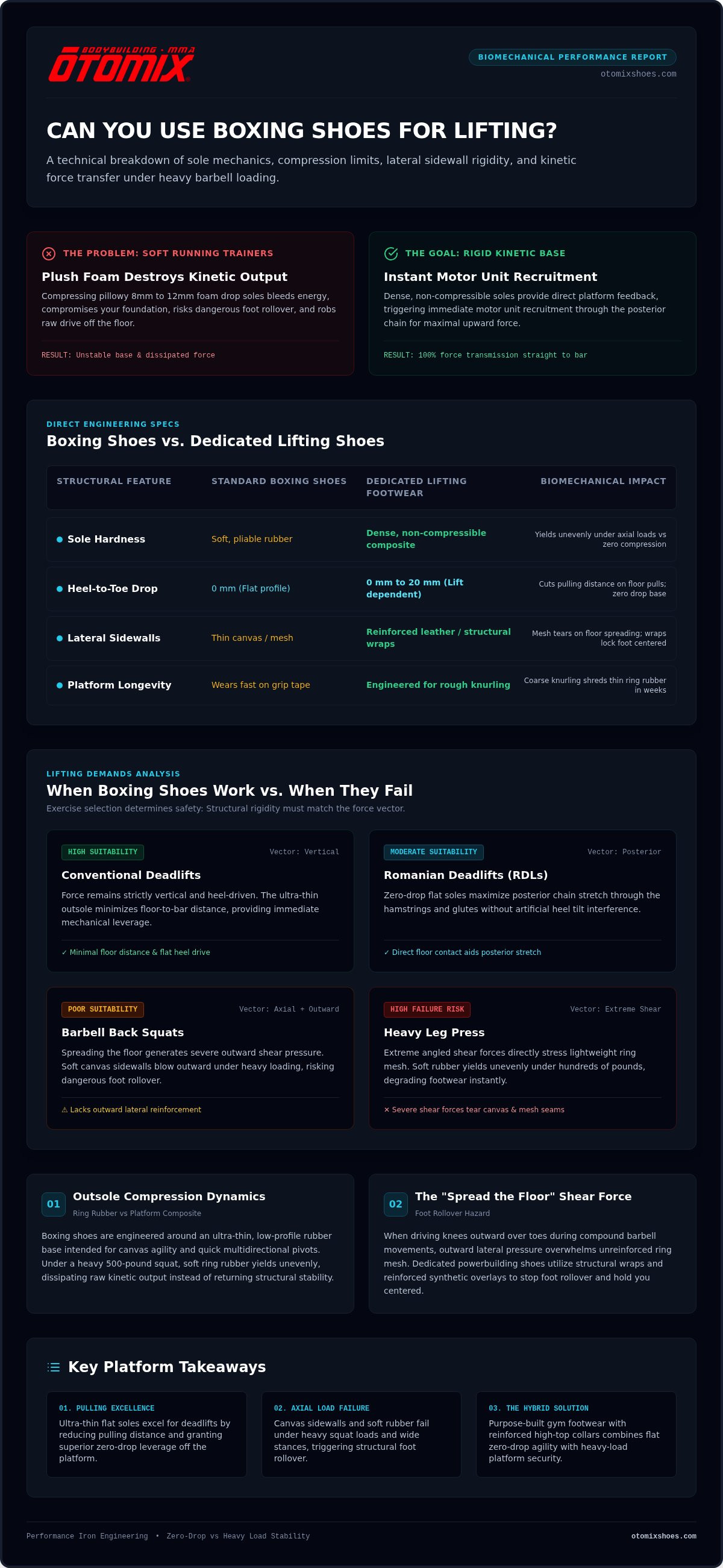
Lifting Demands: When Boxing Shoes Work and When They Fail
When asking can you use boxing shoes for lifting across an entire training split, exercise selection determines your safety. Footwear structural rigidity must match the exact vector of force you demand from the platform. Check the suitability breakdown:
- Conventional Deadlifts: High suitability. Force remains vertical and heel-driven.
- Romanian Deadlifts: Moderate suitability. Flat soles maximize posterior chain stretch.
- Barbell Back Squats: Poor suitability. Outward knee pressure blows out soft canvas sidewalls.
- Heavy Leg Press: High failure risk. Extreme sheer forces tear thin upper mesh off the outsole.
The Deadlift Exception: Why Flat Boots Pull Big Numbers
Deadlifts thrive on flat rubber. Zero heel elevation aligns your hips, loading hamstrings and glutes into optimal starting tension. Minimal stack height keeps you glued to the floor, reducing overall bar travel distance. Check out the Stingray Performance Bodybuilding Weightlifting Workout Gym Shoes guide to see how razor-thin soles unlock explosive pulling mechanics.
The Squat and Leg Press Hazard: Why You Need Real Structure
Can you use boxing shoes for lifting on heavy leg days? Never risk it! Squats demand pushing outward against the shoes to ignite glute recruitment and keep knees tracking true. Boxing boots lack the lateral resistance to stop severe foot blowout. Leg press footplates create aggressive angular sheer that destroys ring shoes. Explore how the Ultimate Trainer locks your feet into place under massive loads. Upgrade your platform foundation today at otomixshoes.com!
Why Purpose-Built Gym Footwear Outperforms Boxing Shoes
Stop compromising heavy platform PRs with gear made for boxing rings! When athletes ask can you use boxing shoes for lifting, they are really searching for lightweight mobility paired with flat ground feel. Boxing boots supply ankle height, but purpose-built lifting footwear fuses that agile profile with indestructible platform stability. Otomix pioneered specialized bodybuilding and strength footwear since 1989. The Stingray Performance Bodybuilding Weightlifting Workout Gym Shoes and Ultimate Trainer Bodybuilding Weightlifting Workout Gym Shoes provide razor-thin, zero-drop outsoles wrapped in high-tensile structural walls that conquer maximum barbell punishment.
Otomix Engineering: Built for the Weight Room Since 1989
Weight room floors chew through fragile ring shoes. Otomix utilizes dense outsoles engineered to bite into rubber mats, wooden platforms, and knurled steel plates without slipping. The Extreme Trainer construction locks your ankle joints firm during high-volume sets. Heavy-duty leather and reinforced synthetic panels laugh off barbell abrasion, outlasting delicate canvas boots round after round.
The Final Verdict: Lock In Your Platform Base
Can you use boxing shoes for lifting if nothing else is in your gym bag? Sure, but it remains a temporary fix. Keep boxing boots where they belong, gliding and pivoting across the canvas. Equip your intense workouts with footwear engineered from the rubber up to drive PRs safely. Dominate your next session and Shop Otomix Performance Lifting Shoes now!
Upgrade Your Footwear Foundation and Shatter Your Plateaus
So, can you use boxing shoes for lifting when heavy iron is on the line? While zero-drop ring boots assist deadlift leverage, they rapidly break down under severe squat sheer forces and abrasive platform grip. Flimsy canvas mesh risks catastrophic foot rollover, while soft outsoles drain kinetic energy right when you need explosive drive.
Never settle for gear built for the ring when you belong on the platform. Otomix has stood as the pioneering gym footwear specialist trusted by champions since 1989. You get ultra-flat, non-compressible soles designed for maximum force transfer, backed by rigid high-top ankle support built to withstand heavy squats and deadlifts workout after workout.
Stop bleeding poundages through inadequate gear. Dominate your next heavy set with Otomix high-performance lifting shoes! Lock in your stance, protect your joints, and attack every single rep with absolute platform dominance!
Frequently Asked Questions
Can you squat in boxing shoes safely?
No, squatting heavy in boxing shoes introduces serious injury risks! Squats create extreme lateral sheer force when you push your knees out and drive your feet against the platform. Because ring boots use light, flexible mesh uppers without structural reinforcement, your feet can roll right over the thin soles. For safe axial loading, you need dense outsoles and reinforced sidewalls that refuse to buckle under heavy barbell pressure.
Are boxing shoes good for deadlifting?
Yes, boxing shoes work well for deadlifts because pulling requires purely vertical force! Their zero-drop profile and ultra-thin outsoles minimize the distance the barbell must travel from the platform to lockout. This flat geometry keeps your hips close to the bar and maximizes posterior chain drive. However, lifters asking can you use boxing shoes for lifting long term should know rough gym platforms quickly grind down ring soles.
Do boxing shoes wear out fast on gym flooring?
Yes, boxing shoes deteriorate rapidly on abrasive gym surfaces! Manufacturers engineer ring boots exclusively for smooth canvas mats. Coarse rubber gym tiles, diamond-plate steel, and rough platform knurling create extreme friction that grinds down thin rubber soles in just weeks. If you train intensely multiple days per week, standard ring footwear simply lacks the abrasion resistance required to survive grueling barbell environments without tearing apart at the seams.
What is the difference between boxing shoes and wrestling shoes for lifting?
Wrestling shoes feature rounded outsoles that wrap up the sides of your foot, while boxing shoes feature completely flat, thin soles. When considering can you use boxing shoes for lifting versus wrestling footwear, boxing boots offer a flatter foundation for vertical pulling. However, neither style features the rigid composite midsoles or reinforced lateral leather overlays engineered into professional weight room footwear to prevent dangerous platform rollover under heavy weight.
Why should you choose specialized bodybuilding shoes over boxing boots?
Specialized bodybuilding footwear delivers the thin sole mechanics of ring boots with the unbreakable durability required for brutal training splits. Otomix models like the Stingray Performance, Ultimate Trainer, and Extreme Trainer provide zero-drop ground force transfer, locked-in ankle collars, and high-tensile sidewalls. They withstand heavy squats, hack squats, and deadlifts without compressing or rolling, giving you a platform-proven base engineered specifically for maximal iron.


