

Gym Footwear Mistakes: How to Match Shoes to Your Workout
Your running shoes may be the wrong choice for a strength workout. Common gym footwear mistakes often start with wearing one pair for every activity: running shoes are designed for forward motion, cross-trainers for varied movement, and flat, firm shoes can provide a more stable base for lifting.
It’s convenient to reach for the shoes you already own. But running, fitness classes, and heavy lifting place different demands on your feet. Cushioning or support that works well for one activity may feel less stable during another.
Learn how to match footwear to your training, use a running shoe’s extra eyelet for a more secure fit, and understand the limits of cross-trainers. This guide covers practical choices so you can choose shoes suited to the movements in each workout.
Key Takeaways
- Choose footwear around the movements you’ll perform, not just the fact that you’re training at the gym.
- Learn how the extra eyelet can help create a more secure lace fit when you need it.
- Use cross-trainers for versatile workouts, while recognizing where a dedicated shoe may be a better match.
- Match your shoes to running, lateral drills, or lifting to support steadier movement and better training mechanics.
1. Running shoes for forward movement versus lateral fitness classes
Running shoes are designed for forward movement, not the sharp side steps common in boot camp, Zumba, or court drills. Their cushioning and height may also make balance harder during squats and deadlifts. For strength work, a flat, firm shoe can provide a steadier base.
Match your shoes to the activity. For walking, prioritize a comfortable fit and support through the heel and forefoot. Tennis and basketball involve lateral cuts, so side-to-side stability matters; basketball players may also choose high-tops for support during quick changes of direction. Running shoes aren’t the right default for every class.
Fit matters as much as shoe type. Try shoes toward the end of the day, when normal swelling may make your feet larger. Leave about a half-inch between your longest toe and the front of the shoe. Runners need room for feet to swell during a run, and extra space in the toe box helps prevent toes from hitting the front. Have your feet measured annually, since size can change.
Running shoes wear down with use, so pay attention to changes in their support. For other gym shoes, uneven sole wear, reduced grip, or less stability during exercise are signs to replace them. Don’t rely on the calendar alone; worn support changes how the shoe feels under load.
Worn or ill-fitting shoes can contribute to foot pain and strain. Running in shoes with reduced support may cause your body to compensate, while a poor fit can press your toes against the shoe. Stop exercising if foot pain begins. If pain persists afterward, see a podiatrist.
Rotate workout shoes every couple of days to let them air out and dry. Keep footwear dry between sessions and change out of damp socks, since lingering moisture can contribute to odor and fungal growth.
2. Using the extra eyelet for ankle support
The extra eyelet near the top of some running shoes can help secure your heel. Use it to create a heel lock, also called a runner’s loop, if your heel slips during a run or your laces loosen. Thread each lace end through the top eyelet on the same side to form a small loop. Cross the lace ends, pass them through the opposite loops, then pull gently and tie. This holds the heel more securely inside the shoe. It can improve the fit, but it doesn’t replace footwear designed for another sport.
Check lace tension before training. Your heel should feel secure without pinching, and your toes should still move comfortably. If the loop puts pressure across the top of your foot, loosen it or use the standard lacing pattern. A runner may use the extra eyelet for a more secure fit, while a basketball player needs shoes designed for repeated side-to-side movement. Laces alone can’t provide the lateral stability needed for court sports.
Orthotics address a different aspect of fit. Arch support is built into a shoe, while an orthotic is an insert placed inside it. If you use one, make sure it sits flat without crowding your toes or lifting your heel out of the shoe. An insert that shifts during a squat or walk can distract you from your movement. Assess the fit with the insert in place, not just with the shoe’s original insole.
Keep the goal clear: the extra eyelet fine-tunes lacing, while arch support and orthotics affect how the foot sits inside the shoe. For weight training, a stable base matters more than a tight heel lock. Explore stable training footwear when choosing shoes for lifting, and use the eyelet technique for a better-fitting running shoe.
3. Cross-trainers and their limitations
Cross-trainers are designed for varied gym movements, making them a practical option for workouts that combine drills, machines, and short bursts of activity. But their versatility has limits. A shoe designed for several activities may not provide the specific feel or support you want for a demanding discipline. Choose according to the workout’s main movement, not the label alone.
For a fitness class with side steps, quick changes of direction, and floor exercises, cross-trainers may be a better fit than running shoes. Check for a firm heel, good support, and manageable weight. A secure heel helps keep your foot in place, while lighter shoes can feel less cumbersome during repeated transitions. Walk, step sideways, and bend your knees in the shoes. Notice whether your foot shifts or the sole feels unstable.
You can run a short distance in cross-trainers, but that doesn’t make them ideal for regular running. Someone jogging briefly before a circuit class may prefer one versatile pair. If longer or repeated runs are the main focus of a workout, choose shoes intended for running. The longer the run, the more important it is to let that activity guide your footwear choice.
Cross-trainers aren’t a universal solution for lifting, either. During a heavy squat or deadlift, a cushioned, flexible sole may feel less stable than a flat, firm base. Court sports involve repeated cuts and rapid changes of direction, so choose footwear suited to those movements. One shoe can cover several gym activities, but it shouldn’t erase the differences between running, lifting, and sport-specific drills.
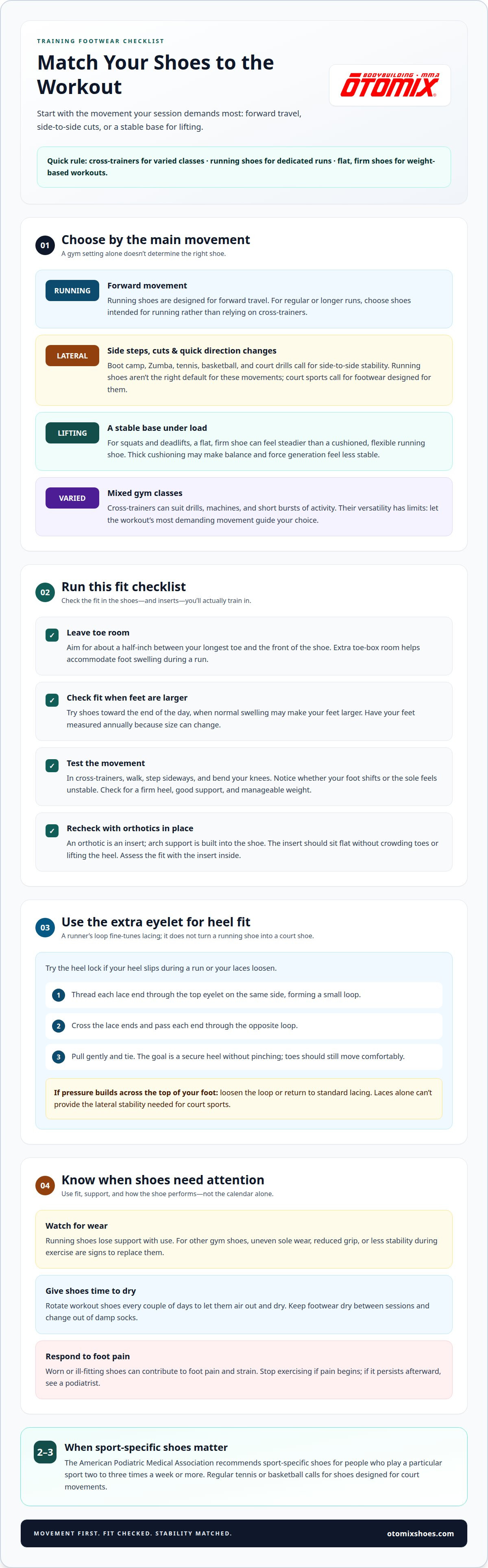
Use this quick rule: choose cross-trainers for varied classes, running shoes for dedicated runs, and stable training shoes for weight-based workouts. If your session combines activities, let the most demanding movement guide your choice. Then test the fit with the movements you’ll perform, such as a lateral step or controlled squat.
4. Matching shoes to the workout
Choose footwear according to the workout’s main demand: forward travel, lateral cuts, or a stable base for lifting. The American Podiatric Medical Association recommends sport-specific shoes for people who play a particular sport two to three times a week or more. If tennis or basketball is a regular part of your schedule, wear shoes designed for court movements rather than expecting general gym shoes to suit every activity.
Are running shoes a poor choice for weightlifting and strength training? They can make lifting feel less stable. Thick, cushioned soles can affect squat and deadlift technique and make it harder to generate force safely. For weight-based exercise, a flat, firm shoe can provide greater stability. Some lifters train in socks for increased stability, balance, and grip, but choose footwear appropriate to your gym and workout.
Match footwear to other activities just as carefully. Running shoes suit forward motion and need shock absorption and good arch support. Basketball calls for support during quick changes of direction, while tennis requires stability for side-to-side movement. For a class that combines activities, cross-trainers may work better than running shoes. If one workout includes several activities, let its most demanding movement guide your choice.
Is it safe to work out in sandals, boots, or casual sneakers? They may not provide the support or stability your planned exercise requires. Sandals, for example, leave the foot exposed, while a casual sneaker may lack a firm base for lifting. Choose athletic shoes suited to your workout, with a secure fit and support at the front and back.
Should gym shoes be broken in before workouts? No. They should feel comfortable right out of the box or off the rack; don’t rely on a break-in period to fix pressure or slipping. Playing a sport in unsuitable shoes twice a week can affect more than performance. Match the shoe before training, then choose weightlifting workout shoes for a session centered on lifting.
Otomix
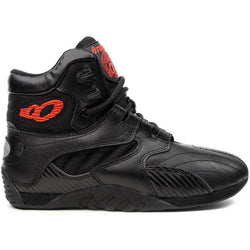
Otomix offers footwear for bodybuilding, weightlifting, and gym training. Its range includes Stingray Performance Bodybuilding Weightlifting Workout Gym Shoes, Ultimate Trainer Bodybuilding Weightlifting Workout Gym Shoes, and Extreme Trainer. These models give you options for strength-focused sessions instead of relying on running shoes for every workout.
First, identify the main demands of your training. If lifting and bodybuilding are central to your routine, explore Otomix footwear and consider which model suits your workouts. Match your choice to the movements you perform, then prioritize a comfortable, stable fit.
Contact Otomix to discuss your gym footwear needs.
Make Your Next Training Choice Count
Treat gym footwear mistakes as useful feedback, not a reason to buy blindly. Your training may shift from steady runs to strength blocks or mixed classes, so review your footwear as your routine changes. Before your next session, identify the movement that demands the most control and choose shoes suited to it. This keeps your setup intentional as your goals evolve.
Pay attention to fit and feel as your training changes. If a pair distracts you, reassess rather than forcing it into every workout. A deliberate footwear choice helps you focus on the session, from warm-up to final rep. Keep a simple note of your most frequent workouts to clarify what you need from your next pair.
Ready to choose training footwear with your routine in mind? Contact Otomix about your training shoes. Step into your next session prepared to give the work your full focus.
Frequently Asked Questions
What are the most common gym footwear mistakes?
Common gym footwear mistakes include choosing shoes for appearance or convenience instead of the workout’s demands. Wearing the same cushioned running shoes for a treadmill session and heavy squats, for example, may leave you without a stable base for lifting. Also watch for worn tread, a poor fit, and loose laces. Match your shoes to the movement you’ll do most.
How should gym shoes fit, and how much toe room is needed?
Gym shoes should feel comfortable right away, hold your foot securely, and leave about a half-inch between your longest toe and the front of the shoe. Check the fit while standing, with the shoes laced as you’ll wear them for training. A fitting should assess foot length, width, and arch length. Try both shoes and make sure your toes aren’t pressed together.
Which shoes are best for weightlifting, cardio, HIIT, and gym classes?
Choose flat, firm shoes for weightlifting, running shoes for dedicated runs, and cross-trainers for classes with varied movements. For a HIIT session combining lateral drills and strength exercises, prioritize the movements that require the most control. If repeated running is the focus, wear running shoes; if lifting is central, choose a stable base.
How should gym shoes be chosen for flat feet, high arches, or overpronation?
Start with fit, comfort, and the support your workouts require instead of choosing shoes by foot type alone. A proper fitting considers foot length, width, and arch length. If you use orthotics, assess the shoes with the inserts in place. Notice whether your feet feel secure while walking and training. Persistent foot pain after exercise warrants an assessment by a podiatrist.


