

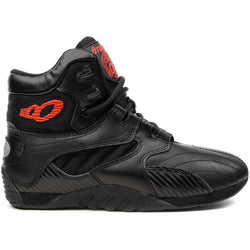
How Much Should You Spend on Lifting Shoes? A 2026 Buying Guide
The best lifting shoe for you isn’t necessarily the most expensive one. If you’re wondering how much to spend on lifting shoes, start with your lifts, fit, and training frequency, not the price tag. A lower-cost shoe may meet your needs, but only if its design suits the way you train.
Comparing price tiers can be frustrating when the differences between shoes aren’t clear. You want stable support without paying for features you won’t use, and you want to avoid buying twice because your first choice doesn’t fit or suit your workouts.
This 2026 guide helps you set a sensible budget around your training and footwear needs. You’ll learn which construction and fit details to check, how to compare specialized footwear with general training shoes, and how to evaluate options against the same criteria. We’ll also look at Otomix’s Stingray Performance, Ultimate Trainer, and Extreme Trainer, using only confirmed product information. Spend with purpose by choosing footwear that suits the work you actually do.
Key Takeaways
- Set how much to spend on lifting shoes by matching your budget to your lifts, fit needs, and training frequency.
- Compare intended use, support, durability, and versatility, then check fit in person whenever possible.
- Use a simple decision process to prioritize must-have features and skip extras that don’t serve your training.
- Compare Otomix’s Stingray Performance, Ultimate Trainer, and Extreme Trainer using current product details before choosing.
How Much Should You Spend on Lifting Shoes? Start With Your Training
There’s no single spending level that suits every lifter. To decide how much to spend on lifting shoes, begin with the movements you do, how often you train, and what feels secure and comfortable on your feet. A shoe’s price alone doesn’t show whether it matches your routine or will improve your performance.
Dedicated lifting sessions place different demands on footwear than workouts that combine lifting with running, jumping, or other varied movements. When comparing shoes, consider whether you need a stable base for focused lifting or a shoe that can accommodate a wider mix of activities. Shoes alone won’t build strength or guarantee safer lifting. For context, specialized weightlifting equipment includes shoes designed for the sport.
To see how footwear choices can vary by workout, watch this video:
When specialized lifting shoes make sense
If most of your workout is focused on lifting, dedicated shoes may be worth considering for their purpose-built construction. If you also run, jump, or move through varied exercises, check whether the shoe is intended for those activities too. Think about how often your workout switches between lifting and other movements, then compare that with the shoe’s stated use. If possible, try it on and assess the fit rather than relying on the product name.
Why the right budget depends on your use
For occasional lifting, a comfortable fit and suitability for your main exercises may matter more than premium extras. With frequent, focused training, consistent fit and construction you can rely on from session to session become more important. Consider how often you expect to wear the shoes and whether their features address a real need in your routine.
Good value is footwear that fits your training and feels right enough to use consistently. Buy for the work you actually do, not a higher price tag or features your workouts don’t call for.
What Determines Lifting-Shoe Value Beyond the Price Tag?
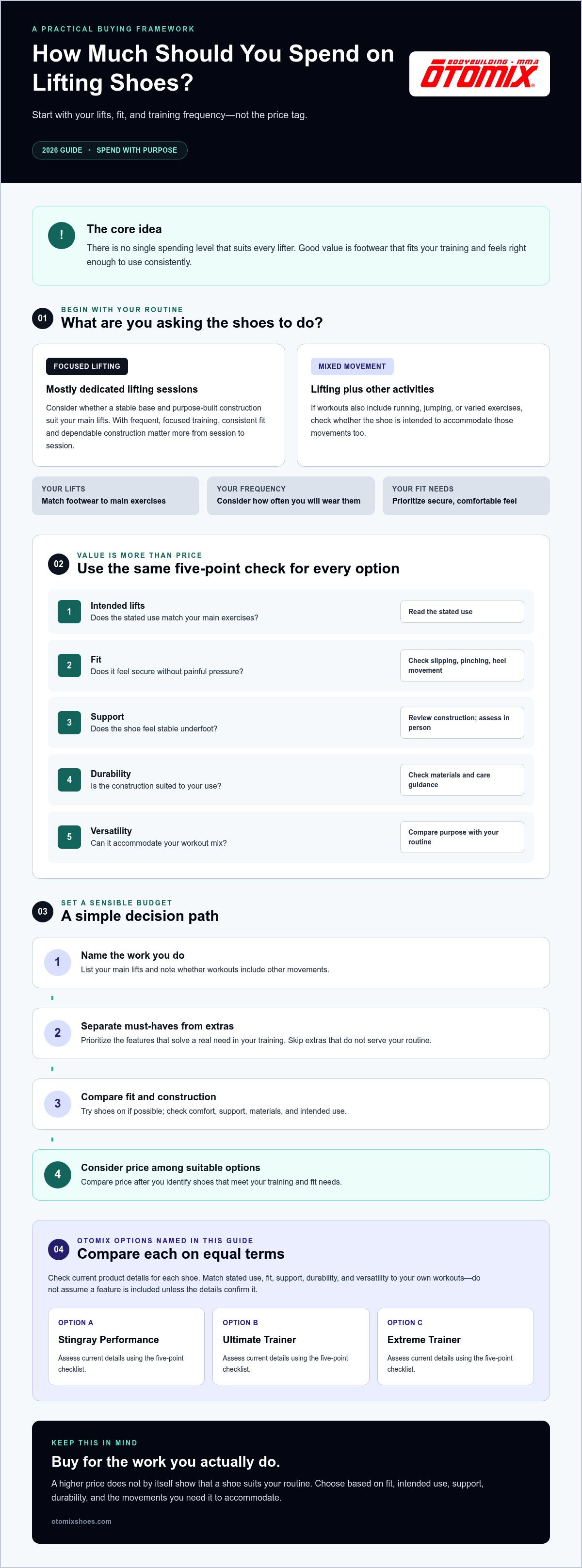
Price is only one part of the comparison. A useful shoe should suit your main lifts, fit securely, provide the support you’re looking for, and hold up to the way you train. It should also work for the other movements in your routine if you plan to use it beyond lifting. A shoe is worthwhile when its design matches your training demands.
Apply the same checklist to each option. Product descriptions can help you check intended use, materials, closure details, and care guidance. For fit, try the shoes on if possible. Check whether your heel moves, whether any area pinches, and whether your foot slides inside the shoe. These simple checks can reveal a poor fit before you commit to wearing it for a workout.
| Compare | What to consider | How to assess it |
|---|---|---|
| Intended lifts | Does the shoe suit your main exercises? | Read the stated use and match it to your training. |
| Fit | Does it feel secure without painful pressure? | Try it on and check for slipping, pinching, or heel movement. |
| Support | Does the shoe feel stable underfoot? | Review construction details, then assess the feel in person. |
| Durability | Is the construction suited to regular use? | Check listed materials and care information. |
| Versatility | Can it accommodate the movements in your routine? | Compare the stated purpose with your workout mix. |
Look past the marketing language
Terms like “high-performance” or “premium” don’t explain how a shoe is built or whether it suits your lifts. Look for specific, current product details instead, such as stated use, construction, and care guidance. If a description doesn’t explain a feature you care about, don’t assume it’s included. For broader footwear context, explore this weightlifting shoes guide.
Compare options on equal terms
Wondering how much to spend on lifting shoes? First compare intended use, fit, support, durability, and versatility. Then consider price among the options that meet your needs. Check current specifications, sizing guidance, and purchase terms before buying. You can use the same checklist to assess Otomix lifting shoes and see whether their stated use aligns with your training.
How to Set a Lifting-Shoe Budget Without Overspending
Build your budget around a short list of needs, not a growing list of features. This four-step process keeps the decision tied to your training and helps you judge how much to spend on lifting shoes.
- Name your lifts and workout style. Write down the exercises your shoes need to suit. Note whether your sessions focus on lifting or combine it with running, jumping, or other movements.
- Set fit and comfort requirements. Decide what a secure, comfortable fit means for you. Keep those requirements fixed as you compare models, rather than compromising on fit for extra features.
- Compare only relevant features. Check each option’s current product details against your lift list and fit criteria. If a feature won’t help with your routine, leave it out of the decision.
- Review the total value. Before ordering, confirm the sizing guidance, current specifications, and return conditions. Consider whether the shoe is likely to suit how often you’ll use it.
A feature can sound impressive without adding value to your workouts. Keep your shortlist focused on what you’ll use, and don’t stretch your budget for a design detail that doesn’t match your training. If two options both meet your needs, compare their verified features and fit before letting price decide.
Know when to wait or spend less
If the fit is uncertain, the intended use is unclear, or product details leave an important question unanswered, wait and verify before buying. A specialized pair may not suit every workout or every lifter. Choosing a simpler option, or delaying the purchase, can be a better decision than paying for shoes that don’t feel right or fit your routine.
Use the Ultimate Trainer overview as one reference, then judge the model by its current details and your must-haves. Explore Otomix footwear options and check each model against your criteria.
Which Otomix Lifting Shoes Should You Compare for Your Training?
Otomix offers three models to evaluate: Stingray Performance, Ultimate Trainer, and Extreme Trainer. The model names alone don’t tell you which one best matches your lifts, fit preferences, or workout routine. Compare the current product information for each and use the listed details, not assumptions, to narrow your choices.
Match a confirmed model to your training priorities
Start with the work your shoes need to support. For each model, check the current product description, intended use, construction details, and available fit or sizing guidance. Compare those details with your primary lifts and workout style. The Extreme Trainer is described as offering stability and support during intense training sessions; check its current product information to see whether its details align with your needs. If another feature matters to you but isn’t clearly stated, don’t treat it as a confirmed difference between models.
Use the same questions for all three:
- Does the stated intended use fit your training?
- Does the sizing information help you assess fit?
- Do the listed construction details meet your must-have criteria?
This keeps the comparison grounded. Stingray Performance, Ultimate Trainer, and Extreme Trainer are options to investigate, not automatic recommendations for different lifters based on their names.
Your final pre-purchase check
Before deciding how much to spend on lifting shoes, verify the current product details and sizing information on the product page. Review purchase terms, including return conditions, before ordering. If fit, intended use, or a detail that matters to you remains unclear, pause and confirm it rather than guessing.
Choose the model whose verified details best match your priorities. Explore Otomix lifting shoes and compare the current options before making your decision.
Choose Your Lifting Shoes With Confidence
The right budget isn’t the biggest one. It’s the amount that gets you a shoe suited to your lifts, comfortable on your feet, and appropriate for how often you expect to use it. To decide how much to spend on lifting shoes, compare construction and current product details with your training needs, then set aside features that won’t serve your routine.
Otomix specializes in athletic footwear, with Stingray Performance, Ultimate Trainer, and Extreme Trainer among its offerings. Compare each model’s current description, sizing guidance, and purchase terms before choosing. Let verified details, not assumptions based on a model name or price alone, guide your decision.
Ready to compare options against your priorities? Explore Otomix lifting shoes and review the current models before you choose.
Frequently Asked Questions
How much should you spend on lifting shoes?
There’s no set amount that works for every lifter. Decide how much to spend on lifting shoes by considering your main lifts, training frequency, the construction you need, and whether the fit feels secure and comfortable. Compare suitable options using the same criteria, then check current product details and sizing guidance before buying.
Are expensive lifting shoes always better?
No. A higher price doesn’t automatically mean a shoe suits your training better or performs better for you. Compare its stated intended use, construction details, fit, and support with what your workouts require. A less expensive option may make more sense if it meets your needs, while costly features add little value when they don’t match your routine.
Can beginners use specialized lifting shoes?
Yes. Beginners can wear specialized lifting shoes if the design suits their exercises and the fit feels secure. Experience alone doesn’t determine whether a shoe is appropriate. Consider whether your sessions focus on lifting or include varied movements, then check the shoe’s stated purpose. Specialized footwear isn’t essential for every new lifter or every workout.
What should you look for before buying lifting shoes?
Start with intended use: the shoe should suit the lifts you do most. Check the product description for construction and support details, then use sizing guidance to find a fit that feels secure without pinching or slipping. If possible, try the shoes on. Before ordering, review current product information and purchase terms, including return conditions.


