

Lace-Up vs Velcro Lifting Shoes for Fit and Fastening
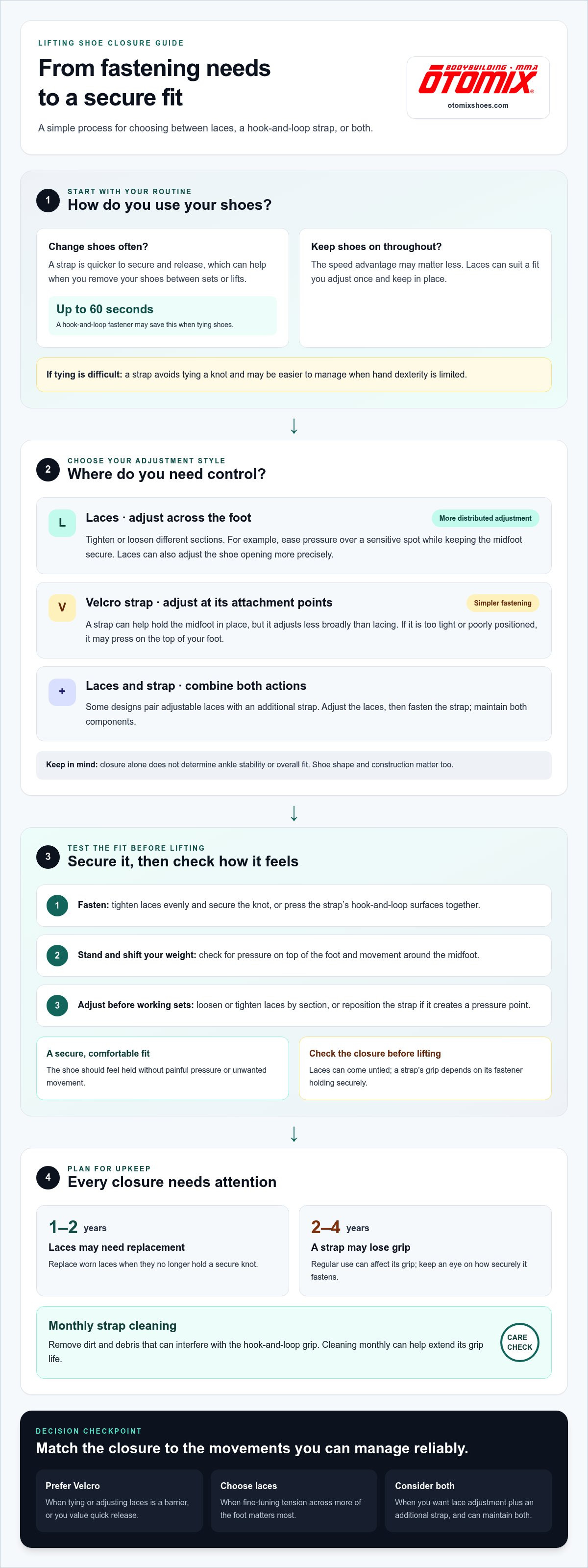
A faster closure isn’t automatically the better lifting shoe. With lace-up vs. Velcro strap lifting shoes, laces let you fine-tune tension across the foot, while Velcro straps are quicker to fasten and release. If tying laces is difficult or you want less fuss between sessions, Velcro may be easier to manage; if precise adjustment matters most, laces offer more control.
Both options can feel secure, but fit matters more than the closure alone. A strap that presses awkwardly or laces that are difficult to adjust can distract from your setup, so choose the fastening style that works with your feet and routine. This guide compares support and comfort, fastening speed, and accessibility, then gives you a practical way to decide. Get clear on what each closure does well and choose with confidence.
Key Takeaways
- Choose laces when you want to adjust tension across more of the foot; straps offer a simpler fastening option.
- If hand dexterity makes tying difficult, a hook-and-loop closure may be easier to manage.
- Consider how often you remove your shoes during training when comparing fastening speed and convenience.
- Keep hook-and-loop closures clear of dirt and debris to help maintain their grip.
Accessibility for people with limited dexterity
For lifters with limited dexterity, Velcro straps are often easier to fasten than laces because they don’t require tying a knot. Lace-up shoes can be harder to adjust while worn, especially if gripping and pulling narrow laces is difficult. If you change shoes frequently, you may also prefer a closure that releases quickly.
Durability depends on the closure and its upkeep. Weightlifting shoe laces typically need replacement after 1-2 years, while a hook-and-loop strap may lose grip after 2-4 years of regular use. Neither closure stays maintenance-free: one uses replaceable laces, and the other relies on clean, gripping fasteners.
For strap care, remove dirt and debris that can interfere with the hook-and-loop grip. Cleaning the strap monthly can help extend its grip life. Replace worn laces when they no longer hold a secure knot, and keep an eye on strap fastening as its grip changes.
How much do lace-up and Velcro strap lifting shoes cost? Price depends on factors such as construction, materials and brand; the closure type alone doesn’t determine the cost.
Can lifting shoes have both laces and a Velcro strap? Yes. Some designs combine adjustable laces with an additional hook-and-loop strap.
| Closure option | Dexterity | Upkeep | Fastening |
|---|---|---|---|
| Lace-up | Requires tying | Laces may need replacement | Adjust by tightening laces |
| Velcro strap | Useful when hand use is difficult | Clean monthly | Fast to release and secure |
| Laces and strap | Combines two closure actions | Maintain both components | Adjust laces, then fasten strap |
Choose the closure that matches the hand movements you can manage reliably, then consider how to maintain it.
- Prefer Velcro if tying or adjusting laces is a barrier.
- Choose laces if replacing them is simpler for your routine than cleaning a strap.
- Consider a combined closure if you want both lace adjustment and a strap.
Comfort and support
The closure affects how you secure the shoe, but fit also depends on its shape and construction. Compare how each option lets you adjust tension across your foot.
Lace-Up Comfort and Support
Laces let you tighten or loosen different sections, helping distribute pressure across the foot. For example, you can ease tension over a sensitive spot while keeping the midfoot secure. This zone-by-zone adjustment offers more flexibility than a strap that fastens at set points.
Which lifting shoes provide better ankle stability? Laces let you adjust the shoe opening more precisely, but the closure alone doesn’t determine ankle stability. Fit and shoe construction matter too, so a snug fastening shouldn’t be mistaken for ankle support.
Velcro Strap Comfort and Support
A Velcro strap secures the shoe at its attachment points, making adjustment straightforward but less distributed than lacing. If the strap is too tight or poorly positioned, it may press on the top of your foot. Fasten it firmly enough to hold the shoe without creating an uncomfortable pressure point.
Do lifting shoe straps improve foot lockdown during squats and deadlifts? A strap can help hold the midfoot in place, especially when paired with laces, but the shoe must fit properly. A single strap with good lacing is sufficient for most lifters; a second strap may suit wider feet, high training volumes, or competition use.
How should lifting shoes fit, and can laces or straps be adjusted for wide feet? Aim for a secure fit without painful pressure or unwanted movement. Laces allow adjustment across more of the shoe opening, which can help accommodate wider or differently shaped feet. A strap adjusts only where it attaches, so it can’t change the fit across the whole foot.
Test the closure in your lifting stance: fasten the shoe, plant your foot, then check for pressure on top and movement around the midfoot. Loosen or tighten laces by section, or adjust the strap if it creates a pressure point. Make changes before your working sets.
For gym-focused footwear, explore bodybuilding and weightlifting shoes suited to your training needs.
Ease and speed of fastening
Velcro straps are quicker to secure and release than lace-up closures. A hook-and-loop fastener may save up to 60 seconds when tying shoes. That difference matters during a gym session with repeated shoe changes, or when you want to loosen your footwear between lifts. Laces take more steps: pull them snug, tie a knot, then check the tension.
If you keep your shoes on throughout a workout, the time saved by a quick closure may matter less. Laces let you adjust tension along the shoe opening, while a strap fastens at its attachment points. Narrow laces can also require precise finger movements. If tying is difficult, pulling a strap across the shoe may be simpler.
Use a quick fit check before your first working set:
- With laces, tighten them evenly and secure the knot so the shoe feels held without pinching.
- With a strap, press the hook-and-loop surfaces together and check that the closure holds.
- Stand and shift your weight; adjust the fastening if your foot slides or pressure feels uneven.
Velcro makes shoes easy to remove between sets, but quick release isn’t the only consideration. Laces can come untied during activity, so check the knot before lifting. A strap avoids tying a knot, though its grip depends on the fastener holding securely. Both closures should feel stable before you begin a squat or deadlift.
Think about your routine. If you change shoes often or find lacing difficult, Velcro offers a faster, simpler fastening action. If you prefer to set your fit once and keep your shoes on, laces may suit you better. Try each closure while seated, then standing, and choose the one you can fasten securely and comfortably each time.
Hook-and-loop closure operation
A hook-and-loop closure joins a strip of tiny hooks to a strip of small loops. Its grip depends on clean surfaces that align and press together securely.
Velcro Strap Advantages
The main advantage is straightforward use: place the strap across the shoe and press it closed. Unlike lacing, this avoids threading and tying laces, which can make fastening easier for people with limited hand dexterity. Releasing the strap is also quick, making it useful for lifters who remove their shoes between training blocks.
What are the pros and cons of Velcro strap lifting shoes? They’re quick to fasten and release, and don’t require tying. Their grip can weaken as the fastener collects debris or wears with use.
Velcro Strap Drawbacks and Rules
Dirt, leaves, lint, and other debris can cling to the hooks and loops, reducing their hold. Inspect the closure before training, brush away visible debris, then press the strap flat against its matching strip. A weightlifting shoe’s hook-and-loop strap may lose grip after 2-4 years of regular use; wear varies with use and care.
Do powerlifting or weightlifting rules restrict shoe closures? Requirements vary by federation and event, so there isn’t one universal closure rule for every competition. Before competing, read the rules that apply to your event and make sure your shoes meet them.
For routine care, clean the strap monthly to help extend its grip life. Keep the fastening surfaces together during storage, and check that they still hold before your next session. If a strap lifts at the edge or releases under light pulling, don’t rely on it for a secure fit.
Use this simple check before lifting:
- Remove visible dirt, lint, or cotton from both closure surfaces.
- Align the hook and loop strips, then press the full strap down firmly.
- Pull gently at the strap’s edge to confirm it stays attached.
A quick inspection can catch debris or reduced grip before a squat or deadlift. For everyday gym use, choose a closure you can fasten securely and maintain as part of your routine.
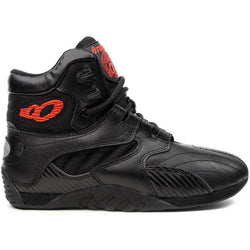
Otomix: Stingray Performance Bodybuilding Weightlifting Workout Gym Shoes
Otomix’s Stingray Performance Bodybuilding Weightlifting Workout Gym Shoes are one option when choosing footwear for bodybuilding, weightlifting and gym training. The closure is only part of the decision; match the shoe to your training and fit needs.
Compare the Stingray Performance and Ultimate Trainer Bodybuilding Weightlifting Workout Gym Shoes for serious training. The Extreme Trainer is built to offer stability and support during intense sessions. Consider how each shoe feels as you set your stance and move through your lifts, as well as whether its fastening style suits your routine.
Review Otomix’s footwear and choose the model that fits your training priorities. For more information, visit otomixshoes.com.
Choose Your Next Training Shoe
Choose footwear based on what you need during training, not just how the closure looks. Your lace-up vs. Velcro strap lifting shoes decision should reflect your routine, how you fasten shoes and the feel you want underfoot. Use those priorities to narrow your options, then choose a shoe designed for your type of training.
Otomix offers the Stingray Performance Bodybuilding Weightlifting Workout Gym Shoes, Ultimate Trainer Bodybuilding Weightlifting Workout Gym Shoes and Extreme Trainer. Consider which model suits your bodybuilding, weightlifting or gym workouts, then explore the available footwear.
Contact Otomix about lifting shoes to take the next step. Choose with purpose, get your training gear ready, and move into your next session with confidence.
Frequently Asked Questions
Velcro vs Lace vs Slipper: Which Closure Is Best?
For lifting, choose a closure that gives you a secure fit you can manage consistently. Laces and straps let you fasten the shoe; a slipper-style shoe has no separate closure to tighten. That simplicity can suit quick changes, but gives you fewer ways to adjust the fit after putting it on. Compare how each style feels during your warm-up before deciding.
Velcro vs Laces: Which Shoe Fastening Works Best?
Velcro is quick to fasten, while laces suit lifters who want to adjust tension across the shoe opening. The lace-up vs. Velcro strap lifting shoes choice also depends on your routine: a strap can simplify transitions if you remove your shoes between activities. If you fasten once and leave your shoes on, laces let you fine-tune the fit. Choose the option you can secure reliably each session.
How Do Lace-Up and Velcro Strap Lifting Shoes Differ in Fit and Support?
Lace-up and Velcro-strap lifting shoes differ in how they adjust pressure. Laces distribute tension across sections of the shoe, while a strap tightens at its attachment points. Comparing lace-up vs. Velcro strap lifting shoes makes the tradeoff clear: lacing offers more adjustment zones, while straps simplify fastening. Check that your heel stays seated when you shift into your lifting stance.
Are Velcro Straps or Laces Better for Olympic Weightlifting?
Neither closure is automatically best for Olympic weightlifting. Choose a pair that stays comfortable and secure through snatch and clean-and-jerk practice. During your warm-up, test the fastening in a deep receiving position and while resetting between attempts. A closure that feels stable while standing may feel different as your foot flexes. For competition, consult the rules that apply to your event.
What Are the Pros and Cons of Lace-Up Lifting Shoes?
Lace-up shoes offer adjustable tension across the foot, which can help you tune the fit to different areas. The tradeoff is the extra handling needed to tie and retie them. Before a session, check that the knot holds and the lace ends don’t interfere with your stance. Carrying replacement laces can be useful if a lace becomes damaged or stops securing properly.
Which Lifting Shoe Closure Is Best for Beginners or People With Limited Mobility?
Velcro can be a practical option for beginners or people who find tying difficult because it doesn’t require a knot. Try fastening the shoe while seated, then stand and check that your foot feels secure. Before training, practice putting on and removing both shoes so fastening doesn’t distract from learning a consistent setup and lifting technique.


