

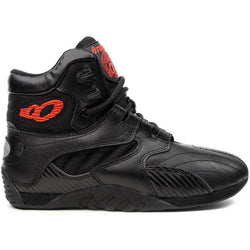
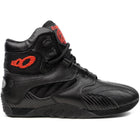
Men's Lifting Shoes for Squats and Gym Training
Men’s lifting shoes can help support squat positioning when limited ankle mobility makes it harder to reach depth with a steady, upright torso. Their raised heel changes your foot’s starting angle. Weightlifting shoes described for the sport have a heel-to-toe drop ranging from 15 mm to 22 mm. The right choice depends on your movement needs, not just how heavy you lift.
A stable, firm shoe can suit heavy barbell work, while a cross-training shoe may work better for sessions that mix lifting with varied gym movements. Neither automatically improves performance: heel elevation helps some lifters, but footwear cannot replace the ankle mobility your squat requires. Learn how lifting shoes compare with cross-trainers, how heel height and ankle mobility affect your position, and what to consider when choosing men's lifting shoes for squats and gym training. Use these comparisons to narrow your options and choose men's lifting shoes suited to the work you actually do.
Key Takeaways
- Match forefoot stiffness to your main lifts: rigid shoes suit heavy barbell squats, while a more flexible feel can better fit mixed training.
- Use cross-training shoes when your session shifts between lifting and varied gym movements; prioritize a stable base for your heaviest sets.
- Assess your squat position and ankle movement before choosing heel height. The right elevation can support your setup, but it won’t replace mobility.
- Judge performance by your stability, control, and training demands, not by footwear alone. Compare construction and fit before choosing a pair.
Weightlifting shoe testing and product comparisons
Compare shoes by how they support your actual lifts, not by their labels alone. Forefoot flexibility is one useful factor to assess for heavy squats and other barbell work.
Reasons to Use or Avoid Lifters
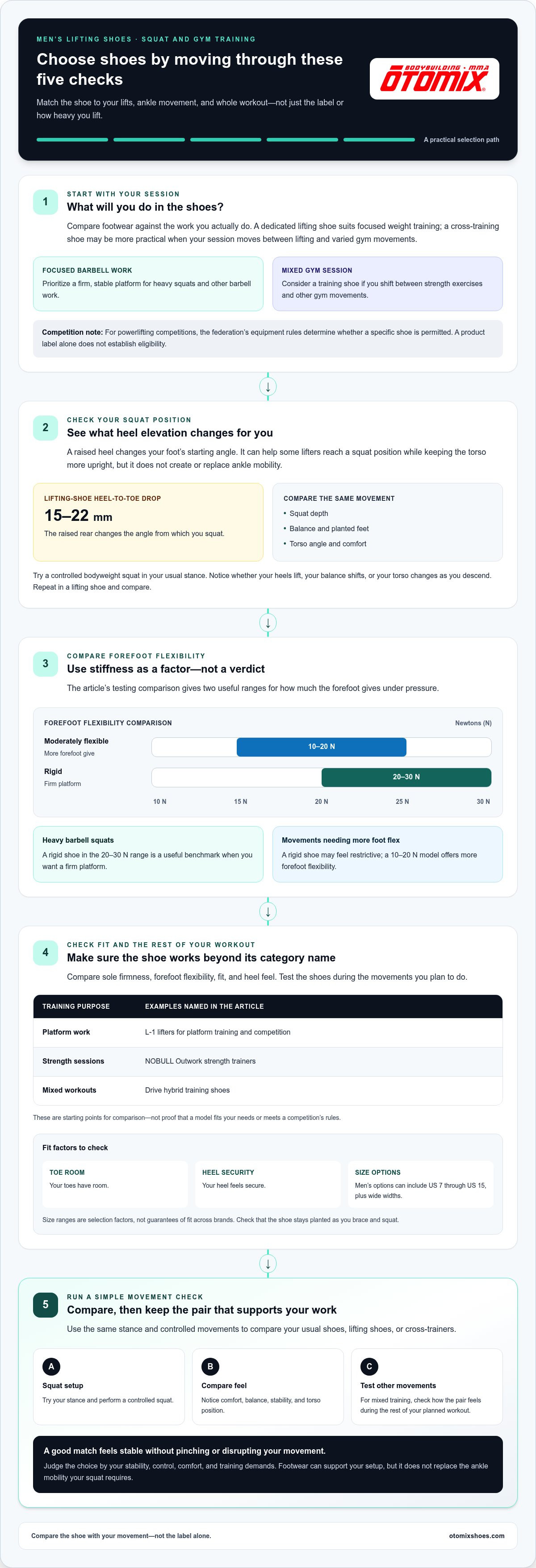
Rigid weightlifting shoes can suit heavy-loaded barbell squats when you want a firm platform underfoot. The testing comparison places rigid shoes at 20-30 N of forefoot flexibility, while moderately flexible lifting shoes fall at 10-20 N. That distinction helps you compare how much the forefoot gives under pressure. A rigid shoe may feel restrictive during movements that need more foot flex.
Try a simple comparison: squat in your usual shoes and in a lifting shoe, then note comfort, balance, and whether your feet stay steady. Dedicated weight-training models, including the NOBULL Lifter, are designed for lifting-focused sessions. If your workout shifts regularly between barbell sets and varied gym movements, weigh that specialization against the flexibility you need for the rest of your training.
Choosing a Men's Weightlifting Shoe
Start with your main lifts, then compare sole firmness, forefoot flexibility, fit, and heel feel. For heavy squats, a rigid option in the 20-30 N range is a useful benchmark; a 10-20 N model offers more forefoot flexibility. Test your stance and a controlled squat in each pair. Keep the shoe that feels stable without pinching or disrupting your movement.
Men’s options can include sizes from US 7 through US 15, plus wide-width choices. Treat those as selection factors, not guarantees of fit across brands. Check that your toes have room, your heel feels secure, and the shoe stays planted as you brace and squat. A strong comparison ends with the model that suits your foot and training priorities.
Cross-training shoes for lifting and gym workouts
Choose a cross-training shoe when your session combines barbell work with varied gym movements. For powerlifting competitions, the federation’s equipment rules determine whether a specific shoe is permitted. A product label alone does not establish eligibility.
A lifting shoe is designed for focused weight training, while a training shoe may suit sessions that move between strength exercises and other gym work. Compare your workout, not just the shoe category. If you go from squats to dynamic drills, consider how each pair feels during both tasks. A shoe that feels steady under a bar may be less practical for a varied session.
Examples named for different training purposes include L-1 lifters for platform training and competition, NOBULL Outwork strength trainers, and Drive hybrid training shoes. Treat those names as starting points for comparison, not proof that a model fits your needs or meets a particular competition’s rules. Check the shoe’s fit and performance during the movements you plan to do.
Related shoe categories can help narrow your options. Strength trainers focus on lifting, while hybrid training shoes suggest a broader mix of gym activities. Compare a dedicated lifting shoe with a cross-trainer during your squat setup, then test the cross-trainer during your other exercises. Notice heel stability, comfort, and whether each shoe feels suited to the task.
- Platform work: Compare L-1 lifters with your current shoe during your usual barbell setup.
- Strength sessions: Include NOBULL Outwork among the strength-trainer examples you assess.
- Mixed workouts: Consider Drive hybrid training shoes as a category example, then test the fit across your planned movements.
Make your decision with a simple movement check: try your stance, perform a controlled squat, then test the other exercises in your workout. Choose the pair that feels appropriate across the session. For competition, follow the applicable rulebook.
Heel elevation and ankle range of motion
Heel height changes your starting position in a squat and can affect how comfortable ankle movement feels. The right fit depends on your mobility and the position you want to maintain.
Heel-to-Toe Drop and Squat Position
The heel-to-toe drop of lifting shoes described for weightlifting ranges from 15 mm to 22 mm. A raised heel angles the foot forward, which can help some lifters reach a squat position while keeping the torso more upright. It doesn’t create ankle mobility; it changes the position from which you squat. Compare your depth, balance, and torso angle in shoes with different heel heights, using the same stance and controlled movement.
Lifter Heel Construction and Drop
A lifting shoe raises the rear of your foot while keeping the forefoot lower. This difference is called the heel-to-toe drop. During a squat, the raised platform changes your ankle’s starting angle and can make forward knee travel feel more accessible. Notice how the heel meets the floor, whether your foot stays planted, and how the shoe feels as you lower. The shoe needs a steady base, not simply extra height.
Flat or Raised Heels for Deadlifts
Flat shoes are a practical starting point for deadlifts because they keep your heel closer to the floor. A raised heel changes your starting position, so it may not suit every lifter or deadlift style. Compare both options with a controlled setup: plant your feet, brace, and check whether you can reach the bar while staying balanced. Choose the shoe that supports your position without forcing an awkward start.
To assess your ankle movement, perform a controlled bodyweight squat in your usual stance. Notice whether your heels lift, your balance shifts, or your torso changes position as you descend. Repeat the movement in a lifting shoe and compare. If heel elevation makes the position feel more manageable, it may suit your squat setup. If your feet feel unstable or your movement worsens, prioritize a flatter position and stay within a comfortable range of motion.
Whether lifting shoes improve performance
Lifting shoes can support performance when their design matches the demands of a specific lift. For example, a stable base can help you maintain consistent foot pressure during a heavy squat. A raised heel may suit your squat position but feel less useful for deadlifts. The shoe changes your setup, not your strength or technique.
Judge the result by repeatable movement, not a dramatic first impression. Use the same load, stance, and depth in each pair. Compare foot stability, balance, and how naturally you reach your planned position. If one shoe helps you keep your feet planted through each squat, that is a practical advantage. If it alters your balance or feels awkward, it may not improve that lift for you.
Separate footwear effects from other training variables. Keep your warm-up, bar position, and movement consistent while comparing shoes. A different stance or load can change how a set feels and make the comparison less useful. Record a simple observation after each set, such as “heels stayed grounded” or “stance felt unstable.” These notes identify a specific difference rather than a vague impression.
- For squats: Assess whether your shoes support a steady descent and controlled ascent.
- For deadlifts: Notice whether your setup feels balanced and your feet stay planted.
- For mixed workouts: Check whether the shoe remains comfortable across each movement, not only the first lift.
Performance also depends on fit and movement demands. A shoe that feels secure during a squat may not suit every exercise in a varied gym session. Compare your current pair with a lifting shoe during the same workout, then choose the option that supports stable, repeatable movement. Footwear can help when its structure matches your lift, but a specialized shoe is not an automatic upgrade for every athlete or exercise.
Otomix: Stingray Performance Bodybuilding Weightlifting Workout Gym Shoes
Otomix offers the Stingray Performance Bodybuilding Weightlifting Workout Gym Shoes for bodybuilding and weightlifting workouts. Use the model to focus your search on your training needs, then consider fit and how you plan to use the shoes.
Otomix also offers the Ultimate Trainer Bodybuilding Weightlifting Workout Gym Shoes and Extreme Trainer. These models provide options to consider alongside heel elevation, stability, and the demands of your training. Choose the one that aligns with the workouts you want footwear for.
Visit Otomix’s training shoe options to explore the available styles.
Make Your Next Training Session Count
Let your next workout help you decide. Pick one lift and notice how your current pair feels during your setup and movement. After training, write down what you want your next pair to support, such as a secure stance or comfort during your gym routine. This helps you choose men's lifting shoes based on your actual priorities, not appearance alone.
Next, compare those priorities with footwear designed for bodybuilding, weightlifting, and gym workouts. Otomix offers the Stingray Performance Bodybuilding Weightlifting Workout Gym Shoes, Ultimate Trainer Bodybuilding Weightlifting Workout Gym Shoes, and Extreme Trainer. Consider which option best suits your training as you narrow your search for men's lifting shoes.
Contact Otomix about lifting shoes and take the next step toward a more deliberate training setup.
Frequently Asked Questions
What are the best men's lifting shoes in 2026?
The best choice depends on your training focus and how the shoe feels during your lifts. Otomix offers the Stingray Performance Bodybuilding Weightlifting Workout Gym Shoes, Ultimate Trainer Bodybuilding Weightlifting Workout Gym Shoes, and Extreme Trainer. Compare the options against the workouts you do most, then assess comfort and stability while performing those movements.
What heel height should I choose for lifting?
Choose heel height based on how it affects your preferred squat position and balance. Weightlifting shoes described for the sport have a heel-to-toe drop ranging from 15 mm to 22 mm. Try your normal stance and controlled squat in the shoe, then notice whether the heel helps you maintain a comfortable position without shifting your balance.
How should weightlifting shoes fit?
Look for a secure heel and midfoot, with enough room for your toes to rest comfortably. Stand in the shoes, take your usual stance, and rehearse a controlled squat. Notice heel movement, pressure points, or toes pressing against the front. The fit should feel stable throughout the movement without forcing your foot into an awkward position.
Which shoes work well for squats and Olympic lifting?
Choose a weightlifting shoe that feels steady during squats and comfortable in your usual Olympic lifting positions. Test both movements instead of relying on appearance or a model label. If the shoe feels secure in squats but restricts movement during practice, compare another fit or style that better suits your full training routine.
What features matter when buying men's lifting shoes?
Prioritize a secure fit, a stable-feeling base, and a heel height that suits your lifting positions. Check that your toes have room, your heel stays in place, and the shoe feels comfortable during your exercises. If your sessions include more than barbell work, test those movements too. For competition use, consult the event’s equipment rules.
Can beginners benefit from weightlifting shoes?
Beginners may find a raised heel helpful if it allows them to reach a squat position while keeping the torso more upright. Compare shoes using the same stance and a controlled squat, then choose one that feels stable and comfortable.


