

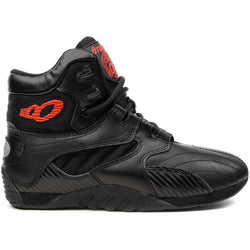
Running Shoes vs Weightlifting Shoes: Stop Sabotaging Your Gains!
Squatting in cushioned sneakers is like trying to build a skyscraper on a bed of marshmallows. You're sacrificing elite stability for soft comfort, and it's costing you serious pounds on the bar! Most lifters think their expensive runners are the ultimate all-around gym gear. They're wrong. The debate of running shoes vs weightlifting shoes isn't about style; it's about raw physics. You need maximum force transfer, not energy absorption that leaves your ankles wobbling and your knees screaming during heavy sets.
Stop sabotaging your gains immediately! This guide reveals exactly why your choice of footwear is either building a legendary physique or destroying your joints. You'll discover the precise moment to ditch the foam and switch to professional-grade gear like the Stingray Performance or Ultimate Trainer. We're breaking down the hard facts on thin-sole technology, injury prevention, and the specialized standards required to crush your next PR. It's time to feel the floor, lock in your form, and dominate the platform!
Key Takeaways
- Stop losing power to "marshmallow" soles and learn how non-compressible footwear transfers maximum force into the floor!
- Discover why the mechanical divide between running shoes vs weightlifting shoes is the difference between a new PR and a serious injury.
- Apply the "Iron Rule" to determine exactly when you need flat, stable soles for heavy lifting versus cushioned support for cardio.
- Explore why elite-level gear like the Stingray Performance offers the thin-sole stability and ankle lockdown that runners simply can't provide.
- Eliminate ankle wobbling and knee pain by choosing footwear engineered for the specific demands of high-performance bodybuilding!
The Mechanical Divide: Force Absorption vs. Force Transfer
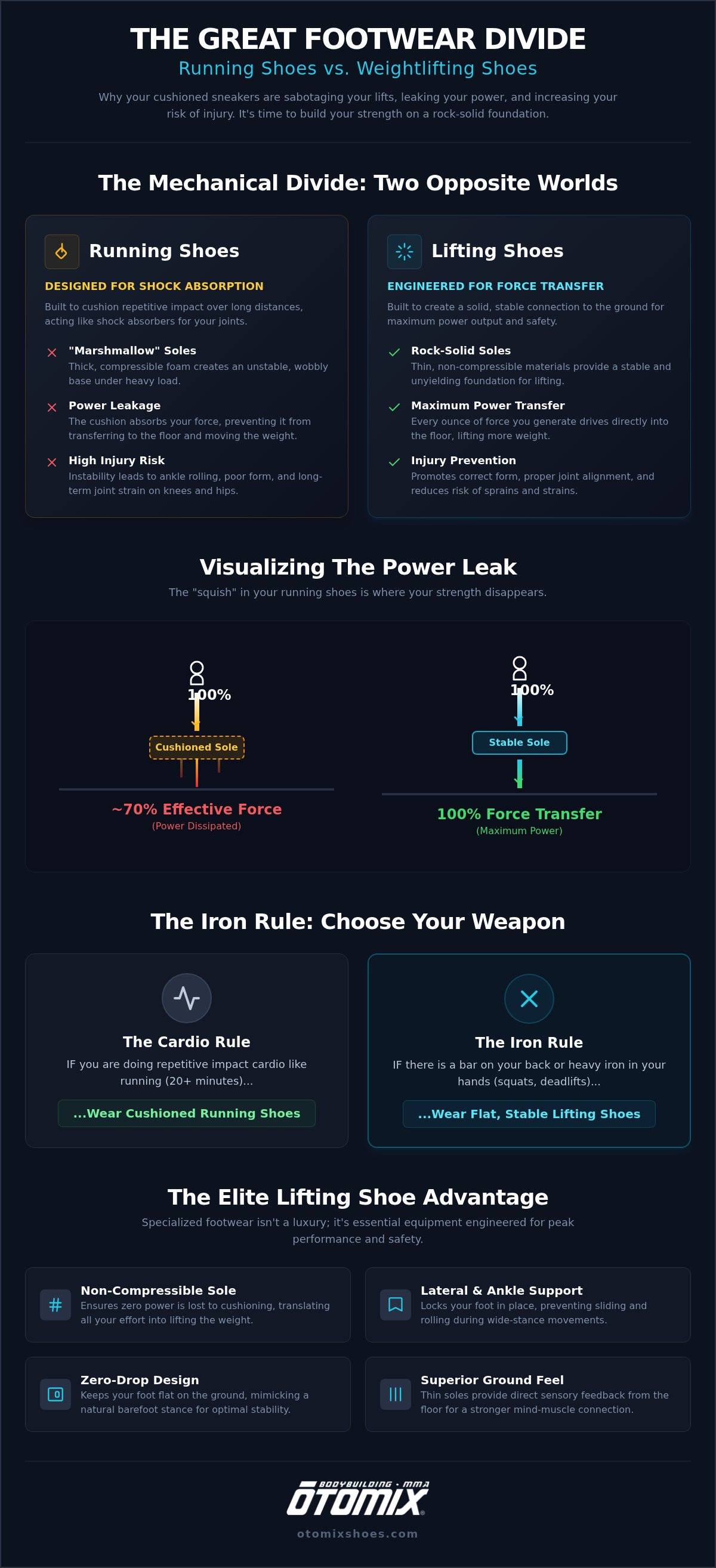
Running shoes are built for one thing: survival against gravity. They use thick, squishy EVA foam to soak up impacts that reach three times your body weight during a sprint. That's great for the pavement, but it's a disaster for the platform! When you analyze running shoes vs weightlifting shoes, you're looking at two opposite engineering worlds. One is a shock absorber. The other is a high-speed power conductor. You can't expect a shoe designed for soft landings to handle the crushing pressure of a 400-pound squat.
Running Mechanics: The Science of Impact
Running footwear features a rockered sole for a smooth heel-to-toe transition. This rolling design is a total nightmare for stationary lifting! Foam midsoles thrive on energy return for your gait, but they cause massive energy loss during a heavy set. Every millimetre of "squish" in your heel is power that never reaches the iron. It's like trying to max out your squat on a pile of sand. You lose vertical drive. Your balance shifts forward. Your force dissipates into the cushion instead of moving the weight. Stop leaking power immediately!
Lifting Mechanics: The Science of Stability
Serious lifting demands a rock-solid foundation. Professional Olympic weightlifting shoes and specialized bodybuilding footwear utilize non-compressible soles. This ensures every ounce of effort drives directly into the floor. This is where zero-drop designs and thin-sole technology dominate. By minimizing the gap between your foot and the ground, you get instant sensory feedback. This ground feel is critical for a perfect mind-muscle connection! You need extreme lateral support to keep your feet from sliding during wide-stance movements. Don't settle for generic sneakers. Gear up with the Stingray Performance or Ultimate Trainer for that elite, locked-in stability. These tools are designed to exploit force, not absorb it!
Performance Risks: Why Running Shoes Sabotage Your Heavy Sets
Squatting in runners is a gamble you're destined to lose. It's the "Mattress Effect" in full swing. You're trying to balance hundreds of pounds on unstable, squishy foam. This is why the choice of running shoes vs weightlifting shoes is a critical safety decision. High-stack running shoes create a massive lever arm for ankle sprains. One slight shift in your center of gravity and your ankle rolls under the pressure. Mesh uppers are built for breathability, not bracing. On a heavy leg press, that flimsy fabric can't hold your foot in place. You deal with dangerous shear force while your foot slides inside the shoe. It's a recipe for disaster!
Your 1RM is being eaten alive by your footwear. A biomechanical analysis of squatting confirms that squishy soles compromise your form and kinematics. Every inch of cushion represents a power leak. You're working harder for less result because your shoes are absorbing your effort.
The Hidden Cost of Compression
Foam doesn't compress evenly under a heavy bar. One side dips lower, your hip shifts to compensate, and your knee tracks inward. This creates an unbalanced load that wrecks your symmetry and stalls your progress. Heel compression is the primary enemy of the heavy squatter. It creates a shifting foundation that forces your stabilizer muscles to work overtime just to keep you upright. Stop wasting energy on balance and start focusing on the lift!
Long-Term Joint Impact
Chronic knee strain isn't a badge of honor; it's a sign of failing gear. Unstable foot positioning forces your joints to compensate for the shoe's instability. If you want to stay in the game for decades, you must ask: are lifting shoes worth it for your longevity? The answer is a resounding yes. Protect your joints from unnecessary wear. Switch to a dedicated trainer like the Ultimate Trainer to ensure your foundation is as strong as your ambition!
Choosing Your Weapon: When to Wear Running vs. Weightlifting Shoes
Stop playing games with your progress! You need a system that works as hard as you do. The Cardio Rule is simple: if you're hitting the treadmill for 20+ minutes, keep your runners on. They're built for that repetitive impact. But the second you step off the track, the Iron Rule takes over. If there's a bar on your back or iron in your hands, you need flat, stable soles. No exceptions! Squats and deadlifts are non-negotiable movements where specialized gear is mandatory for survival. Understanding the mechanical differences between shoes is the first step toward elite performance. The debate of running shoes vs weightlifting shoes ends the moment you load the rack.
Don't fall for the "cross-trainer" trap. These shoes claim to do everything but end up being the master of none. They're too stiff for long runs and too squishy for heavy PRs. Running shoes are for the road. Specialized lifting shoes are for the platform. Mixing them is just asking for a plateau. You wouldn't take a sports car off-roading, so don't take your runners to the squat rack!
The Professional's Gym Bag
High-performance athletes don't compromise. They carry two pairs of shoes. One for the warm-up, and one for the war. High-top support is essential for those heavy bodybuilding sessions where ankle lockdown determines your output. It's about professional-grade confidence. Carrying dedicated gear like the Stingray Performance shows you're serious about your craft. It’s the hallmark of an elite practitioner who values results over convenience.
Spotting the Best Lifting Gear
Don't get fooled by flashy marketing or generic sneakers. Use this checklist for the best gym shoes for lifting: a totally flat sole, aggressive ankle lockdown, and extreme durability. Remember, "thin is win" for deadlifts and floor-based movements. You want to be as close to the floor as possible to shorten the pull and maximize your grip. Ready to dominate the gym? Grab your Stingray Performance or Ultimate Trainer now and experience the power of elite engineering!
The Otomix Advantage: Elite Stability for Serious Athletes
Stop settling for generic sneakers that fail under pressure. The battle of running shoes vs weightlifting shoes is won by the gear that understands the gym floor. Otomix isn't just another shoe brand. We are the architects of the platform! Our footwear is engineered to exploit the floor, giving you the leverage to push past your limits. You've seen how running foam sabotages your drive. Now, experience what happens when your footwear actually helps you move the weight!
The Stingray Performance is the undisputed thin-sole king. It offers maximum floor contact and a grip that never quits. For those who need a high-performance hybrid, the Ultimate Trainer delivers. It provides the support you demand for every heavy set. If you're going for a soul-crushing max, the Extreme Trainer provides maximum ankle lockdown. It keeps your feet rooted while the weight tries to bury you! These aren't just shoes. They're professional-grade equipment for serious athletes.
Engineered for Bodybuilding
Otomix has a legacy built on iron. We've been serving the bodybuilding community since 1989. We don't make running shoes. We make tools for champions. Our weightlifting shoes are the definitive pro's choice for 2026. They're designed by lifters, for lifters. Experience the specialized engineering that generic athletic brands simply can't match. It is the difference between a plateau and a PR.
Lock Down Your Gains
Flimsy running mesh stands no chance against the intensity of a real workout. It stretches. It tears. It fails. Otomix materials are built for extreme durability and uncompromising support. Upgrade your footwear right now. Feel the immediate difference in your next set. Don't let your shoes be the weak link in your chain. Lock down your gains. Dominate the gym. Choose the brand that lives where you train and get the edge you deserve!
Dominate the Platform and Crush Your Next PR
Your foundation is the most critical piece of equipment in your gym bag! Stop letting soft running foam eat your power and compromise your joints. You now know the truth. Running shoes are for the road; lifting shoes are for the platform. Choose force transfer over force absorption. You need the thin-sole technology that has made Otomix the professional grade standard since 1989. Feel the floor. Lock your ankles. Drive every ounce of energy into the iron!
The era of compromising your gains with improper gear is finished! The debate of running shoes vs weightlifting shoes has a clear winner for serious lifters. Don't wait for an injury to make the switch. Get the high-top ankle support your heavy squats deserve right now. Experience the elite stability that legendary bodybuilders trust.
GRAB YOUR ELITE OTOMIX LIFTING SHOES NOW!
Your next PR is waiting. Step up to the bar with total confidence and show the world what you're made of!
Frequently Asked Questions
Can I use running shoes for light weightlifting?
You can, but you're still sacrificing essential stability! Even light loads require a rock-solid base to prevent ankle wobble. If you're performing standing movements, that "marshmallow" sole creates micro-instability that ruins your form. Switch to a flat sole to build elite habits from your very first rep!
What happens if I run in weightlifting shoes?
Don't do it! Weightlifting shoes have zero shock absorption. Running in them is like sprinting on concrete with wooden planks strapped to your feet. You'll likely suffer from shin splints or stress fractures. Plus, you'll ruin the specialized soles of your Stingray Performance or Ultimate Trainer. Keep the runners for the road!
Are flat shoes better for squats than running shoes?
Absolutely! Flat shoes are infinitely superior for squats. They provide a non-compressible surface that ensures maximum force transfer into the platform. When comparing running shoes vs weightlifting shoes, the flat sole wins every time. It keeps your center of gravity stable and prevents the dangerous forward lean caused by squishy running heels.
How much of a difference do lifting shoes actually make for beginners?
It's a total game-changer! Beginners often struggle with balance and hitting proper depth. Specialized footwear provides the ankle lockdown and floor grip needed to master the basics safely. Don't wait until you're "strong enough" for professional gear. Start with the right foundation to prevent bad habits and avoid early injuries!
Should I deadlift in my running shoes?
Never! Deadlifting in running shoes is a recipe for a missed lift or a back injury. The thick sole increases the distance the bar has to travel. It also creates an unstable platform that can cause your weight to shift mid-pull. Stick to thin-sole shoes like the Stingray Performance to keep your feet as close to the floor as possible!
Can I wear my Otomix shoes for a quick treadmill warm-up?
Keep it to a brisk walk! A quick 5-minute walking warm-up is fine. However, do not use them for high-intensity running. Otomix shoes are engineered for the gym floor and maximum stability. Save the heavy impact for your runners and keep your running shoes vs weightlifting shoes rotation strict to protect your gear!


