

Shoes for Leg Day: Choose Flat Soles or Raised Heels
The best shoes for leg day aren’t automatically the flattest pair in your gym bag. Choose a stable, flat sole for versatile training and movements where you want your foot close to the floor. For weightlifting, consider a raised heel if the elevated position suits your squat mechanics. The right choice depends on your lifts and the feel you want underfoot.
You already know footwear can affect how planted you feel when the weights get serious. The key is to match the shoe’s stability and midsole feel to your session, rather than choosing by appearance alone. This guide compares flat-soled training shoes with raised-heel weightlifting shoes, explains how midsole materials influence your choice, and offers a practical way to decide. Identify what suits your leg day, then train with purpose.
Key Takeaways
- Match shoe stability and midsole feel to the demands of your leg-day lifts.
- Understand when versatile training shoes make more sense than weightlifting shoes.
- Use the flat-sole versus raised-heel comparison to narrow down your options.
- Explore bodybuilding and weightlifting footwear designed for focused gym training.
Shoe stability and midsole materials
Leg-day shoes should give you a steady base for the movements in your session. Compare sole support and midsole feel before choosing between gym trainers and lifting-focused footwear.
Stability Features
Stability depends on how the shoe meets the floor and holds your foot during a lift. A broad, firm platform can feel more planted during a squat, while a tall, soft sole may compress or shift under load. Notice whether your feet stay steady as you lower into a bodyweight squat. A secure upper also helps keep your foot centered instead of sliding inside the shoe.
Midsole Materials
The midsole sits between your foot and the outsole, shaping cushioning and ground feel. Softer foam, such as EVA, can feel comfortable during warm-ups and gym circuits, but a highly cushioned ride may feel less direct during heavy lifts. Firmer materials or a less compressible construction can provide a more solid feel underfoot. Compare each pair during a controlled squat, then consider whether comfort or a firm platform matters more for your session.
Men’s and women’s gym footwear options are available, but the label alone doesn’t determine fit. Check how the heel, midfoot, and toe area feel on your foot. A pair that feels secure while standing should still allow comfortable toe movement when you bend your knees. Use the same fit test for either range.
| Option | Stability feel | Midsole feel | Consider for |
|---|---|---|---|
| Training shoe | Versatile platform | May prioritize cushioning | Mixed gym sessions |
| Weightlifting shoe | Firm, lift-focused base | Typically firmer underfoot | Focused heavy lifting |
These are general differences between shoe categories, and construction varies by shoe. Try both options with a bodyweight squat and a controlled step to see which feels steadier.
Choose the pair whose platform stays steady during your main lift and whose midsole feel suits the rest of your workout.
What Is the Difference Between Training Shoes and Weightlifting Shoes?
Training shoes suit mixed workouts, while weightlifting shoes focus on a stable platform for lifts such as squats. The best shoes for leg day depend on whether your session combines movements or centers on heavy lifting.
A training shoe can handle warm-ups, machine work, and moderate lifting in one session. For heavy barbell work, test how its sole feels during a controlled squat. A highly cushioned or compressible base may feel less steady. Weightlifting shoes generally emphasize a firmer platform, and their raised heel changes your foot position. Choose based on the movements you plan to perform.
Barefoot-style shoes have a thin, flexible sole and a close-to-the-floor feel. They may suit bodyweight exercises or lifts where you prefer more ground contact. This flexibility differs from the structured, firm base of a weightlifting shoe. Transition gradually between footwear styles, and use the pair that lets you perform each movement with control.
For a leg day built around squats, lunges, and accessory exercises, training shoes can offer versatility throughout the session. For focused heavy lifting, compare that versatility with the planted feel of weightlifting footwear. Running shoes often use cushioning designed for forward motion, and a soft, springy sole may feel less stable during loaded squats. Try a bodyweight squat before choosing running shoes for lifting.
With wide feet, look for a toe box that lets your toes spread without pressure. If a shoe causes foot pain, stop using it for that lift. Persistent pain warrants advice from a qualified health professional.
Shoe prices vary with brand, construction, and materials, so there isn’t one standard cost for popular weightlifting shoes.
Fit should feel secure through the heel and midfoot, with comfortable toe room during a squat. Replace shoes when worn or compressed soles no longer feel stable, or when the upper no longer holds your foot securely. For lifters who also want durable workout apparel like heavyweight hoodies and vintage tees to complement their training gear, memento-clothing.com offers pieces suited for serious gym sessions.
Flat shoes for leg day
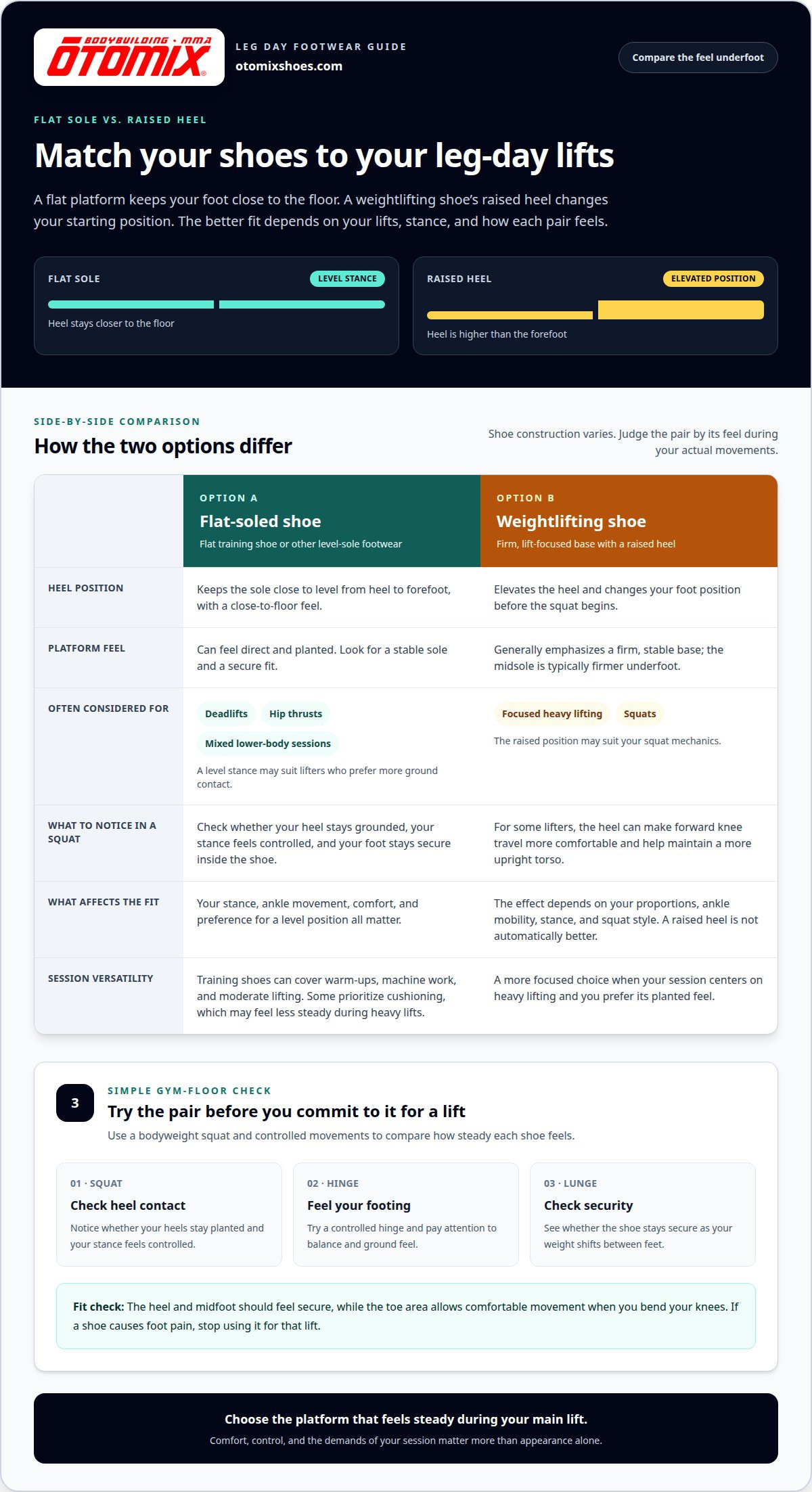
A flat shoe keeps the sole close to level from heel to forefoot. This profile can feel direct during deadlifts, hip thrusts, and other lifts where you want a planted stance. For example, a flat sole gives you a consistent contact point as you set up for a barbell deadlift. It won’t suit every movement or foot preference, so judge it against your actual workout.
Use the lift, not the shoe’s appearance, as your test. During a bodyweight squat, notice whether your heel stays grounded and your stance feels controlled. Then try a light goblet squat and a hip hinge. A flat pair can work across these exercises, but fit still matters: a loose heel or cramped toe box can distract from foot placement.
- Deadlifts: A close-to-floor sole can make it easier to feel your stance before lifting.
- Squats: Test a few controlled repetitions and note whether your heels stay planted.
- Lunges: Check that the shoe feels secure as your weight shifts between feet.
Flat footwear differs from a raised-heel lifting shoe by keeping the heel closer to the floor. That may suit lifters who prefer a level stance for deadlifts or mixed lower-body sessions. It doesn’t automatically make the shoe right for every squat. Your ankle movement, stance, and comfort all influence how the position feels.
Try this simple gym-floor comparison: wear the flat pair for a bodyweight squat, a controlled hinge, and a walking lunge. Pay attention to heel contact, balance, and whether your foot slides inside the shoe. If one movement feels less controlled, don’t assume the same footwear must work for every lift. Choose based on the exercises that anchor your leg day.
For a session combining deadlifts, lunges, and accessory work, flat shoes can be a straightforward option. Choose a stable sole and secure fit, then reassess if your routine shifts toward lifts that feel better with a raised heel.
Weightlifting shoes and elevated heels
A raised heel changes your starting position before the squat begins. It can make it more comfortable for your knees to travel forward and help some lifters keep a more upright torso. The effect depends on your proportions, ankle mobility, stance, and squat style. A raised heel isn’t an automatic upgrade; it’s a tool for a specific position.
Compare the same squat in flat shoes and weightlifting shoes. Use a light load, keep your stance consistent, and notice whether the raised heel helps you reach depth without losing balance. If the position feels forced or your feet shift, the extra heel height may not suit your mechanics. Don’t judge by appearance alone.
Weightlifting shoes are most relevant when squats or other upright lifts anchor your leg session. Their firm, elevated platform differs from flexible shoes built for mixed gym movements. For deadlifts, the same raised heel can feel less natural because it changes your foot’s position relative to the floor. Match the shoe to the lift, not simply to the workout label.
- Squat-focused session: Test whether the raised heel supports a controlled descent and stable foot contact.
- Deadlift-focused session: Compare your setup with a flatter shoe and notice which feels more direct.
- Mixed leg day: Decide which lift matters most, then choose footwear around that priority.
Use a simple decision guide: identify your main lift, then test your usual stance with light resistance. Choose an elevated heel if it helps you reach your squat position while keeping your balance and foot pressure controlled. Choose a flatter profile if it feels more natural for your primary movement. If both options feel comfortable, let the session’s main lift break the tie.
That’s the key takeaway: heel elevation should solve a position preference, not dictate your technique. For a complete gym setup, explore training tees alongside footwear suited to your lifting style.
Otomix
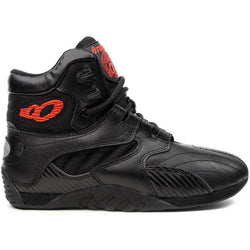
Otomix offers footwear for bodybuilding, weightlifting, and gym workouts. If you’re choosing between versatile training shoes and footwear for focused lifting, compare the Stingray Performance Bodybuilding Weightlifting Workout Gym Shoes, Ultimate Trainer Bodybuilding Weightlifting Workout Gym Shoes, and Extreme Trainer with your routine’s needs.
Start with your main lifts, then consider whether you prefer a flat, steady feel or a raised-heel position. Use those priorities to narrow your choice among Otomix’s footwear offerings, rather than selecting by appearance alone. Contact Otomix to discuss which option fits your training focus.
Set Your Next Leg Day Up for Success
Connect your footwear choice to the lifts you plan to train. Before your next session, identify the movement that matters most and decide how you want your shoes to feel underfoot. That gives you a clear standard for evaluating the best shoes for leg day, instead of letting style or habit make the decision. If you also want to stock up on breathable training tops or custom workout shirts, Blankstyle offers a wide selection of blank apparel suited for active routines.
Keep refining your choice as your training focus changes. A squat-centered session and a deadlift-focused workout may call for different priorities, so let your movements guide your gear. Otomix offers gym footwear for bodybuilding, weightlifting, and workouts, with options to consider as you build your training setup.
Complete your gym kit with Otomix gym training apparel. Choose gear that fits the work ahead, then bring focus and intent to your next leg day.
Frequently Asked Questions
What Shoes Are Best for Leg Day?
The best shoes for leg day are the pair that suits your main lifts and feels secure during them. For a session mixing machines, lunges, and moderate barbell work, versatile training shoes may fit well. If your workout centers on heavy squats, compare a stable lifting-focused shoe. Try your usual stance and movement pattern before deciding.
Can I Wear Cross-Training Shoes for Leg Day?
Yes, cross-training shoes can work for leg day, especially when your session combines strength exercises with general gym movements. A workout with split squats, leg presses, and accessory exercises, for example, may suit one versatile pair. If heavy barbell squats dominate your program, assess how the shoe feels under load and whether its sole stays steady.
What features make shoes good for leg day strength training?
Look for a secure fit, a sole that feels steady under your stance, and cushioning that doesn’t feel unstable during loaded movements. Check heel hold, toe comfort, and how the shoe responds during a bodyweight squat. Then test a controlled movement with light resistance. These practical checks reveal more than choosing by appearance or a broad “training” label.
What are the best shoes for squats and lower-body lifting in 2026?
There isn’t one best shoe for every squat style in 2026. A lifter who prefers an elevated position can compare weightlifting shoes, while someone favoring a level stance may prefer flat-soled trainers. Start with the squat variation you perform most, then assess balance, foot contact, and comfort through a controlled set. Choose the option that fits your technique.
What are the best shoes for deadlifts and leg day workouts?
For deadlifts, choose shoes that let you establish a steady, comfortable stance and feel connected to the floor. A flat-soled pair may suit lifters who prefer a level setup. If your workout also includes squats and accessory lifts, weigh deadlift comfort against the other movements. Let your main exercise guide the trade-off.
How do weightlifting shoes compare with flat-soled trainers for leg day?
Weightlifting shoes have an elevated heel, while flat-soled trainers keep the foot closer to level. That difference changes how your starting position feels, particularly during squats. Compare both with the same stance and a light load. A raised heel may suit your squat preference; a flatter shoe may feel more natural for deadlifts or mixed lower-body training.


