

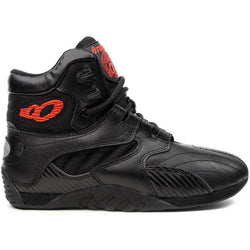
Shoes for Strongman Training: Flat Shoes vs. Heeled Lifting Shoes
Deadlift slippers are often allowed for strongman pulling events, but they’re not the only option. Heeled weightlifting shoes are generally permitted, while flat shoes can work well for deadlifts and moving events. The best shoes for strongman training depend on the lifts and events you need to prepare for.
A stable, familiar shoe is a sensible choice when you’re moving heavy loads. However, one pair may not suit every event, especially when a contest includes overhead lifts, pulls, carries, and loading. This guide compares flat and heeled shoes, explains where deadlift slippers fit, and covers footwear for moving events. Use the practical criteria below to choose what to train in, including when a raised heel may help and when a flat sole makes more sense.
Key Takeaways
- Deadlift slippers are typically allowed for pulling events, while competition footwear rules can vary by event and organization.
- Compare flat soles with raised heels against the lifts you perform, especially deadlifts and overhead presses.
- For yoke carries, farmer’s walks, and medleys, prioritize secure footing and traction over a raised heel.
- Explore Otomix’s Stingray Performance, Ultimate Trainer, and Extreme Trainer when choosing footwear for weightlifting and gym training.
Are heeled shoes allowed in strongman competitions?
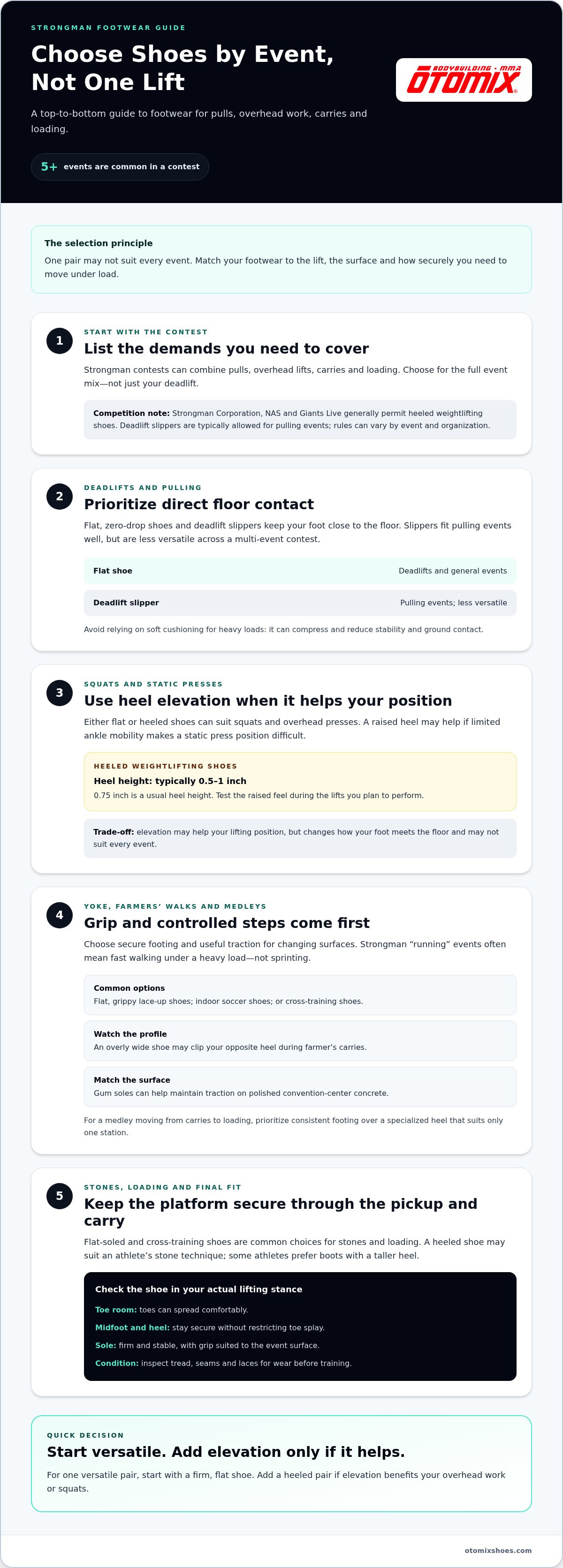
Generally, yes. Strongman Corporation, NAS, and Giants Live generally permit heeled weightlifting shoes in competition events. Deadlift slippers are typically allowed for pulling events, too. Since contests commonly include 5+ events, choose footwear for the event demands, not one lift alone.
Running shoes can work for light movement, but soft cushioning may compress under heavy loads, reducing stability and ground contact. For loaded lifts and carries, choose a firm sole that keeps your foot planted.
For deadlifts, flat, zero-drop shoes or deadlift slippers provide direct contact with the floor. Squats and overhead presses can suit either flat or heeled weightlifting shoes. A raised heel may help if limited ankle mobility makes a static press position difficult. Choose based on the lift and how you move.
Look for a firm, flat sole, a stable platform, and a secure upper that holds the midfoot without restricting toe splay. Check the fit in your lifting stance: your toes should have room to spread, while your heel and midfoot stay secure.
Unsuitable footwear can affect balance and force transfer. A cushioned sole may compress under load, while a loose fit can let your foot shift. Either can make it harder to maintain a stable position during a heavy lift.
When comparing powerlifting shoes, focus on construction rather than brand name. Prioritize a firm base, a secure fit, and a heel height suited to your lifts. Treat regular and sale prices as secondary to those criteria. Try the shoe in your lifting stance and check both toe room and heel security.
| Option | Best fit | Trade-off |
|---|---|---|
| Flat shoe | Deadlifts and general events | Less heel elevation |
| Heeled weightlifting shoe | Squats and static presses | Raised heel changes feel |
| Deadlift slipper | Pulling events | Less versatile across events |
For one versatile pair, start with a firm, flat shoe. Add a heeled pair if elevation benefits your overhead work or squats.
Flat shoes versus weightlifting shoes
Choose by lift and foot position, not appearance. Flat soles suit deadlifts and direct floor contact; raised heels may help with some squats and static overhead presses.
Flat Shoes
Flat lifting shoes have a low-profile sole without a raised heel. They keep your foot closer to the floor, making them a strong option for deadlifts and lifts where you want a neutral, planted base. A firm, flat trainer also avoids the compression that a soft, cushioned sole can create under load.
If you have wide feet, prioritize room for your toes to spread. If you have narrow feet, focus on a secure midfoot fit. Try the shoe in your actual lifting stance: your toes should spread comfortably, and your foot shouldn’t slide inside the upper.
Weightlifting Shoes
Weightlifting shoes use an elevated heel, typically from .5 inches to 1 inch; 0.75” is a usual heel height. That raised position can help athletes with limited ankle mobility stay more upright during static overhead presses on flat, smooth surfaces. They’re also an option for squatting when you prefer heel elevation.
Unlike a flat shoe, a heeled shoe changes how your foot meets the floor. Test it during the lifts you plan to perform instead of assuming the raised heel suits every event.
Flat Shoes Versus Heeled Shoes
Flat shoes provide a level base for deadlifts; heeled shoes add elevation that may help with overhead pressing or squatting. For strongman deadlifts, flat-soled shoes or barefoot lifting are common choices. For presses, athletes commonly choose either flat soles or Olympic lifting shoes. Ankle mobility and surface conditions can affect which feels more suitable.
Match width and hold, too. A wide foot needs space to spread without losing midfoot security, while a narrow foot needs an upper that holds it firmly. Choose flat shoes for a level feel, or heeled shoes when elevation helps your lifting position. Explore weightlifting workout shoes as you compare those priorities.
Footwear for yoke, farmers walks, and medleys
For loaded carries, choose shoes that keep your steps controlled and secure. Yoke walks, farmer’s walks, and medleys call for stable footing and useful traction across changing surfaces.
A flat, grippy lace-up shoe can suit yoke carries and farmer’s walks. Indoor soccer shoes and cross-training shoes are also common choices for moving events. Avoid an overly wide profile during farmer’s carries, where it may clip your opposite heel. On polished convention-center concrete, gum soles can help maintain traction.
Strongman “running” events often involve fast walking under a heavy load, not sprinting. Choose a shoe that feels secure at walking pace while carrying weight. For a medley that moves from carries to loading, prioritize consistent footing over a specialized heel that suits only one station.
Footwear for Atlas Stones
For stones and loading events, flat-soled shoes or cross-training shoes are common choices. Olympic lifting shoes add elevation, which may help athletes with limited ankle mobility rise from the bottom position while holding an implement. Some athletes prefer boots with a taller heel for stone events. Compare how they feel with your lifting position and the demands of the load.
Stone carries also require sure footing between the pickup and platform. Choose a sole that grips the event surface, and avoid a loose fit that lets your foot shift inside the shoe. A heeled shoe may suit your stone technique, while a flat trainer can work for a wider range of loading exercises.
Durable Footwear
Durability matters when shoes face repeated carries, turns, and loading stations. Before training, inspect the tread for wear and check the upper for loose seams or laces. These checks can reveal wear that affects traction or fit, particularly before moving events on polished concrete or grass.
Match the sole to the surfaces you train on. Gum soles can help on smooth indoor floors, while a flat, grippy lace-up design suits carries. For car and axle squats, either flat shoes or Olympic lifting shoes can work, depending on your preference. These squat events are fairly uncommon, so let your regular events guide your main footwear choice.
Weightlifting shoes for strength sports, including strongman
Weightlifting shoes aren’t limited to Olympic lifting. Athletes also use them in powerlifting, CrossFit, and strongman when they prefer an elevated heel for squats. The heel changes your foot’s starting position, so judge its value by the movement, not the sport label.
In strongman, a raised heel may also help in specific events. During a log press, it can help keep your torso upright through the dip and support leg drive. If your press position feels constrained, that’s a reason to test heeled shoes. Compare your movement in flat and weightlifting shoes during training.
An elevated heel is a preference for squatting, not a requirement for every event. For car and axle squats, either a flat-soled shoe or an Olympic lifting shoe can work. Decide based on the position you can maintain under the implement. Don’t assume the same footwear will suit every lift in a mixed contest.
Stones and loading events are another possible use for weightlifting shoes. Their added lift may help athletes with limited ankle mobility rise from the bottom position while holding an implement. That can matter during the pickup and initial stand. Test the shoes during stone practice and consider whether the raised heel supports your movement through the full load.
The trade-off is versatility. A heeled pair may suit squats, log presses, or certain loading positions, while flat shoes remain a common choice for deadlifts and moving events. Build your selection around the lifts that challenge your positions most. If overhead work or squatting is the sticking point, test heeled footwear there. If direct floor contact matters most, choose a flat option.
Ready to compare footwear for weightlifting and gym sessions? Explore weightlifting workout shoes and match your choice to the lifts you train.
Otomix: Stingray Performance Bodybuilding Weightlifting Workout Gym Shoes
Otomix offers the Stingray Performance Bodybuilding Weightlifting Workout Gym Shoes for bodybuilding, weightlifting, and gym workouts. If your training combines those activities with strongman lifts, these shoes are an option for your gym sessions and strength work.
The Ultimate Trainer Bodybuilding Weightlifting Workout Gym Shoes are another option for weightlifting and gym sessions. For intense training, the Extreme Trainer is designed to offer stability and support. Compare each model with your training priorities and the movements you practice rather than assuming one shoe suits every event.
Choose footwear according to the work you do: weightlifting and gym sessions, or intense training where stability and support matter. Visit otomixshoes.com to explore Otomix footwear.
Set Up Your Next Strongman Training Block
Make footwear part of your event preparation, not a last-minute decision. During training, notice how your shoes feel as you set up, move, and reset between efforts. Note which pair helps you feel composed and which makes you adjust your stance. Those observations are more useful for choosing footwear than appearance alone.
The right shoes for strongman training should support the work you’re actually rehearsing. Build consistency by practicing in the footwear you plan to use, then focus on refining your technique and event transitions. Thoughtful preparation can help you feel ready when it’s time to lift.
Explore Otomix footwear and find an option for your strength-training routine. Contact Otomix about strongman shoes, then keep building toward your next training goal.
Frequently Asked Questions
Can I wear the same shoes for log press and deadlift?
Yes, one pair can work for both, though the feel may differ by lift. A heeled shoe may help your log-press dip and leg drive, while a flat shoe provides direct contact with the floor for deadlifting. If you use one pair, test it during both movements in training. Notice whether the heel changes your pull setup or press position before using it in a contest.
Do strongman athletes need special shoes?
No. Strongman athletes can train in suitable general-purpose footwear. Choose a pair that stays secure during your main lifts and provides dependable footing for carries. A firm trainer, for example, can work for gym lifting and loading practice, while separate deadlift slippers may suit pulling sessions. The right setup depends on your events, surfaces, and whether you can train comfortably in one pair.
Should I start with a heeled shoe or a flat shoe for strongman?
Start with a flat shoe, then add a heeled pair if overhead work becomes a limiting factor. Use training to identify the issue: if limited ankle mobility makes a static press position difficult, test an elevated heel for that lift. Keep the flat pair for movements where you prefer direct floor contact. Build your kit around a demonstrated need, not assumptions.
What Type of Shoes Should You Wear for Strongman?
Choose footwear by event: a firm, flat shoe for deadlifts, a grippy lace-up pair for carries, and a heeled option to consider for presses or squats. For outdoor grass events involving pushes or pulls, have cleats available for traction. If your contest includes different surfaces, practice in the footwear you plan to use on each one.
What are the best shoes for strongman training in 2026?
The best shoes for strongman training in 2026 are the ones that match your events and fit securely. There isn’t one ideal pair for every athlete: a deadlift-focused lifter may favor flat footwear, while an athlete limited by ankle mobility during static pressing may prefer a raised heel. Compare your main lifts, carry events, and training surfaces before choosing.
How do weightlifting shoes compare with flat-soled shoes for strongman events?
Weightlifting shoes raise the heel, which may help with squat depth or an upright position during static overhead work. Flat-soled shoes keep your foot level and suit deadlifts and moving events where you want a consistent base. A competitor with log press and farmer’s walk events, for example, may prefer different pairs for each task.


