

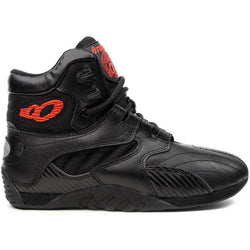
A guide to choosing flat shoes for bodybuilding training
Strong barbell training starts with a solid connection to the floor. Flat shoes for bodybuilding usually have firmer soles and less cushioning than conventional athletic shoes, giving you a stable base and closer ground contact that can support balance and power transfer. They’re a practical option for many lifts, but not an automatic upgrade for every workout.
Footwear can change how secure a squat or deadlift feels. The key is matching the shoe to your movements, not simply chasing the flattest sole. Ankle mobility can affect whether a raised heel helps you reach a comfortable position, while foot shape makes fit and support important considerations. This guide explains where low-profile shoes can work well, what to consider if ankle movement is limited or your feet are flat, and where firm, minimally cushioned shoes may fall short during bodybuilding and higher-rep sessions.
Key Takeaways
- Choose cross-training footwear around your session: barbell work and varied gym workouts can call for different levels of sole firmness and cushioning.
- Use your squat position to assess heel needs. Limited ankle movement may make heel elevation useful, while comfortable movement can suit a flatter setup.
- For high-rep bodybuilding sessions, consider whether a firmer, minimally cushioned sole stays comfortable through the full workout.
- For barbell lifts, look for a low-profile design that keeps your feet close to the floor, then weigh that feel against the demands of your training.
1. Why Use Flat Shoes for Working Out?
Flat shoes for bodybuilding can suit lifting because a firm, low-profile sole keeps your feet close to the floor. Compared with cushioned running shoes, this setup can provide a steadier base for squats and deadlifts, where foot position helps you control the bar. Cross-training shoes can also work for mixed gym sessions if their soles feel stable during lifts and general workouts.
For squats and deadlifts, flat footwear can be a better fit than running shoes because soft cushioning may compress under load. Powerlifting commonly uses shoes with little or no heel. Olympic weightlifting is different: competitors generally wear shoes with an elevated heel, which can support a more upright squat position.
For grip and stability, look for a firm sole with non-slip tread and a secure fit. A flat shape alone doesn’t guarantee traction; the outsole needs to hold steady on the gym floor. Cleveland Clinic says shoes should provide enough stability for the activity to help reduce the risk of turf toe. Keep these features in mind when choosing flat shoes for bodybuilding.
Converse or Vans styles may suit bodybuilding if their soles feel firm and provide dependable grip for your lifts. Barefoot lifting also removes cushioning between your feet and the floor, but many gyms don’t allow it. Whichever option you choose, test your stance and foot control with a light warm-up set first.
Flat shoes can work for bodybuilding competitions and gym workouts, but footwear requirements and gym policies vary. Follow the specific event’s rules and your gym’s policy rather than assuming one shoe suits every setting. For regular training, choose footwear that keeps your stance secure during the movements you perform.
Look for a low-profile sole, reliable traction, and a fit that holds your foot without pinching your toes. Choose a size that lets your toes rest naturally while keeping your heel secure during a squat setup. Beginners can start with familiar movements and lighter loads, then assess whether the shoe feels stable through each rep.
2. Ankle mobility and flat-foot training
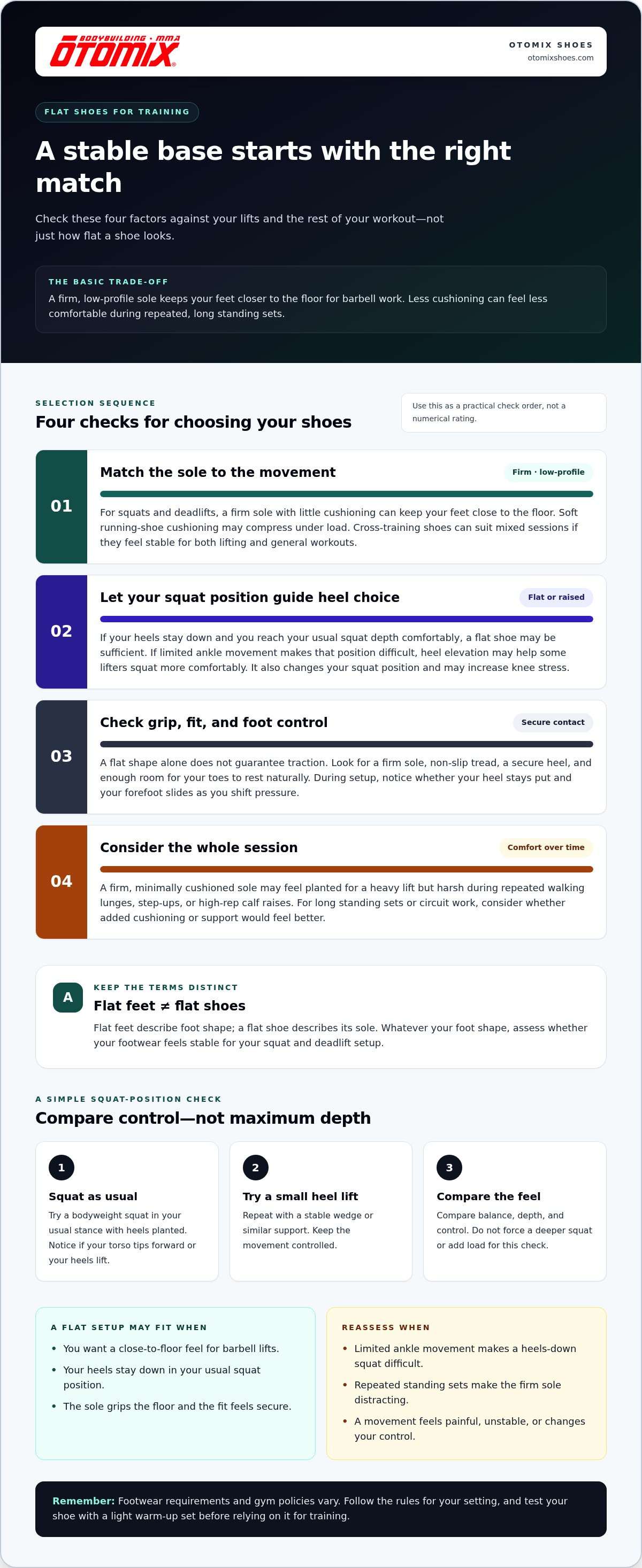
Ankle mobility affects how comfortably you can reach a squat position. If your ankles don’t bend easily, keeping your heels down may feel difficult as you lower. A raised heel can help some lifters squat with limited ankle mobility. If you can reach your usual squat depth with your heels down, a flat shoe may be sufficient. Compare how each position feels before choosing.
Try a bodyweight squat in your usual stance. Keep your heels planted and notice whether your torso tips forward or your heels lift. Then repeat with a small heel lift, using a stable wedge or similar support. Compare your balance, depth, and control. This is a movement check, not a reason to force a deeper squat or add load.
Heel elevation changes your squat position. It may make a deeper squat or heavier lift feel easier, but that change can also increase knee stress. Base your decision on controlled movement, not the greatest range or load you can reach. If a flat stance lets you keep your heels down and control each rep, for example, it may suit your squat pattern.
Flat feet and flat-soled shoes are different things. Flat feet describe your foot shape; a flat shoe describes its sole. Whatever your foot shape, assess whether your footwear feels stable during a squat and deadlift setup. Check that your heel stays secure and your forefoot doesn’t slide as you shift pressure. Durability matters too: regular training wears down soles over time.
For deadlifts, a low-profile or barefoot-style setup can keep the foot close to the floor. Gym rules may prohibit barefoot lifting, so use an allowed shoe. If you’re comparing footwear for bodybuilding and weightlifting, explore bodybuilding and weightlifting shoes as you consider the fit and support your training requires.
3. Limitations for bodybuilding and high-rep workouts
Flat shoes can feel less comfortable during high-rep bodybuilding than during a short, heavy lift. Their firm, minimally cushioned soles absorb less impact during repeated movements such as walking lunges, step-ups, or high-rep calf raises. If your workout includes long sets on your feet, that firmness may become distracting before your target muscles fatigue.
Flat shoes don’t automatically cause foot, ankle, or knee problems during lifting. Poor fit, insufficient support for your needs, or a stance that changes your movement can contribute to discomfort. If a squat or lunge feels painful, stop the set and reassess your footwear, stance, and range of motion instead of pushing through.
Consider the whole session, not just its first barbell exercise. A shoe that feels planted during a deadlift may feel harsh during repeated walking lunges or circuit work. For a workout that combines heavy lifting with higher-rep accessories, notice when your feet start to feel fatigued. This comparison helps you decide whether one pair suits the full session.
Bodybuilding also includes seated and supported exercises. During seated biceps curls, for example, footwear usually matters less than during standing calf raises, where your feet help maintain balance. Match your shoes to movements that demand steady foot contact. If your session shifts from a heavy squat to extended standing sets, reassess comfort between exercises.
Test your footwear during your actual workout before relying on it every training day. Start with a warm-up, then try a familiar squat, a controlled lunge, and a standing accessory movement. Notice sole pressure, heel movement, and whether your toes feel cramped. A flat shoe can work well for lifting, while extra cushioning or support may suit a high-rep session better. Make your decision based on comfort and control throughout the workout.
4. Flat shoes for barbell training
Flat shoes for bodybuilding can keep your feet close to the floor during barbell work. That low-profile feel can help you sense your stance as you brace for a deadlift or settle beneath a squat bar. Consider the lift, your preferred stance, and whether the sole feels steady during setup. Your shoe should support repeatable positioning, not distract from it.
For deadlifts, a flat sole avoids adding heel height that could change your starting position. Deadlift slippers take this further: they have no elevated heel or padding and are only slightly thicker than socks. That minimal design offers little protection from the floor, so consider the gym surface and footwear rules before using them. Your footwear needs to suit the training environment, too.
Powerlifting squats and Olympic weightlifting can call for different shoe profiles. A low or flat heel may suit a powerlifting squat style, while weightlifting competitors generally wear shoes with a raised heel. If you’re choosing flat shoes for bodybuilding, identify the barbell lifts that anchor your session before prioritizing a sole profile. One shoe shape won’t match every lifting style.
Bench pressing also makes foot placement part of your setup. Plant your feet before unracking, then keep them stable as you press. For squats and deadlifts, rehearse your setup with an empty bar and notice whether your feet shift. These checks help you judge how your shoes perform during your actual barbell movements.
Use your main lifts to guide the decision. If deadlifts and flat-heel powerlifting squats dominate your program, a low-profile sole may suit your needs. If your training centers on Olympic-style lifts, consider how heel elevation affects your position. When selecting flat shoes for bodybuilding, weigh sole height, grip, and control against your routine. Explore footwear for barbell training to compare options for your lifting routine.
Otomix: Stingray Performance Bodybuilding Weightlifting Workout Gym Shoes
Otomix Stingray Performance Bodybuilding Weightlifting Workout Gym Shoes give lifters a specialized footwear option for bodybuilding and weightlifting. If you’re comparing shoes for barbell sessions, consider them alongside the Ultimate Trainer Bodybuilding Weightlifting Workout Gym Shoes. Both models are designed for bodybuilding and weightlifting training.
For intense training sessions where stability and support matter, the Extreme Trainer is another option. Match your choice to your routine: consider the lifts you perform, how your feet feel during setup, and whether you need shoes for broader gym workouts. The right choice should suit your training priorities, not just the shoe’s appearance.
Explore the options and visit otomixshoes.com.
Make Your Next Training Block More Deliberate
Treat footwear as part of your training setup, not an afterthought. Before your next training block, decide which lifts and sessions you want your shoes to support. During practice, notice whether your stance feels natural, your feet stay comfortable, and your setup feels consistent from warm-up to working sets. These observations can help you decide whether flat shoes for bodybuilding suit the way you train or another style better matches your routine.
Keep your priorities clear. A shoe should fit the work you actually do, not an idealized program or someone else’s lifting style. If you’re ready to explore footwear made for bodybuilding and weightlifting, contact Otomix about training shoes.
Train with purpose, choose carefully, and feel confident in your next session.
Frequently Asked Questions
Why Use Flat Shoes for Working Out?
Flat shoes can suit workouts that include strength exercises and gym movements requiring a planted stance. A lifter moving from deadlifts to standing rows, for example, may prefer a shoe that feels consistent in both setups. Flat shoes are less suited to sessions dominated by running or jumping, where repeated impact makes cushioning more relevant. Choose footwear for the movements your workout actually includes.
Why are these the best weightlifting shoes?
No single shoe is best for every lifter or lift. A powerlifting-focused routine may favor a flat profile, while Olympic-style squats may call for a raised heel. Judge a pair by how it feels during your actual setup, not by a “best” label. Try familiar movements first, then consider whether the shoe suits your training style and gym routine.
What are the best flat shoes for bodybuilding and weight training?
The best choice depends on your lifts, comfort, and preferred fit. Otomix offers Stingray Performance Bodybuilding Weightlifting Workout Gym Shoes, Ultimate Trainer Bodybuilding Weightlifting Workout Gym Shoes, and the Extreme Trainer. Compare the options with your routine and the support you want, then choose the model that aligns with your training priorities.
Why do bodybuilders wear flat shoes for lifting?
Some bodybuilders prefer flat shoes for the familiar platform they provide during standing lifts and lower-body training. That preference can make sense for a session built around deadlifts, rows, and standing calf work. It doesn’t mean every bodybuilder needs the same footwear: training style, lift selection, and personal comfort all shape the decision.
How much do popular flat weightlifting shoes cost in the United States?
Prices vary by model and whether a sale price applies. Compare the regular and sale prices listed for the specific shoe you’re considering instead of relying on a general market average. This gives you a clearer comparison between models and helps you decide based on your training needs and budget.


