

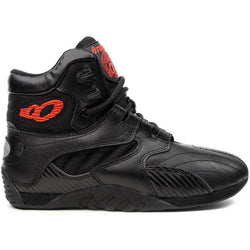
Choose a Lifting Shoe Heel Height That Suits Your Ankle Mobility
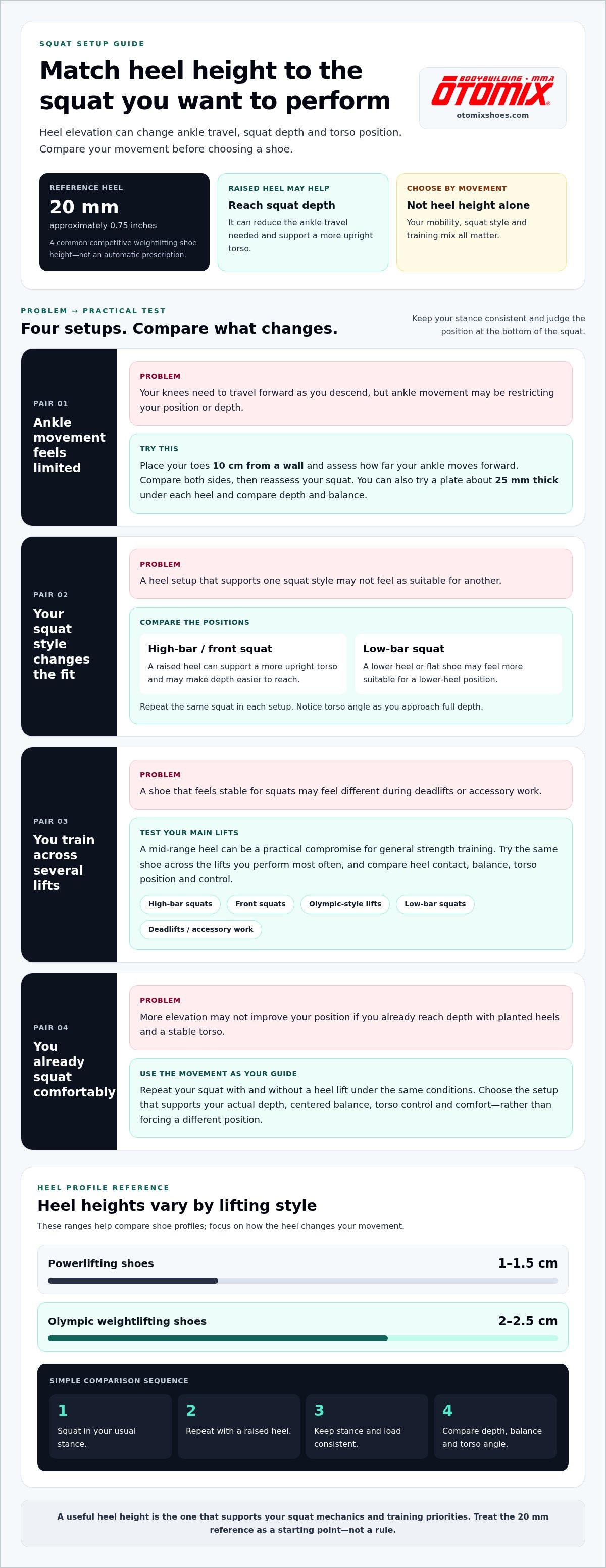
The tallest heel isn’t automatically the right choice. A 20 mm heel, approximately 0.75 inches, is the default for competitive weightlifting shoes. A raised heel may make it easier to reach squat depth and keep your torso more upright.
You may already know that heel elevation changes how a squat feels. The key is matching the lift to your ankle mobility and training, rather than choosing a shoe by heel height alone. Understanding what heel height on lifting shoes is for can help you make a more confident choice.
This guide explains how heel elevation affects your squat, what to consider when comparing heel heights, and how to assess your mobility with a simple test. You’ll also find a practical guide to choosing a lifting shoe heel height that suits your training goals.
Key Takeaways
- Use a toes-to-wall mobility check to understand whether ankle movement may be limiting your squat position.
- Compare your depth and torso position with and without a heel lift before choosing a shoe height.
- Match heel height to your squat style and training priorities; a setup that suits high-bar squats may not suit low-bar squats as well.
- Once you know the support and stability you want, compare Otomix’s lifting and training shoe offerings against your needs.
What Does Heel Elevation Actually Do?
Heel elevation changes how far your ankles need to move and how upright your torso can stay during a squat. Compare your depth and position in movements such as high-bar and low-bar squats.
Raised-Heel Shoes and Squat Depth
A raised heel changes the starting angle of your foot, helping your knees travel forward while your heels stay planted. That can make it easier to reach squat depth, especially when ankle movement limits your position. Try a plate about 25 mm thick under each heel, then compare your depth and balance with your usual stance. A better-feeling setup is a useful clue, not a final shoe choice.
Heel Elevation and Torso Position
Heel elevation can help you keep a more upright torso during a squat. That may suit high-bar back squats and front squats, where an upright position can support the movement. A lower heel or flat shoe may feel better for low-bar squats. Compare the same squat in each setup, noting whether your torso angle changes as you approach full depth.
Ankle Dorsiflexion and Full-Depth Squats
Ankle dorsiflexion is the forward movement of your shin over your foot. A squat needs that movement as your knees travel forward and your hips descend. If ankle mobility restricts this motion, a raised heel can reduce how much ankle travel you need for a similar squat position. For a simple mobility check, place your toes 10 cm from a wall and assess your forward ankle movement. Compare sides, then reassess your squat.
Raised-Heel Shoes Versus Flat Shoes
Raised-heel lifting shoes can make squat depth easier to reach and help you keep your torso more upright. Flat shoes don't provide the same elevation, so they may suit lifters who prefer a lower-heel position, including some low-bar squatters. Both options can work; the difference is how each supports your stance, ankle movement, and preferred squat mechanics. Weightlifting shoes also provide a more stable base than typical barefoot or minimalist shoes.
Use this comparison to guide your first test, then assess each setup by depth, torso position, and balance.
| Option | Squat depth | Torso position | Typical fit |
|---|---|---|---|
| Raised heel | May help reach depth | Can support a more upright torso | High-bar or front squat |
| Flat shoe | Less heel assistance | Lower-heel position | May suit low-bar squat |
Choosing a heel height based on ankle mobility
Choose heel elevation by comparing your ankle movement with your squat position, not by copying another lifter’s setup. A 0.75-inch heel is a useful reference point, but your stance, limb proportions, and target depth shape the decision.
Use Your Squat Position as the Test
Start with your usual squat stance and descend to your normal depth. Notice whether your heels stay planted, your balance remains centered, and your torso feels controlled. Then repeat the squat with a raised heel, keeping your stance and load consistent. Compare your position at the bottom, not just how the first few repetitions feel. If elevation helps you reach depth without losing balance, it may suit your mobility and squat mechanics.
Factor In Limb Proportions
Ankle mobility isn’t the only factor. Lifters with long shins and femurs may benefit from a heel of 0.75 inches or higher, particularly when their squat requires more forward knee travel. Lifters with shorter legs can start with a 0.75-inch heel, then judge it by their bottom position. These are starting points, not rules that override your movement.
Match Elevation to Your Mobility
If your ankles limit forward movement, a raised heel can reduce the ankle travel needed to reach squat depth. If you can squat deeply with planted heels and a stable torso, extra elevation may not improve your position. Test both setups under the same conditions: use your normal stance, descend to full depth, and compare balance, torso angle, and comfort. Choose the heel height that supports your actual squat rather than forcing a different position.
Use that movement test to narrow your choice, then compare lifting shoe options against the squat position you want to maintain.
Mid-range heels for general strength training
For general strength training, a mid-range heel can be a practical compromise between a flat shoe and a higher lifting heel. A common reference is 20 mm, approximately 0.75 inches. That height appears in competitive weightlifting shoes, but your training mix matters more than the label. Use it as a comparison point, not an automatic prescription.
Start with the lifts you perform most often. If your program centers on high-bar squats, front squats, and Olympic-style lifts, heel elevation may support your squat position. If low-bar squats dominate, a lower heel or flat shoe may feel more suitable. For mixed sessions, test the same shoe across your main lifts. A setup that feels stable during squats may feel different during deadlifts or accessory work.
- Squat to your usual depth and note heel contact and balance.
- Repeat with a flat shoe, keeping your stance and load consistent.
- Compare torso position and control at the bottom of each squat.
- Test your primary lifts before settling on one all-session shoe.
Heel profiles also vary by lifting style. Powerlifting shoes typically have heels of 1-1.5 cm, while Olympic weightlifting shoes commonly measure 2-2.5 cm. These ranges help explain why a “mid-range” choice depends on the shoes being compared. Focus on how the heel changes your movement, rather than assuming two labels describe identical setups.
For a routine that combines strength work and bodybuilding exercises, consider which movements call for a stable, raised platform and which feel better with less elevation. A mid-range heel can suit a varied, squat-focused program if it supports consistent depth and balance. Base your decision on your actual lifts: compare positions, repeat the test, and choose the heel that best fits your training priorities.
Choosing heel height for lifting shoes
If you’re asking what the heel height on lifting shoes is for, focus on how elevation changes your squat position, not the number alone. For squats, a 20 mm heel, about 0.75 inches, is a useful starting point, especially for high-bar or front squats. For strength training, match the heel to your main lifts, ankle movement, balance, and torso position.
Heel Height for Squats
A 20 mm heel is a common reference for competitive weightlifting shoes. It can support a deeper squat by reducing the ankle travel needed, while helping maintain a more upright torso. High-bar and front squatters may prefer this effect. For low-bar squats, a lower heel or flat shoe may better suit the movement. Compare your depth and balance before deciding.
Heel Height for Strength Training
Strength training includes different squat styles, so one heel height won’t suit every lift equally. Powerlifting shoes typically have heels of 1-1.5 cm, while Olympic weightlifting shoes commonly have heels of 2-2.5 cm. If your sessions mix squat variations, prioritize the lift that matters most. Then assess whether that heel height keeps your position controlled across the rest of your routine.
Measuring Lifting Shoe Heel Height
Heel height describes the raised heel’s height relative to the shoe’s forefoot, not the shoe’s full sole thickness. Compare measurements using the same units, since 20 mm is approximately 0.75 inches. Popular brands offer different models and heel heights; category benchmarks include 1-1.5 cm for powerlifting shoes and 2-2.5 cm for Olympic weightlifting shoes. Knowing what the heel height on lifting shoes is for helps you compare measurements against your training needs.
Risks of Excessive Heel Height
A heel that feels too high can affect your balance and squat mechanics. If added elevation makes you shift forward or lose a stable position at the bottom, it may not suit your squat. Compare your usual shoe with a raised option using the same stance and movement. Choose a height that supports depth without disrupting control through the full repetition.
Explore lifting shoe options and compare your choices against the squat position and training style you want to support.
Otomix: Stingray Performance Bodybuilding Weightlifting Workout Gym Shoes
Otomix Stingray Performance Bodybuilding Weightlifting Workout Gym Shoes are an option to consider after weighing heel height, ankle mobility, and training goals. The right choice depends on how the shoes feel during your own squats and workouts, so use the movement checks in this guide to clarify what you need.
Otomix also offers Ultimate Trainer Bodybuilding Weightlifting Workout Gym Shoes and Extreme Trainer shoes. Compare the options against your priorities, whether you’re focused on bodybuilding workouts, weightlifting, or general gym training. Keep your preferred squat position and the lifts in your routine in mind as you narrow your choice.
Explore Otomix footwear to find an option for your training.
Put Your Shoe Choice to Work
Make your next training session a deliberate test of your footwear choice. Notice how your stance feels, whether each repetition stays controlled, and whether your setup supports your priority lifts. Treat those observations as useful feedback, not a reason to copy another lifter’s shoe choice. Your own movement provides a practical basis for deciding what to try next.
Understanding what the heel height on lifting shoes is for can help you approach that decision with intention. Build a simple habit: pay attention to your position during training, then use those observations to guide your next footwear comparison. If you’re ready to explore options for bodybuilding, weightlifting, or gym workouts, contact Otomix about lifting shoes. Keep refining your setup with purpose, and take that focus into your next session.
Frequently Asked Questions
27Mm vs 20mm Weightlifting Shoe Heel: Which Is Right?
Start with 20 mm as a common reference, then decide whether more elevation improves your lifting position. A higher heel may suit you if it helps you maintain balance and reach your preferred squat depth. Compare both options during the same squat, using your normal stance and a manageable load. Judge control and comfort, not the heel measurement alone.
Will a higher heel make me dependent on it?
Wearing raised-heel shoes doesn’t automatically make you dependent on them. The shoe changes your starting position during a lift, but it doesn’t replace ankle mobility or practice. To compare how you move without elevation, perform some squats in your usual flat footwear, then compare your stance, balance, and depth. Choose footwear based on your training needs.
What is the typical heel height of weightlifting shoes?
A 20 mm heel, approximately 0.75 inches, is a common reference for competitive weightlifting shoes. Olympic weightlifting shoes often fall in the 2-2.5 cm range, so models can differ around that benchmark. Use the stated measurement to compare shoes, then assess how the heel feels during your lifts. A typical height is a starting point, not a requirement for every lifter.
What heel height is best for Olympic weightlifting?
Olympic weightlifting shoes commonly have heels measuring 2-2.5 cm, with 20 mm serving as a standard reference. Choose within that range by testing the lifts you train, including the receiving position in a snatch or clean. Notice whether your feet stay balanced and your squat position remains controlled. The best option is the one that supports your lifting technique.
How does heel height affect squat depth and ankle mobility?
A raised heel can reduce the ankle travel needed to reach a squat position, which may help when limited ankle movement affects your depth. For a practical comparison, squat in your usual shoes, then repeat with heel elevation while keeping your stance consistent. Compare your bottom position and balance. This test shows whether elevation helps your movement, rather than relying on mobility alone.
Are lifting shoe heel heights listed in millimeters or inches?
Heel heights may be listed in millimeters, centimeters, or inches, depending on the shoe description. For example, 20 mm is approximately 0.75 inches. Convert measurements to the same unit before comparing models, and make sure you’re comparing heel elevation rather than total sole thickness. That keeps the numbers meaningful and helps you compare options accurately.


