

Footwear for Functional Fitness: Compare Fit, Support and Feel
The most cushioned shoe isn’t automatically the best choice for functional fitness. Footwear for functional fitness training should fit comfortably, avoid rubbing, and balance stability with enough flexibility for varied movements. Your training shoes should feel secure without pinching or restricting your foot.
That balance matters when a workout shifts from lifting to running, jumping, or changing direction. A shoe that feels great under a bar may feel too stiff during conditioning; a soft, flexible pair may feel less stable under load.
Compare fit, support, cushioning, ground feel, and flexibility, then match those qualities to the movements you do most. To judge a shoe, walk, squat, and try the movements in your regular sessions. Notice where its design supports your training and where it feels limiting.
Consider the trade-offs between versatile trainers, running shoes, minimalist designs, and weightlifting shoes. The best option depends on the movements in your routine and how each shoe feels when you perform them.
Key Takeaways
- Choose a secure, comfortable fit that doesn’t pinch or rub, then test it through the movements in your workout.
- Compare stability and flexibility together: your shoes should feel planted for lifts without making dynamic movement feel restricted.
- Match cushioning and ground feel to your training mix; softer isn’t automatically better for every workout.
- Use the movements you do most to guide your choice, especially when your sessions shift between lifting, running, and quick changes of direction.
How Should Your Cross-Trainers Fit?
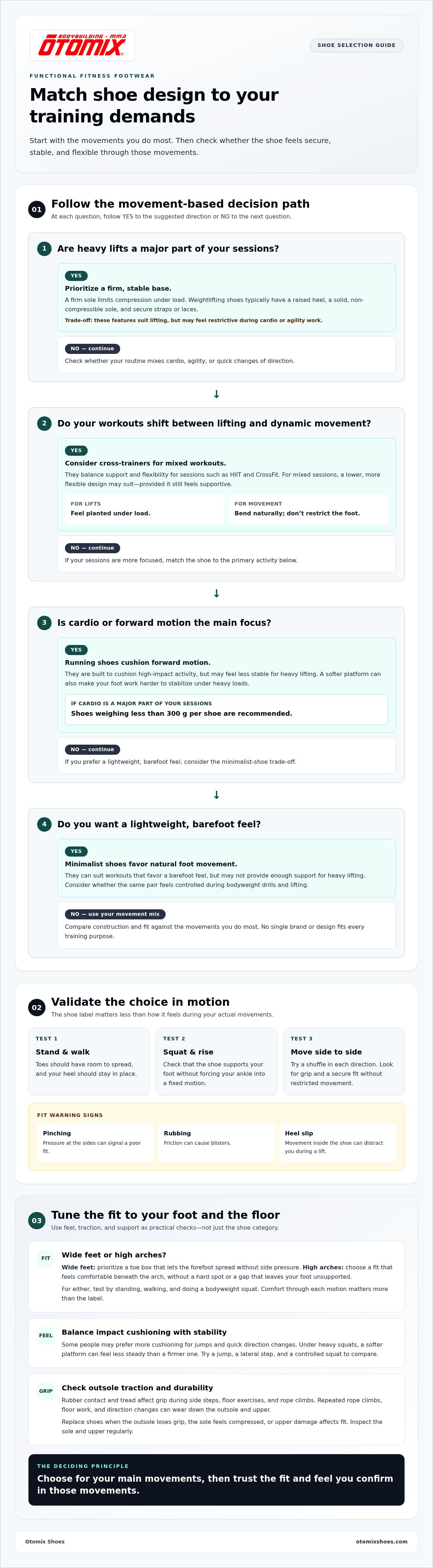
Start with a secure, comfortable fit. Your toes need room to spread, while your heel stays in place during squats, burpees, and quick direction changes. Walk, squat, and rise onto your toes while wearing the shoes. Rubbing, pinching, or heel slip are warning signs: friction can cause blisters, and movement inside the shoe can distract you during a lift.
Match the shoe to your workout. Cross-training shoes balance support and flexibility for mixed sessions, including HIIT and CrossFit. Running shoes cushion forward motion, but may feel less stable for heavy lifting. Weightlifting shoes typically have a raised heel, a solid, non-compressible sole, and secure straps or laces. Those features suit lifting, but can feel restrictive during cardio or agility work.
For wide feet, prioritize a toe box that lets your forefoot spread without pressure at the sides. For high arches, choose a fit that feels comfortable beneath the arch, without a hard spot or a gap that leaves your foot feeling unsupported. Test both by standing, walking, and doing a bodyweight squat. Comfort through each motion matters more than the label.
| Option | Best fit for | Trade-off |
|---|---|---|
| Cross-trainers | Mixed workouts | Balance of support and flexibility |
| Running shoes | Cardio and forward motion | May lack stability for heavy lifting |
| Weightlifting shoes | Heavy lifting | Less suited to varied movement |
| Minimalist shoes | Lightweight, barefoot feel | May not support heavy lifting enough |
Choose the type of shoe that suits your main training demands, then test the fit during the movements you perform most.
For pull-ups and burpees, lightweight training shoes can make rapid transitions feel easier. If cardio is a major part of your sessions, shoes weighing less than 300 g per shoe are recommended. Check the outsole for grip and the upper for breathability; durability matters when repeated changes in motion put the shoe under stress. For resistance training, prioritize a stable base that feels planted under load.
Training shoe stability, support, and flexibility
A functional training shoe must balance a stable base with enough flexibility for varied activities. For a heavy squat, a firm sole limits compression under load; for burpees or lateral steps, a shoe that bends naturally lets the foot move. Powerlifting shoes often use a firm sole and elevated heel, while a lower, more flexible design may suit mixed sessions. Choose by purpose, not by the word “training” on the shoe.
Check stability with a simple test: stand, shift your weight side to side, then do a bodyweight squat. Your foot should feel supported without the shoe forcing your ankle into a fixed motion. For lateral movement, look for an outsole that grips the floor and a secure fit that keeps your foot from sliding inside. Durability matters too: repeated rope climbs, floor work, and direction changes can wear down the outsole and upper.
The best functional fitness training shoes in 2026 are the ones suited to your main activities. For lifting-heavy sessions, prioritize a firm, stable base; for workouts mixing cardio and agility, look for more flexibility without losing support. No single brand or design fits every training purpose.
For lateral movements, choose a stable platform, a secure upper, and an outsole that grips during side steps. Try a shuffle in each direction. The shoe should stay planted without restricting your motion.
Popular training shoe prices vary with design, materials, and intended use. Compare construction and fit against your workout needs, rather than choosing by brand name alone.
There’s no fixed lifespan that fits every training schedule. Replace shoes when the outsole loses grip, the sole feels compressed, or damage to the upper affects fit. A shoe lab may assess training shoes with more than 30 tests, but your own wear check matters too. Inspect the sole and upper regularly, especially after workouts involving rope climbs or repeated lateral drills.
Cushioning, stability, and ground feel
Minimalist shoes can suit functional fitness workouts that favor a lightweight, barefoot feel and natural foot movement. For some people, they may not provide enough support for heavy lifting, so weigh that trade-off before using them for loaded squats. For mixed CrossFit exercises, consider whether the same pair feels controlled during both bodyweight drills and lifting.
Cushioning changes how a shoe feels under impact and load. During HIIT or conditioning classes with jumps and quick direction changes, some people may prefer more cushioning. Under heavy squats, however, a softer platform can feel less steady than a firmer one. Match the feel to the work: try a jump, a lateral step, then a controlled squat, and notice whether the shoe feels secure through each movement.
Ground feel is the connection between your foot and the floor. A closer, firmer feel can make it easier to sense your position during lifts, while extra cushioning can soften repeated landings. Check the outsole too. Rubber contact and tread affect how the shoe grips during side steps, floor exercises, and rope climbs. Aim for dependable traction without a bulky, unstable feel.
Running shoes are built to cushion high-impact activity, but their design may lack the stability needed for heavy lifting. Their cushioning can also make your foot work harder to stabilize under heavy loads. That trade-off matters if a workout moves from a run straight into barbell work.
Test shoes with movements your sessions actually include. Try a few bodyweight squats, a small jump, a side step, and a rope-climb motion. Notice whether the cushioning feels comfortable on impact, whether the outsole holds during lateral movement, and whether your foot feels planted under load. A shoe that performs well in one exercise may feel different in another.
Versatility for varied functional fitness workouts
A versatile shoe earns its place by handling the transitions in your workout. One session might move from deadlifts to box jumps, then into shuttle runs and floor exercises. The shoe needs to balance a stable platform for lifting, enough flexibility for movement, and traction that holds during direction changes. Judge it across the whole sequence, not just the first exercise.
Running shoes often support front-to-back motion, making them less suited to quick changes of direction or agility drills. A cross-trainer is designed for varied activities, though each model balances stability and flexibility differently. Most cross-training and CrossFit shoes can accommodate short warmup runs of up to 3 miles. For longer or regular running, prioritize how the shoe feels over that distance and during the workout’s other movements.
Use your workout plan to set priorities. If it includes heavy squats, jumps, and lateral shuffles, try each movement in sequence. Notice whether the shoe feels planted under the squat, secure on landing, and grippy during the shuffle. If your routine includes short runs between stations, add a brief jog to assess comfort and transitions. A shoe that suits one drill may feel awkward in another.
Make the final comparison practical. List your most frequent activities, then rank them by importance. Try the shoes during a squat, a side step, and a short run. Check whether the outsole maintains traction, the base feels balanced under load, and the shoe allows natural motion. Prioritize the movements you train most rather than choosing for a rare exercise. That’s the clearest route to versatile performance without expecting one pair to excel at every task.
Ready to compare footwear built for gym training? Explore gym training footwear and match your choice to the movements you do most.
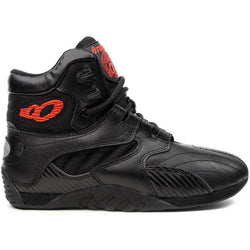
Otomix: Stingray Performance Bodybuilding Weightlifting Workout Gym Shoes
Otomix’s Stingray Performance Bodybuilding Weightlifting Workout Gym Shoes offer a focused option for athletes prioritizing bodybuilding, weightlifting, and gym workouts. If your training centers on lifting rather than running and agility, compare the shoe’s purpose with your routine.
Otomix also offers the Ultimate Trainer Bodybuilding Weightlifting Workout Gym Shoes and Extreme Trainer. Start with your main training purpose: a lifting-focused routine calls for different priorities than workouts built around frequent runs, jumps, and direction changes. Compare these gym shoes with the fit and movement criteria above to decide which best suits your training.
Visit otomixshoes.com to explore Otomix footwear.
Make Your Next Training Shoe Choice Count
Let your actual routine guide the decision. Identify the movements that need to feel most secure, then consider how often your sessions shift between lifting and conditioning. The right footwear for functional fitness training should match those priorities, not simply look like an all-purpose solution. Use your workout plan as a filter and choose based on the movements you regularly perform.
For gym-focused training, Otomix offers the Stingray Performance Bodybuilding Weightlifting Workout Gym Shoes, the Ultimate Trainer Bodybuilding Weightlifting Workout Gym Shoes, and the Extreme Trainer. Compare these options with your training needs and decide which best fits your routine.
Ready to take the next step? Contact Otomix about training footwear and keep building a setup that supports your goals. Choose with purpose, train with confidence, and bring that focus to your next session.
Frequently Asked Questions
Footwear and Functional Strength Training: Where to Begin?
List the movements in your regular sessions, then identify where your shoes feel least dependable. If your routine combines dumbbell work, step-ups, and short cardio intervals, for example, prioritize a pair that feels controlled through those transitions. Try it during a representative workout, not just while standing still, and note any discomfort or distracting movement.
What are training shoes?
Training shoes are athletic shoes designed for exercise involving different kinds of movement. Unlike shoes intended mainly for running, they’re commonly used for gym activities such as lifting, bodyweight exercises, and conditioning drills. Designs differ, so the label alone doesn’t tell you how a particular pair will feel during your workout. Match the shoe’s purpose to the movements you actually do.
What makes it the best?
The best training shoe is the one that suits your workouts and feels comfortable through their key movements. There isn’t one ideal design for every athlete or routine. A session centered on strength work, for example, has different demands from one filled with repeated runs and jumps. Decide which activities matter most, then compare shoes against those priorities instead of choosing by appearance or hype.
What should you look for in a training shoe?
Look for a comfortable fit, a secure feel, and construction suited to your training surface and routine. Check the upper for pressure points, the sole for a steady platform, and the outsole for dependable contact with the floor. Then try movements that reflect your sessions, such as a lunge and a side step. How the shoe feels in motion can reveal issues a quick glance misses.
What features make shoes suitable for functional fitness training?
Useful features depend on the workout mix. A shoe for varied gym sessions needs to support controlled lifting while allowing movement during drills and conditioning. The right footwear for functional fitness training should feel secure during transitions, not just in one isolated exercise. Consider how the sole, upper, and cushioning work together, then judge the shoe by the movements that appear most often in your routine.
How should functional fitness training shoes fit?
Shoes should feel comfortable and secure without squeezing your toes or letting your heel shift. Try them with the socks you normally wear for training, lace them as you would for a workout, and walk before testing familiar movements. Pay attention to pressure that develops as you move. A comfortable fit at rest matters, but it should remain comfortable once your session begins.


