

Footwear to Improve Mind-Muscle Connection: What Really Helps?
Can the right shoes help you feel a muscle working, or are you just moving the weight? Footwear to improve mind-muscle connection can support a steadier, more repeatable lifting setup, but shoes alone won’t create muscle focus. Your base can affect how secure and consistent a lift feels. That may help you settle into your stance, but it isn’t the same as deliberately controlling the target muscle.
This guide explains what footwear can realistically do and what focused attention must do. You’ll learn how to choose training shoes around your movements and fit preferences, then use practical cues to focus on the working muscle instead of chasing the load. Otomix offers specialized footwear for bodybuilding and weightlifting workouts, including Stingray Performance, Ultimate Trainer, and Extreme Trainer models. We’ll put those options in context without promising that any shoe guarantees better activation. Build a consistent setup, sharpen your cues, and make each rep more intentional.
Key Takeaways
- Use footwear to improve mind-muscle connection as support for consistent foot placement, not as a substitute for focused attention.
- Direct attention to the working muscle, and distinguish that internal cue from simply concentrating on moving the weight.
- Compare footwear by fit and how comfortably it lets you repeat your stance for your training movements.
- Test one target-muscle cue with a manageable load, then assess control without sacrificing sound form.
What footwear can, and cannot, do for mind-muscle connection
Can shoes make you feel a muscle working? Not by themselves. Mind-muscle connection means consciously directing your attention toward the muscle performing a movement. Footwear can support a repeatable setup: a pair that feels comfortable and consistent may help you place your feet similarly from set to set. It cannot supply the attention that focus requires.
Mind-muscle connection is focused attention on the working muscle; footwear supports your setup, not your concentration. That distinction matters. Shoes are a training aid, not a shortcut to muscle growth or a guarantee of greater activation. Choose training footwear around your movements and fit preferences, then put your attention to work.
For a related look at barefoot footwear, watch this video from Frank Medrano:
The goal isn’t to chase a dramatic sensation. A consistent foot position can make it easier to repeat your setup, so you can focus on the rep instead of readjusting your stance. Specialized training footwear, including Otomix Stingray Performance, Ultimate Trainer, and Extreme Trainer models, can be part of that setup. Choose based on the movements you train and what feels comfortable, rather than expecting a particular model to create a stronger muscle sensation.
What does mind-muscle connection feel like during a lift?
During a curl, you might notice your biceps working as you raise and lower the weight under control. That awareness is useful when it comes with sound technique, not when you twist, rush, or shorten the movement just to feel more. Sensation varies by exercise, individual, and training experience. Some reps may feel more distinct than others, and that doesn’t automatically mean the muscle isn’t doing its job. Use footwear to improve mind-muscle connection as setup support, while keeping your focus on controlled, technically sound repetitions.
Why focused attention matters more than footwear alone
Your attention during a rep can shape what you notice. An internal focus means directing attention toward the muscle doing the work, such as thinking about your chest contracting during a press. An external focus points attention toward the movement or equipment, such as pushing the bar away. Either cue can be useful depending on the task, but footwear doesn’t choose your focus for you.
Research on attentional focus examines how different cues relate to performance or measured muscle activity. Interpret those findings carefully: results can depend on the exercise, participants, instructions, and measurement method. A change in measured activity in one study doesn’t prove that a particular cue works the same way for every lifter. Activation findings alone also don’t establish greater muscle growth, lasting training benefits, or an independent effect from footwear.
Keep the roles clear. Shoes may help you settle into a familiar foot position; your cue and technique guide the repetition. If your stance feels different from set to set, choosing footwear that feels consistent may make your setup easier to repeat. It still can’t direct your attention or correct a rushed, poorly controlled rep.
Can footwear improve muscle activation by itself?
No shoe can guarantee a stronger mind-muscle connection or a specific muscle response. A stable, repeatable setup is the platform. The mental cue is the instruction you use during the lift. For a curl, that might mean noticing your biceps as you raise the weight while keeping the movement controlled. Choose footwear to improve mind-muscle connection as one part of your setup, then prioritize focused attention and sound technique.
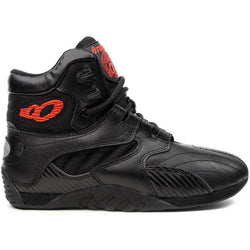
Otomix sells specialized training footwear for bodybuilding and weightlifting workouts, including Stingray Performance, Ultimate Trainer, and Extreme Trainer models. Compare a pair with your training movements and fit preferences, without expecting footwear to do the work of attentive reps.
How to compare footwear for a more consistent lifting setup
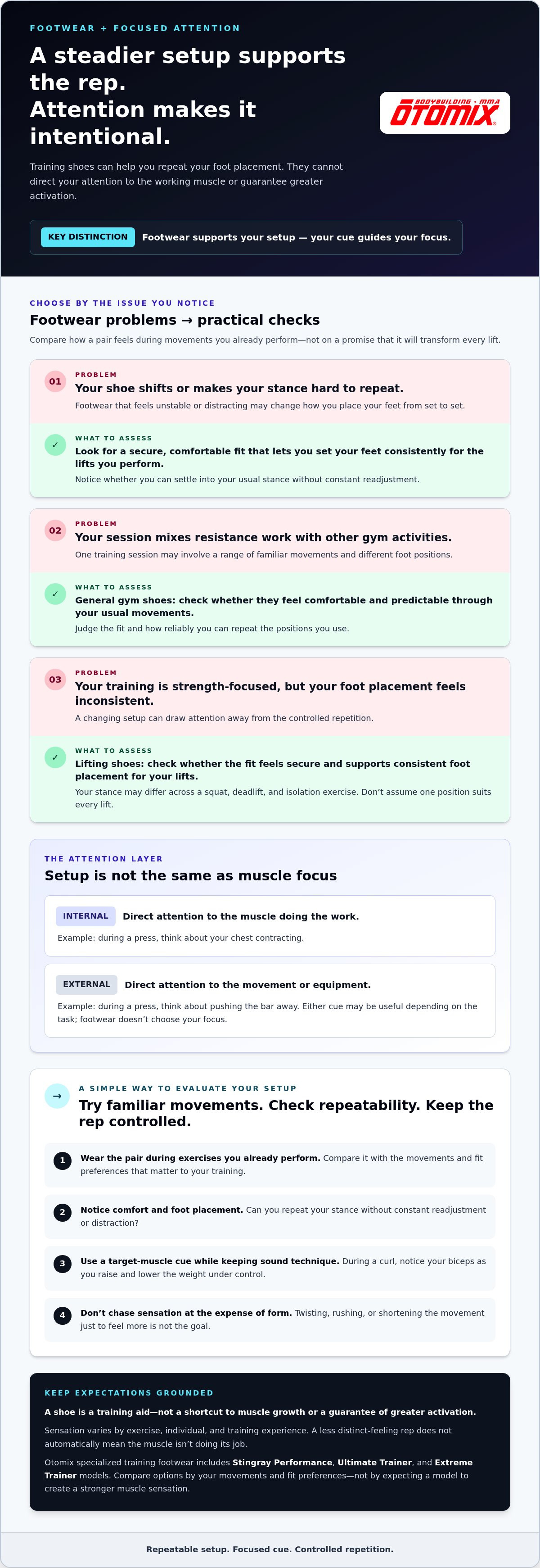
Choose shoes for the work you do, not on the promise that one pair will transform every lift. Check whether the fit feels secure and comfortable, and whether you can settle into your usual stance without the shoe shifting or distracting you. Compare options by wearing them for familiar movements and noticing whether your foot placement stays consistent. The best footwear to improve mind-muscle connection is footwear that comfortably supports a repeatable setup for your training.
| Footwear type | Training context | What to assess |
|---|---|---|
| Lifting shoes | Strength-focused sessions | Does the fit feel secure, and can you set your feet consistently for the lifts you perform? |
| General gym shoes | Sessions mixing resistance work and other gym activities | Do they feel comfortable and predictable through your usual movements? |
| Unsuitable or inconsistent footwear | Lifts where the shoe shifts, feels unstable, or makes your stance hard to repeat | Notice whether the footwear distracts you or changes how you place your feet. |
Match footwear considerations to the movement
Your stance may change between a squat, deadlift, and isolation exercise. A squat setup might feel comfortable with one foot position, while your deadlift stance or a standing calf raise calls for another. Don’t assume one shoe or stance suits every lift. Think about the movements in your routine, then judge footwear by whether it comfortably supports the positions you use and lets you repeat them with control.
What to notice when testing a pair
Try a pair during exercises you already perform. Check whether your feet feel comfortably placed and whether you can repeat your stance without constant readjustment. Pay attention to fit and movement, rather than analyzing every sensation underfoot. If the shoes distract you from controlled movement, they may not suit that session. Compare them across familiar lifts with a manageable load and your normal form, and change one thing at a time so you can tell what feels different.
For broader selection context, explore this weightlifting shoes guide. Otomix’s Stingray Performance, Ultimate Trainer, and Extreme Trainer are specialized footwear options for bodybuilding and weightlifting workouts. Explore Otomix training shoes, considering your movements and fit preferences.
Put footwear and focused cues together in your next workout
Turn footwear to improve mind-muscle connection into a practical setup choice, then let your attention guide the rep. Use a familiar exercise and shoes that feel comfortable for its stance. Keep the load manageable, maintain your technique, and treat this as a repeatable practice, not a guaranteed result.
A simple cue-and-footwear practice sequence
Use these steps during a familiar movement, such as a controlled leg extension or curl:
- Select the movement. Pick an exercise you know well, so you can focus on execution instead of learning new mechanics.
- Set up consistently. Wear familiar footwear, place your feet, and settle into the same comfortable position each set.
- Choose one cue. Direct attention to the target muscle as you perform each repetition. Keep the cue simple.
- Assess control. After the set, note whether your movement stayed controlled and whether you noticed the target muscle working.
Track those observations across sessions. Look for consistency in setup and control, not a dramatic sensation on every rep. If your form changes or you need to force a feeling, reduce the load or reset your technique.
Choose specialized footwear around your training
Otomix sells Stingray Performance, Ultimate Trainer, and Extreme Trainer footwear for bodybuilding and weightlifting workouts. Compare options based on fit, comfort, and the movements you plan to train. No model guarantees a stronger mind-muscle connection; footwear is one part of a deliberate setup.
Use the same criteria as you explore Otomix training shoes. For a closer look at one option, visit the Stingray Performance guide. Consider your planned movements and fit preferences, then keep the priority where it belongs: controlled reps and a clear cue.
Make your next session more deliberate
Use your next workout to build a setup you can repeat, then give each rep one clear focus. Keep the movement familiar, choose a manageable load, and notice whether your stance and technique stay consistent. Treat footwear to improve mind-muscle connection as a practical consideration, not a promise of instant change. Your attention, patience, and quality of execution still lead the way.
Otomix has been in business since 1989 and sells specialized footwear for training. Compare its training shoes with the movements you perform and the fit you prefer, then use them as part of a deliberate lifting routine. Explore Otomix training shoes and take your next session one focused rep at a time. Stay consistent, keep your form sharp, and build your connection through the work.
Frequently Asked Questions
Is mind-muscle connection the same as muscle soreness?
No. Mind-muscle connection is attention during a movement; soreness is discomfort that may appear after training. You can perform a focused set without feeling sore later, and soreness doesn’t prove that you targeted a muscle effectively. Judge a set by whether you followed your intended movement and kept control, not by how tender the area feels the next day.
Can mind-muscle connection replace progressive overload?
No. Focus can help you perform a rep with intention, but it doesn’t replace gradually increasing the challenge of training over time. Progress might involve adding repetitions or increasing resistance while maintaining sound technique. Don’t add load simply because a set felt easy, and don’t sacrifice control to chase a number. Track your work and make changes steadily rather than expecting focus alone to drive progress.
How do I know if I am feeling the target muscle correctly?
You can’t confirm effective targeting from sensation alone. Check whether the exercise’s intended action matches what you’re doing, and whether you can repeat the movement without pain, momentum, or unwanted compensation. The phrase footwear to improve mind-muscle connection describes a possible setup aid, not a way to verify muscle activity. If a sharp or unusual pain occurs, stop and reassess rather than pushing through it.
Does mind-muscle connection matter more for isolation or compound exercises?
It can be useful in both, but the practical focus may differ. In an isolation exercise, such as a leg extension, you can attend closely to the muscle the movement is designed to challenge. In a compound lift, several muscle groups contribute, so prioritize the movement goal and solid execution rather than trying to feel only one muscle. Keep the cue simple and relevant to the exercise.
Can beginners develop a mind-muscle connection?
Yes. Beginners can practice directing attention during familiar, manageable movements; the skill doesn’t require advanced training experience. Start with a load that allows you to move smoothly, and learn the exercise’s basic pattern before adding a complicated cue. Notice whether you can repeat the same controlled motion across your set. As you gain experience, adjust your cue to suit the exercise and your understanding of it.


