

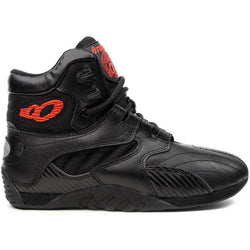
Otomix Stingray Shoes for Deadlift Grip and Stability
Deadlift grip and stability depend on a secure fit and steady contact between your feet and the floor, not the shoe name alone. Assess the Otomix Stingray for deadlifts by how its fit, sole, and support work with your stance and setup. These details shape how planted the shoe feels under the bar.
A shoe may feel comfortable during general gym workouts but different when you set up for a heavy pull. Look beyond appearance: consider whether the fit feels secure and the sole helps you stay steady through the movement.
This guide explains how the Stingray’s fit, sole, and support relate to deadlifting, and what to consider when weighing the shoe for your training. Use these factors to decide whether it suits the way you lift, without assuming any shoe guarantees better grip or stability.
Key Takeaways
- Judge deadlift footwear by how securely it fits your stance, not by its name alone.
- Consider how the sole feels against the floor when setting up and pulling.
- Think about the support you want while lifting, and how it works with your movement.
- Explore the Stingray Performance shoes as a bodybuilding and weightlifting footwear option for gym training.
Otomix stingray for deadlifts
Deadlift footwear affects how steadily you set your feet, brace, and push against the floor. A shoe’s name alone doesn’t tell you how it will perform in your stance. Fit, sole contact, and the support you feel during setup all matter. For example, a heel that shifts can distract you before the bar leaves the ground, even if the shoe feels comfortable while standing.
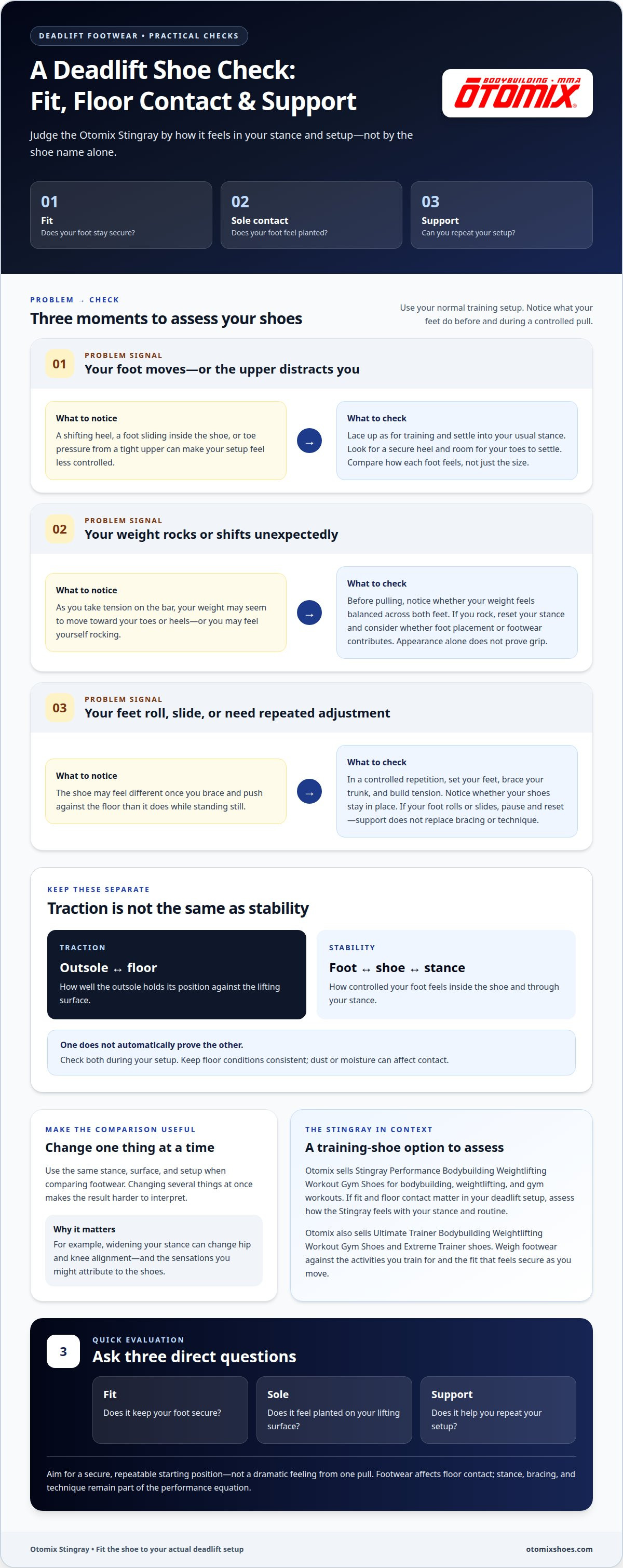
Start with fit. Lace the shoes as you would for a training session, then stand in your usual deadlift stance. Your heel should feel secure, and your toes should have room to settle without your foot sliding inside the shoe. A tight upper can distract you during setup, while excess movement can make your stance feel less controlled. Fit is personal, so compare how each foot feels instead of relying on size alone.
Next, assess sole contact. A stable-feeling connection gives you a clear sense of where your feet meet the platform. During a controlled setup, notice whether your weight feels balanced across your foot or shifts unexpectedly toward your toes or heels. If you rock as you take tension on the bar, reset your stance and consider whether your foot placement or footwear contributes to the sensation. Don’t treat a shoe’s appearance as proof of grip.
Support matters throughout the pull, not just while standing still. Set your feet, brace your trunk, and build tension before moving the bar. Notice whether your shoes stay in place as you push against the floor. A secure-feeling fit can help you repeat your setup, but it doesn’t replace bracing or technique. If your foot rolls or slides, or you need to adjust repeatedly, pause and reset rather than forcing the repetition. That feedback is more useful than judging support from a product description alone.
Use this simple evaluation during a normal training session:
- Fit: Lace up, settle into your stance, and notice heel movement or toe pressure.
- Contact: Before pulling, check whether your weight feels balanced across both feet.
- Movement: During a controlled repetition, observe whether your feet stay planted as you create tension.
Keep the comparison consistent. Use the same stance, surface, and setup when evaluating footwear; changing several things at once makes the result harder to interpret. For example, widening your stance can change your hip and knee alignment, altering the sensations you might attribute to the shoes. Focus on one adjustment at a time. Aim for a secure, repeatable starting position, not a dramatic feeling from a single pull.
Separate traction from stability, too. Traction describes how well the outsole holds its position against the floor; stability describes how controlled your foot feels inside the shoe and through your stance. One doesn’t automatically prove the other. A shoe may feel secure while standing but behave differently once you brace and pull. Check both during your own setup, and keep the floor condition consistent, since dust or moisture can affect contact.
In short, ask three direct questions when evaluating footwear: does the fit keep your foot secure, does the sole feel planted on your lifting surface, and does the support help you repeat your setup? These checks connect shoe choice to your actual deadlift practice. They also keep expectations realistic: footwear affects your contact with the floor, while stance, bracing, and technique remain part of the performance equation.
Otomix: Stingray Performance Bodybuilding Weightlifting Workout Gym Shoes
Otomix sells Stingray Performance Bodybuilding Weightlifting Workout Gym Shoes for bodybuilding, weightlifting, and gym workouts. If fit and floor contact are priorities in your deadlift setup, the Stingray is a relevant training-shoe option to consider. Assess how it feels with your stance and lifting routine rather than assuming it will improve grip or stability.
The right choice depends on what you need from footwear across your training. Otomix also sells Ultimate Trainer Bodybuilding Weightlifting Workout Gym Shoes and Extreme Trainer shoes. Focus your decision on the activities you train for and the fit that feels secure as you move.
For a closer look at Otomix footwear, contact Otomix.
Choose Your Next Training Step
Choose footwear as part of a deliberate training decision, not as a shortcut to a stronger pull. Consider how the Otomix Stingray for deadlifts fits your priorities across your gym routine, then choose the option that best matches the work you do. Your setup should support consistent practice, while technique, preparation, and effort remain central to every lift.
If you’re ready to explore whether Stingray shoes fit your training needs, take the next step and speak with Otomix. Bring your questions about choosing footwear for your workouts and make an informed choice at your own pace. Strong training starts with decisions that suit your goals. Contact Otomix about Stingray shoes, then get ready to approach your next session with focus.


