

Questions to Ask Before Buying Lifting Shoes for Your Needs
Running shoes may feel comfortable, but they aren’t designed to provide the stability you need for weightlifting. Using them to lift could cause injury. Before buying lifting shoes, focus on a stable base, a secure fit, and support suited to your training. The most useful questions to ask before buying lifting shoes can help you decide whether a dedicated pair makes sense for you.
It’s easy to reach for the shoes you already own, especially if you also run or work out at the gym. But the right choice depends on your activities, how the shoe supports your foot, and whether your current footwear already meets your needs.
This guide covers the key checks: support for your feet and frame, avoiding a duplicate purchase, choosing a style you’ll keep wearing, and matching footwear to your activities. Ask each question with your training in mind, then choose with confidence.
Key Takeaways
- Check that the shoe feels secure and stable, with room for your toes to move comfortably.
- Review the pairs you already own and the lifts you do before deciding whether you need dedicated lifting shoes.
- Choose a look you’ll want to wear beyond a passing trend, not one that only appeals in a product photo.
- Match your footwear to your training: running shoes aren’t designed to provide the stability needed for weightlifting.
1. Assessing foot and frame support
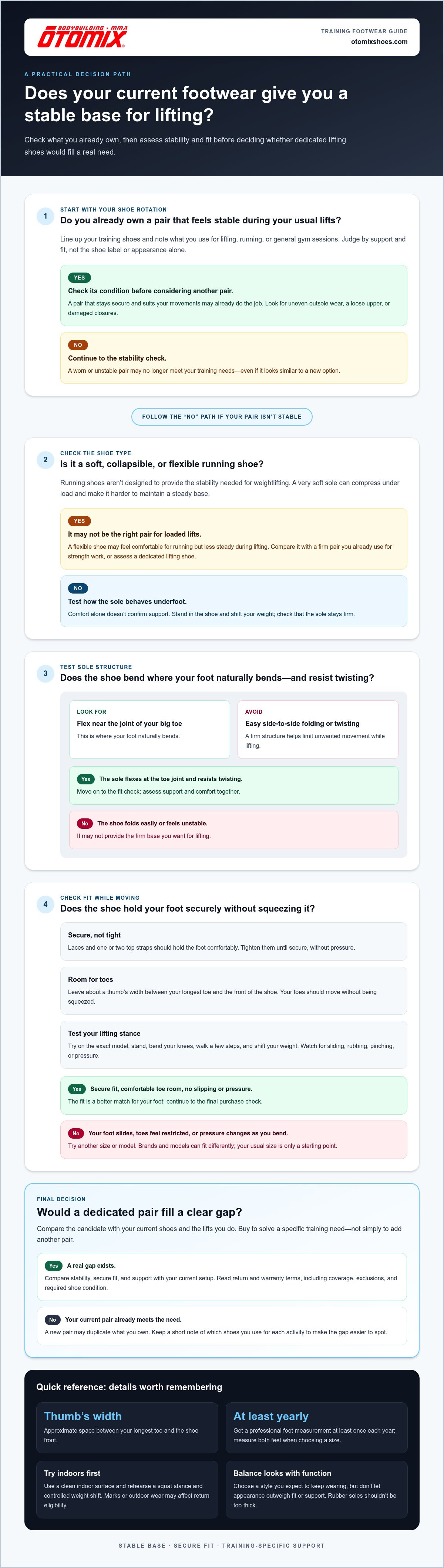
Start by checking stability, not appearance. Press the sole and test how the shoe bends. It should flex near the joint of your big toe, where your foot naturally bends, but shouldn’t fold easily from side to side or twist. That firm structure helps support your foot while you lift, rather than letting it shift inside a flexible sole.
Next, check how securely the shoe holds your foot. Weightlifting shoes generally have one or two straps across the top, in addition to laces. Tighten them until they feel secure, but not so much that they cause pressure. A snug upper and well-made footbed can reduce sliding and rubbing that may contribute to blisters. Walk a few steps and test your stance before deciding the fit is right.
Don’t assume that soft cushioning means better support. Soft, collapsible shoes and inserts don’t provide the same foot stability as a firm lifting shoe. A very soft sole can compress under load, making it harder to maintain a steady base. Compare how the shoe feels underfoot while standing, then check that the sole stays firm as you shift your weight. Comfort matters, but the shoe shouldn’t feel unstable.
Measure both feet for length and width before choosing a size. Feet can change with age, weight fluctuations, exercise habits, and foot-related health conditions. Have your feet measured each time you buy shoes, and get a professional measurement at least once each year. Leave about a thumb’s width between your longest toe and the front of the shoe, while making sure your toes can move without being squeezed.
Finally, try on the exact model you plan to buy. Different brands and models can fit differently, so your usual size is only a starting point. Check the fit while standing and bending your knees into a lifting stance. Too little room can restrict toe movement; too much can let your foot slide. Assess support, sizing, and comfort together rather than as separate boxes to tick.
Checking whether you already own a similar pair
Before buying, read the return and warranty terms, including coverage, exclusions, and required shoe condition. Try the shoes indoors, then rehearse your lifting stance to see whether the fit works.
Start with a practical audit of your current footwear. Line up your training shoes and note what you use each pair for: lifting, running, or general gym sessions. Then ask whether any pair already feels stable during your usual lifts. If it stays secure and suits your movements, a new purchase may duplicate a job your current shoes already do.
Look beyond the label. Compare the shoe’s sole, flexibility, and support with your training needs. For example, a flexible running shoe may feel comfortable on the treadmill but less steady during loaded lifts. A firm pair you already use for strength work may serve the same purpose as the model you’re considering. Judge by performance and fit, not appearance alone.
Check the condition, too. Look for uneven outsole wear, a loose upper, or damaged closures. A worn or unstable pair may no longer serve the same purpose, even if it looks like a new option. Keep a short note of which shoes you wear for each activity. This simple record can show whether a new pair fills a real gap or repeats a choice you already have.
For an at-home trial, wear the shoes on a clean indoor surface. Lace and fasten them as you would for training, then test a squat stance and a controlled weight shift. Watch for slipping, pinching, or pressure that changes when you bend your knees. Check return rules before trying them, since marks or outdoor wear may affect eligibility. If a dedicated pair would fill a clear gap, compare bodybuilding and weightlifting gym shoes against your current setup. Buy to solve a specific training need, not simply to add another pair.
3. Considering whether the style will last
Ask yourself whether you’ll still want to wear the shoes a couple of years after buying them. Choose a look that works with the training clothes you already wear, not just one outfit. For example, if you alternate between dark shorts and brighter tops, consider whether the shoes suit both. A versatile style is more likely to stay in your regular training rotation.
Don’t judge the design from a product photo alone. A shoe can look different on your foot than it does on a model or in its box. If you can try it on, view it from the side and above, then see how its shape and color look with your usual gym clothes. This quick check helps you tell genuine appeal from styling that only works in a photograph.
Ask what attracts you most: the design, the construction, or simply the brand name. A familiar logo shouldn’t outweigh practical details. For strength training, the Centers for Disease Control and Prevention recommends rubber soles that aren’t too thick, since thick soles may cause tripping. Consider the outsole’s thickness and grip alongside its appearance and suitability for your training.
Materials affect both feel and appearance. A snug synthetic or leather upper can help reduce rubbing and movement inside the shoe. Inspect how the upper joins the sole and whether the shoe looks suited to repeated gym use. Don’t assume a striking finish means the shoe will last. Compare its materials and construction with how often you train and how you’ll care for it.
Finally, weigh style against how often you may need to replace the shoes. A cheap pair may need replacing every year or more often, so consider whether a lower initial cost suits your priorities. Choose a design you’ll keep wearing, but don’t let appearance outweigh fit or function. Before buying, name the outfits and training sessions the shoes should suit. If you can’t picture them beyond one look or occasion, keep comparing.
4. Matching shoes to activities and occasions
Weightlifting shoes are designed for lifting, not every activity in your training week. They generally have one or two straps across the top, and laces and straps together can help secure the shoe. Choose a fastening system that holds your foot comfortably without being too tight. If you lift about once a week, dedicated shoes may suit your routine. If you lift about once a month, you probably don’t need to invest in them.
For squats, Olympic lifts, and powerlifting, match the shoe to the lift and your mobility. Traditional weightlifting shoes commonly have raised heels of 3/4-1 inch. Powerlifting shoes commonly have 1-1.5cm heels, while weightlifting shoes commonly have 1.5-2.5cm heels. Olympic weightlifting shoes most commonly have 2-2.5cm heels. These categories guide comparison, but comfort and fit still matter.
A raised heel of about 0.75 inches can support stability and help some lifters keep an upright torso, depending on mobility. For high-bar squats, one contributor recommends a heel height of at least 2.5cm. Treat that as a specific recommendation, not a universal rule for every squat or lifter.
Lifting shoes can support stability, but they don’t replace practice. Changing shoes alone won’t produce dramatic performance changes without regular training. For deadlifts, choose footwear that gives you a stable, comfortable base for your setup. Running shoes aren’t designed for weightlifting stability, and using them to lift could cause injury. For everyday gym workouts, match your shoes to the session instead of assuming one pair suits every movement.
For strength training, the Centers for Disease Control and Prevention recommends rubber soles that aren’t too thick, since thick soles may cause tripping. Compare footwear against your actual lifts and training routine, then explore lifting shoe options that fit those needs.
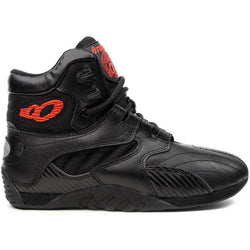
Otomix: Stingray Performance Bodybuilding Weightlifting Workout Gym Shoes
Otomix’s Stingray Performance Bodybuilding Weightlifting Workout Gym Shoes offer a dedicated footwear option to compare with your training needs. Use the support, fit, and activity checks above to decide whether a purpose-built gym shoe suits your routine.
The Ultimate Trainer Bodybuilding Weightlifting Workout Gym Shoes are another bodybuilding and weightlifting option. Otomix also offers the Extreme Trainer. Compare each with the lifts you perform, how often you train, and what you need from your footwear. Choose a pair that fits your actual sessions, not simply another shoe for the shelf.
Ready to explore your options? Contact Otomix to discuss its bodybuilding and weightlifting shoes.
Make Your Next Training Session the Test
Before choosing, turn your shortlist into a simple decision tool. Write down the lifts you perform most, the surfaces you train on, and what you want your footwear to do. Use those priorities to compare options, rather than letting a bold design or familiar label make the decision for you.
The questions to ask before buying lifting shoes should lead to a clear reason for your decision. If you can explain how a pair fits your routine and what need it fills, you’re choosing with purpose. If the answer isn’t clear, pause and revisit your priorities before buying.
Otomix offers the Stingray Performance Bodybuilding Weightlifting Workout Gym Shoes, Ultimate Trainer Bodybuilding Weightlifting Workout Gym Shoes, and Extreme Trainer. Explore the options and decide which best fits your training needs. Contact Otomix about your shoe needs, then move into your next session ready to train with purpose.
Frequently Asked Questions
Are they too soft?
A shoe may be too soft if its sole compresses noticeably under your body weight or feels unstable as you brace. Stand in your lifting stance and shift gently from one foot to the other. Notice whether the shoe stays planted or feels squishy and uneven. Comfort matters, but the shoe shouldn’t cushion every movement like a running sneaker.
Do they bend?
Yes, but the bend should be limited and purposeful. Hold the heel and toe, then gently flex the shoe. It should resist twisting and folding from side to side. As a practical check, compare its movement with a flexible everyday sneaker. If the lifting shoe folds easily across the middle, it may not provide the firm platform you want for loaded lifts.
How do I know I’m getting the best value for my money?
Judge value by how well the shoe suits your training, not by price alone. One of the key questions to ask before buying lifting shoes is whether the pair fills a genuine gap in your footwear. Consider how often you lift and whether its construction suits regular use. Review the return and warranty terms before buying.
How do weightlifting shoes differ from flat training shoes and running shoes?
Weightlifting shoes typically combine a firm sole with a raised heel. Flat training shoes have a flatter platform, while running shoes are designed for running rather than lifting stability. For example, a runner who also squats should consider whether their running shoes feel steady under load. Choose footwear for the session’s demands, not simply because it works for another activity.
What heel height is best for weightlifting shoes?
There isn’t one heel height for every lifter or lift. Traditional weightlifting shoes generally have a raised heel in the 3/4-1″ range. Olympic weightlifting shoes most commonly have heels measuring 2-2.5cm, while powerlifting shoes commonly have 1-1.5cm heels. Use these typical profiles as comparison points, then consider your lifting style and mobility when choosing.
Should I choose a raised, flat, or adjustable heel for my lifting style?
Choose based on the movements you train and the stance that feels controlled. A raised heel may suit lifters who want help maintaining a more upright torso, depending on mobility. A flat profile may suit someone who prefers a level base. If you’re comparing heel styles, include that choice among the questions to ask before buying lifting shoes, then match it to your regular lifts.


