

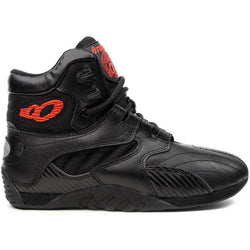
Travel Friendly Lifting Shoes for Light, Easy Packing
A shoe built only for heavy lifts may be a poor travel choice. The best travel friendly lifting shoes balance a lightweight, packable design with a secure feel for training and enough comfort for the rest of your trip. Choose for the miles between workouts, not just the minutes under the bar.
You want to train without letting bulky gear take over your bag. A travel-ready pair should earn its space, feel comfortable beyond the gym, and suit the way you lift. This guide explains what to look for, from weight and packability to fit, support, and versatility.
Use these practical checks to compare your options and decide which features matter most for your trip. You’ll have a clearer way to choose lifting shoes that are easy to pack and ready for more than one activity.
Key Takeaways
- Prioritize a pair that packs easily and stays comfortable during travel, not just during your workout.
- Test the fit and feel with the movements and everyday activities you expect to do on your trip.
- Compare lifting shoes by the balance of support, stability, and versatility that suits your training.
- Consider minimalist or foldable designs carefully, and weigh packability against the secure feel you want under load.
1. Lightweight and packable travel shoes
Travel-friendly lifting shoes need to do more than fit beside your clothes. Prioritize a manageable shape and weight, then consider whether you can wear them comfortably between the airport, hotel, and gym. Steel-toe shoes can feel heavy and rigid during long travel days, so avoid unnecessary bulk for ordinary training trips.
Compare the packed shoe with your other essentials. A flexible upper may compress more easily than a stiff construction, while a secure sole still matters for lifting. Choose based on your actual itinerary, not just how small the shoes look in a product photo.
For a practical look at gym shoes designed for travel, watch 6 FAVORITE GYM SHOES FOR TRAVELING (Barefoot, Training & Running!) from That Fit Friend.
Travel-friendly lifting shoes generally trade some bulk for greater versatility than regular weightlifting shoes. A traditional lifting pair may prioritize stability and support under load; a travel pair also needs to work for walking between activities. Judge each pair by your training needs and how it feels outside the gym.
Test the fit before packing: walk indoors, climb stairs, then try a few unloaded squats and lunges. Notice heel movement, toe pressure, and whether the sole feels stable when you brace. A pair that pinches during a short walk is a poor choice for a day that includes both sightseeing and training.
Yes, weightlifting shoes can go in carry-on luggage. Passengers traveling through domestic airports may keep their shoes on at TSA security checkpoints, but shoes with hidden metal components may attract extra screening.
There’s no single price for travel-ready weightlifting shoes in the United States. Cost depends on the shoe’s construction, materials, and intended use. Compare those features with how often you’ll lift and wear the pair while traveling.
Before packing, check for metal buckles, eyelets, or inserts that could draw attention at airport screening. Place the shoes where they’re easy to remove if needed, and keep the rest of your carry-on organized for a smoother transition from check-in to training.
2. Testing shoes for comfort and versatility
Test the pair in the socks you plan to wear while traveling and training. Walk across a hard floor, climb stairs, then try bodyweight squats and lunges. Check whether your heel stays secure, your toes can spread, and the sole feels steady as you shift direction. A shoe that feels comfortable standing still may rub once your stride lengthens.
Yes, cross-training shoes can work instead of lifting shoes while traveling, especially for mixed sessions with machines, walking, and lighter weights. For heavy squats or pulls, assess how firmly the shoe holds your foot and whether its cushioning feels stable under load. A soft, compressive feel may suit movement-based workouts but feel less secure for lifts that demand a planted base.
There’s no single heel height that suits every lifter. Choose a heel that supports your squat position without forcing an uncomfortable angle, and test it with your usual stance. Aim for a secure midfoot and heel, plus enough toe room to spread your toes. Tightness at the sides can become distracting during a long travel day.
Use the same movements to compare pairs instead of judging by appearance alone. Try a controlled squat, a hip hinge, and a short walk. Notice whether the heel lifts, your foot slides, or pressure builds near the toes. Repeat the checks after loosening and tightening the laces. A small adjustment can improve lockdown, but it shouldn’t create pinching across the instep.
Match the shoe to your itinerary, too. If you’ll move from a hotel gym to walking around town, test that transition before packing. A stable feel under a light dumbbell and an easy stride on pavement are useful signs of versatility. Skip any pair that performs well for only one planned activity.
If you want to compare purpose-built options against your comfort checklist, explore these bodybuilding and weightlifting shoe options. Focus on the fit and support that match your training, then judge whether that pair also suits your travel routine.
3. What are the best travel-friendly weightlifting shoes in 2026?
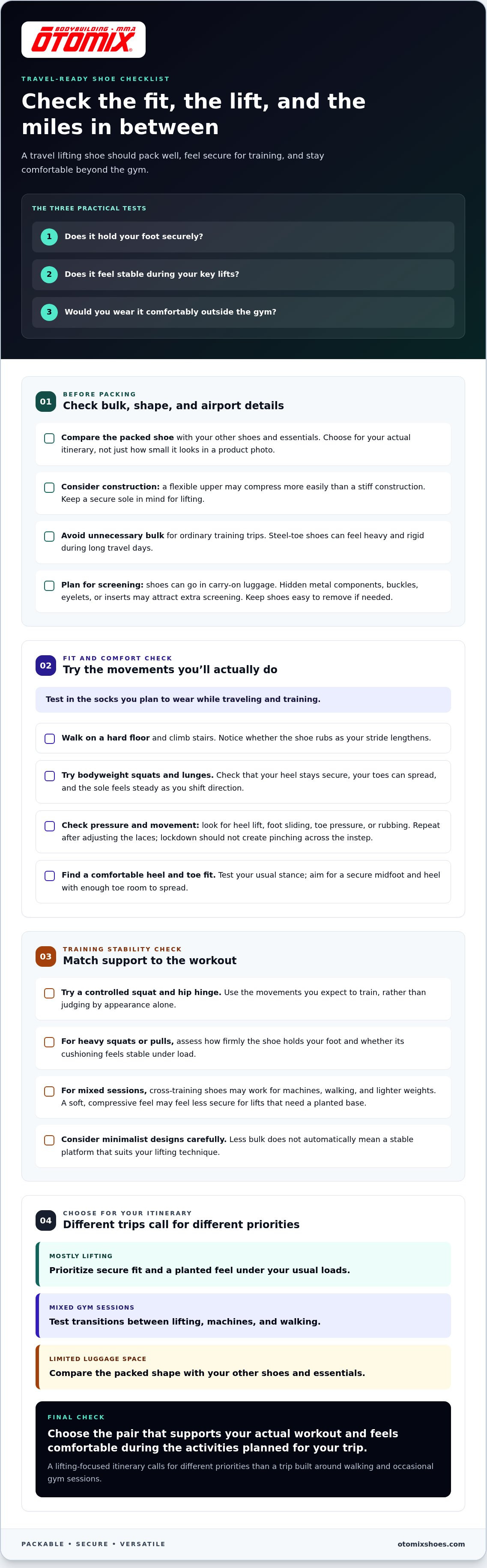
In 2026, the best choice depends on your main lifts, walking plans, and space in your bag. Compare shoes by three practical tests: how securely they hold your foot, how stable they feel during your key lifts, and whether you’ll wear them comfortably beyond the gym. No single design wins for every itinerary.
For a dedicated lifting pair, shortlist options made for weightlifting and bodybuilding, then try them with your usual training socks. Otomix offers Stingray Performance Bodybuilding Weightlifting Workout Gym Shoes and Ultimate Trainer Bodybuilding Weightlifting Workout Gym Shoes. Assess each against your training and travel needs rather than assuming any shoe suits every lifter.
A cross-training shoe may make more sense if your trip includes varied sessions. Try a bodyweight squat, a controlled hinge, and a short walk. Compare how the shoe feels during each movement. If it feels comfortable while walking but unstable during your usual lift, it may not suit a training-focused trip.
For a minimalist option, consider whether its feel suits your lifting technique and itinerary. Minimal construction can reduce bulk, but it doesn’t automatically provide the stable platform every lifter wants. Try your usual stance and movements before making it your only pair.
Use this quick comparison before choosing:
- Mostly lifting: Prioritize secure fit and a planted feel under your usual loads.
- Mixed gym sessions: Test transitions between lifting, machines, and walking.
- Limited luggage space: Compare the packed shape with your other shoes and essentials.
Make your final choice based on the trip, not the product label. A shoe that supports your actual workout and feels comfortable during your planned activities earns its place. A lifting-focused itinerary calls for different priorities than a trip built around walking and occasional gym sessions.
4. Are there foldable or minimalist weightlifting shoes for travel?
Yes. Flexible, minimalist training shoes can take up less room than rigid lifting footwear, and some can be compressed inside a travel bag. But packability alone doesn’t make a shoe suitable for lifting. Check whether its sole gives you the stable, secure platform you need for your usual exercises.
Try a simple pack test before your trip: place the shoes beside your regular footwear and compare how much space each pair takes. Press the upper gently to see whether it flexes without forcing the sole to bend excessively. A shoe that folds easily but feels unstable during a squat may not suit your training.
Minimalist designs can feel different from shoes with more structure. A thinner, flexible sole gives your foot a closer feel to the floor, while less cushioning can change how impact and pressure feel during walking. Test the shoe with a bodyweight squat, a controlled deadlift setup, and a walk across a hard surface. Notice which activities feel comfortable and controlled.
Use these checks to decide whether a foldable or minimalist pair fits your plans:
- For lifting: Test your regular stance and lifting movements. Look for a steady base and secure foot placement.
- For packing: Check whether the shoe fits around clothing without being crushed or misshaped.
- For mixed travel days: Walk in the pair before relying on it for errands and workouts.
Don’t assume every minimalist shoe suits every lift. A flexible design may suit bodyweight training or lighter sessions, while heavier lifting can call for a firmer feel. Match the shoe to your workout, then test that choice before traveling. If you’re comparing structured options, explore bodybuilding and weightlifting shoes and consider how their intended training use fits your packing priorities.
Otomix: Stingray Performance Bodybuilding Weightlifting Workout Gym Shoes
Otomix’s Stingray Performance Bodybuilding Weightlifting Workout Gym Shoes are a lifting-focused option for trips that include gym training. Compare them with the Ultimate Trainer Bodybuilding Weightlifting Workout Gym Shoes by checking fit, comfort, and how each feels during your planned workouts. For travel, also consider whether the pair suits your other activities and packing priorities.
Choose based on what you expect your shoes to do. If your itinerary centers on bodybuilding or weightlifting, focus on a secure, comfortable fit during your training movements. If walking and mixed activities matter just as much, use the comfort and versatility checks from earlier sections before choosing. The Extreme Trainer is another Otomix option for gym training.
Visit Otomix’s shoe selection to explore the options.
Make Your Next Trip Training-Ready
Your next trip is a chance to make every item in your bag earn its space. Decide what you’ll train, where you’ll wear your shoes, and what feel matters most underfoot. Then choose travel friendly lifting shoes that fit your actual plans, not an idealized workout routine. A focused choice can simplify packing and help you arrive ready to move.
If you’re narrowing down gym footwear, Otomix offers Stingray Performance Bodybuilding Weightlifting Workout Gym Shoes, Ultimate Trainer Bodybuilding Weightlifting Workout Gym Shoes, and Extreme Trainer. Compare these options with your training priorities and travel needs. The next step is to choose the style that fits how you plan to use it.
Explore Otomix lifting shoes and choose your next training companion. Pack with purpose, keep your goals in sight, and make your next workout count!
Frequently Asked Questions
What makes shoes good for travel?
Good travel shoes suit the full day, not just one stop on your itinerary. A pair worn from a hotel to a gym, for example, should feel comfortable during ordinary walking and suit your planned workout. Consider how easily you can put them on, whether they stay secure as you move, and how well they work with the clothing and activities you’ve packed for.
What features make weightlifting shoes suitable for travel?
Travel-suitable weightlifting shoes combine a dependable fit with a design that works for your itinerary. Look for laces you can adjust quickly, a sole that feels steady during your usual lifts, and an upper that doesn’t create pressure during everyday movement. If you’ll wear them through a full travel day, try them with your planned socks and assess comfort after extended walking.
Which lifting shoes are lightweight and packable?
Minimalist and flexible training shoes are common styles to compare when packing space matters. But a shoe’s label doesn’t tell you its actual weight or how it will feel during your lifts. Otomix offers Stingray Performance Bodybuilding Weightlifting Workout Gym Shoes and Ultimate Trainer Bodybuilding Weightlifting Workout Gym Shoes. Compare each pair’s fit and packed shape with your travel and training needs.


