

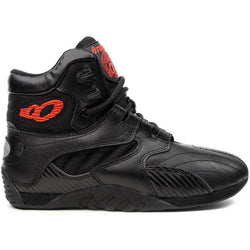
White Lifting Sneakers for Men for Gym Training
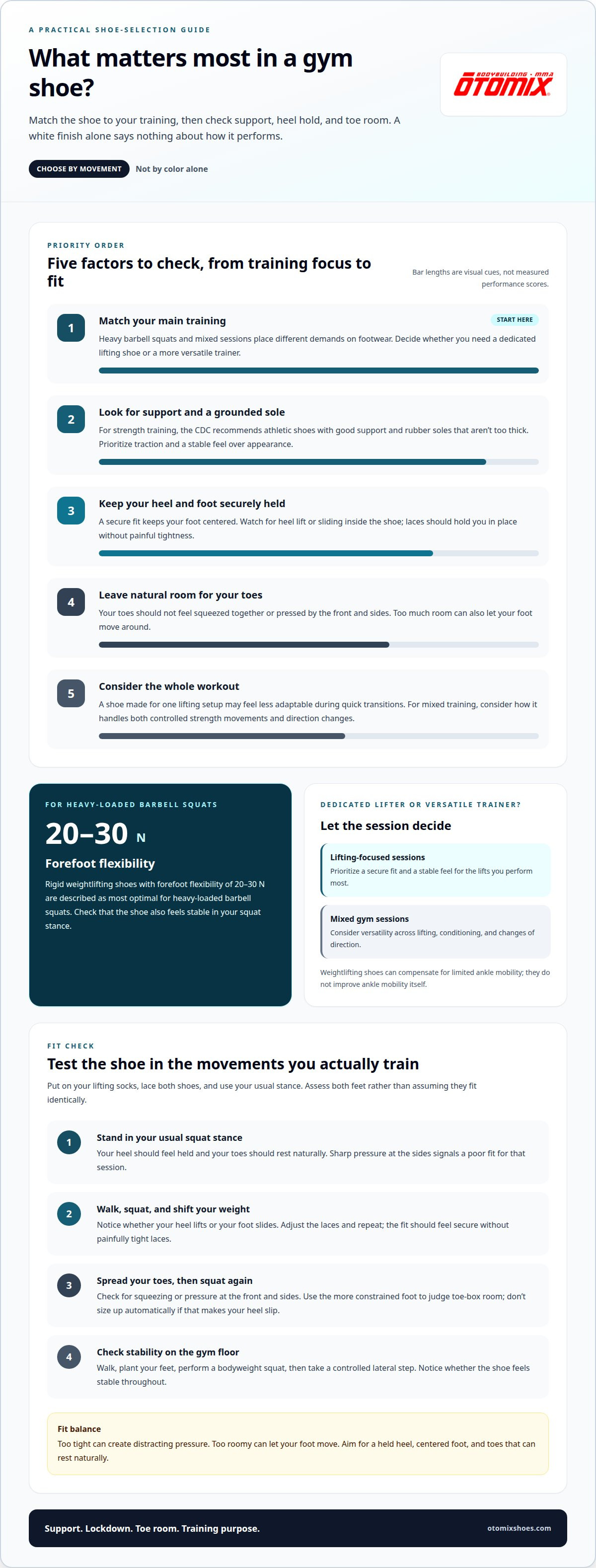
A clean white finish doesn’t make a shoe ready for a heavy set. White lifting sneakers for men can suit gym training when the fit, lockdown, and toe box work for your movements, not just your style. For strength training, the Centers for Disease Control and Prevention recommends athletic shoes with good support and rubber soles that aren’t too thick.
It makes sense to look beyond color. A shoe can feel secure during a lift yet restrictive across the toes, while a roomier fit may not hold your foot firmly enough for every workout. The right balance depends on your training and how the shoe fits.
This guide explains what to look for in lifting shoes for weight training, gym workouts, and cross-training. Learn how support and sole feel affect your choice, how to assess fit, lockdown, and toe box room, and when a dedicated weightlifting shoe may suit your training better than a versatile gym option.
Key Takeaways
- Match your shoes to your main training: heavy lifts call for different priorities than mixed gym sessions.
- For strength work, prioritize support and a rubber sole that isn’t too thick.
- Assess fit by balancing secure lockdown with enough toe room for comfortable movement.
- Compare the available training-shoe options by purpose, including Otomix’s bodybuilding and weightlifting footwear.
Workout shoe activities, including weightlifting
Choose gym footwear by the movements you train, not color alone. A shoe suited to barbell work may feel different during cross-training or conditioning.
Workout Shoe Uses
Gym shoes may be used for strength sessions, weightlifting, and workouts that combine different movements. Start by identifying your main activity: a heavy barbell squat places different demands on footwear than a session that alternates between lifting and conditioning. Then decide whether you need a dedicated weightlifting shoe or a more versatile trainer.
Weightlifting shoes can compensate for limited ankle mobility, but that benefit is specific to how the shoe supports your lifting position. They don’t improve ankle mobility itself, and a specialized shoe may be less suited to workouts with varied movements. Men’s white workout shoes category listings include one weightlifting shoe, so distinguish dedicated lifting footwear from general gym trainers.
Men’s Weightlifting Shoe Recommendations
For heavy-loaded barbell squats, rigid weightlifting shoes with forefoot flexibility of 20-30 N are described as most optimal. Use that figure as a specific selection criterion, then assess whether the shoe feels stable during your squat stance. Don’t choose by appearance alone: the right recommendation depends on your main lifts and how the shoe feels under load.
For men’s weightlifting shoes, prioritize a secure fit for the lifts you perform most. Try them while standing in your usual squat stance. Your feet should feel held in place without distracting pressure. White lifting sneakers for men should suit your training priorities; if your sessions include varied gym work, consider whether a dedicated lifting shoe fits the full routine.
Shoes for gym and cross-training
Cross-training can shift from dumbbell work to bodyweight drills in a single session. Choose footwear for the movements you repeat most, then consider how it handles the rest.
A workout combining lunges, cable exercises, and short conditioning intervals calls for versatility. Look for a secure feel during direction changes and a stable base during controlled strength movements. A shoe designed for one lifting setup may feel less adaptable when you move quickly between stations.
For strength training, the Centers for Disease Control and Prevention recommends athletic shoes with good support and rubber soles that aren’t too thick. Apply that guidance to movements such as rows or presses: the shoe should feel supportive, and its sole shouldn’t feel excessively bulky. Prioritize traction and a grounded feel over appearance.
Try a simple gym-floor check before training. Walk, plant your feet, then perform a bodyweight squat and a controlled lateral step. Notice whether the shoe feels stable throughout. If your workout includes both barbell sets and fast transitions, consider whether one pair suits the full session or a more specialized shoe better matches your training.
White lifting sneakers for men can suit a gym rotation, but color doesn’t determine cross-training performance. Check how the shoe feels during your routine, from a planted stance to a lateral movement. Keep your main activity in focus: mixed sessions and lifting-focused workouts may call for different priorities.
For a training-focused option, explore bodybuilding and gym training shoes as you compare footwear for your routine.
Fit, lockdown, and toe box
Start with your training stance, not the shoe’s color. Put on the socks you wear for lifting, lace both shoes, and stand as you would for a squat. Your heel should feel held, while your toes rest naturally in the forefoot. Sharp pressure at the sides signals a poor fit for that session.
Test lockdown while moving. Walk, perform a bodyweight squat, then shift your weight from one foot to the other. Notice whether your heel lifts or your foot slides inside the shoe. If either happens, adjust the laces and repeat. A secure fit keeps your foot centered without requiring painfully tight laces.
Check the toe box separately. Stand with your weight evenly distributed and spread your toes; they shouldn’t feel squeezed together. Then squat and notice whether the front or sides press against your toes. A narrow toe box may distract you during a set, while too much room can let your foot move around.
Compare both feet rather than assuming they fit identically. Lace each shoe evenly, then repeat the squat and weight shift on both sides. Use the more constrained foot to judge whether the toe box has enough room. Don’t size up automatically if that makes your heel slip; try a different shoe shape.
Evaluate white lifting sneakers for men through the movements you actually train. A pair that feels comfortable while seated may shift during a standing lift. Check heel hold, lace pressure, and toe movement in sequence. The shoes should feel secure without creating distracting pressure. Let fit, not color, guide your choice.
Men’s white workout shoe brands
Compare brands by training purpose, not just a white colorway or bold product name. A brand’s workout range may include shoes for different routines, so read each model description and identify the activity it supports. A lifter focused on barbell sessions needs a different fit and feel from someone alternating between strength stations and conditioning drills.
Use this brand comparison checklist:
- Training focus: Check whether the model is presented for weightlifting, bodybuilding, general gym training, or mixed workouts.
- Fit details: Look for clear sizing and shape information, then compare it with how the shoe feels around your heel and toes.
- Construction information: Review the features the brand actually states. Don’t assume that every white shoe from one brand shares the same design.
- Model differences: Compare shoes within the same range by purpose. A training shoe and a lifting-focused shoe may serve different sessions.
Next, connect the brand’s stated purpose to your own routine. If your sessions center on heavy lifts, prioritize a model’s lifting focus. If you combine weights with varied gym movements, consider versatility alongside stability. A white finish is a style choice; it doesn’t tell you how a shoe will feel during a set.
Compare descriptions side by side, then use the fit checks from the previous section. A model may suit your workout category but still feel loose at the heel or restrictive across the toes. Brand reputation alone can’t resolve that mismatch. Choose a model whose intended use matches your movement priorities and whose fit feels secure and comfortable.
Choose by purpose first, then narrow the options by fit and feel. Explore gym training shoe options as you compare men’s workout footwear for your routine.
Otomix
Otomix offers bodybuilding, weightlifting, and gym footwear for men comparing shoes by training purpose. Its range includes Stingray Performance Bodybuilding Weightlifting Workout Gym Shoes, Ultimate Trainer Bodybuilding Weightlifting Workout Gym Shoes, and Extreme Trainer. Compare these options if you’re looking for lifting-focused footwear or a shoe for gym training.
Use the criteria in this guide to narrow your choice: match the shoe to your workouts, then weigh fit, lockdown, and toe box room. Compare Otomix options with the activities you train rather than choosing by white color alone. For white lifting sneakers for men, the right match starts with how the shoe suits your routine and feels on your feet.
For more information about Otomix footwear, contact Otomix.
Choose Your Next Training Pair
Choose your next shoes around the sessions you plan to train, not a color trend or familiar label. Before deciding, picture your usual workout from warm-up to final set. Which movements need the most secure feel? Which parts of the session call for more freedom to move? Let your answers guide your shortlist.
Then test the pair: lace up, take your lifting stance, and move through the motions you train. Notice anything distracting, restrictive, or unstable. A good choice should suit your routine as well as your feet. Keep that standard in mind as you compare white lifting sneakers for men and decide what belongs in your gym rotation.
If you’re ready to explore footwear options for your training, start a conversation with Otomix. Bring your workout priorities into that next step, and move forward with a clearer idea of what you need. Choose with purpose, then get back to training.
Frequently Asked Questions
What are the best white weightlifting shoes for men?
The right choice matches your training focus and feels comfortable during your lifts. Otomix offers Stingray Performance Bodybuilding Weightlifting Workout Gym Shoes and Ultimate Trainer Bodybuilding Weightlifting Workout Gym Shoes, as well as Extreme Trainer. Compare each option by its stated training purpose and your routine. A white finish is a style preference, not a measure of lifting performance.
Which men's white lifting sneakers have the best stability for squats and deadlifts?
For stability-focused training, consider Extreme Trainer, designed to offer stability and support during intense sessions. That description doesn’t establish a separate ranking for squats versus deadlifts. Consider the demands of each lift: a squat involves a set stance and controlled descent, while a deadlift starts from the floor. Judge whether your chosen shoe feels secure in both setups.
What are the best affordable white lifting shoes for men, and how much do they cost?
The most affordable option is the one whose current listed price fits your budget and training needs. Prices vary by model, so compare the listed prices for Stingray Performance, Ultimate Trainer, and Extreme Trainer before deciding. Also consider how often you’ll use the shoes and whether their intended workout focus suits your routine. This helps you assess value without relying on a generic industry price range.
How should men's weightlifting shoes fit, and how do I choose the right size?
Weightlifting shoes should feel secure without pinching or letting your foot slide. Try them with the socks you expect to wear and lace them as you would for training. Check both feet, since one may feel tighter. If you’re between sizes, compare how each option holds your heel and allows toe movement in a lifting stance. Comfort during movement matters more than the number printed inside.
Are white lifting sneakers suitable for powerlifting, Olympic lifting, and general gym workouts?
Weightlifting shoes can suit different gym activities when their design matches the workout. Powerlifting and Olympic lifting place different demands on footwear, so consider your movements and the shoe’s stated purpose. For general gym sessions combining lifting with varied exercises, versatility may matter more. White is simply a color; it doesn’t determine whether a shoe suits a particular discipline.
What heel height and sole features should I look for in men's lifting shoes?
Look for good support and a rubber sole that isn’t too thick. For heavy-loaded barbell squats, rigid weightlifting shoes with forefoot flexibility of 20-30 N are described as most optimal; no heel height is specified.


