

Best Gym Shoes for Stability: 2026 Pro-Athlete Guide
Your expensive "performance" sneakers are likely sabotaging your heaviest lifts. If you've ever felt your ankles wobble mid-squat or lost your balance during a heavy leg press, you're fighting a losing battle against squishy soles. It's time to stop guessing. You need the best gym shoes for stability to turn that wasted energy into raw power! Stop letting your gear hold you back from the gains you've earned through sweat and discipline.
We get it. You're tired of sliding inside your shoes when the weight gets real. You want that total foot-to-floor connection that makes you feel like you're bolted to the platform. It's about confidence under the bar. It's about knowing your base won't crumble when you're pushing for that final rep. This 2026 Pro-Athlete Guide will show you exactly how to eliminate instability and unlock the massive strength gains you've been missing. We're diving into the technical specs of elite footwear like the Stingray and Extreme Trainer to ensure your next PR is your strongest one yet. Get ready to experience the ultimate lockdown!
Key Takeaways
- Eliminate the "Marshmallow Effect" by ditching compressed soles that steal your power and cause dangerous ankle wobbling during heavy sets.
- Identify the best gym shoes for stability by looking for ultra-thin soles and high-density materials that offer a superior ground-to-floor connection.
- Reduce lateral sway by up to 25% by switching from generic cross-trainers to specialized lifting footwear engineered for extreme loads.
- Match your shoes to your training style, whether you need high-top protection for bodybuilding or aggressive floor grip for powerlifting.
- Unlock massive strength gains with pro-athlete favorites like the Stingray Performance and Extreme Trainer for ultimate ankle lockdown.
Why Your Current Gym Shoes Are Killing Your Stability and Gains
Stop sabotaging your progress with footwear designed for the wrong sport. Most lifters walk into the weight room wearing running sneakers or basketball shoes. This is a massive mistake. Stability is your ability to maintain foot position and balance under a heavy external load. When you have hundreds of pounds on your back, any movement in your foundation is amplified. If your feet aren't locked, your lift is already failing!
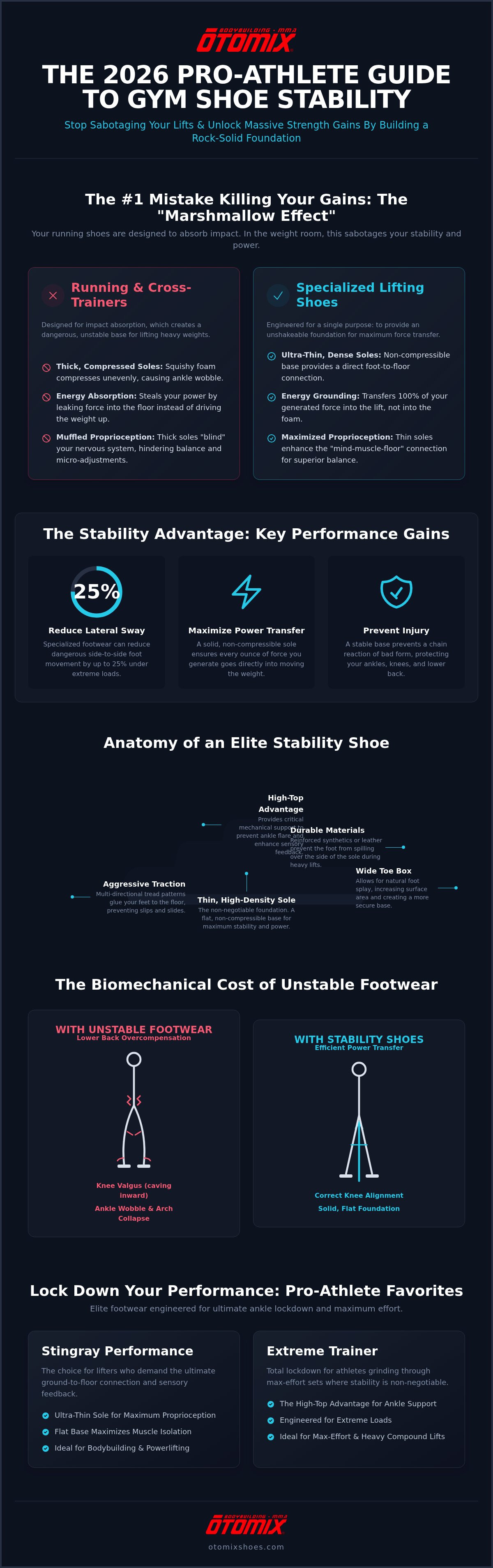
The biggest culprit is the "Marshmallow Effect." Running shoes feature thick, compressed soles designed to absorb impact. In the squat rack, that foam compresses unevenly under weight. This causes your ankles to roll and your power to leak into the floor instead of driving the bar up. You need energy grounding, not energy return. High-tech "bounce" foam is great for a 5k, but it's a liability when you're chasing a new PR. The best gym shoes for stability prioritize a dense, non-compressible base that keeps you connected to the platform.
Basketball shoes aren't much better. They're engineered for lateral cutting and vertical jumping on a court. They often have high stack heights that increase the lever arm on your ankle. This makes you more prone to tipping. To move serious weight, you need specialized gear that respects the specific force vectors of bodybuilding and powerlifting.
The Biomechanical Cost of Unstable Footwear
Unstable feet create a dangerous chain reaction. When your arches collapse or your heels shift, your body compensates. This often leads to knee valgus, where your knees cave inward during a lift. It also forces your lower back to take over the stabilization work your feet should be doing. To prevent injury, the best gym shoes for stability must provide a flat, solid foundation. Look for a wide toe box that allows for natural foot splay. Spreading your toes increases your surface area and creates a wider, more secure base for every rep.
Proprioception: Your Secret Weapon for Heavy Lifts
Proprioception is the sensory input that dictates balance. It's the "mind-muscle-floor" connection that tells your brain exactly where your body is in space. Thick, cushioned soles "blind" your nervous system. They muffle the feedback you get from the ground, making it harder to make micro-adjustments during a heavy set. Specialized shoes like the Stingray Performance or Extreme Trainer use ultra-thin soles to maximize this feedback. By feeling the floor, you can react faster, stay tighter, and push harder without the fear of losing your footing. Don't let a layer of cheap foam stand between you and your next strength breakthrough!
The Anatomy of the Best Gym Shoes for Stability
True stability isn't a happy accident! It's the result of precise engineering and high-performance materials. When you're moving heavy weight, every millimeter of your footwear matters. The best gym shoes for stability aren't built for a casual jog. They're built for total lockdown and zero-fail support! If your current shoes feel like they're stretching under the pressure of a heavy squat, they're failing you. You need a chassis that can handle the torque!
- Sole Density: High-density rubber is non-negotiable. It provides a solid platform that won't compress or deform under extreme loads.
- Traction Patterns: Aggressive, multi-directional tread keeps your feet glued to the floor. This prevents lateral sliding during heavy leg presses or wide-stance movements.
- Material Durability: Lightweight mesh is a liability in the rack. Serious lifting gear uses reinforced synthetics or leather to prevent the foot from spilling over the side of the sole.
Don't settle for "good enough" when your safety and gains are on the line. You need gear that mirrors the intensity of your training. Every component must work together to create an unbreakable foundation. This is how pro athletes stay grounded while moving massive iron.
Thin Soles vs. Elevated Heels
Your choice of sole shape dictates your mechanical advantage. Elevated heels are great for Olympic lifting, but bodybuilding shoes prioritize a flat-sole design. A thin, flat base keeps your center of gravity low. It shortens the distance the bar travels on deadlifts. It also ensures your weight stays on your heels where it belongs. This maximizes muscle isolation and keeps your joints in their strongest alignment for peak performance!
The High-Top Advantage for Ankle Support
Don't confuse ankle support with a lack of mobility! A high-top design provides critical mechanical support and enhanced sensory feedback. It prevents "ankle flare" when you're grinding through max-effort sets. Pro athletes demand the total lockdown of the Stingray Performance because it secures the joint without sacrificing the range of motion needed for deep squats. It's the difference between a shaky rep and a dominant one!
If you want to feel the difference that professional-grade engineering makes, you can browse the latest high-stability trainers designed for the world's strongest athletes.
Stability Case Study: Specialized Lifting Shoes vs. Cross-Trainers
Stop settling for mediocre performance. We put specialized footwear to the test against standard cross-trainers under extreme conditions. The results weren't even close! When loading 400lb+ on the bar, the best gym shoes for stability proved their worth by eliminating the dangerous "foot-slop" found in generic sneakers. Industry testing indicates that specialized lifting shoes show 25% less lateral movement than cross-trainers under peak loads. This isn't just a minor improvement. It's the difference between a locked-in lift and a potential injury!
The "Lock-In" factor is a game changer for serious practitioners. Standard trainers require your internal foot muscles to work overtime just to stay balanced. This leads to premature fatigue and reduced power output. Specialized gear does the heavy lifting for you. It secures your heel and midfoot, allowing your nervous system to focus entirely on driving the weight. Plus, these shoes are built to last. While generic trainers rip and deform under the lateral stress of heavy squats, professional-grade gear maintains its structural integrity for years of hardcore abuse.
Cross-Trainers: The Jack-of-All-Trades Trap
Don't fall for the hybrid hype! Cross-trainers are designed for versatility, not peak strength. The flexibility required for burpees or box jumps is the exact opposite of what you need for a 500lb leg press. Soft, flexible soles create a "squish" that absorbs your force before it even hits the floor. Every millimeter of compression is stolen energy! You shouldn't trust your PRs to a shoe that's trying to do everything at once. Before you drop another dollar on gear, check the Best Shoes for the Gym 2026 Checklist to see where your current pair falls short.
The Otomix Stability Advantage
Pro bodybuilders don't switch brands for the aesthetics. They switch for the isolation and the edge. Mass-market brands prioritize the "average" gym-goer, but you aren't average. The Ultimate Trainer provides a specialized hybrid stability that leaves standard sneakers in the dust. It features a significantly lower stack height and higher ankle lockdown than the leading competitors. By getting your foot closer to the floor and securing the joint, you maximize your mechanical advantage. It's time to demand more from your footwear. Get the best gym shoes for stability and feel the pro-athlete difference today!
How to Select the Right Stability Shoe for Your Training Style
Your training style dictates your gear. Don't grab a pair of generic sneakers and expect pro-level results! The best gym shoes for stability must match the specific demands of your workout. If you're a bodybuilder, you need total isolation. This means prioritizing high-top ankle protection to keep your joints secure during heavy leg days. Pro athletes choose models like the Extreme Trainer to ensure their focus stays on the muscle, not on preventing an ankle roll. You need to be able to push against the shoe without it giving way.
Powerlifters have different requirements. You need to maximize your "rip the floor" grip to create tension from the ground up. Check out our dedicated guide on powerlifting shoes for men to see how the right sole can add pounds to your total. For functional fitness, you might sacrifice a bit of rigid stability for better movement, but never compromise on a flat base. Even in dynamic movements, a squishy sole is your enemy. Finally, sizing is non-negotiable. A snug fit is essential for performance. If your foot slides even a millimeter inside the shoe, you've already lost your mechanical advantage and your confidence!
Identifying Your Primary Stability Needs
Do you need lateral support for lunges or vertical stability for squats? Most lifters ignore this distinction until they feel a wobble. You can test any shoe in 30 seconds before your first set. Stand on one foot and perform a shallow, controlled squat. If you feel the sole tilt or the upper material stretch under your weight, it's a failure! Heel lockdown is the most ignored factor in selecting the best gym shoes for stability. If your heel lifts during a drive, you're leaking power and risking a strain. Ensure your footwear features a secure, high-quality lacing system that anchors your heel into the back of the shoe for an unbreakable bond.
Material Choice: Leather vs. Synthetic for Support
Leather and heavy-duty synthetics act as "walls" for your feet. They provide the structural integrity that mesh simply cannot offer. While mesh is breathable, it lacks the tension needed to hold your foot in place under the lateral stress of a heavy set. You need materials that won't deform when you're grinding through a PR. A reinforced heel counter is essential for stability because it prevents the rearfoot from collapsing during max-effort sets. This component keeps your foot aligned over the center of the sole. It's time to upgrade your foundation and stop settling for "good enough" gear.
Shop the full Otomix stability collection now and lock in your gains!
Lock Down Your Performance with Otomix Elite Stability Gear
Success in the gym starts from the ground up. You've seen the science. You know why generic sneakers fail. Now it's time to gear up with the original authority in high-performance footwear. Otomix has been the "insider secret" of the bodybuilding world since 1989. We didn't just join the category; we pioneered it! For over 35 years, we've engineered the best gym shoes for stability to meet the brutal demands of pro athletes who move massive iron every single day.
Choosing Otomix means choosing an unbreakable foundation. Whether you need the ultra-thin ground feel of the Stingray Performance or the aggressive lockdown of the Extreme Trainer, we have your back. Our shoes aren't built for the masses. They're built for the elite. Don't let another workout go by with a shaky base. Experience the difference that pro-athlete engineering makes for your strength, safety, and confidence. It's time to stop guessing and start growing!
If you're a bodybuilder who needs a versatile, hybrid stable base, the Ultimate Trainer is your perfect match. It provides the ideal balance of lateral support and vertical stability. It's the go-to choice for athletes who demand high-performance results across every muscle group. You get the stability of a lifting shoe with the versatility needed for a complete workout. Stop compromising on your gear. Start dominating every set with the best gym shoes for stability on the market!
The Stingray Performance: Original Stability
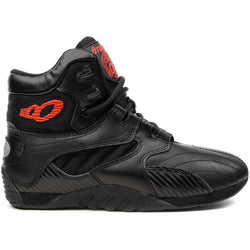
The Stingray Performance is the undisputed thin-sole king. It features an ultra-lightweight design that doesn't sacrifice a single ounce of support. It's the gold standard for leg day isolation because it maximizes proprioception and ground feedback. By bringing your foot closer to the floor, you gain a massive mechanical advantage on every rep. You'll feel the floor like never before, allowing for micro-adjustments that keep your form perfect under pressure. Shop Stingray Performance Shoes Now and feel the power of a true ground-to-floor connection!
Extreme Trainer: For the Heaviest Sets
When the weight gets scary, you need the Extreme Trainer. This shoe is specifically engineered for those who demand the ultimate in ankle lockdown and joint support. It features an extra-wide base that creates a massive surface area for maximum force distribution. The reinforced ankle support acts as a structural cage for your joint, preventing any hint of "ankle flare" or instability during max-effort lifts. It's the definitive choice for pro-level power and heavy bodybuilding. View the Extreme Trainer Collection today and secure your base for your next heavy session. Don't wait for a failure to upgrade your foundation!
Dominate Every Set with Pro-Grade Stability
Stop letting inferior footwear limit your potential. You've seen why flat, dense soles are non-negotiable for heavy lifts. You understand how high-top support protects your joints during max-effort sets. Now it's time to take action! Choosing the best gym shoes for stability is the single most important gear decision you'll make this year. Generic sneakers are built for the average person. You aren't average. You're a serious practitioner who demands the best.
Otomix has been pioneering gym footwear since 1989. We are the brand trusted by IFBB Pro bodybuilders worldwide. Our gear is specifically engineered for the most intense training environments on the planet. Don't waste another rep fighting for balance. Lock your feet to the floor and unlock the massive strength gains you've been building. Your foundation is your future!
Upgrade Your Stability with Otomix Professional Gym Shoes!
Go get those gains. The platform is waiting and the weight won't move itself!
Frequently Asked Questions
What are the best gym shoes for stability in 2026?
The best gym shoes for stability are pro-grade models like the Stingray Performance and the Extreme Trainer. These shoes are specifically engineered with ultra-thin soles and high-density materials to provide an unbreakable foundation for heavy lifting. They've been the top choice for elite athletes since 1989 because they eliminate the energy leaks found in generic sneakers!
Do high-top gym shoes actually provide more stability than low-tops?
Yes, high-top gym shoes offer superior stability by creating a mechanical cage around the ankle joint. This design provides critical physical support while increasing proprioceptive feedback to your brain. You'll feel more locked in during heavy sets, which prevents dangerous ankle flare and improves your overall balance under the bar.
Can I use running shoes for weightlifting if I need stability?
No, you should never use running shoes for heavy weightlifting. Running sneakers are built with soft, compressed foam designed for impact absorption, which creates a dangerous "Marshmallow Effect" under heavy loads. This instability causes your ankles to wobble and robs you of the power needed to crush your PRs!
How thin should the sole be for the best stability in the gym?
The sole should be as thin as possible to maximize your ground-to-floor connection. The best gym shoes for stability use ultra-thin, high-density rubber to keep your center of gravity low and your balance precise. This design ensures you feel every inch of the platform, allowing for the micro-adjustments that keep your form perfect.
Why is ankle support important for heavy squats and leg presses?
Ankle support is vital because it prevents the joint from shifting laterally when you're under extreme pressure. Without proper lockdown, your body wastes energy trying to stabilize the foot instead of driving the weight. Secure ankle support ensures your power moves in a straight line, protecting your joints and maximizing muscle isolation.
Are flat shoes better for stability than shoes with a raised heel?
Flat shoes are generally better for overall stability because they allow for natural foot splay and total ground contact. While raised heels have their place in Olympic lifting, a flat sole is the gold standard for bodybuilding and deadlifting. It keeps your weight distributed evenly and prevents you from tipping forward during max-effort reps.
How often should I replace my gym shoes to maintain maximum stability?
You should replace your lifting shoes every 6 to 12 months if you're training hard multiple times a week. Even high-quality gear eventually faces material fatigue. If you notice the upper material stretching or the sole losing its "bite" on the floor, it's time to upgrade. Don't wait for a failure to refresh your foundation!
What is the difference between cross-trainers and specialized lifting shoes for stability?
Cross-trainers are built for flexibility and cardio, while specialized lifting shoes are built for rigidity and lockdown. Standard trainers use soft midsoles that compress and shift under weight. Specialized gear like the Ultimate Trainer provides a non-compressible base that stays rock-solid, ensuring your feet don't slide when the weight gets real.


