

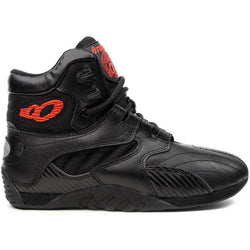
Bodybuilding Workout Shoes: Choose the Right Pair for Your Training
Bodybuilding workout shoes should suit the lifting and gym sessions you actually do. Start with your training, the fit you prefer, and how the shoe is intended to be used, rather than choosing by appearance alone.
It’s easy to compare dedicated training shoes with everyday gym sneakers and still feel unsure. A more useful approach is to compare each shoe’s stated purpose, fit, and underfoot feel. This guide explains what to look for and how Otomix’s Stingray Performance, Ultimate Trainer, and Extreme Trainer fit into a lifting-focused shortlist.
We’ll compare footwear by training needs and show how to narrow your options without assuming that every training shoe works for every activity. Focus on the shoe first, then use the product details to make a practical choice.
Key Takeaways
- Match bodybuilding workout shoes to the movements you train, rather than choosing by trend alone.
- Compare intended use, sole feel, and fit. Aim for a secure feel without painful pressure.
- Otomix’s Stingray Performance and Ultimate Trainer are designed for bodybuilding and weightlifting, while the Extreme Trainer is built for stability and support during intense training.
- Build your shortlist around your main training needs, then compare the details of each shoe model.
Bodybuilding Workout Shoes: Start With Your Training, Not the Trend
Bodybuilding workout shoes are training footwear chosen for the movements you do most and the fit you prefer, rather than for everyday wear alone. A sneaker may be fine for a casual gym visit, but a shoe designed for bodybuilding and weightlifting is made with those activities in mind. Start by identifying what your regular sessions involve.
Resistance training and general gym workouts can involve different movements and preferences. Bodybuilding focuses on resistance training and physique development; What is Bodybuilding? offers a general overview of the activity. When comparing shoes, look at the stated training purpose rather than assuming every athletic shoe is interchangeable. For Otomix footwear, the Stingray Performance and Ultimate Trainer are designed for bodybuilding and weightlifting, while the Extreme Trainer is built to offer stability and support during intense training sessions.
For a quick look at footwear choices for squatting, watch this video:
Which training movements shape your footwear choice?
Map your regular session before comparing pairs. List the exercises you do most often, how frequently you lift, and whether you use the same shoes for varied gym activities. That list gives you a practical way to compare product descriptions: prioritize shoes intended for bodybuilding and weightlifting if resistance training is the main use. If your workouts combine several activities, consider which one matters most and whether you want one pair for the full session or a separate pair for a different training purpose.
It’s also useful to distinguish a shoe’s intended role from assumptions based on its name or appearance. A model designed for lifting should lead your shortlist for bodybuilding sessions. Then compare the fit and details of the specific model rather than expecting every shoe in a training range to feel identical.
Bodybuilding shoes versus martial-arts training shoes
Compare each shoe by its stated purpose, not by category names or appearance alone. Bodybuilding-focused footwear is intended for gym and lifting use. A shoe described for martial-arts practice has a different stated purpose, so don’t assume it is automatically suited to a lifting session. Keeping those uses distinct helps you choose with your regular training in mind. For more dedicated lifting-footwear guidance, explore this weightlifting shoes guide.
How to Compare Bodybuilding Workout Shoes Before You Buy
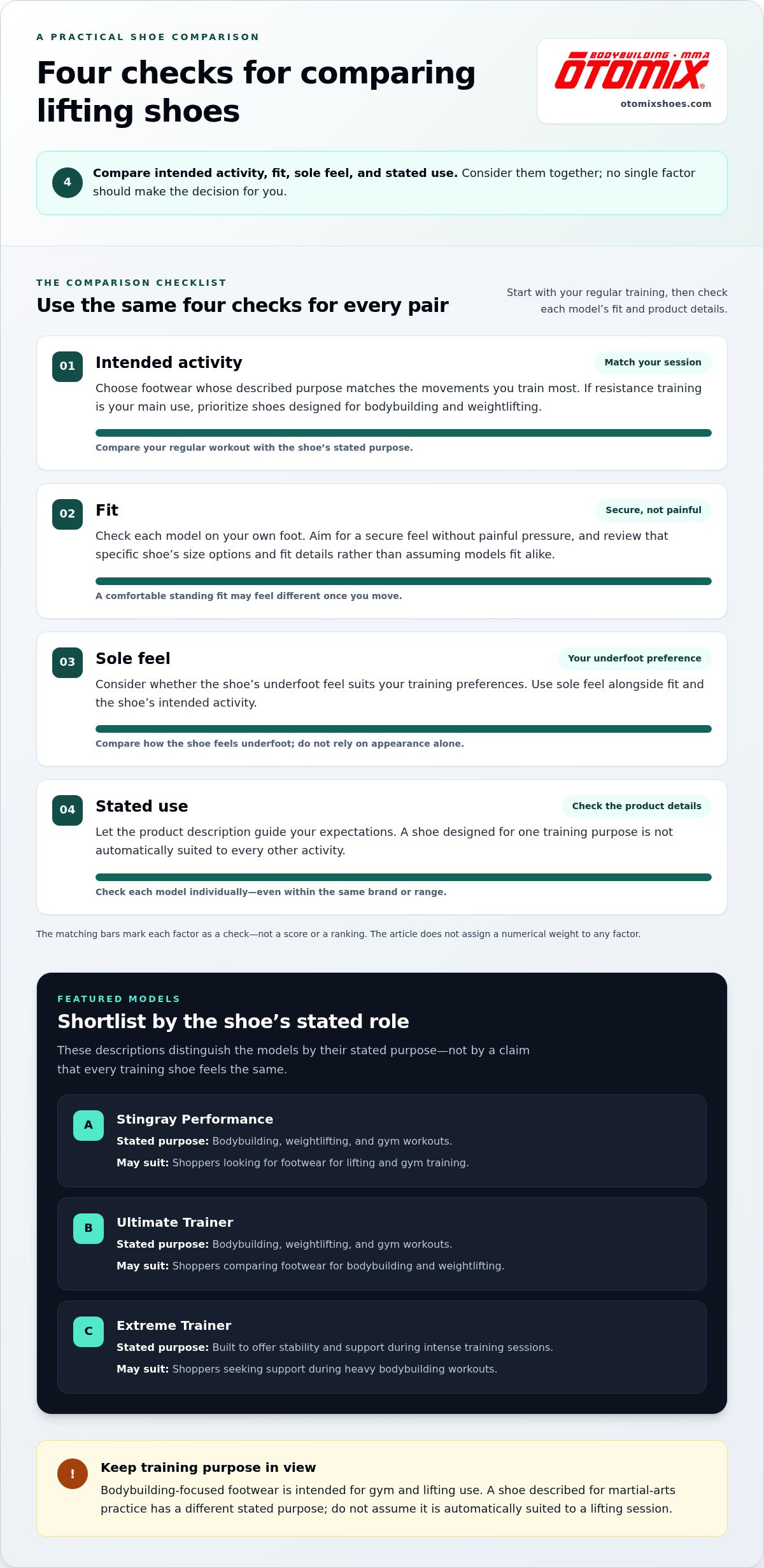
Use a consistent checklist instead of judging bodybuilding workout shoes by appearance alone. Start with the training you plan to do, then compare whether the fit feels secure, how the sole feels underfoot, and what the product description says the shoe is for. Compare intended activity, fit, sole feel, and stated use before you buy.
- Intended activity: Match the shoe’s described purpose to your regular session.
- Fit: Look for a secure feel without painful pressure.
- Sole feel: Consider whether the underfoot feel suits your training preferences.
- Stated use: Let the product details guide expectations instead of assuming every training shoe serves the same role.
Fit and product details: what to check
Review the size options and details for the specific model you’re considering. Don’t assume two models share identical sizing or fit just because they come from the same brand or category. Assess the shoe on your own foot: it should feel secure, not painfully tight. If you’re comparing models, check each one separately and use the product information for that particular shoe rather than relying on a universal size rule.
Pay attention to whether the fit feels secure through the movements you regularly perform. A shoe that feels comfortable while standing may feel different once you move through a workout. Use fit, the listed purpose, and your own training needs together rather than letting one factor make the decision for you.
When is a specialized shoe a better match?
A specialized shoe may make more sense when its stated purpose aligns closely with your regular movements and training setting. Consider whether you mainly lift or move between varied gym activities. Then compare the product description with that use. Otomix’s Stingray Performance and Ultimate Trainer are designed for bodybuilding and weightlifting, and the Extreme Trainer is built to provide stability and support during intense training sessions.
For a focused comparison, browse the Otomix collection and keep your main training needs in view. Compare the product descriptions and fit details for the shoes you’re considering. Choose based on what each model is designed for, not on an assumption that all training footwear has the same role.
Otomix Taekwondo Gear: Standout Shoes and Training Add-ons
When choosing bodybuilding workout shoes, focus on footwear designed for bodybuilding, weightlifting, and gym workouts. Otomix’s range includes the Stingray Performance, Ultimate Trainer, and Extreme Trainer. Their stated uses give you a more relevant comparison than grouping shoes and optional gear together. Compare the intended use and fit of each model before deciding which one belongs on your shortlist.
| Product | Stated purpose or positioning | May suit |
|---|---|---|
| Stingray Performance | Bodybuilding, weightlifting, and gym workouts | Shoppers looking for footwear for lifting and gym training |
| Ultimate Trainer | Bodybuilding, weightlifting, and gym workouts | Shoppers comparing footwear for bodybuilding and weightlifting |
| Extreme Trainer | Built to offer stability and support during intense training | Shoppers seeking support during heavy bodybuilding workouts |
Which featured shoes belong on your shortlist?
Start with the Stingray Performance or Ultimate Trainer if bodybuilding and weightlifting are the main reasons you’re shopping. Both are designed for those activities. The Extreme Trainer is built to offer stability and support during intense training sessions, making it another option to compare for heavy bodybuilding workouts. Use those stated distinctions to narrow your options, then check each model’s product details and fit independently.
To make the comparison easier, write down what matters most to you before browsing. You might prioritize a shoe’s stated training purpose, the way it feels underfoot, or how securely it fits. Use the same criteria for each model so that you’re comparing like with like, rather than switching between unrelated features as you browse.
Which accessories are useful additions?
Keep the footwear decision separate from other training choices. For a bodybuilding or weightlifting session, first decide what you need from your shoes. Then consider any other gear as a separate part of your routine, based on its practical role. An extra item doesn’t make a shoe a better match for your training, and a bundle or accessory should not distract from comparing the footwear itself.
Choose footwear for its stated training purpose, and make the shoe itself the focus of your comparison. Use the same checklist across the models, then browse Otomix footwear to compare the available options.
Build Your Bodybuilding Workout Shoes Shortlist and Choose Your Gear
Turn your training plan into a focused shortlist. The goal isn’t to find one pair that sounds right for every activity. It’s to match each option to its stated purpose, review its fit details, and compare the models using the same criteria. Use this sequence to make the choice practical.
A four-step shortlist for active shoppers
- Define your training use. Write down the movements and sessions your footwear needs to serve, such as bodybuilding workouts, weightlifting, or general gym training.
- Compare stated use. Check each shoe’s product description against those activities. Keep bodybuilding and weightlifting footwear on your lifting shortlist, and don’t assume every training shoe has the same purpose.
- Review fit details. Look at the size options and the specific product information. Choose based on the details for that shoe, not assumptions about another model.
- Prioritize the footwear. Compare the shoe’s intended use, fit, and sole feel before considering any other training needs.
This simple filter helps you compare bodybuilding workout shoes without letting appearance distract from the main decision. First settle on the footwear purpose. Then compare the Stingray Performance, Ultimate Trainer, and Extreme Trainer against your training needs and the product details for each model.
Explore the collection and related footwear guidance
If you’re weighing a bodybuilding-focused option, the Stingray Performance bodybuilding workout shoes guide covers that shoe separately. For your shortlist, keep the focus on the training you do and compare the Stingray Performance, Ultimate Trainer, and Extreme Trainer by their stated purpose and individual fit details.
When you’re ready to compare models, browse Otomix footwear and choose the option that best fits your bodybuilding or weightlifting routine.
Choose Gear That Fits Your Next Training Block
Your footwear choice can be a deliberate part of planning your next training block. Before you decide, picture the sessions ahead: which activities will you practise, and what role should your shoes serve? Keep bodybuilding workout shoes in the lifting category, and compare the stated purpose of each model with your routine. That clear separation helps you choose around your real training needs instead of buying gear simply because it looks versatile.
Use a focused comparison: review the product details, consider how the fit feels, and decide which model aligns with your sessions. Explore Otomix footwear to compare the available bodybuilding and weightlifting shoes.
Train with purpose. Choose your footwear with confidence and bring that focus to your next session.
Frequently Asked Questions
Are bodybuilding workout shoes different from regular gym shoes?
They can be, but the useful distinction is intended activity and fit, not a universal label. A shoe designed for lifting may suit a different session than one intended for varied gym activity. Compare each product’s description with the movements you actually do. If your workout includes several types of exercise, decide which activity matters most and use that as the starting point for your footwear choice.
Can I use Taekwondo shoes for bodybuilding workouts?
Choose footwear according to its stated purpose and the movements in your workout. A shoe described for martial-arts practice should not automatically be treated as a dedicated lifting shoe. Otomix’s Stingray Performance and Ultimate Trainer are designed for bodybuilding and weightlifting, while the Extreme Trainer is built to offer stability and support during intense training. Compare those stated uses with your planned session.
How should bodybuilding workout shoes fit?
Look for a secure, comfortable feel without painful pressure. Fit can vary by specific shoe, so review the size options and product information for the item you’re considering rather than relying on a general rule. If you’re comparing models, assess each one independently. A size choice that seems right for one pair shouldn’t be treated as proof that another style will fit the same way.
What is included in the Jay Cutler Bodybuilding Weightlifting Shoe Kit?
For a footwear purchase, begin by comparing the shoe models and their stated purposes. Otomix’s range includes the Stingray Performance, Ultimate Trainer, and Extreme Trainer. Review the product details for the specific shoe you’re considering, then decide which model fits your bodybuilding or weightlifting routine.
Do I need martial-arts accessories for a bodybuilding workout?
No. Choose gear according to your activity rather than treating equipment associated with another discipline as standard for every gym-goer. For a bodybuilding routine, start with footwear designed for bodybuilding and weightlifting, then consider any other equipment separately according to your own training needs.


