

Flat Sole Weightlifting Shoes: The 2026 Elite Guide to Maximum Power
Stop wasting energy on squishy foam! Your high-tech running shoes are actively sabotaging your squat PR. If you're chasing elite numbers, your footwear is the foundation of your failure. You already know the frustration of unstable ankle positioning during a heavy set. You need a rock-solid connection to the platform, and that starts with flat sole weightlifting shoes. It's time to fix your base and reclaim your power!
This 2026 elite guide breaks down the mechanics of professional footwear so you can master your floor contact and crush your powerlifting PRs. You'll discover why a precision-engineered platform is the only way to achieve maximum force transfer and lateral stability. Much like the specialized mechanical work done by Powerband Precision for high-performance engines, every component of your lifting gear must be optimized for peak results. We're diving into the technical specs of professional-grade gear like the Otomix Stingray Performance and Ultimate Trainer series. Learn why the pros choose these specialized tools for superior ankle support and a base that lasts for years. Stop settling for average and start lifting on a professional foundation!
Key Takeaways
- Master zero-drop mechanics to reclaim natural foot positioning. Learn how a 0mm drop creates the ultimate platform for elite power!
- Activate your posterior chain and stabilize your center of gravity. Discover why flat sole weightlifting shoes are the secret to crushing heavy PRs without tipping forward!
- Solve the femur-length puzzle once and for all. Find out if your specific body archetype demands a flat base for maximum lifting efficiency!
- Demand professional-grade durability. Learn how to evaluate sole hardness and choose the right upper materials for gear that survives years of high-volume training!
- Upgrade to elite-level stability with the Otomix Stingray Performance. Get the insider edge on the footwear used by the world's most serious practitioners!
What Are Flat Sole Weightlifting Shoes and Why Do They Matter?
Stop guessing. Start lifting. A flat sole weightlifting shoe is defined by a precise 0mm heel-to-toe drop. This isn't a design choice; it's a mechanical requirement for elite performance. Traditional sneakers tilt your pelvis and shift your weight forward. These specialized tools keep your foot in a natural, neutral position. You get 100% floor contact. No gimmicks. No elevation. Just raw power. It's the difference between standing on a swamp and standing on concrete.
Otomix designs like the Stingray Performance aren't passive footwear. They're active platforms. Passive lifestyle sneakers are built for walking. Active flat sole weightlifting shoes are built for war on the platform. They utilize ultra-thin outsoles to minimize the distance between your foot and the floor. This maximizes proprioception. You feel the ground. You control the weight. You dominate the set.
The Death of the Running Shoe in the Weight Room
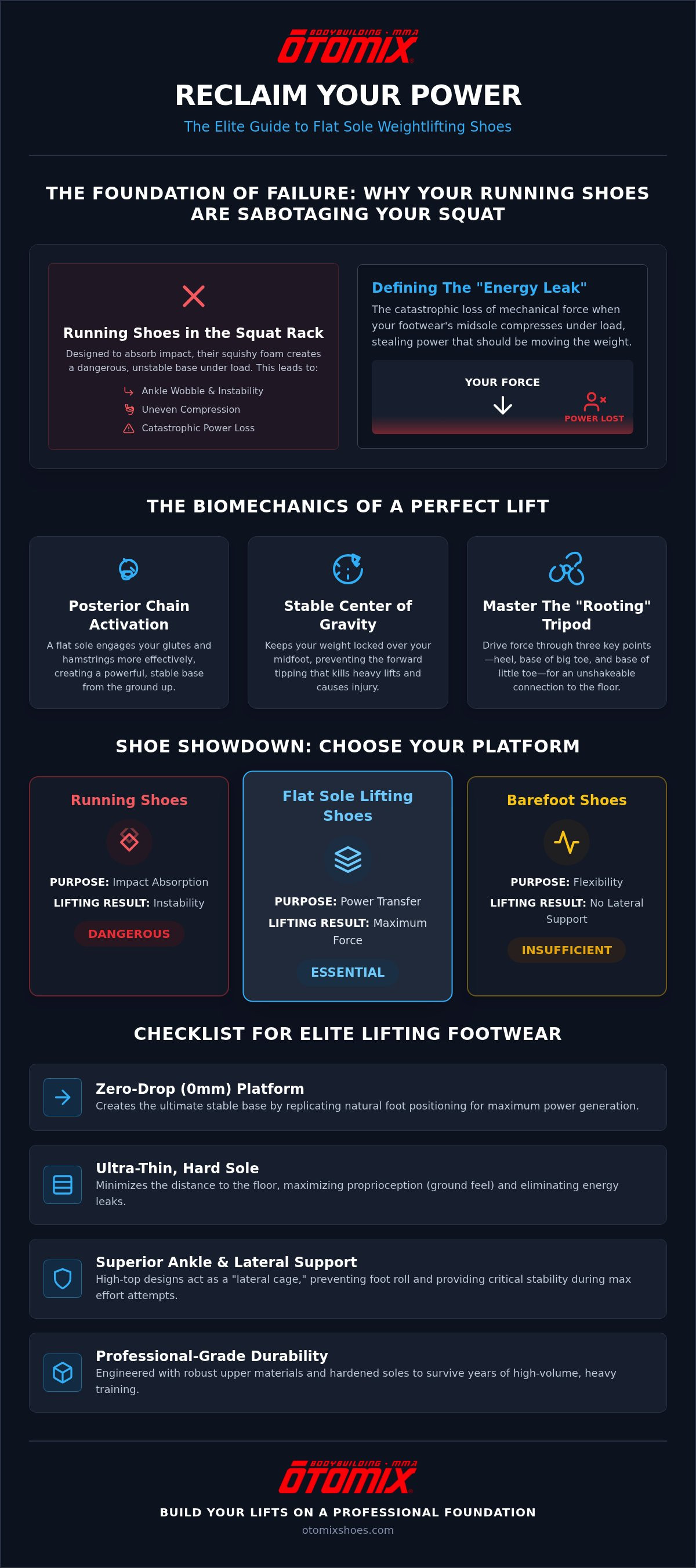
Get those running shoes out of the squat rack! Air pods and foam cushions are the enemies of strength. They're designed to absorb impact; in lifting, you need to generate it. When you're under a 400lb load, that foam compresses unevenly. Your ankles wobble. Your power vanishes. It's dangerous and inefficient. You wouldn't build a skyscraper on a mattress. Don't build your total on foam.
Every millimeter of "squish" in your sole is a failure point. An energy leak is the catastrophic loss of mechanical force when your footwear's midsole compresses under load, stealing power that should be moving the weight. Professional gear like the Ultimate Trainer eliminates this leak entirely. You get a direct, rigid connection to the earth. Every ounce of effort goes into the bar.
Flat vs. Barefoot: Knowing the Difference
Don't confuse flat sole weightlifting shoes with minimalist barefoot shoes. They aren't the same. Barefoot shoes focus on maximum flexibility and "natural" movement. Lifting flats focus on rigid, lateral stability. You need a fortress for your feet, not a sock. Barefoot shoes lack the structural integrity required for heavy compound movements. They won't protect you during a max effort attempt.
Elite lifting requires a lateral cage to prevent foot roll. You need a high-top design and a secure lockdown system to stay "rooted" to the platform. This is critical for Powerlifting where stability is everything. According to the January 1, 2026 USAPL rulebook, your soles must be flat with no projections and a maximum height of 5 cm. Models like the Extreme Trainer meet these pro standards while providing the grip you need to anchor your stance. Secure your base. Claim your PR.
The Biomechanics of Power: How Flat Soles Transform Your Lifts
Your body is a machine. If the foundation is weak, the entire structure fails. Just as precision-minded builders might explore The Ultimate Restomod Guide to optimize a classic car's chassis, a serious lifter must focus on the mechanical integrity of their footwear. When you step into flat sole weightlifting shoes, you're choosing mechanical efficiency over cushion. Most gym goers rely on elevated heels, but elite powerlifters know that a flat base is the secret to total Posterior Chain Activation. By keeping your foot flush with the platform, you engage your glutes and hamstrings more effectively. You aren't just standing; you're anchoring. This position keeps your center of gravity locked over your midfoot. It stops forward tipping before it starts. You stay upright. You stay powerful. You stay in control.
Mastering the "Rooting" technique requires a specific type of feedback that only a flat sole provides. Your foot needs to function as a tripod. You must drive through the heel, the base of the big toe, and the base of the little toe simultaneously. Cushioned shoes or high heels distort this connection. A zero heel-to-toe drop allows your foot to splay naturally and grab the floor. This "tripod" engagement creates an unshakeable base for every heavy rep. If you want to feel the floor and own the platform, the Stingray Performance offers the professional-grade contact you need to succeed.
Stability isn't just about the sole. It's about the entire ankle complex. While many brands push low-top flats, they ignore the risk of ankle roll during max effort sets. A high-top design acts as a lateral cage. It provides the structural integrity needed to prevent your foot from shifting under hundreds of pounds. You get the freedom of a flat sole with the security of a professional wrap. This is how you survive high-volume training blocks without injury.
Deadlifts: Shortening the Range of Motion
In the world of heavy pulls, every millimeter is a mountain. A thin, flat sole puts you closer to the earth. This literally reduces the distance the bar has to travel. You aren't just lifting smarter; you're lifting shorter. By staying closer to the center of the earth, you improve your leverage and optimize your "pull" from the floor. When you're hunting a new PR, that tiny reduction in range of motion is the difference between a locked-out lift and a missed attempt.
Squats: The Case for the Flat-Sole Powerlifter
Wide-stance squatters, listen up. If you squat with a wide base, heeled shoes can actually work against you by forcing your knees too far forward. Flat soles allow you to sit back into the lift. This shifts the load from your knees to your powerful hip musculature. It reduces shear stress on the joints and provides the stability required for low-bar squatting mechanics. You get a more natural, hip-dominant movement that translates to massive numbers on the bar.
Flat vs. Heeled Lifting Shoes: Which One Dominates Your Routine?
Stop following the herd. Heeled shoes aren't the universal solution for every lifter. The choice between a 0.75-inch heel and a 0-inch flat is a matter of physics, not fashion. Most commercial guides claim heeled shoes are the gold standard for everything. They're wrong. If you're a lifter with long femurs, an elevated heel can actually sabotage your leverage by forcing excessive forward knee travel. You lose power. You stress the joints. Flat sole weightlifting shoes fix this by allowing you to sit back into your hips. This is where your real strength lives. Short-femur athletes might find depth easier in heels, but for the rest of us, a flat base is the superior choice for overall stability and power production.
Hybrid athletes often feel they have to choose one or the other. You don't. But if you're looking for a single shoe to dominate your routine, the flat sole is the clear winner for versatility. In the bodybuilding world, the "Floor-to-Foot" connection is your secret weapon. You need to feel the muscle, not just move the bar. Heeled shoes can shift the load away from the intended muscle group during accessory work. Flats keep you grounded. They allow for a more natural foot splay during high-rep leg presses and hack squats. You get a better mind-muscle connection. You get better growth. It's that simple. Professional gear like the Ultimate Trainer is built for this exact versatility.
When to Reach for the Heel
Heels have their place. If you're chasing snatches or clean and jerks, that elevation is non-negotiable. It compensates for ankle mobility limitations and keeps your torso upright during high-bar or front squats. It's a specialized tool for vertical torso mechanics. If you're strictly an Olympic weightlifter, keep the heels. For everyone else, it's time to look at the floor. Don't use a specialized Olympic tool for a powerlifting or bodybuilding job.
When the Flat Sole Wins Every Time
Flats dominate the deadlift platform. Period. You need that zero-drop base for Romanian Deadlifts (RDLs) and Good Mornings to maximize hamstring tension. Any elevation in the heel shifts the load to your quads, defeating the purpose of these posterior chain builders. For bodybuilding, flat sole weightlifting shoes provide the maximum "feel" for the muscle during lunges and calf raises. You aren't just moving weight; you're sculpting. Get the connection you've been missing. Use the Stingray Performance to anchor your bodybuilding routine and feel the difference in every rep!
How to Choose the Perfect Powerlifting Shoe for Heavy Volume
Stop buying sneakers for a powerlifter's job. When you're hunting for the ultimate pair of flat sole weightlifting shoes, you need to look past the aesthetics. Start with the sole hardness. A pro-grade shoe requires a high durometer rating. This means the rubber is dense enough to resist compression under massive loads. If you can squeeze the sole with your thumb, it's garbage. You need a platform that acts like a solid block of wood under your feet. Suede uppers are the gold standard for longevity. They mold to your foot over time while resisting the abrasions common in a hardcore gym environment. Synthetics are lighter, but suede is built for the long haul in the trenches.
Ankle support is your insurance policy. High-tops provide a structural wrap that low-tops simply can't match. This lateral stability is non-negotiable for heavy sets where one slip could mean a missed lift or an injury. You also need a traction pattern that ignores the dust of a commercial gym floor. Look for multi-directional grips that allow you to screw your feet into the platform. This is how you generate maximum torque from the ground up. Professional flat sole weightlifting shoes are designed to bite into the surface, ensuring you never lose your footing during a max-effort grind.
Sizing for Performance, Not Comfort
Sizing for performance is different than sizing for a walk in the park. Your lifting shoes should feel restrictive. They should feel supportive. If they feel cozy, they're likely too big. You need a snug fit to prevent internal foot sliding. This ensures every ounce of force goes into the bar. To verify a performance fit, perform a heavy calf raise and ensure there is zero gap between your heel and the shoe's insole. Choose a wide toe box to allow for natural splay, but keep the midfoot lockdown tight for total control.
Durability Check: What Lasts in the Trenches?
Durability is found in the details. Look for reinforced stitching at the high-stress points. Pro-grade gear like the Extreme Trainer uses superior sole-to-upper bonding that won't delaminate under pressure. Cheap soles will compress and pancake after just a few heavy sessions. Don't waste your money on disposable gear. Read our guide on the Best shoes for strength training to find your next pair. Check for these specific features before you buy:
- High Durometer Soles: Non-compressible rubber for maximum force transfer.
- Reinforced Stitching: Essential for high-volume training blocks.
- Aggressive Outsole Grip: Prevents slipping on dusty commercial floors.
- Lateral Support Cage: Keeps the foot locked in place during heavy squats.
Get your Otomix high-performance trainers now and start training with a base that actually lasts!
Otomix Performance: Engineering the Ultimate Flat Sole Experience
Mainstream brands build for the masses. We build for the monsters. While generic athletic companies prioritize aesthetics, Otomix focuses on the brutal reality of a heavy squat. You don't need a fashion statement on the platform. You need a precision-engineered weapon. Our flat sole weightlifting shoes provide the uncompromising stability that pro-level athletes demand. We've spent decades perfecting the "insider secret" of the bodybuilding world. The result? A professional-grade base that turns your feet into unshakeable anchors. Stop settling for shoes designed for the treadmill. Start lifting in gear designed for the win!
The signature Otomix high-top profile is our definitive advantage. Most competitors push low-top flats that leave your ankles vulnerable. We don't. Our high-top design acts as a lateral cage, providing the structural integrity needed to prevent rolls during high-volume training blocks. It's about ankle safety without the bulk. You get maximum lockdown and a professional wrap that supports your joints during every heavy rep. This is the foundation of the Otomix legacy. It's time to upgrade your security and focus entirely on the weight. Secure your base. Dominate the gym.
The Stingray Performance: A Professional Legacy
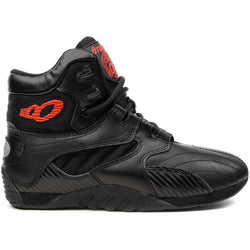
This is the flagship. The Otomix Stingray Performance is the gold standard for lifters who crave a "dead-to-the-floor" feel. It features an ultra-thin sole that brings you closer to the earth than any other competitor. You get maximum proprioception and an aggressive grip that bites into the floor. The ultra-lightweight construction means you stay agile without sacrificing stability. It's the ultimate tool for the serious powerlifter hunting a new PR. Check out the Stingray Performance Weightlifting Shoes and experience the pro-level difference for yourself!
Ultimate Trainer: Squats, Deadlifts, and Everything In-Between
Are you an all-around gym warrior? The Ultimate Trainer is your high-performance hybrid. It's designed for athletes who transition from heavy squats to explosive accessory work. You get enhanced lateral support that dominates on the leg press and hack squat. It's the versatile choice for those who demand one shoe for their entire routine. This isn't a compromise; it's an evolution. Read our Ultimate Trainer Hybrid Guide to see why this model is a staple in hardcore gyms worldwide.
For those who demand the absolute maximum in lockdown, the Extreme Trainer delivers. It's built for the most aggressive training sessions imaginable. With 2026 model updates focusing on reinforced stitching and superior sole-to-upper bonding, these flat sole weightlifting shoes are built to survive the trenches. You get pro-level stability that lasts for years. Don't let your footwear be the reason you miss a lift. Choose the brand that lives in the gym. Choose Otomix. Grab your pair today and crush your next session!
Claim Your Elite Foundation and Crush the Competition
Your foundation is the only thing standing between you and a massive total. You've seen the science. You understand the biomechanics of zero-drop power. You know why high-top support is the non-negotiable secret for heavy sets. Now it's time to stop settling for average gear. Every rep without the right base is a missed opportunity for growth. Don't let an energy leak steal your strength. Fix your foundation now.
Choosing professional flat sole weightlifting shoes is the ultimate power move for your training. Otomix is the trusted choice for IFBB Pros and Elite Powerlifters because we don't compromise. Our gear features durable suede and breathable mesh construction built for the most brutal sessions. You get unbeatable high-top ankle support that keeps you locked in when the weight gets heavy. It's time to join the ranks of the elite.
Crush Your Next PR with Otomix Flat Sole Shoes!
Get back into the rack with total confidence. Your next record-breaking lift starts from the ground up. Go get it!
Frequently Asked Questions
Can I use flat sole weightlifting shoes for squats?
Yes, you can absolutely use them, especially for low-bar or wide-stance squats. These shoes allow you to sit back into the lift, engaging your glutes and hamstrings more effectively than heeled alternatives. While Olympic lifters prefer heels for upright torso mechanics, powerlifters often choose a flat base to maximize hip-dominant strength. It's about your specific biomechanics and finding the most stable foundation for your style.
Are flat lifting shoes better than deadlift slippers?
Yes, because they offer superior lateral stability and ankle support that slippers simply can't provide. While slippers get you close to the floor, they lack the structural "cage" needed to prevent your foot from shifting under massive loads. Professional flat sole weightlifting shoes like the Stingray Performance give you that same "dead-to-the-floor" feel with the added security of a high-top wrap and aggressive traction.
Do flat sole shoes help with lower back pain during lifting?
They can help by preventing the forward tipping often caused by squishy running shoes or excessive heel heights. A flat base encourages a more neutral pelvic position and better posterior chain engagement, which reduces unnecessary stress on the lumbar spine. By creating a rock-solid connection to the platform, you eliminate the instability that leads to "butt wink" and other form breakdowns that trigger lower back discomfort.
Should beginners use flat sole powerlifting shoes?
Yes, starting with a flat base helps beginners develop proper lifting mechanics without the "crutch" of an artificial heel. It forces you to master ankle mobility and "rooting" early in your training career. Building your foundation on flat sole weightlifting shoes ensures you aren't fighting your footwear as the weights get heavier. Start with the right gear to avoid unlearning bad habits later in your journey.
How long do Otomix flat sole shoes typically last?
Our shoes are built for the trenches and typically last for years of high-volume training. We use professional-grade suede and reinforced stitching that won't delaminate or shred under pressure. While generic sneakers pancake within months, the Stingray and Ultimate Trainer models maintain their sole hardness and structural integrity through countless heavy sessions. Your investment pays off in long-term performance and unshakeable stability on the platform.
Can I wear flat weightlifting shoes for cardio or walking?
No, don't use these for cardio or long-distance walking. These shoes are precision-engineered for lifting stability, meaning they lack the impact-absorbing foam found in running shoes. Wearing them for cardio will lead to discomfort and unnecessary wear on the specialized thin outsoles. Keep your lifting shoes for the platform and your trainers for the track. Protect your gear and your joints by using the right tool for the job.
Do I need to wear socks with thin-sole lifting shoes?
Yes, wearing high-quality athletic socks is essential for maintaining a snug performance fit and preventing internal foot sliding. Socks also manage moisture, which protects the internal materials of your shoes from premature breakdown. A thin, moisture-wicking sock is usually best to maintain that "dead-to-the-floor" feel without adding unnecessary bulk. Keep your feet dry and your lockdown tight for every heavy set.
Are flat sole shoes good for wide-stance lifters?
Yes, they are the preferred choice for wide-stance squatters and sumo deadlifters. A flat base allows you to drive through the outside of your feet and engage your hips without the forward knee travel caused by a heel. This lateral stability is critical when your feet are set wide. You get a more natural, powerful drive that translates directly into higher numbers on the bar and better joint health.


